
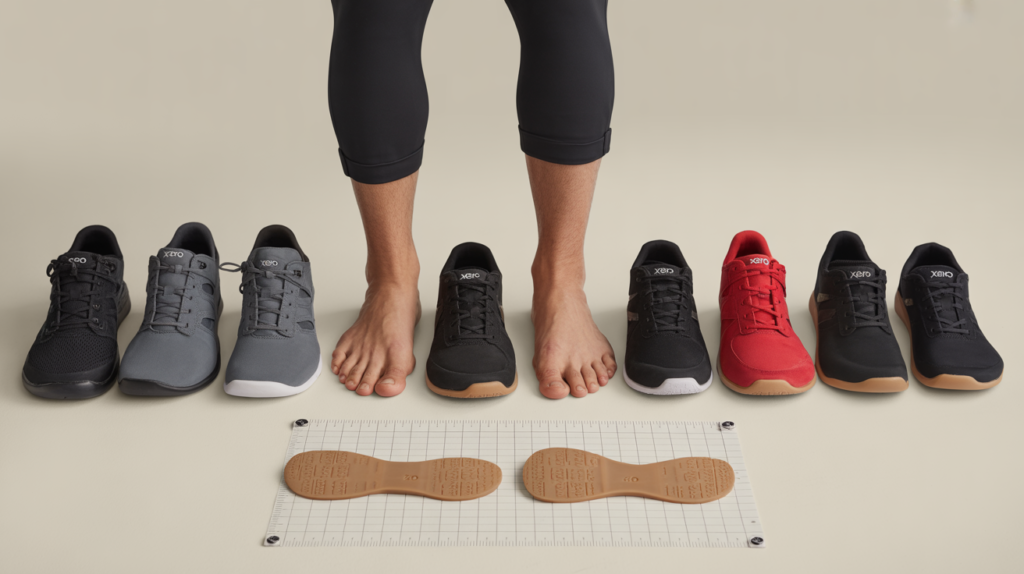
If your Xero Shoes feel close but not quite right, the safest move is to check fit by length, toe space, and heel hold before deciding whether to keep them. For the full measurement method and model-by-model guidance, start with the main Xero sizing guide.
Fit check
The Right Size Should Feel Roomy In The Toe Box, Secure At The Heel, And Free Of Pressure When You Walk Downhill Or Bend Your Toes.
- Size up if your longest toe touches the front, especially when standing.
- Stay put if you have thumb-width room and the heel does not slip.
- Exchange if you get numbness, pinching, or repeated hot spots after a short walk.
How To Test Xero Shoes Fit In Under Five Minutes
A good fit check is simple: stand up, load the foot, and see how the shoe behaves during movement. Barefoot-style shoes can feel acceptable in the hand or while seated and still be wrong once your weight settles into the footbed.
Start with both shoes on and wear the socks you plan to use most often. Walk on a hard surface, bend your knees, and pay attention to three things: toe room, heel security, and whether the upper presses anywhere along the top or sides of the foot. If you need a fuller sizing walkthrough, the size guide tips page can help you compare fit across different Xero models.
What A Correct Fit Feels Like
- Toes can spread naturally without hitting the front.
- The heel stays planted when you walk and turn.
- The upper holds the foot without pressure points.
- There is enough space for slight swelling later in the day.
What Usually Means You Should Change Size
- The front looks roomy until you stand, then the toes hit.
- You have to tighten laces excessively to stop movement.
- Your toes or instep go numb after a short wear test.
- The shoe feels good only before your foot warms up.
Measurement Mistakes That Create A Bad Fit
Most fit problems start before the box is even opened. If you measure too early in the day, only one foot, or while seated, the result can be misleading enough to push you toward the wrong size.
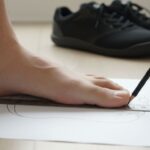
Measure at the end of the day, while standing, and trace both feet if possible. Choose the larger foot as your reference, then compare that tracing against the shoe shape rather than relying on a number alone. That matters even more with Xero because the right size depends on how the toe box and midfoot match your actual shape, not just the label.
If you are still early in the buying process, the broader Xero Shoes sizing guide is the best place to compare lengths, model differences, and size-up guidance in one place.
Fit Troubleshooting By Foot Type
- Wide Feet prioritize toe-box shape first, then length. A larger number does not always solve width pressure.
- Narrow Heels heel slip often responds better to lacing changes than to a full size change.
- High Insteps pressure on the top of the foot usually means the upper volume is too low or lacing is too tight.
- Flat Feet comfort depends more on room and stability than on arch-heavy structure.
- Swelling Or Long Wear Days test fit later in the day so the shoe is not borderline tight once your foot expands.
When To Keep Them, And When To Exchange
The simplest rule is this: keep the pair only if you can walk normally without toe pressure, heel lift, or numbness after a short real-world test. If you need to keep adjusting your gait to make the shoes feel acceptable, the fit is probably off.
Before you return anything, check the brand’s policies so you do not miss the window. The Xero Shoes return policy guide explains what to expect, and the exchange guide is useful when the issue is size rather than model choice.
Next step
Need The Full Sizing Chart, Not Just A Fit Check? Move to the main guide for the complete measurement method and model selection advice.
Common Questions About Xero Fit
Do Xero Shoes Run Big Or Small?
It depends on the model and your foot shape, which is why a direct fit check is better than assuming your usual size will work. If your toe box feels right but your heel slips, the issue is often volume rather than length.
Should You Size Up Or Down In Barefoot Shoes?
If your longest toe touches the front or your feet swell during wear, sizing up is usually the safer move. If the shoe feels sloppy at the heel and still has excess length, the size may already be too large.
Are Xero Shoes Wide Fit?
Many Xero styles give more natural toe room than standard shoes, but that does not mean every model works for every wide foot. Width, toe shape, and instep volume all need to line up for the fit to feel right.
What Is The 3 Shoe Rule?
In practical terms, it refers to comparing more than one size or model when a shoe is borderline, because feet change under load and over time. The best choice is the one that still feels right after standing, walking, and a bit of movement.

Natalie Harper is a versatile author and content creator at My Shoes Finder, where she explores a wide range of general topics that resonate with diverse audiences. With a passion for storytelling and a keen eye for detail, Natalie crafts engaging articles that provide valuable insights and inspire readers. Her commitment to quality and relatability makes her work a trusted resource for those seeking both information and inspiration in their daily lives.
See also:
 How To Tell If Your Shoes Fit: Clear Signs, Fit Checks, And Sizing Tips
 Are Xero Shoes Wide In The Toe Box? Fit Guide For Wide Feet
 How To Measure Your Feet For Xero Shoes Size Fit
 How to Measure for Xero Shoes: Find Your Best Size Before You Buy
 Are Xero Shoes True To Size? Fit Accuracy, Toe Box Width, And Model Differences
 Wide Feet Guide: Signs, Causes, And How To Find The Right Fit
Your insights on the significance of proper sizing for barefoot shoes really resonate with me, especially the emphasis on how it impacts overall foot health. In my experience, the transition to barefoot footwear was initially challenging, not just in adjusting to the lack of support but also in finding the right fit. I made the mistake of focusing too much on aesthetics rather than how the shoes accommodated my foot shape and movement.
I appreciate the emphasis on proper sizing for barefoot shoes in your guide. The transition to barefoot footwear can be quite a transformative experience, but achieving the right fit is indeed critical to reaping the full benefits. I’ve personally found that transitioning slowly and paying attention to how my feet respond to different sizes and widths can make a significant difference.
You’ve touched on such an important aspect of barefoot footwear—sizing can truly make or break the experience! I’ve found that when I wear shoes that really fit my foot’s natural shape, it not only enhances comfort but also improves my overall posture and movement. I remember transitioning to barefoot shoes a few years ago; it was a bit of an adjustment at first, but once I got the right size and style for my foot, I noticed a significant increase in my stamina during outdoor activities.
It’s interesting to see the increasing focus on proper sizing for barefoot footwear. I’ve personally struggled with finding the right fit, especially since I’ve transitioned to barefoot shoes. It’s true that sizing can make or break the experience; I’ve experienced discomfort that could’ve easily been avoided with more guidance on fit.
I love your emphasis on proper sizing for barefoot shoes! It’s so true that the right fit can make a world of difference in comfort and foot health. I remember when I first transitioned to barefoot footwear; I underestimated the importance of sizing and ended up with a pair that was too tight. It really impacted my overall experience.
The emphasis on proper sizing for barefoot footwear truly resonates with me, especially as someone who has experienced the transformative power of embracing a more natural shoe choice. I used to be caught in the cycle of conventional shoes, prioritizing aesthetics over comfort, and it led to various foot issues. Transitioning to barefoot shoes not only improved my foot health but also reconnected me with a more instinctual way of moving.
It’s great to hear your story about transitioning to barefoot footwear. The journey from conventional shoes to a more natural choice can be eye-opening, right? It’s not just about the comfort; it’s almost like rediscovering a forgotten part of ourselves. When I first switched to barefoot shoes, I noticed how it changed not just how my feet felt, but how my entire posture and movement improved. It’s fascinating how our shoe choices can influence our biomechanics and overall wellness.
I really appreciate your insights on barefoot footwear and the emphasis on proper sizing—it’s something that often gets overlooked. I remember my first experience with barefoot shoes; I was excited to transition from conventional sneakers, thinking it would feel just as great, if not better. However, I learned the hard way that sizing is critical, especially since the shoes have a unique fit that encourages natural foot movement. I chose a size based on my regular sneaker size, but they ended up feeling too tight because I didn’t account for the shape and flexibility that barefoot shoes offer.
Your emphasis on proper sizing for barefoot footwear is spot on, especially considering how crucial fit is for promoting natural foot movement. I’ve experienced firsthand how a well-fitted pair of barefoot shoes can enhance comfort during long runs or hikes, allowing the foot to function as nature intended.
Ah, the age-old struggle of finding the right size in barefoot shoes—it’s like trying to pick the perfect avocado at the grocery store, am I right? You squeeze, you prod, and yet you’re still left guessing if it’ll be a smooth guacamole or a rock-hard disaster! I totally agree that proper sizing is key, especially since you want those shoes to feel like a second skin rather than miniature medieval torturers on your feet.
This is such an important discussion about barefoot footwear and the nuances of getting the right fit. I remember when I first transitioned to barefoot shoes; I was excited about the idea of promoting natural foot movement but quickly learned that sizing truly makes a difference. The initial discomfort I experienced was mostly due to my miscalculation of size and width.
It’s great to hear your transition story. Getting the right fit in barefoot shoes is definitely a journey many of us go through. It’s surprising how something as simple as size and width can make such a difference in comfort and overall experience.
Your exploration of barefoot footwear and the importance of proper sizing resonates deeply with my own experiences. My journey into barefoot shoes began with a desire to reconnect with a more natural foot movement, similar to what you describe. However, I quickly discovered that the journey wasn’t merely about choosing a brand or style; it was a nuanced process of understanding my own foot anatomy and how it relates to different shoe designs.
It’s interesting how our experiences with footwear can lead us to deeper reflections on our bodies and movements. Your desire to reconnect with natural foot movement resonates with my own journey—I remember when I first transitioned to barefoot shoes, it felt like unearthing a part of myself that had been buried under traditional footwear.
I must say, the quest for the perfect barefoot shoe is like finding a needle in a haystack—if that needle was actually a comfy, flexible piece of footwear that leaves your toes wiggling under the stars. As someone who jumped on the barefoot bandwagon a little late (sorry, dear toes, for all those years in stiff shoes!), I can attest to how crucial proper sizing is. The last thing you want is a pair that feels like a wrestling match between your foot and the shoe.
I completely get where you’re coming from. The journey to find that perfect barefoot shoe really does feel like an adventure, doesn’t it? It’s funny how we often overlook the importance of proper footwear until we feel the freedom of our toes wiggling again. I used to be in the stiff-shoe camp for so long, but once I made that shift, it was like rediscovering what my feet were meant to feel.
I really appreciate the focus on sizing in your post—it’s such a critical aspect of choosing barefoot shoes! I’ve had my fair share of missteps with sizing when I first ventured into barefoot footwear. I remember thinking I could just go my usual size, but I ended up with a pair that felt too snug, which kind of defeated the purpose of all that freedom and comfort.
Ah, the age-old battle of finding the perfect shoe fit! I once bought a pair of “barefoot” shoes that were so snug, I felt like a sardine in a can—definitely not the freedom I was hoping for. Your advice on checking that toe box and heel fit is spot on! It’s like Goldilocks and the Three Bears, but instead of porridge, we’re just looking for footwear that doesn’t make us want to cry.
I really appreciate how you broke down the fitting process for Xero Shoes. It echoes something I’ve been thinking about lately—how important the right fit is, not just for comfort but also for the overall benefits of barefoot footwear. I remember when I first ventured into the world of minimalist shoes; it was like stepping into a whole new realm of freedom for my feet. However, I definitely learned the hard way about the significance of sizing and toe space.
I really appreciate the detailed insights on fit and sizing when it comes to barefoot footwear, particularly with Xero Shoes. I’ve often found that the importance of a proper fit is often overlooked, especially in an age where online shopping makes it all too easy to rush into a purchase without considering how crucial sizing truly is.
Finding the right fit in barefoot footwear can truly transform your walking experience. I’ve personally discovered how important it is to allow your toes enough room to splay naturally. After trying on various styles, I learned that a snug heel secured without slipping makes all the difference when tackling different terrains. It seems so small, yet wearing shoes that fit properly can also promote better posture and overall foot health.
You’ve really nailed the importance of fit with barefoot footwear! I had a similar experience when I first tried Xero Shoes; I was so excited to make the switch but ended up feeling a bit cramped in the toe area. It turns out I neglected to consider the toe box space, which is such a game-changer!
It sounds like you’ve had quite the journey with your footwear choice. The toe box space is such a crucial aspect that often gets overlooked. A cramped toe area can really impact comfort and the overall experience of wearing barefoot shoes.
It’s interesting to see how much emphasis is placed on finding the perfect fit with barefoot footwear like Xero Shoes. I remember when I first made the switch to barefoot shoes; it was a game changer for my foot health and overall comfort. The fit guidelines you’ve laid out offer such important insight. I particularly resonate with the point about giving your toes ample room in the toe box. It reminds me of a time when I was determined to wear a pair of minimalist shoes that were just a bit too snug. After an afternoon of walking, my feet were sore and cramped, which completely defeated the purpose of switching to barefoot options!
I found your insights on the importance of sizing and fit in barefoot footwear truly enlightening, especially given how often people overlook these details in favor of aesthetics or brand reputation. Having recently made the transition to barefoot shoes myself, I can definitely relate to the nuances of finding the right fit. I recall when I first tried on a pair of Xero Shoes; I was astonished at how different the fit felt compared to traditional footwear. Initially, I assumed that the snugness was a sign of a good fit, but I quickly learned about the critical role of a roomy toe box. It’s fascinating how our perceptions of comfort can shift so dramatically.
It’s interesting how our initial assumptions about comfort can lead to such a different experience in barefoot footwear. I remember my own transition; when I first tried a pair of minimal shoes, I too was startled by the new sensations. The snug fit of traditional shoes can feel secure and familiar, but the discovery of a roomy toe box really opens up a whole new world of comfort and movement.
It’s interesting that you mention the importance of a proper fit in barefoot footwear. I’ve noticed that many people underestimate how crucial the toe box space is for overall comfort and foot health. After switching to barefoot shoes myself, I found that giving my toes room to spread naturally improved my posture and even reduced some of the discomfort I used to feel in traditional footwear.