
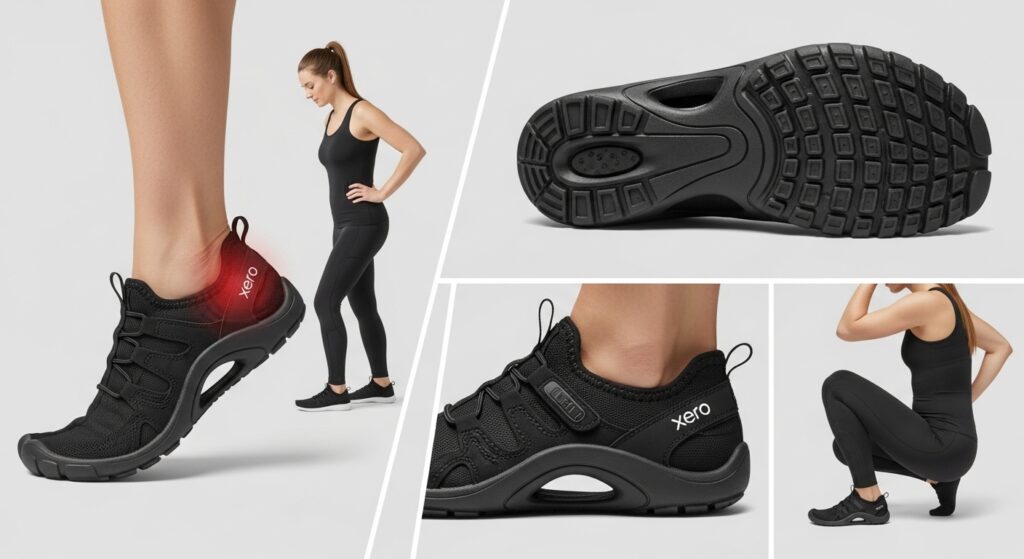
Xero Shoes can help some people reduce back strain and stand a little taller, but they are not a cure-all. The main value comes from a more natural foot position, better ground feedback, and a transition that encourages you to move with less compensation through the ankles, hips, and lower back. If posture is your main concern, this footwear-and-alignment guide is a useful companion read.
For readers comparing pain-relief angles across the barefoot-shoe cluster, the knee-pain guide is the stronger clinical comparison point, while this article stays focused on back pain, posture, gait, and safe adaptation.
At a glance: who may benefit
- People whose back discomfort seems linked to stiff shoes, elevated heels, or a narrow toe box.
- Walkers and light runners who want better foot awareness and a flatter, more stable platform.
- Readers who are willing to transition gradually rather than switching overnight.
- People trying to improve posture cues through the feet, ankles, and hips together.
Why shoes can change how your back feels
Footwear shapes the way force travels upward through the body. A shoe with a thick heel, strong arch support, or a narrow toe box can subtly alter how you load the foot, rotate the shin, position the pelvis, and hold the spine during walking or standing.
That does not mean every cushioned shoe causes back pain, or that every minimalist shoe fixes it. It does mean the lower body works as a chain. If one link changes, the rest often compensate. Xero Shoes sit in the minimalist category, so they try to remove some of the shoe-driven interference and let your foot move more freely.
The practical appeal is simple: a flatter platform, a wider toe area, and more sensory feedback can make it easier to sense your balance and keep your posture from drifting into the same habitual patterns. That can be helpful for some people with recurring tightness in the lower back, especially if their current shoes are tilted, rigid, or overly cushioned.
| Question | What to look for | Why it matters for back pain |
|---|---|---|
| Heel height | Low or zero-drop geometry | A flatter stance may reduce the forward shift that can increase lumbar compensation. |
| Toe room | Wide toe box | Toes can splay, which may improve balance and reduce bracing elsewhere. |
| Flexibility | Bendable sole | The foot can articulate naturally instead of being held rigid. |
| Transition speed | Gradual introduction | The back often feels better only if calves, feet, and gait adjust without overload. |
How Xero Shoes may help posture, not just comfort
Posture is not only a “sit up straight” issue. It starts at the feet. If your shoes change where your weight lands, they can influence how your knees track, how your hips stack, and whether your lower back has to work harder to keep you upright.
Xero Shoes may help posture by encouraging a more neutral base. When the heel is not artificially elevated and the forefoot is not squeezed, many people find it easier to stand with their weight distributed more evenly. That can reduce the feeling of leaning forward, locking the knees, or gripping the toes to stay stable.
The effect is usually subtle, not dramatic. If you expect shoes to “fix” posture on their own, the result can be disappointing. If you use them as part of a broader movement reset—walking more deliberately, strengthening the feet, and paying attention to hip position—the payoff can be more meaningful.
A useful way to think about it
If your current shoes make you feel unstable, tilted, or dependent on cushion, a minimalist pair can give your body cleaner sensory information. That does not guarantee pain relief, but it can make better alignment easier to notice and maintain.
When to wear them, and when to wait
Timing matters more than many people realize. The biggest mistake is wearing a minimalist shoe for a full day on day one. That is when calves, arches, and the small stabilizers around the foot are most likely to complain, and when back comfort can temporarily get worse instead of better.
A gentler schedule often works better, especially if you are switching from heavily cushioned trainers or supportive walking shoes. Start with short indoor sessions, then short outdoor walks, then longer daily wear only after the body has adapted.
| Phase | What to do | What it helps you avoid |
|---|---|---|
| Week 1 | Wear them for 10–15 minutes at a time, mostly on easy surfaces. | Overloading calves, arches, and the chain that supports posture. |
| Weeks 2–3 | Add short walks and light errands if soreness is mild and fades quickly. | Mistaking adaptation soreness for a shoe that truly does not fit your body. |
| After adaptation | Use them for longer daily wear if your back, feet, and calves stay calm. | Jumping from one pair to all-day wear without a progress check. |
| If pain spikes | Back off, shorten wear time, and assess fit, gait, and activity load. | Forcing a transition that is too aggressive for your current tolerance. |
How this compares with the broader barefoot-shoe cluster
This article is intentionally narrower than a general “benefits of barefoot shoes” page. It exists to answer one question: can Xero Shoes help with back pain and posture?
If your main pain issue is elsewhere, use the more specific guide instead of trying to force a back-pain article to do everything. For heel and arch-driven issues, the plantar fasciitis strategies page is the better fit, and for lower-limb alignment or pain tracking through the knees, this knee-pain prevention article gives a more specific decision path.
That distinction matters. People often search broadly for relief, but the body does not always respond broadly. A shoe that helps one pattern of strain may do little for another, which is why a focused page is more useful than a generic one.
Practical buying cues if posture is the goal
- Prioritize fit first. A minimalist shoe that is too tight can make posture worse by forcing toe gripping or uneven loading.
- Look for a stable, flat platform. The goal is not softness for its own sake; it is a predictable base.
- Start with the easiest use case. Walking usually beats long runs as an introduction.
- Keep other variables steady. Change shoes, not shoes plus mileage plus workouts plus terrain all at once.
What to do if your back feels worse at first
A short adjustment period is common, but worsening pain should be treated seriously. If your lower back feels tighter after switching, the first questions are usually about exposure, fit, and load—not whether minimalist shoes are inherently “bad.”
Reduce wear time for a few days, simplify the terrain, and check whether you are unconsciously changing your gait. Some people shorten their stride too much, tense their calves, or lean back to compensate. Those reactions can create more tension through the lumbar area.
If you are already managing foot pain, especially around the heel or arch, you may want to cross-check the transition advice in the plantar fasciitis guide before increasing your wear time. Back comfort sometimes improves only after the feet stop overreacting to the new demand.
A sensible next step
If your main issue is posture-driven lower-back tension, Xero Shoes are worth trying carefully, not aggressively. They make the most sense when you want a lower-interference shoe and are ready to give your body time to adapt.
If your pain is more pronounced, recurring, or linked to the knees and feet as well, start with the more specific guides first so you do not guess your way through the wrong problem.
Frequently asked questions
Can Xero Shoes actually help back pain?
They may help if your pain is tied to footwear habits, poor foot mechanics, or postural compensation. They are less likely to help if the cause is structural, inflammatory, or unrelated to how you stand and walk.
Will minimalist shoes improve posture automatically?
No. They can make better alignment easier to feel, but posture still depends on your mobility, strength, gait, and daily movement habits.
How long does the transition usually take?
Many people need a few weeks of gradual use before the shoes feel normal. If you are starting from heavily cushioned shoes, the adaptation period can take longer.
Should I stop if I feel soreness in my feet or calves?
Mild soreness can be part of adaptation, but sharp pain, limping, or pain that lingers into the next day means you should reduce wear time and reassess the transition.
Are Xero Shoes better for back pain than cushioned shoes?
Not universally. Some people feel better in a minimalist shoe, while others need more cushioning or support. The best choice depends on the specific cause of discomfort and how your body responds during transition.

Ethan Marshall is a passionate writer and content creator at My Shoes Finder, where he explores a diverse range of topics, from lifestyle and fashion to innovative products and personal development. With a keen eye for detail and a commitment to delivering engaging and informative content, Ethan connects with readers by sharing insights that inspire and inform. He believes in the power of storytelling to influence positive change, and he continually seeks to provide valuable perspectives that resonate with his audience.
See also:
 Xero Shoes For Children In 2025: Fit, Safety, And Best Models
 Running In Xero Shoes: Who They Suit And How To Transition Safely
 Xero Shoes Sale Guide: Where To Find The Best Discounts
 Who Founded Xero Shoes? The Origin Story Behind The Brand
 Xero Shoes For Bunions: What Helps, What Doesn’t, And Which Models Fit Best
 What Are Xero Shoes? A Clear Brand Overview, Benefits, And Fit Guide
Your exploration of Xero Shoes truly piques my interest, particularly regarding their potential for back pain relief and improved posture. Having transitioned to minimalist footwear myself, I can attest to the significant differences it makes, not only in foot comfort but also in overall body alignment.
It’s great to hear your experience with minimalist footwear! There’s definitely something transformative about making that shift, isn’t there? I was skeptical at first, but once I slipped on my first pair, everything changed. You start to notice how balanced and light your body feels. It’s like reconnecting with the ground beneath you, you know?
It’s fascinating to see how Xero Shoes are positioning themselves as a solution for back pain and posture issues, especially with the growing awareness of the importance of foot health in overall well-being. I’ve been on this health journey myself and discovered firsthand how critical the right footwear can be. For years, I struggled with persistent back pain and thought the solution lay solely in physical therapy and exercises. It wasn’t until I started researching minimalist footwear that I realized a significant part of my discomfort was due to the conventional shoes I had been relying on, which offered too much cushioning and support without allowing my feet to move naturally.
It’s great to hear about your journey with foot health and how much of a difference the right footwear can make. It’s interesting how many of us overlook our shoes when we think about back pain and posture. Your experience really highlights a common realization—our feet are pretty incredible, and forcing them into conventional shapes can lead to all sorts of problems. Those cushioned shoes often feel comforting, but they can restrict our natural movement, which is kind of counterproductive.
It’s interesting you mention the connection between footwear and back pain; it really is such an overlooked aspect of overall health. I remember when I first started paying attention to my shoes—after years of wearing what felt comfy in the moment, I realized how much my feet and posture were suffering. I stumbled upon some literature on natural foot movement, which has really shifted my perspective on the whole issue.
I’ve come across some practical tips on how to ensure your shoes fit properly, which really complements the idea of tuning into our foot health and avoiding those common pitfalls.
‘How To Tell If Your Shoes Fit: Clear Signs, Fit Checks, And Sizing Tips’
https://myshoesfinder.com/signs-and-tips-for-the-right-shoe-size/.
I’ve been curious about Xero Shoes for a while now! The minimalist approach really resonates with me. After switching to more barefoot-style footwear in my workouts, I noticed a significant reduction in back pain—like my body finally aligned itself the way it’s meant to be. It’s fascinating how much our shoes can influence posture and overall health.
It’s fascinating how Xero Shoes tap into the idea of natural foot mechanics. I’ve been trying out minimalist footwear myself, and I’ve noticed how much more aware I am of my surroundings when I wear them. It really does change the way you engage with the ground, almost like a reminder of how we instinctively moved before modern footwear took over.
I’ve been exploring minimalist footwear recently, and I can really relate to the notion of Xero Shoes allowing for a more natural foot experience. I’ve noticed that when I walk in shoes that encourage a more grounded feel, I actually have less tension in my back at the end of the day. It’s fascinating how something as simple as shoe design can impact our posture and overall well-being.
It’s interesting how much footwear can influence our overall comfort and posture. I remember shifting to minimalist shoes a few years ago and experiencing a similar transformation. It felt like reconnecting with the ground beneath me, almost like my feet were learning to move in a more natural way again. I can definitely relate to noticing less tension in my back after a long day.
The intersection of footwear design and biomechanics is a fascinating topic, and I’m glad to see it explored through the lens of Xero Shoes and their minimalist approach. As someone who has been struggling with back pain for years, I’ve been on a quest to find solutions that not only alleviate discomfort but also promote better posture. The philosophy behind Xero Shoes resonates with me because it aligns with the broader discussion about how our lifestyles and the footwear we choose can significantly impact our physical health.
It’s interesting to see how minimalist shoe designs like Xero Shoes are gaining traction, especially for their potential benefits in addressing back pain and improving posture. Having transitioned to barefoot footwear myself a few months ago, I’ve noticed a significant difference in not just my alignment but also the way my feet and legs feel after long days on my feet.
As someone who has long grappled with back pain and poor posture, I found your exploration of Xero Shoes and minimalist footwear incredibly resonant. The innovative design philosophy behind these shoes, which emphasizes a return to our natural foot mechanics, opens up a conversation that extends beyond shoes themselves to our overall relationship with health and movement.
I’ve been really curious about the impact of minimalist footwear on back pain and posture. My experience with traditional shoes has been a bit of a rollercoaster—sometimes they seem to support me, but often I end up feeling more stiffness. I tried a pair of Xero Shoes recently, and it made such a difference! They really do let your feet move naturally. I’ve noticed a change not just in my walking but in how my back feels, too.
It’s interesting how our experiences with footwear can significantly impact our overall well-being, isn’t it? I can relate to your rollercoaster ride with traditional shoes—there’s often a disconnect between feeling supported and feeling stiff. It’s great to hear that Xero Shoes have made such a positive difference for you.
I really appreciate how you’ve highlighted the benefits of Xero Shoes, especially when it comes to back pain relief and posture improvement. I’ve been on a bit of a journey exploring minimalist footwear myself. I used to rely heavily on cushioned sneakers, thinking they were doing me good. But as I started adopting more minimalist options, I noticed not only a reduction in back pain but also a significant improvement in my overall posture.
It’s great to hear about your journey with minimalist footwear! There’s something pretty powerful about really tuning into how our bodies respond to what we wear on our feet. Those cushioned sneakers may feel comfortable at first, but as you discovered, they can actually change the way we move, often masking the underlying issues that can lead to pain and poor posture.
I appreciate the in-depth overview of Xero Shoes and their potential benefits for back pain relief and improved posture. It’s fascinating to see how minimalist footwear is gaining traction in the wellness community. Personally, I’ve been experimenting with transitioning to barefoot shoes over the past few months, and I’ve noticed a significant improvement in my foot strength and overall body alignment.
It’s great to hear about your positive experience with transitioning to barefoot shoes. Many people find that gradual changes in footwear can lead to surprising benefits, especially in terms of foot strength and body alignment.
The discussion around Xero Shoes and their approach to barefoot footwear is particularly intriguing, especially considering the increasing awareness of natural movement and its benefits for posture and back pain relief. As someone who has transitioned to minimalist shoes, I’ve noticed a significant change in my overall comfort during long walks and runs.
The concept of Xero Shoes really resonates with me, especially regarding how they advocate for our natural biomechanics. I’ve recently switched to minimalist footwear and have noticed a significant difference in my posture and overall comfort, particularly during long hours at work. It’s fascinating how a simple change can lead to such improvements in daily activities.
It’s interesting to see the growing focus on barefoot footwear like Xero Shoes, especially in relation to back pain and posture. I’ve personally experienced the benefits of minimalist shoes when I made the switch a couple of years ago. Initially, I felt a bit of discomfort as my feet adapted, but over time, the improved alignment and support for my arches made a significant difference, not just in my comfort but also in my overall posture.
It’s great to hear about your personal experience with minimalist shoes! The transition can definitely be a process, but it sounds like you navigated it well. I’ve read that transitioning to barefoot footwear often helps people reconnect with their natural foot mechanics, leading to benefits like improved balance and a more natural gait. It’s fascinating how much our footwear choices can impact not just our foot health, but our posture and overall well-being.
The insights shared about Xero Shoes and the philosophy behind barefoot footwear really resonate with me. As someone who has struggled with back pain and posture issues for years, the idea of minimalist shoes making a difference is quite compelling. I’ve often found that conventional footwear, with its added cushioning and arch support, not only fails to alleviate my discomfort but may actually exacerbate it by encouraging a reliance on external support rather than allowing my feet to engage their natural mechanics.
I appreciate the in-depth exploration of Xero Shoes and their benefits, particularly in relation to back pain relief and improved posture. As someone who has struggled with these issues for years, I can genuinely relate to the discomforts that arise from misalignment and improper footwear. It’s fascinating how the concept of barefoot footwear aligns with age-old practices that promote a more natural way of moving—almost a return to the fundamentals of human locomotion.
The exploration of Xero Shoes and their minimalist approach to footwear is truly fascinating, especially when considering their potential impact on back pain relief and posture. Personally, I’ve been on a journey to address my own posture issues, which I suspect stem from years of wearing overly cushioned shoes that don’t allow for the natural movement of my feet. Since transitioning to more minimalist footwear, I’ve noticed a remarkable change—not only in how my feet feel but also in how my entire posture has improved.
It’s fascinating to delve into the principles behind Xero Shoes and barefoot footwear, especially considering how much our modern lives have shifted away from natural movement patterns. I’m particularly intrigued by your exploration of how these minimalist designs can potentially alleviate back pain. Many people, including myself, have experienced the side effects of conventional footwear—ranging from discomfort to chronic issues caused by improper support and alignment.
I totally get where you’re coming from. It’s wild how our day-to-day lives shape the way we move—and often not in the best ways. The shift to more conventional footwear seems like a small change, but it really alters how we walk and even how our bodies feel over time.
I really appreciate your insights into Xero Shoes and their potential benefits for back pain and posture. I’ve been doing some research on minimalist footwear myself, and it’s fascinating how these designs encourage a more natural gait and connection with the ground.
It’s intriguing to see the focus on Xero Shoes and their potential impact on back pain relief and posture correction, especially considering how much our footwear choices influence our overall health. I’ve been on a personal journey in this realm, grappling with back pain for years, and the way conventional shoes often prioritize style over function can’t be overstated.
It’s great to hear that you resonate with the discussion around Xero Shoes and their role in alleviating back pain. You’re right on the mark when you say that our footwear choices can have such a massive impact on our health. It’s fascinating how something as simple as what we wear on our feet can influence our body mechanics for better or worse.
Your exploration of Xero Shoes as a means for back pain relief and improved posture is intriguing, particularly as someone who has grappled with similar issues. The idea of mimicking the natural experience of walking barefoot really resonates with me; I’ve often found that traditional footwear can sometimes exacerbate discomfort, rather than alleviate it.
I’ve always found the design philosophy behind Xero Shoes intriguing, especially the emphasis on reconnecting with our natural foot mechanics. As someone who has struggled with back pain from traditional supportive footwear, I’m curious about how the minimalist approach might actually promote better posture.
I appreciate your insights on Xero Shoes and their role in alleviating back pain and improving posture. As someone who has struggled with similar issues, I’ve found that reconnecting with the ground beneath us is transformative—not just for our feet but for our entire body and mind.
Your exploration of Xero Shoes and the broader implications of barefoot footwear raises some intriguing points about our relationship with the ground beneath our feet and the evolution of shoe design. It’s fascinating to consider how minimalist footwear not only seeks to enhance comfort but also aligns with a growing awareness of our natural biomechanics.
I really appreciated your insights into Xero Shoes and the overall philosophy behind minimalist footwear. It’s fascinating how these shoes are designed to promote a more natural walking experience, and I can personally relate to your points about the impact on posture and back pain. A friend of mine started wearing Xero Shoes a few months back and has been raving about the difference it’s made not just for her feet, but for her entire posture.
It’s really interesting to hear your perspective on Xero Shoes and how they’ve helped with your friend’s posture and overall comfort. I’ve noticed a similar shift in my own experience since I transitioned to a more minimalist style of footwear. It’s amazing how something as simple as the shoes we wear can have such a profound effect on our posture and daily comfort levels.
I found an insightful guide that dives deeper into how Xero Shoes can help with bunions and improve overall foot health, which seems right in line with your experience.
‘Xero Shoes for Bunions: 2025 Guide to Hallux Valgus Improvement’
https://myshoesfinder.com/xero-shoes-for-bunions-2025-improvement-guide/.
It’s great to hear that your friend has had such a positive experience with Xero Shoes. Many people do find that transitioning to minimalist footwear can lead to significant improvements in their overall comfort and alignment. The design really encourages a more natural gait, which can often help alleviate issues like back pain and poor posture.
It’s fascinating how the evolution of footwear, particularly with innovations like Xero Shoes, is shedding light on our natural biomechanics. As someone who has dealt with occasional back pain, I appreciated your insights on how minimalist shoes can help alleviate discomfort. I’ve dabbled in barefoot running myself and found that transitioning to a more minimal shoe did require some adjustment, but the improvement in my posture was quite noticeable over time.
This exploration of Xero Shoes and their connection to back pain relief and improved posture resonates deeply with me. Having transitioned to a more minimalist approach in my own footwear choices, I’ve witnessed firsthand how our shoes can dramatically influence not just our comfort but also our overall movement and well-being.
I’ve always been intrigued by how our footwear choices impact our posture and overall well-being. After switching to more minimalist shoes a while back, I noticed a significant difference in my back pain and how my body feels during walks—almost like it encourages a more natural alignment. I love that Xero Shoes embrace that natural connection to the ground. It seems like our feet were designed for movement in a way that modern shoes often overlook. Have you or others had experiences transitioning to barefoot footwear? I’d be curious to hear how it’s impacted your daily activities or exercise routines!
It’s fascinating to see how interest in barefoot footwear like Xero Shoes is growing, particularly in the context of addressing issues such as back pain and posture—a topic so many of us grapple with in our daily lives. As someone who’s experimented with various shoe types in an attempt to alleviate chronic discomfort, I can definitely resonate with the appeal of minimalist footwear.
It’s interesting to hear about your journey with different shoe types and how you’re exploring the minimalist footwear route. Thousands of us are on this quest for comfort, especially when dealing with back pain and posture issues. It’s kind of wild how something as simple as our choice of shoes can have such a profound impact on how our bodies feel day-to-day.
The connection between footwear and overall physical well-being truly intrigues me, especially when it comes to something like back pain relief. My own experience with minimalist shoes has been transformative; I’ve found that they encourage a more natural gait and posture, which seems to alleviate strain on my back. It’s fascinating to see how footwear can influence not just foot health but also posture and alignment throughout the body.
I really appreciate how you’re delving into the benefits of Xero Shoes and the whole barefoot movement. It’s interesting how our footwear choices have such a profound impact on our overall health and posture.
It’s interesting to see the rising popularity of minimalist footwear like Xero Shoes, particularly as more people become aware of how traditional shoes with excessive cushioning can alter our natural gait and contribute to various foot and back issues. I appreciate your focus on how these shoes prioritize flexibility and foot mechanics, which is especially relevant in today’s society where many of us are spending increased time seated or in footwear that doesn’t allow for natural movement.
Your exploration of Xero Shoes and their minimalist design raises important considerations about how our footwear impacts not just posture, but overall physical health. While the idea of reconnecting with the ground is compelling, I’ve found that transitioning to barefoot footwear can be a double-edged sword, especially for those of us accustomed to traditional cushioning.
I find the concept of Xero Shoes really fascinating, especially since I’ve been on a journey to improve my posture and overall foot health lately. The idea of minimalist footwear mirroring barefoot walking seems to resonate with how our bodies were designed to move. I used to rely heavily on heavily cushioned shoes, but I’ve recently started experimenting with more minimalist options and have noticed a significant difference in my posture and back pain.
It’s fascinating to see how the concept of minimalist footwear, especially Xero Shoes, is gaining traction, not just as a trend but as a movement towards a more natural way of walking and running. The idea that our feet have evolved to function without excessive cushioning aligns with a growing awareness about the importance of reconnecting with our bodies in a more primal way.
It’s fascinating how Xero Shoes are designed to reconnect us with our natural biomechanics. I’ve been exploring minimalist footwear myself, and it’s been eye-opening to notice the changes in my posture and general comfort. It’s humbling to think about how many shoes out there disconnect us from our body’s natural sensations.