
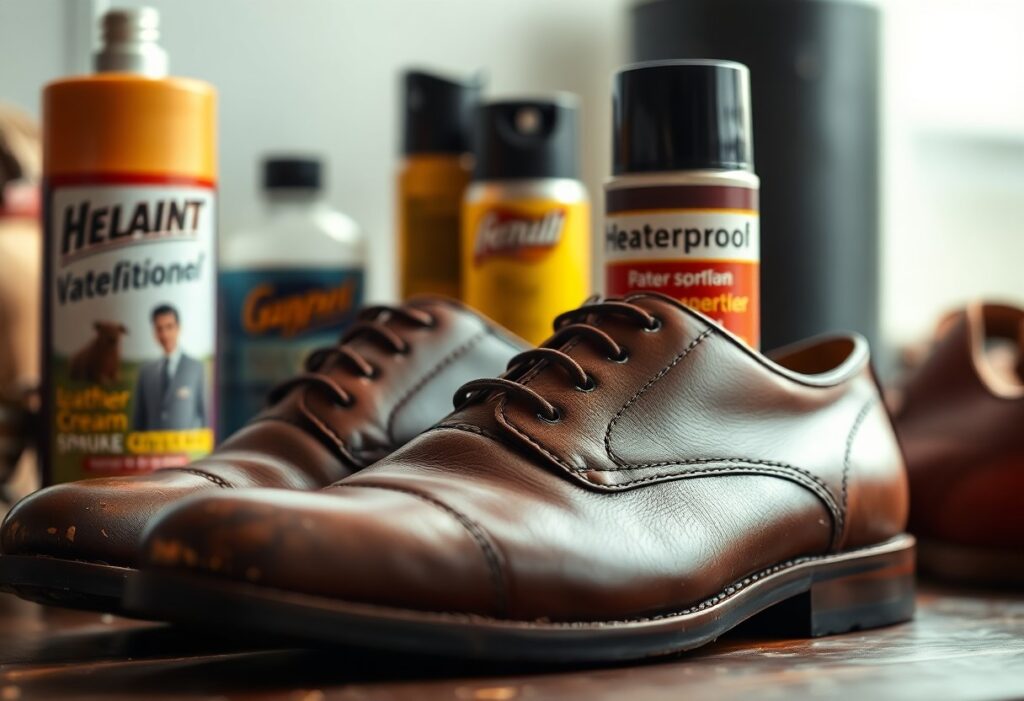
Waterproofing spray is the wrong first move for smooth leather shoes. It can seal the surface, block conditioners from penetrating, and leave leather drier and more prone to cracking over time.
If you want a safer care routine, start with the leather itself: nourish it, then add protection that still lets it breathe. For a broader product-avoidance guide, see better options than neutral wax on shoes, which fits the same decision path of choosing products that help instead of harm.
What To Use On Smooth Leather Instead
Smooth full-grain leather usually does best with cream, conditioner, and a light wax polish. Those products support the grain, help restore lost oils, and protect the finish without smothering the leather.
- Leather Cream replenishes oils and keeps the leather supple.
- Conditioner helps prevent dryness and surface stiffness.
- Wax Polish adds water resistance on high-wear areas such as toe caps.
Quick Decision Guide
The scope matters here. Waterproofing spray can make sense for some materials, but smooth leather is not one of them. Use the table below to match the product to the right surface and avoid the most common mistake.
| Material | Safe use of waterproofing spray? | Best alternative |
|---|---|---|
| Smooth Leather | Usually Avoid | Leather cream + conditioner + light wax polish |
| Suede | Often Yes | Suede-safe protector spray |
| Nubuck | Often Yes | Nubuck protector spray |
| Textiles / Mesh / Canvas | Usually Yes | Fabric-safe waterproofing spray |
Why Smooth Leather And Spray Do Not Mix Well
Smooth leather is not a dead, sealed material. Its grain still needs to breathe, exchange moisture, and accept nourishing products. When you cover it with a waterproofing spray, you may get quick surface repellency, but you also create a barrier that interferes with the way healthy leather ages.
It Can Interfere With Breathability
Good leather care respects airflow and moisture regulation. Smooth leather naturally handles small amounts of moisture better than many people assume, and sealing the pores too aggressively can make the material less flexible and less comfortable to wear.
It Can Shorten The Life Of The Finish
When leather cannot take up nourishment, it loses flexibility more quickly. That often shows up as stiffness, fine surface cracking, and a finish that looks tired long before the shoe should have aged that way.

What To Use Instead Of Waterproofing Spray
The better approach is to choose products that protect without sealing the leather shut. That usually means a combination of conditioning and finishing, not a spray designed to coat the surface.
Leather Cream And Conditioner
If your smooth leather shoes look dry or feel less flexible than they used to, conditioning is the first fix. A quality cream or conditioner restores lost oils and helps the leather stay supple. This is especially important if the shoes have been worn in dry weather, stored for a long time, or exposed to repeated cleaning.
A good rule is to condition when the leather starts to look dull rather than waiting for visible cracking. For a practical timing framework, the article on when to condition new shoes and when not is a useful next step because it helps you avoid overdoing care on fresh pairs.
Wax Polish For Surface Protection
Wax polish is the better choice when your main goal is a cleaner-looking barrier against moisture and scuffs. It does not replace nourishment, but it helps protect the outer finish and works especially well on toe caps and other high-wear points. That is why many shoe-care routines pair cream with a light wax finish instead of using a waterproofing spray.
If your finish is already in good shape, you may need very little product. A gentle brushing step before polishing helps remove dust, improves the final shine, and keeps buildup from forming. For that part of the routine, the basics of brushing shoes are worth following because prep matters as much as the product itself.

Where Waterproofing Spray Does Belong
Waterproofing spray is not useless; it is just material-specific. Suede, nubuck, and many textiles can benefit because those surfaces absorb water more readily and do not rely on the same conditioning routine as smooth leather. That is the key difference behind the recommendation: use spray where it suits the material, not where it blocks maintenance.
If you are unsure about a mixed-material shoe, check the dominant surface first. Leather trim may be fine with cream or wax, while suede panels may need a separate protector. The tanning and surface structure matter, which is why material-specific guidance such as this overview of leather tanning methods and quality impact can help you understand why different finishes respond differently to the same product.
Choose The Right Care Path For The Pair You Own
If your shoes are smooth leather, skip the waterproofing spray and work with the material instead. If your collection includes suede or nubuck, keep a separate protector for those pairs so you are not forcing one product to do every job.
For a broader alternative-first guide, the most relevant next read is the better options to neutral wax, since it follows the same logic of matching the product to the finish instead of treating all shoes the same.
A Simple Routine That Works Better
A practical smooth-leather routine does not need to be complicated. Clean the shoe gently, brush away loose dirt, apply cream when the leather looks thirsty, and finish with a modest wax layer if you want extra resistance and a sharper appearance. That sequence gives the material care from the inside out.
What you are trying to avoid is the false sense of security that comes from a spray-only approach. Waterproofing spray may make water bead up on day one, but that quick surface win can come at the cost of long-term leather health. When the goal is longevity, the better routine is always the one that feeds the leather first.
Frequently Asked Questions
Is Any Waterproofing Spray Safe On Smooth Leather?
Most sprays are not the best choice for smooth leather because they can interfere with conditioning and breathability. If a product claims leather compatibility, read the label carefully and test sparingly, but cream and wax are still the safer default for regular care.
When Should I Use Waterproofing Spray Instead?
Use it on materials that do not depend on cream-based nourishment, especially suede, nubuck, canvas, mesh, and other textiles. Those surfaces generally benefit more from a protective spray than smooth leather does.
What Is The Best Substitute For Smooth Leather Shoes?
Use leather cream or conditioner first, then a wax polish if you want added surface protection. That combination nourishes the leather while giving you a stronger protective finish than spray alone.
Can Waterproofing Spray Damage Leather Permanently?
It can contribute to long-term dryness if it repeatedly blocks conditioners from getting into the leather. The damage is usually gradual rather than immediate, but that is exactly why it is worth avoiding on smooth leather from the start.

Ethan Marshall is a passionate writer and content creator at My Shoes Finder, where he explores a diverse range of topics, from lifestyle and fashion to innovative products and personal development. With a keen eye for detail and a commitment to delivering engaging and informative content, Ethan connects with readers by sharing insights that inspire and inform. He believes in the power of storytelling to influence positive change, and he continually seeks to provide valuable perspectives that resonate with his audience.
See also:
 Neutral Wax On Shoes: When To Skip It And What To Use Instead
 How To Remove Candle Wax From Leather Shoes Safely
 How To Darken Shoe Color With Cream: Safe Tips For A Polished Finish
 Nubuck Vs Suede Vs Roughout Leather: Differences, Care, And Best Uses
 Which Xero Shoes Are Actually Waterproof? Care Tips And Wet-Weather Options
 Should You Condition New Shoes? Here’s When To Wait



You make such a compelling point about the often-overlooked nuances of leather care! It’s fascinating how many people unknowingly compromise their investment in quality footwear with simple mistakes like using waterproofing sprays. I’ve had my share of leather mishaps, and I learned the hard way that nourishing the leather with creams and waxes is the way to go. I used to think that any product marketed for leather would work, but it turns out that attention to the specific type of leather makes all the difference.
You’ve touched on a really important aspect of leather care. It’s easy to think that any product out there is safe to use, but leather really demands that extra bit of attention. Each type—be it full-grain, suede, or nubuck—has its own quirks that require specific treatment.
You’ve made a great point about the nuances of leather care. I’ve found that taking the time to understand the specifics of each leather type can really extend the life of a piece. For instance, when I first acquired a suede jacket, I was so intimidated by its upkeep that I almost didn’t wear it at all. But once I learned about the right protective sprays and cleaning techniques, it became one of my favorite items.
This topic on leather care brings up some vital considerations that many consumers overlook, often in the pursuit of convenience or the latest quick-fix solutions. As someone who has invested in quality leather shoes—and learned some hard lessons along the way—I can personally attest to the crucial role that proper care plays in extending the life of our footwear.
I totally relate to this topic! I used to think waterproofing spray was a must-have for my leather shoes, but after a couple of pairs dried out, I realized how misguided I was. It’s crazy how something that seems like a simple fix can end up doing more harm than good. Now, I stick to a routine with quality conditioners and waxes—it’s almost like giving my shoes a little spa day!
It’s interesting to hear your experience with waterproofing spray. I think many of us start with the assumption that a quick fix like that can solve our problems, especially when it comes to protecting our favorite leather shoes. But as you’ve discovered, those solutions can sometimes lead to unexpected consequences.
I totally relate to that feeling of wanting a quick fix, especially when it comes to taking care of things we really value, like leather shoes. I had a similar experience once when I used a popular waterproofing spray on a favorite jacket. Initially, it seemed to work wonders, but after a few applications, I noticed the fabric looked dull and even started to peel in some areas.
It’s interesting how our experiences shape our approach to caring for our shoes. I completely understand where you’re coming from—what seems like an easy solution can sometimes backfire. Your “spa day” concept is spot on! Regular conditioning and the right wax can really enhance leather’s natural beauty while keeping it flexible.
I totally get where you’re coming from about waterproofing sprays. I used to think they were a quick fix too, but I learned the hard way with a favorite pair of leather boots. They started looking dull and lifeless after a few applications. Switching to a leather conditioner was a game changer! It really brought back the shine and kept them feeling soft. I also find that taking a few minutes to care for my leather goods makes them last longer, which is a win in my book.
I really appreciate your perspective on leather care. It’s interesting how something that seems straightforward, like waterproofing sprays, can have such mixed results. I had a similar experience with a leather jacket I loved. After a couple of spray applications, it lost that rich, natural look, and I felt like I had robbed it of its character.
I really appreciate this insight on leather care. I used to think that waterproofing sprays were a must for my smooth leather shoes, but after seeing the damage on a pair I neglected with them, I’ve definitely changed my approach. It’s fascinating how we often overlook the fact that leather is essentially a living material that requires nurturing. I’ve started using a good quality cream and wax, and I can already see a difference in how the leather feels and looks.
It’s great to hear about your experience with leather care and the shift in your approach. You’re right; many people don’t fully appreciate that leather is a natural product, which means it demands a little more intentional care than synthetic materials.
Your exploration of common leather care mistakes resonates deeply with anyone who values quality footwear. The point about waterproofing sprays potentially jeopardizing the integrity of smooth leather is particularly significant. I’ve often observed that while these sprays may offer a quick fix, they overlook the essential needs of the material. Leather, especially higher grade varieties like full grain, deserves thoughtful maintenance that respects its natural properties rather than masking them with quick solutions.
You’ve touched on an important aspect of leather care that often gets lost in the rush of modern maintenance solutions. It’s so easy to reach for a spray that promises quick results without really thinking about what our leather deserves. As you pointed out, full grain leather has unique qualities that make it special, and masking those with products that might compromise its integrity seems counterproductive.
You’ve hit on such an important aspect of leather care that often gets overlooked. It’s easy to be tempted by those quick fixes like waterproofing sprays, especially when you want your shoes to look great right away. But I’ve found that a little bit of patience with leather can really pay off in the long run.
Your insights on leather care truly resonate with me, particularly the emphasis on avoiding waterproofing sprays for smooth leather. It’s fascinating to consider how our desire to protect our belongings can sometimes lead us astray, particularly with materials as luxurious and complex as leather. I remember when I first purchased a pair of high-quality leather boots; I was excited to keep them pristine but ended up using a spray that I thought would preserve their beauty. Over time, I noticed the leather becoming stiff and less supple. It was only after some research, and perhaps a fair bit of trial and error, that I learned about the importance of nourishment.
It’s great to hear that you found the insights on leather care relatable. That experience with your boots is one many of us can connect with. When we invest in high-quality leather, the excitement can sometimes cloud our judgment on how to properly maintain it. Those waterproofing sprays can seem like a quick fix, but they’re really not doing the leather any favors in the long run.
I completely agree with you; it’s funny how our excitement can lead us to skip over the basics of leather care. That moment when you first get a nice pair of boots—there’s just something special about it. For me, it often feels like they deserve the best treatment, but I’ve learned the hard way that quick fixes like those sprays can sometimes do more harm than good.
Your experience really highlights a common journey many of us take when learning about leather care. It’s easy to fall into the trap of thinking a protective spray is the best way to maintain that pristine look, especially with something as elegant as leather. I remember my own initiation into this world of care with a vintage leather jacket that I adored. I too used a product that was marketed as a ‘protector,’ but rather than preserving its buttery softness, it left the leather almost plastic-like over time.
I really appreciate this breakdown of leather care, especially the emphasis on the potential downsides of waterproofing sprays. It’s something I’ve seen people overlook far too often, and I think your explanation makes it clear why investing in quality care products is so crucial.