
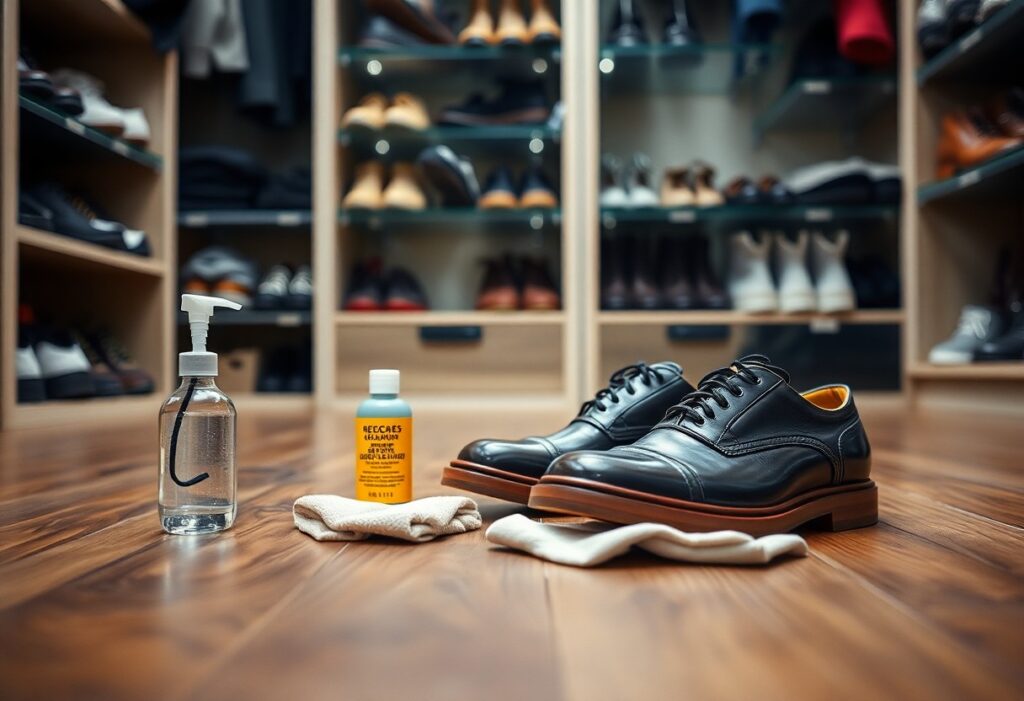
Don’t condition new shoes right away. Fresh leather usually arrives with factory-applied protection, and adding conditioner too early can darken the finish, stain light leather, or disturb the surface treatment.
If you’re also trying to protect smooth leather from the wrong products, it helps to compare this with safer alternatives for smooth leather before you reach for conditioner.
The Practical Rule
For most smooth leather shoes, skip conditioning during the first stretch of wear. Wait until the leather starts to look dull, feel stiffer than before, or show visible dryness. That usually happens after regular use, not on day one.
The safest approach is simple: Clean First, Wear Them In, Then Condition Only When The Leather Asks For It.
Why New Leather Should Be Left Alone At First
Fresh leather is not the same as worn leather. New shoes often come with a sealed or semi-sealed surface and factory-applied treatments that already provide the moisture and protection they need for the first stretch of wear. That means the leather is more reactive to extra products, not less.
When conditioner is added too soon, it can sit on top of the surface instead of absorbing evenly. On light-colored shoes especially, that can lead to blotches, darkening, or a finish that looks patchy rather than polished.
The better goal in the beginning is break-in, not heavy treatment. Let the leather soften naturally as you wear the shoes, and use a brush to keep dirt from building up on the surface. If brushing is unfamiliar, this brushing guide shows why it is the right first step for fresh leather.
The Difference Between Break-In And Conditioning
Break-in is about the shoe adapting to your foot: the upper flexes, the leather softens, and the fit becomes more comfortable. Conditioning is about restoring moisture after the leather begins to show wear. Those are different jobs, and mixing them too early can shorten the life of the finish.
A good way to think about it is this: if the shoe still looks rich, feels supple, and has not started to dry out, leave it alone. If the leather has begun to look tired after regular wear, conditioning becomes useful.
When Conditioning Becomes Appropriate
There is no universal wear count that works for every shoe. The right moment depends more on the condition of the leather than on an exact number of wears. For many pairs, that means waiting through the early break-in phase and revisiting the issue only when the leather starts showing clear dryness.
- The leather looks dull instead of rich and even.
- The upper feels stiffer than it did when new.
- Fine creasing is starting to look dry rather than simply broken in.
- A light test on an inside heel area absorbs normally without visible staining.
If you want the safest test before treating visible areas, try a tiny amount of conditioner on the inside heel or another hidden section first. If the leather darkens dramatically or the finish lifts, stop there and do not continue.
What To Avoid On New Shoes
Not every product that works on older leather belongs on a new pair. Heavy conditioners, neutral wax, and aggressive oils are the most common mistakes because they can overwhelm the factory finish before the shoe has had time to settle.
If you are unsure about wax choices, read the case against neutral wax first so you can avoid a product that looks harmless but often adds more risk than value.
How To Care For New Shoes Without Overdoing It
New shoes usually need less product, not more. The routine should stay simple: brush away dust, keep them dry, use shoe trees if you own them, and let the leather settle naturally. That combination protects the finish while the shoe still has its factory treatment working in your favor.
If the pair is truly still fresh, the best “care” is restraint. Applying cream polish or conditioner too often can create the same problem you were trying to prevent: softening the leather faster than the finish can handle.
For long-term upkeep, it also helps to think beyond the first wear cycle. A broader maintenance routine is covered in these lifespan tips, which fit naturally once the shoes have moved past the brand-new stage.
A Quick Checklist Before You Condition
- The shoes have been worn enough to stop feeling “fresh out of the box.”
- The leather looks dry, dull, or less supple than before.
- You have cleaned the shoes first and removed surface dirt.
- You have tested the product on a hidden area.
- You are using a small amount, not saturating the leather.
What About Different Leather Finishes?
Smooth leather is the main case here, but finish matters. Light-colored leather, crust leather, and highly finished surfaces are especially vulnerable to early treatment because they reveal changes more easily. Those shoes deserve even more restraint at the start.
If you are dealing with materials beyond smooth leather, don’t assume one conditioner fits all. The right product depends on how the leather was tanned, finished, and sealed. For a broader materials overview, the guide to types of leather and their uses is a useful next read.
A Simple Closing Rule
If your shoes are still new, healthy-looking, and already protected by the factory finish, leave them unconditioned. If they have moved past break-in and now look dry or tired, condition lightly and only after testing a hidden area.
That approach keeps the leather safer, preserves color, and prevents the kind of early damage that is hard to reverse once it happens.
Frequently Asked Questions
Why Shouldn’t I Condition Brand New Leather Shoes?
Brand new leather often already has protective factory treatments, so extra conditioner can darken the finish, stain light leather, or disrupt the surface before the shoe has fully broken in.
When Is It Finally Time To Start Conditioning?
Start when the leather actually shows dryness, stiffness, or dullness after regular wear. That matters more than a fixed wear count, because different leathers age at different speeds.
How Can I Tell If My Shoes Need Conditioning?
Look for dullness, stiffness, or dryness. If you are unsure, test a tiny amount on an inside heel area first and stop if the leather darkens or the finish changes.
Keep the first conditioning step simple
If your shoes are still in the new-shoe phase, brushing and waiting are usually smarter than conditioning. When you do need product guidance, start with the leather type, then choose the lightest treatment that fits the finish.
Learn the right first-care stepSee how to protect shoes long term

Oliver Prescott is a dedicated author and content creator at My Shoes Finder, where he explores a diverse range of topics focusing on lifestyle, fashion, and personal development. With a keen eye for detail and a passion for storytelling, he connects with readers by providing insightful and engaging content. Oliver’s writing aims to inspire and inform, making complex ideas accessible and relatable to a broad audience. When he’s not writing, he enjoys exploring new shoe trends and sharing his findings with fellow enthusiasts.
See also:
 Why Waterproofing Spray Can Ruin Smooth Leather Shoes
 Best Xero Shoes For Sweaty Feet: Breathable Picks And Moisture Control Tips
 How To Make Your Shoes Last Longer: Practical Care Tips That Work
 How To Darken Shoe Color With Cream: Safe Tips For A Polished Finish
 Xero Shoes Spring Neutrals Review: Cassie Knit and Dillon Leather
 Brushing Shoes After Wear: Why It Matters And How To Do It Right



This is such an important point to emphasize in leather care—it’s easy to forget that new shoes are already equipped with treatments that serve to protect them right away. I recall my first pair of high-quality leather boots; I was eager to treat them straight out of the box, thinking I was doing them a favor. Instead, I ended up with a blotchy finish that took a lot of effort to rectify.
This is an important and often overlooked point in the realm of shoe care. I’ve personally learned the hard way about misjudging when to condition new leather. A pair of light-colored loafers I purchased, which I enthusiastically conditioned right after getting them, ended up with unsightly dark spots that altered their appearance. It’s fascinating how the sealed pores in new leather significantly change its interaction with conditioning and cleaning agents.
It’s great to hear you’ve had a hands-on experience with this! Those dark spots can be such a disappointment, especially on a nice pair of light-colored loafers. It’s often surprising just how sensitive new leather can be. The sealed pores can really mess with how the leather absorbs products, leading to those uneven spots.
It’s interesting how much we take for granted with new leather, especially when it looks pristine. Those dark spots are frustrating not just on light-colored loafers, but on any leather item. It’s true that sealed pores can throw off how the leather interacts with products we apply. One thing I learned is that different leather types can react differently to moisture and conditioners.
You raise an interesting point about the nuances of shoe care, particularly with new leather footwear. It’s certainly counterintuitive that the impulse to nourish and protect our new shoes could actually lead to detrimental effects. I found myself in a similar situation a few years back; eager to maintain the pristine condition of a pair of light-colored leather boots, I applied a conditioning cream after just a couple of wears. The result was less than ideal—a blotchy discoloration that made me wary of my once-beloved boots.
It’s interesting how much we often overlook the initial treatment of new shoes. I had a pair of light-colored leather boots that I was all set to condition right out of the box. Fortunately, I stumbled upon similar advice, which saved me from potentially ruining them. It’s wild to think that the leather’s pores are still closed and vulnerable! This really makes me wonder about how much we take for granted regarding leather care—like how different types (cowhide, lambskin, etc.) might require unique approaches.
You bring up some really interesting points about leather care that a lot of people probably don’t consider. It’s true that many of us just pull new shoes out of the box and assume they’re ready to hit the streets without giving a second thought to what they really need. Your experience with those light-colored leather boots is a perfect example of how a little prep can go a long way. It’s so easy to overlook those basic steps, but they’re crucial to keeping our footwear looking sharp and lasting longer.
It’s interesting to think about how much we often take for granted when it comes to shoe care. I’ve learned the hard way that rushing to condition new leather can have unintended consequences. A few months ago, I bought a beautiful pair of light-colored loafers and, eager to keep them pristine, applied a conditioner just after a few wears. The result? Patchy discoloration that I couldn’t fix no matter what I tried.
It’s a tough lesson to learn, especially when you invest in a nice pair of shoes. Many people think that giving leather a quick condition is just part of the maintenance routine, but it can really be a double-edged sword. Different types of leather require different care, and light-colored leathers are particularly sensitive. It’s easy to forget that condition and covet consistency.
I appreciate your insights on the proper care of new shoes, especially when it comes to conditioning. I’ve made the mistake in the past of treating my new leather boots right away, convinced they needed extra love. It’s surprising how something that seems so beneficial can, in fact, lead to unintended damage. This makes me think about how we often rush to ‘enhance’ things in life—whether it’s shoes, relationships, or even our health—when sometimes the best approach is to allow things to breathe and develop naturally.
You’ve highlighted an essential aspect of shoe care that is often overlooked by new shoe owners. The distinction between new and worn leather is crucial for maintaining the integrity and longevity of our footwear. It reminds me of the delicate nature of many products, where the initial treatment can serve as a protective barrier that shouldn’t be disrupted prematurely.