
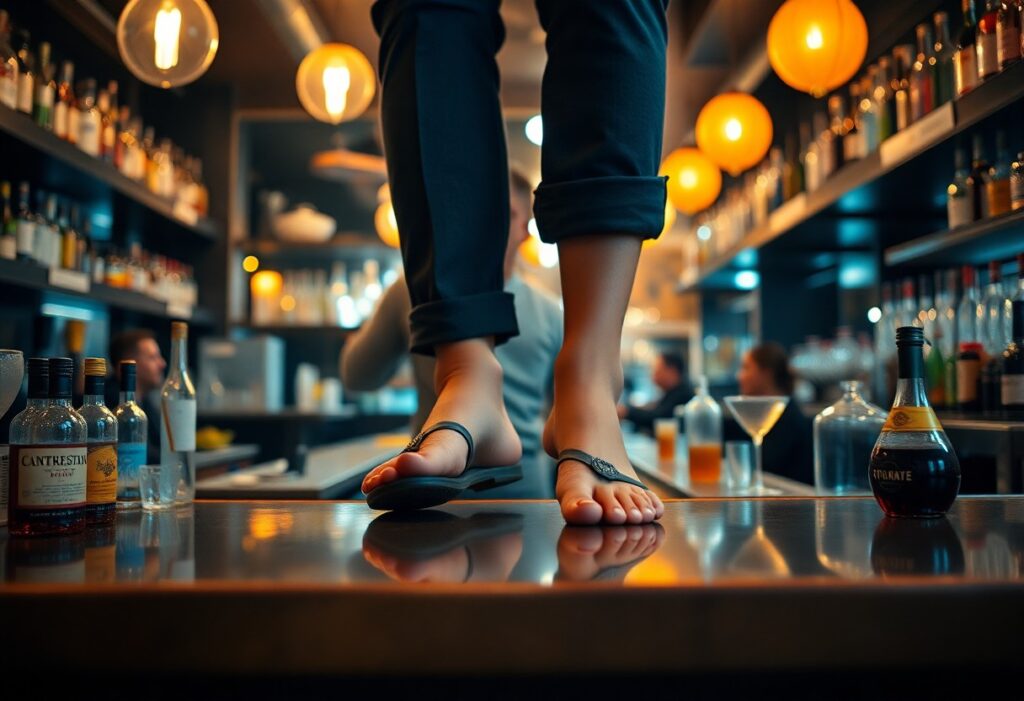
Bartending is hard on your feet: slick floors, fast pivots, long shifts, and little room for a shoe that gets in the way. If you’re choosing between barefoot shoes and more traditional work shoes, the real question is whether the shoe can handle traction, comfort, and dress-code pressure at the same time. For background on the category, see our barefoot shoes guide.
Quick decision guide
For bartenders, the best shoe is usually the one that stays stable on wet floors, feels comfortable through long closes, and still looks right behind the bar. Barefoot shoes can work well if they have real grip, enough room in the toe box, and a style that fits the venue.
- Choose slip resistance first if your bar gets wet or glossy.
- Prioritize a wide toe box if your feet swell during long shifts.
- Pick low-bulk uppers that wipe clean quickly after spills.
- Check whether the shoe passes your dress code before you buy.
What Bartenders Should Look For First
The best shoes for bartenders have to solve a very specific problem: you’re moving quickly in a space where floors can change from dry to slick in seconds. That means traction matters more than marketing. A shoe should also be light enough for constant movement, roomy enough for swollen feet, and durable enough to survive repeated exposure to spills, cleaning, and hard flooring.
Barefoot shoes enter the conversation because they usually give you a wide toe box, a zero-drop platform, and a flexible feel that many bartenders find comfortable during long shifts. But they are not automatically the right answer. Some models are too thin, too casual, or not grippy enough for service work. The win is not “barefoot” by itself; it is whether the shoe fits bartending conditions well.
When Barefoot Shoes Make Sense Behind The Bar
Barefoot shoes make the most sense if you already prefer a natural-feeling shoe and your venue is not aggressively formal. They can be a smart pick for bartenders who spend most of the shift on their feet, do a lot of quick direction changes, and want less toe compression than a standard slim sneaker or dress shoe. The low-drop build can also feel better if you dislike elevated heels or unstable platforms.
The tradeoff is that you should not buy them just for the label. A bartender shoe needs practical grip, and it needs to survive real service conditions. If the outsole is weak on wet tile, the shoe is the wrong choice no matter how comfortable it feels in the store. If you want to understand how to transition gradually into minimalist footwear, read these transition tips for barefoot shoes.
When A More Traditional Work Shoe May Be Smarter
If your bar has slick polished floors, a stricter uniform, or frequent exposure to syrup, ice, and drink spills, a more traditional work shoe can be easier to live with. Some bartenders prefer a little more structure or cushioning during long closings, especially if they are still adjusting to minimalist footwear. If your feet need more support right away, a broader all-day standing option may be a better fit than a pure barefoot model, so compare your choice with all-day standing comfort recommendations.
Bartending-Specific Tradeoffs Worth Knowing
Zero-Drop helpful for balance and a more natural stance, especially if you spend hours turning, leaning, and pivoting around the service well.
Wide Toe Box useful when feet swell late in the shift and when you need room for natural toe splay.
Minimal Padding can feel agile, but it is not ideal for every bartender, especially if you want a softer landing on hard floors.
Easy-Clean Uppers important because bartending shoes pick up splashes, sticky residue, and stains faster than casual everyday shoes.
Dress-Code Fit some bars want a low-profile, polished look, so the most athletic-looking barefoot shoes may not pass.
How The Prio All-Day Sr Fits The Bartender Use Case
One model that comes up often in this space is the Prio All-Day SR from Xero Shoes. It is relevant because it tries to balance the minimalist feel bartenders like with slip-resistant protection that matters in service environments. That combination is exactly what bartenders should look for: enough natural movement to stay comfortable, but enough grip to handle the realities of a bar floor.
Still, even a strong option like that should be judged against your actual shift. A rooftop cocktail bar, a neighborhood pub, and an upscale dining room all place slightly different demands on footwear. If you want to keep comparing barefoot options more broadly, the barefoot shoes FAQ is a useful place to clear up common fit and performance questions before you buy.
A Practical Buying Checklist For Bartenders
- Check whether the outsole actually grips wet or oily surfaces.
- Make sure the toe box leaves room when your feet swell.
- Choose a style that fits your venue’s uniform and dress code.
- Look for a smooth upper that can be wiped clean quickly.
- Try the shoe with the socks you’ll wear on shift.
- Walk, pivot, and stand in them before committing to a long night.
If you’re buying for bartending specifically, the right shoe is usually the one that quietly disappears during service. You should not be thinking about pinched toes, unstable footing, or a shoe that looks out of place with your uniform. The closer the shoe gets to solving those problems, the better it is for the job.
Where To Go Next
If you want to keep the minimalist route, start with the basics of fit and transition, then compare the models that actually suit your workplace. That keeps you from buying a barefoot shoe that feels good in theory but fails in a busy bar.
For a broader model overview, visit our barefoot shoes page and then narrow your choice using the fit advice above.
Frequently Asked Questions
What Shoes Do Bar Staff Wear?
Bar staff usually wear shoes that balance grip, comfort, and a clean look. The best choice depends on the floor surface, uniform rules, and how long the shift runs.
What Are The Most Comfortable Shoes For Bartending?
The most comfortable shoes are the ones that stay stable, give your toes room, and do not create pressure points during a long shift. For some bartenders, that means barefoot shoes; for others, it means a more cushioned work shoe.
What Are The Best Hoka Shoes For Bartending?
A max-cushion running shoe can feel comfortable for standing, but bartending also needs traction, wipe-clean materials, and a profile that fits the venue. Compare any Hoka option against slip resistance first.
Are Barefoot Shoes A Good Choice For Bartenders?
Yes, if they have real traction, enough room in the toe box, and a style that fits your bar. They are not the best choice for every venue, but they can be excellent for bartenders who want a flexible, low-profile shoe with a natural feel.

Natalie Harper is a versatile author and content creator at My Shoes Finder, where she explores a wide range of general topics that resonate with diverse audiences. With a passion for storytelling and a keen eye for detail, Natalie crafts engaging articles that provide valuable insights and inspire readers. Her commitment to quality and relatability makes her work a trusted resource for those seeking both information and inspiration in their daily lives.
See also:
 Barefoot Shoes For Retail Workers: Comfort, Alignment, And Shift Endurance
 Xero Shoes For Children In 2025: Fit, Safety, And Best Models
 Best Barefoot Shoes For Teachers: All-Day Comfort In The Classroom
 Xero Shoes For Office Workers: 2025 Style And Comfort Guide
 Xero Shoes For Nurses: Best Picks For 12-Hour Shifts
 Unleash Your Natural Movement with Barefoot Shoes for Men
I completely resonate with your take on footwear for bartenders! After years of shifts behind the bar, I discovered that comfortable shoes are a game-changer. Switching to barefoot shoes not only improved my foot health but also made me feel more agile during busy nights. The zero-drop heel really keeps your posture aligned, which, as you mentioned, is vital when you’re on your feet all day. Plus, I’ve noticed people are more drawn to a friendly bartender who’s not grimacing in pain!
It’s great to hear that you found such a significant change in your work experience with barefoot shoes. I’ve seen how the right footwear can really transform not just comfort but also your entire vibe behind the bar.
It’s great to hear your experience with barefoot shoes! I think it’s fascinating how something so simple can make such a difference in how we feel on the job. I’ve chatted with other bartenders who made similar switches, and they also rave about how much their stamina improves when the shoes are light and flexible.
I can really relate to your experience with switching to barefoot shoes. After spending so many hours on my feet, I found that the right footwear made a huge difference. It’s interesting how much of an impact something like shoe design can have on our overall well-being. I remember when I first started working in a busy bar, I naively thought that any pair of shoes would do. It wasn’t until I ended up with plantar fasciitis that I realized how important comfort is.
As a former bartender, I can totally relate to the foot agony that can accompany a night of shaking cocktails and pouring pints! I once tried working an entire shift in a pair of “fashionable” heels—let’s just say my feet filed a formal complaint. Barefoot shoes sound like a potential work-around! The zero-drop heel and wider toe box must be revolutionary, like switching from a flip phone to a smartphone—sure, you can get by with either, but one definitely brings more joy and comfort!
It sounds like you’ve had quite the experience behind the bar. That struggle with fashionable heels is all too familiar for those of us in demanding roles. The energy and dynamics of a busy shift can make comfort feel like a luxury, and many bartenders find themselves prioritizing style over foot health, only to regret it halfway through the night.
I hear you loud and clear! Those shifts can be tough on your feet, especially when you’re trying to look the part in those stylish heels. It’s like you’re waging a war between looking good and feeling good—and the feet usually get the raw end of the deal.
I really appreciate you bringing attention to the importance of footwear for bartenders! It’s something that often goes overlooked, but as someone who used to work behind the bar, I can definitely attest to the difference that the right pair of shoes can make.
I completely resonate with your insights on the importance of footwear for bartenders. Having spent a few years working in the service industry myself, I can attest to the toll that long shifts can take on your body, especially your feet. It’s interesting how something as simple as shoes can have such a profound impact on your day-to-day experience behind the bar.
You bring up a really important point about how much our footwear can impact our overall experience in the hustle and bustle of working behind the bar. It’s wild to think that shoes can actually make or break a shift. I remember when I first started, I had this pair of trendy but totally impractical shoes—it felt great when I put them on, but by the end of the night, my feet were screaming at me. It’s easy to underestimate the role they play when you’re caught up in the energy of the bar.
Your discussion about the importance of footwear for bartenders raises some significant points often overlooked in the hustle and bustle of the bar scene. As someone who has spent considerable time in service roles, I can attest to the toll that traditional shoes can take on one’s feet, back, and overall energy levels.
It’s interesting to see how something as simple as footwear can profoundly impact a bartender’s performance and overall well-being. The role of a bartender is so dynamic, and it demands not just skill but also physical endurance. I’ve experienced firsthand the difference proper shoes can make during long shifts. When I switched to barefoot shoes, I noticed a significant reduction in fatigue and foot pain, which allowed me to focus more on connecting with my customers rather than wincing from discomfort.