
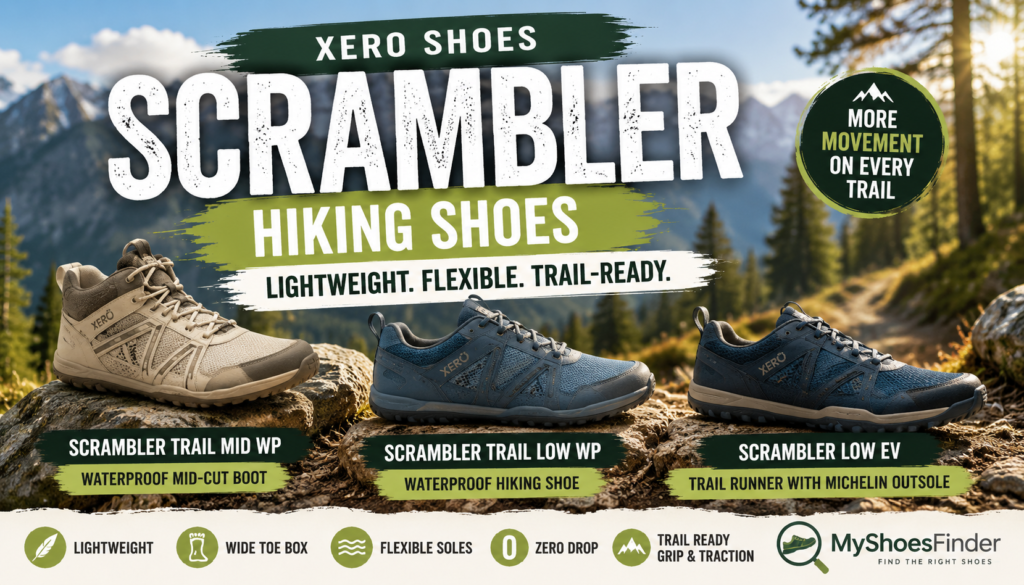
Xero Scrambler Hiking Shoes Guide: Lightweight Barefoot Hiking Styles for Summer Trails
Summer hiking does not always require a heavy boot. The Xero Scrambler line gives hikers lighter, more flexible, barefoot-inspired options for dry trails, wet weather, camping, outdoor travel, and days when you want ground feel without giving up traction.
My quick take
The Xero Scrambler hiking styles make the most sense if you want trail footwear that feels lighter and more natural than traditional hiking boots. I would not treat them as one identical product. Each model solves a different outdoor problem.
Scrambler Trail Mid WP is the boot-style option for more ankle coverage and wet-weather hiking. Scrambler Trail Low WP is the lighter waterproof hiking shoe for varied terrain. Scrambler Low EV is the trail-runner style pick when agility, ground feel, and fast movement matter more than waterproof protection.
For summer hiking, I would choose based on terrain first: wet trail, dry trail, rocky trail, camping trip, travel day, or fast outdoor movement.
Why lightweight barefoot hiking shoes are a strong summer fit
Most traditional hiking boots are built around structure, stiffness, and underfoot isolation. That can be useful on rough terrain, but it can also feel like overkill for summer hikes, national park trails, camping weekends, and outdoor travel.
The Scrambler line goes in a different direction. These shoes are built around a more flexible, lower-profile, foot-friendly feel. That means less bulk, more ground feedback, and a fit that makes sense for people already interested in barefoot shoes, zero-drop shoes, minimalist hiking shoes, or natural movement.
That does not mean everyone should jump straight into minimalist hiking. If you are new to this style, read my guide to transitioning to barefoot shoes before taking them on long or rocky hikes.
Xero Scrambler hiking styles compared
| Model | Best for | Why choose it |
|---|---|---|
| Scrambler Trail Mid WP | Wet trails, hiking boot feel, more coverage | The best pick if you want a waterproof mid-cut hiker without a heavy boot feel. |
| Scrambler Trail Low WP | Waterproof low-cut hiking | The best all-around waterproof hiking shoe for summer trails and varied terrain. |
| Scrambler Low EV | Dry trails, trail running, fast hiking, outdoor travel | The best choice if you want trail-runner agility, grip, flexibility, and a natural feel. |
1. Scrambler Trail Mid WP: the barefoot-inspired hiking boot
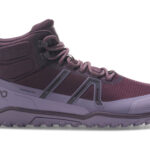
The Scrambler Trail Mid WP is the one I would choose if I wanted a hiking boot format without the heavy, stiff feel of a traditional boot. The mid-cut design gives more coverage around the ankle area, while the waterproof build makes it more useful for wet grass, muddy trails, rainy hikes, and unpredictable summer weather.
This is the most protective concept in the group. I would look at it for trail days where weather and terrain are uncertain, or when I want a boot-style upper but still care about flexibility and ground feel.
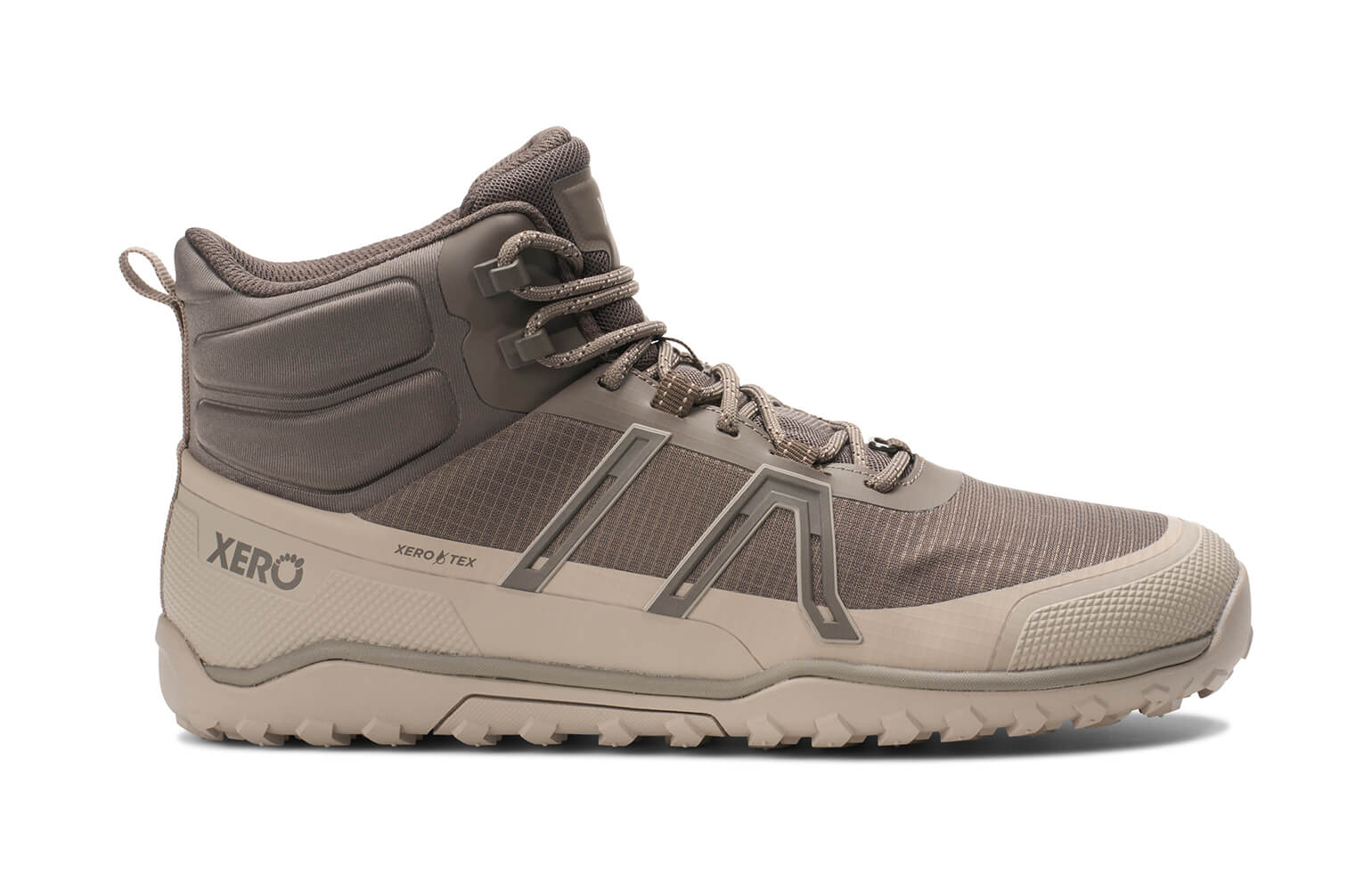
Best fit: hikers who want waterproof protection and boot-like coverage, but do not want the stiff feel of a traditional hiking boot.
2. Scrambler Trail Low WP: the best all-around waterproof hiking shoe
The Scrambler Trail Low WP is the model I would point most summer hikers to first. It keeps the waterproof hiking idea but uses a lower-cut shoe format, which can feel easier for warm weather, travel, and mixed trail days.
I would choose this for wet trails, creekside walking, national park paths, camping trips, and hikes where I want waterproof protection but do not need a full boot. It is also the easier recommendation for people who dislike the bulk of traditional hiking boots.
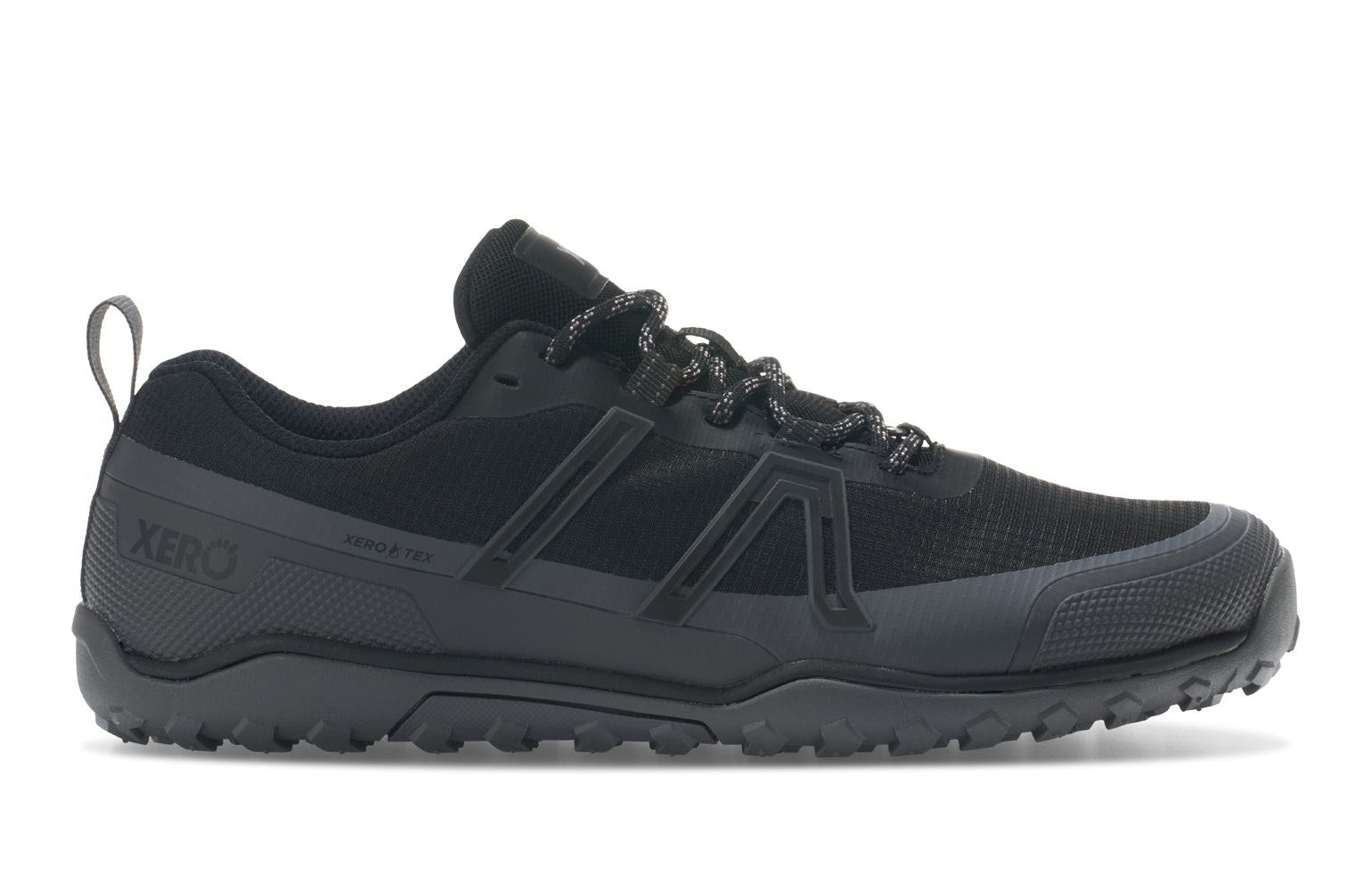
Best fit: hikers who want a waterproof barefoot-style hiking shoe for summer trails, light rain, wet ground, and mixed terrain.
3. Scrambler Low EV: the agile trail runner for fast outdoor movement
The Scrambler Low EV is different from the waterproof Trail WP models. I would think of it as the faster, lighter, more trail-runner-like option. It makes the most sense if I want grip, flexibility, and a more natural feel underfoot without choosing a waterproof hiking shoe.
This is the one I would consider for dry trails, trail running, fast hiking, outdoor travel, and everyday adventure use. The affiliate brief highlights the Michelin outsole angle, which is important because users searching for trail shoes care about traction almost as much as comfort.
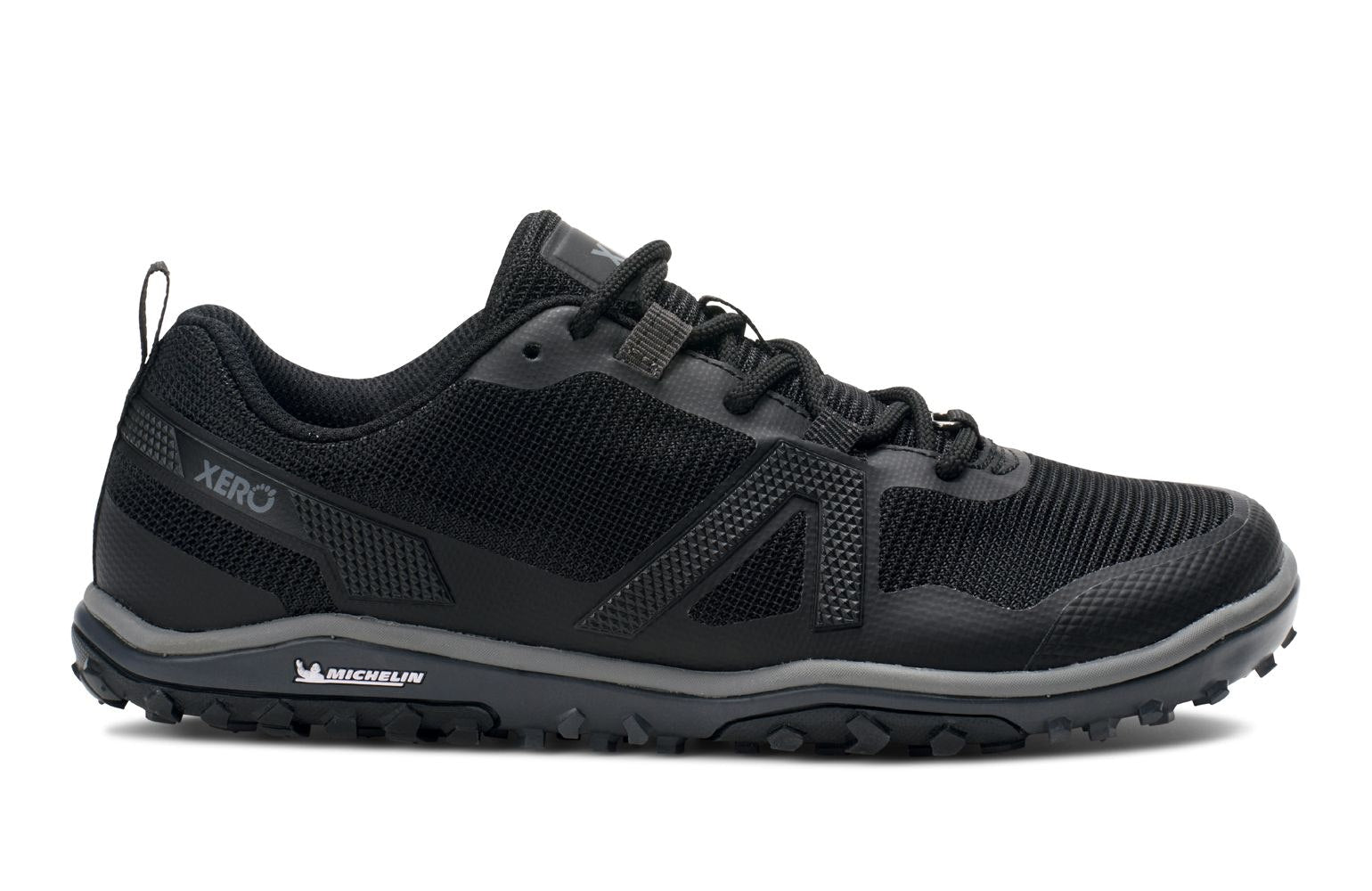
Best fit: hikers, trail runners, and travelers who want trail grip and barefoot-style flexibility more than waterproof protection.
Which Scrambler should I choose?
- Choose Scrambler Trail Mid WP if you want the most boot-like coverage and waterproof protection.
- Choose Scrambler Trail Low WP if you want the best all-around waterproof hiking shoe for summer trails.
- Choose Scrambler Low EV if you want a lighter trail-runner feel with strong grip and more agility.
Quick decision table
| Use case | Best Scrambler pick |
|---|---|
| Rainy trail days | Scrambler Trail Mid WP or Scrambler Trail Low WP |
| Warm-weather hiking | Scrambler Trail Low WP or Scrambler Low EV |
| Fast hiking and trail running | Scrambler Low EV |
| More coverage and boot feel | Scrambler Trail Mid WP |
| Outdoor travel and packing light | Scrambler Low EV or Scrambler Trail Low WP |
Barefoot hiking is different from regular hiking
The biggest difference is ground feel. A traditional hiking boot tries to separate you from the trail. A barefoot-inspired hiking shoe lets you feel more of the terrain, which can make movement feel more natural but also requires more attention from your feet and lower legs.
That is why I would not treat these as a simple swap for heavy boots if I was used to stiff support and thick cushioning. I would build up gradually, especially on rocky trails, long descents, and long mileage days.
Before choosing size, use my guide on how to measure for Xero Shoes. Fit matters even more on trails because downhill movement can push the toes forward.
Who should avoid these hiking shoes?
I would be careful with the Scrambler line if I needed thick cushioning, rigid ankle support, or maximum underfoot protection from sharp rocks. These are lighter, more flexible, barefoot-inspired outdoor shoes, not heavy backpacking boots.
I would also avoid jumping into long technical hikes immediately if I was new to zero-drop or minimalist footwear. Start with shorter trails, easier terrain, and moderate mileage first.
Where these fit in a summer gear guide
The Scrambler models work especially well in summer content because they sit between hiking shoes, trail runners, barefoot shoes, and outdoor travel footwear. That makes them useful for multiple buying scenarios:
- lightweight hiking footwear roundups
- zero-drop hiking shoe guides
- waterproof barefoot hiking shoe recommendations
- national park packing lists
- camping footwear guides
- hiking boot vs hiking shoe comparisons
- wet-weather hiking gear articles
My final verdict
The Xero Scrambler line is strongest for hikers who want less bulk, more flexibility, more ground feel, and a trail-ready outsole without moving into heavy hiking boot territory.
My first pick for most summer hikers would be the Scrambler Trail Low WP because it balances waterproof protection with a low-cut hiking shoe format. I would choose Scrambler Trail Mid WP for more coverage and wet-weather confidence, and Scrambler Low EV for faster dry-trail movement and travel.
If your summer hiking style is lighter, more natural, and less boot-heavy, the Scrambler lineup is one of the strongest Xero clusters to compare.
FAQ
Which Xero Scrambler is best for summer hiking?
For most summer hikers, I would start with Scrambler Trail Low WP. It gives waterproof protection in a lighter low-cut hiking shoe format. For faster dry trails, Scrambler Low EV may feel more agile.
Is Scrambler Trail Mid WP better than Scrambler Trail Low WP?
It depends on coverage. Scrambler Trail Mid WP is better if you want a more boot-like feel and extra coverage. Scrambler Trail Low WP is better if you want a lighter, lower hiking shoe.
Is Scrambler Low EV waterproof?
I would not choose Scrambler Low EV as the waterproof option. For wet trails and rainy hiking, I would look at Scrambler Trail Low WP or Scrambler Trail Mid WP instead.
Are Xero Scrambler shoes good for barefoot hiking?
Yes, they are built for hikers who want a lighter, more flexible, barefoot-inspired feel. They are best for people who already like natural movement or are willing to transition gradually.
Should beginners use barefoot hiking shoes?
Beginners can use them, but I would start slowly. Shorter hikes, easier terrain, and gradual mileage are smarter than immediately using barefoot-style hiking shoes for long rocky trails.

Natalie Harper is a versatile author and content creator at My Shoes Finder, where she explores a wide range of general topics that resonate with diverse audiences. With a passion for storytelling and a keen eye for detail, Natalie crafts engaging articles that provide valuable insights and inspire readers. Her commitment to quality and relatability makes her work a trusted resource for those seeking both information and inspiration in their daily lives.
See also:
 Xero Shoes Scrambler Low EV Review: The Lightweight Trail Shoe I’d Reach for Beyond the Hike
 Xero Daylite Hiker Vs. Scrambler Mid: Which Hiking Shoe Should You Buy?
 Waterproof Xero Shoes: Top Choices for Wet Conditions
 Xero Shoes Lightweight Hiking Boots Under 14 Oz: Which Models Fit The Trail Best?
 Scrambler Trail Mid WP – Waterproof Hiking Boot
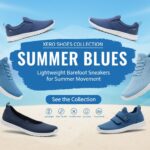 Xero Shoes Summer Blues Collection Review: Fresh Blue Barefoot Sneakers for Summer Movement


I truly appreciate your insights on the Xero Scrambler line and how it caters to different hiking needs. The emphasis on lightweight and flexible footwear is particularly relevant nowadays, as more and more outdoor enthusiasts seek a connection to nature that traditional bulky boots can sometimes hinder.
I’ve always been a bit of a boot snob, clinging to those hefty hiking boots like they were my childhood blanket. But here I am, on the edge of a revelation that lighter might actually mean brighter—both for my feet and my hiking spirits! The Xero Scrambler line seems like a game changer for summer trails, especially when you stumble upon that pesky rock you just knew was hiding there.
I’ve really enjoyed reading about the Xero Scrambler line; it’s refreshing to see a focus on lightweight options for hikers. I’ve always found that traditional hiking boots can feel a bit cumbersome, especially during summer hikes when the last thing you want is to feel weighed down.
You’ve made some really compelling points about the Xero Scrambler styles and their distinction from traditional hiking boots. I’ve personally found that the right footwear can truly transform the hiking experience, especially in the summer when trails can vary dramatically—from rocky paths to muddy sections.
I appreciate your thoughts on the Xero Scrambler styles. It’s interesting how footwear can genuinely impact how we connect with nature on our hikes. In the summer, when the trails shift from dry to muddy in the blink of an eye, having the right shoes can make all the difference. I’ve had my fair share of experiences where I ended up regretting my footwear choices halfway through a trek.
I’m really intrigued by the Xero Scrambler line! As someone who loves summer hiking, I totally resonate with the idea of lighter, more flexible footwear. There’s something so liberating about feeling the ground beneath you, especially on those warm, sun-drenched trails. I’ve always found that traditional hiking boots can feel cumbersome after a while, so it’s refreshing to see a focus on barefoot-inspired designs.
I love the idea of embracing lighter, barefoot-inspired shoes for summer hikes! It’s such a refreshing shift from the heavy boots that can weigh you down, especially on those long, sun-soaked trails. I recently tried the Scrambler Trail Low WP on a day hike, and it amazed me how much more connected I felt to the ground. The agile design definitely enhances your ability to maneuver over diverse terrain without sacrificing traction.
I love the idea of light and flexible footwear for summer hikes! It’s like the difference between wearing a pair of clunky snow boots in a sauna versus some comfy flip-flops. I’m especially intrigued by the Scrambler Low EV—sounds perfect for dodging tree roots while pretending I’m an Olympic trail runner (in my mind, at least).
The insights you’ve provided about the Xero Scrambler hiking shoes highlight an important evolution in trail footwear. As someone who prioritizes a minimalistic approach to hiking gear, I’ve always appreciated how lighter options can enhance the overall hiking experience, especially during the summer months. The emphasis on ground feel and flexibility resonates with my own encounters on diverse terrains.
I really appreciate your insights on the Xero Scrambler line! It’s refreshing to see a focus on lighter, more flexible options for hikers, especially during summer when we often want to feel connected to the ground beneath us. I’ve personally found that lugging around heavy boots can really take away from the experience of being out in nature, making it feel more like a chore than an adventure.
I really appreciate your insights on the Xero Scrambler line! It’s so true that summer hiking often transforms from the need for heavy boots to something much lighter and more flexible. I grabbed a pair of the Scrambler Trail Low WP for a weekend trip in the Rockies last summer, and I was pleasantly surprised by how much I could actually feel the terrain beneath me. That connection to the ground can really enhance the experience, especially when you’re navigating tricky paths or just trying to stay balanced on rocky outcrops.
I’d love to wade into the discussion about Xero Shoes and their Scrambler line! As someone who has spent a fair share of summer weekends clutching my water bottle and pretending I know which trail to follow, I can appreciate the allure of lightweight hiking options. Who doesn’t want to feel like they’re gliding over the terrain rather than trudging through it with heavy boots?
I appreciate your insightful breakdown of the Xero Scrambler line. As someone who has recently transitioned to minimalist footwear for both hiking and everyday activities, I’ve experienced firsthand the benefits of a lighter, more natural approach to footwear. The differentiation you highlighted between the models is particularly important; it acknowledges the varying needs of hikers depending on the terrain and weather conditions.
Your analysis of the Xero Scrambler hiking shoes highlights key distinctions among the models that many hikers, including myself, have come to appreciate. The focus on lighter and more natural footwear resonates with the growing trend of minimalist hiking gear that prioritizes agility and comfort. I recall my own experience with traditional hiking boots, which often felt cumbersome on longer trails, especially in warmer weather. Transitioning to a lighter shoe has not only enhanced my overall hiking experience but has also made me more aware of the trail conditions and the terrain underfoot.
Your insights on the Xero Scrambler line are quite enlightening, especially with regard to how each model caters to specific hiking needs. I find the whole concept of barefoot-inspired designs particularly fascinating; there’s something inherently intuitive about allowing our feet to interact more closely with the terrain.
The insights shared about the Xero Scrambler hiking shoes resonate with many outdoor enthusiasts seeking a shift towards more natural and flexible footwear options. As more hikers become aware of the benefits of adopting a minimalist approach to shoes, the Xero Scrambler line appears well-positioned to address the evolving preferences for lightweight and responsive gear.
The Xero Scrambler styles certainly highlight a shift in hiking footwear philosophy, emphasizing a lightweight and natural feel that resonates with many hikers today. Personally, I’ve found that moving away from traditional hiking boots has not only improved my comfort but also enhanced my connection to the trail.
What an insightful exploration of the Xero Scrambler hiking shoe line! It really highlights how important it is to choose the right footwear based on the type of hiking experience you’re gearing up for. I totally resonate with your point about preferring lighter options—especially during those summer hikes on varying terrains!
I’ve been curious about the shift towards more minimalist footwear for hiking! It’s interesting how lighter options like the Xero Scrambler line seem to really cater to those of us who value ground feel and flexibility over the traditional heavy boots. I’ve personally found that hiking in lighter shoes has improved my agility on the trails, especially when scrambling over rocks or navigating uneven terrain. I love the idea of the Scrambler Low EV for those quick trail runs when I want to stay nimble.