
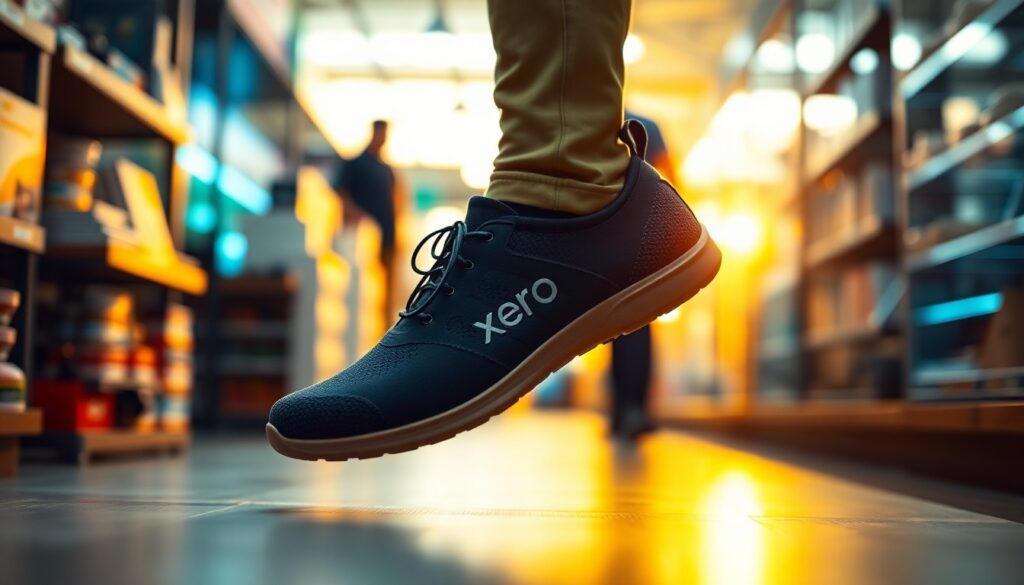
Retail shifts ask a lot from your feet: hard floors, constant pacing, quick pivots, and long stretches without a real break. Barefoot shoes can be a smart fit when you want more natural alignment, better ground feel, and less end-of-shift fatigue.
If you want the purchase-first version of this topic, start with the retail-worker shoe guide; this page focuses on why barefoot shoes work for standing, walking, and staying balanced through a shift.
Quick take
Choose barefoot shoes if your biggest retail-work issues are aching arches, stiff knees, cramped toes, or tired legs after long hours on your feet. Skip them, or transition slowly, if you need heavy cushioning, rely on rigid orthotics, or are managing a foot condition that responds better to structured support.
Why Barefoot Shoes Can Work For Retail Shifts
Retail work is a mix of standing, walking, bending, lifting, and changing direction fast. That combination is exactly why many workers notice more comfort in barefoot shoes: the shoes don’t fight the natural motion your feet need to do the job.
Traditional shoes often add heel elevation, thick midsoles, and narrow toe boxes. Over time, that can change how you load your feet and legs. Barefoot shoes take a different approach: they keep your heel and forefoot level, reduce unnecessary bulk, and let your toes spread more freely. That does not make them magic, but it does make them a useful option when your main goal is staying comfortable through a long retail shift.
What They Can Improve
Toe room, balance, ground feel, and a more natural walking pattern. Those changes can help reduce the “dragging” feeling many workers get at the end of a long shift.
What They Won’t Fix Alone
Poor scheduling, long static standing, or an underlying foot condition. Shoes help, but smart pacing and recovery habits still matter.
The Features That Matter Most On The Sales Floor
If you are shopping for retail use, the right barefoot shoe is less about hype and more about a few practical features. The best pairs support the exact motions retail workers repeat all day.
- Wide Toe Box helps with swelling, bunions, and forefoot pressure.
- Zero-Drop Platform keeps posture more neutral from the ground up.
- Flexible Upper And Sole allows easier movement during stocking, bending, and quick turns.
- Lightweight Build reduces the sense of dragging heavy shoes through a full shift.
- Reliable Traction matters on polished tile, smooth concrete, and backroom floors.
If your feet run wide, that detail matters even more. The right fit can make the difference between a shoe you tolerate and one you can wear all day, so it is worth comparing options with a broader fit profile, like the advice in this wide-feet guide.
For workers whose pain is already centered around the heel or arch, it also helps to compare barefoot models with condition-specific guidance such as our plantar fasciitis guide. Retail shifts can magnify the wrong fit quickly, so matching the shoe to the problem is more useful than chasing a general comfort label.
How To Decide If Barefoot Shoes Are The Right Retail Choice
The easiest way to choose is to ask what hurts most by the end of your shift. If the answer is your toes feel cramped, your arches feel tired, or your back gets stiffer after long standing, barefoot shoes may be a better match than thick cushioned trainers. If you want plush comfort above all else, a more padded work shoe may still be the safer starting point.
A good retail shoe decision usually comes down to three questions: can you stand in it without pinching, can you walk the floor without tripping on bulk, and can you finish a shift without feeling destabilized? Barefoot shoes score well when your answer is yes to natural movement and no to excess shoe weight.
A Practical Fit Test
- Try them later in the day when your feet are slightly swollen.
- Walk on a hard indoor surface, not carpet.
- Check whether toes can spread without rubbing the sides.
- Notice whether your heels feel secure without tightness.
- Wear them long enough to judge pressure points, not just the first minute.
If you need a broader all-day-standing comparison, the all-day comfort guide is the better next stop. It covers the tradeoffs between flexible shoes and more cushioned options in a way that is useful when your shift is long rather than sport-specific.
Getting Through Long Shifts Without Overdoing The Transition
The biggest mistake retail workers make is switching too fast. Barefoot shoes change how your feet load, so your calves, arches, and smaller foot muscles may need time to adapt. That is normal, and it is one reason why gradual use tends to work better than wearing a new pair for a full shift on day one.
A safer approach is to start with shorter wear periods, then increase time as your feet respond well. If possible, alternate with your old shoes for the first couple of weeks. You can also reduce strain by moving more often, avoiding locked knees, and using small recovery breaks to reset your posture.
Good Early Habits
Short wear windows, light foot exercises, and rotating pairs when needed.
Signs To Slow Down
Persistent calf tightness, arch pain that worsens, or soreness that lasts well after the shift.
For people who are also managing a transition period, microdosing barefoot shoes is a useful strategy. It gives your body time to adapt without turning work into a test of endurance.
And if you are transitioning later in life or after years in structured shoes, the pacing advice in our transition guide after 50 is worth a look. The principle is the same: adapt gradually, not aggressively.
A Few Models And Fit Cues Worth Comparing
The original article highlighted several Xero options, and that direction still makes sense for retail workers. What matters most is the relationship between fit, traction, and how much protection you want from the floor beneath you.
If your main issue is that most shoes feel too narrow, the detailed fit guidance in this wide-feet article will help you narrow the field faster. If your real concern is aching heels or arch strain, the plantar fasciitis guide is the better match.
If You Want The Retail-First Shopping Path
This page is meant to help you decide whether barefoot shoes suit the demands of retail work. If you already know you want a model-by-model buying path, move next to the retail-worker buying guide for a more direct shortlist.
If you are on the fence, use this rule: choose barefoot shoes for more freedom, better toe space, and a more natural stance; choose a more cushioned shoe if immediate softness is your top priority.
Frequently Asked Questions
Are barefoot shoes good for retail workers?
Yes, especially if you want a shoe that supports natural movement, toe spread, and better alignment during long standing shifts. They are most useful for workers who feel cramped, tired, or unstable in traditional shoes. The main tradeoff is that they are less plush, so they work best when you value flexibility and ground feel over thick cushioning.
Why do podiatrists warn some people about barefoot shoes?
The warning is usually about sudden transition, not the concept itself. If your feet, calves, or arches are not used to minimal support, switching too fast can create soreness or overload. People with certain foot conditions may also need more structure, so it is wise to check whether barefoot shoes fit your specific needs before changing your work footwear.
What is the best shoe for retail employees?
The best shoe depends on your feet and your shift. If you need room for swelling, a zero-drop design, and better balance on hard floors, a barefoot shoe can be a strong choice. If your job requires more padding or you already rely on rigid orthotics, a different work shoe may be better. The most useful option is the one that keeps you comfortable, stable, and able to finish your shift without extra pain.
Who should not wear barefoot shoes?
People who need firm orthotic structure, cannot tolerate a low-drop transition, or have a condition that requires more support should be careful. Barefoot shoes are not automatically right for everyone. If you are dealing with persistent pain, a podiatrist or physiotherapist can help you decide whether a gradual transition makes sense.

Ethan Marshall is a passionate writer and content creator at My Shoes Finder, where he explores a diverse range of topics, from lifestyle and fashion to innovative products and personal development. With a keen eye for detail and a commitment to delivering engaging and informative content, Ethan connects with readers by sharing insights that inspire and inform. He believes in the power of storytelling to influence positive change, and he continually seeks to provide valuable perspectives that resonate with his audience.
See also:
 Xero Shoes For Nurses: Best Picks For 12-Hour Shifts
 Barefoot Shoes For Retail Workers: When They Help, When They Don’t
 Xero Shoes For Office Workers: 2025 Style And Comfort Guide
 Are Xero Shoes Good For Standing All Day? Best Uses, Limits, And Comfort Tips
 Xero Shoes For Children In 2025: Fit, Safety, And Best Models
 Best Barefoot Shoes For Teachers: All-Day Comfort In The Classroom
I can really relate to the shift towards barefoot shoes in retail! After years of wearing traditional sneakers, I recently made the switch, and the difference has been remarkable. I used to get home after long shifts feeling like my feet were bruised, but now I feel so much lighter and more energized.
It’s interesting how much our footwear can affect our overall well-being. I was in a similar situation not too long ago, where I felt like my feet never got a break after long days on them. Switching to minimalist shoes really changed my outlook as well. I noticed my posture improved, and I felt more connected to the ground—like my feet were finally getting a chance to breathe.
It’s interesting how footwear can play such a crucial role in the never-ending hustle of retail! I remember when I first started out in a retail position, I thought the secret to success was just a good cup of coffee and a smile. Little did I know that my beloved loafers were more of a saboteur than a support system. After a few shifts, I found myself contemplating a career change—perhaps I’d become a professional chair tester instead!
You’ve hit on something that a lot of us overlook in the rush of retail life. You start out thinking a good cup of coffee and a friendly face is all you need, but then reality steps in, and you realize that your footwear choice can really reshape your entire work experience. Those stylish loafers may look sharp, but when you’re on your feet for hours, they can turn into your worst enemy.
You’ve really captured an important aspect of working in retail. It’s so easy to get caught up in aesthetics—wanting to look polished and professional—but the reality is that every shift can feel like a marathon if you’re not careful about your footwear. I remember starting out in a position where I thought a sleek pair of dress shoes would work wonders for my image, only to find myself counting down the hours until I could finally sit down.
You’re hitting on a point that often gets overlooked in retail discussions. The pressure to maintain a polished appearance is heavy, and many of us fall into the trap of prioritizing looks over comfort. It’s frustrating to put on those sleek dress shoes, thinking they’ll elevate your professional image, only to find yourself counting down the minutes until you can finally get off your feet.
You bring up such a valid point about the hidden factors that shape our experiences in retail. It’s easy to get lost in the idea that a good coffee and friendly service are enough, but at the end of a long shift, those stylish loafers can become a real burden. I’ve definitely had my share of choosing shoes that looked great but turned out to be less than forgiving after hours of standing and moving around.
Your insights into the benefits of barefoot shoes for retail workers resonate deeply with a growing awareness of the importance of proper footwear in physically demanding jobs. Retail workers, often facing the dual challenge of prolonged standing and hard surfaces, require shoes that not only provide comfort but also support natural movement.
I really appreciate your take on barefoot shoes for retail workers. It’s interesting to see how much footwear can impact our daily work experience. I used to think any shoe would do as long as it looked decent and was somewhat cushy, but after experiencing foot fatigue during long shifts, I learned the hard way how important proper support really is.
Your insights on the benefits of barefoot shoes for retail workers resonate with my experience. Having spent years in the retail environment, I can attest to the significant impact that footwear has on overall well-being. The idea that traditional shoes can restrict our natural movement seems underrated, especially when considering how our feet are designed to function.
It’s fascinating to see the shift towards barefoot shoes in retail environments. I remember my own experience when I switched to minimalist footwear—initially, I was skeptical, but it genuinely transformed my workdays. The way these shoes encourage natural foot movement not only helped with my posture but also made me more aware of how I engage with the ground beneath me. It almost feels like reconnecting with a more primal way of being!
Your experience really highlights something profound about minimalist footwear that often gets overlooked. It’s true that when you switch to barefoot shoes, it’s not just a change in what’s on your feet; it’s a shift in how you relate to your body and your environment. That initial skepticism is so common—many people don’t realize how disconnected we can become from the natural cues our bodies provide.
I can really relate to the struggle of finding the right footwear for those long retail shifts. I recently made the switch to barefoot shoes after hearing about their benefits, and it’s been a game changer for my daily comfort. It’s interesting how we’ve come to realize that traditional shoes, with all their cushioning, can actually hinder our natural movement.
I couldn’t agree more! It’s like we’ve been living in a shoe-dystopia for too long, crammed into stiff, heavy footwear that feels like a punishment for just existing. My first day in a pair of barefoot shoes was enlightening; I was convinced it was a marketing ploy until I felt the freedom of my toes actually curling.