
How to Measure for Xero Shoes: Find Your Best Size Before You Buy
When I measure for Xero Shoes, I do not just guess from my usual sneaker size. Barefoot shoes depend on toe room, foot width, length, and how the model is supposed to fit — so I want the measurement to be right before I order.
🦶 Toe room
👟 Xero sizing
✅ Better fit
My quick answer
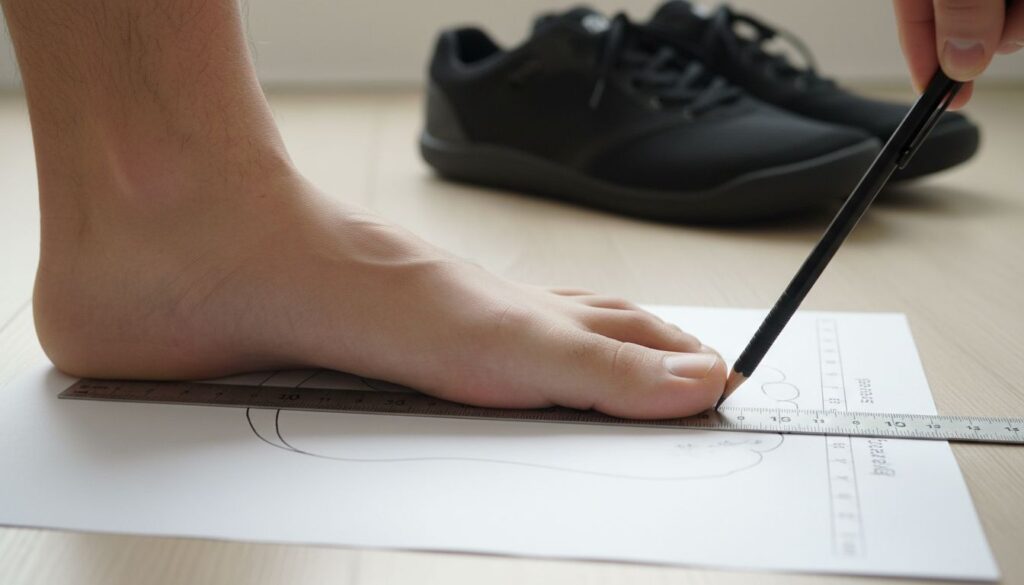
To measure for Xero Shoes, I would stand on paper with my heel against a wall, mark the longest toe, measure both feet from heel to toe, then compare the larger foot to the correct Xero size chart or printable template.
I would also measure width across the ball of the foot, because barefoot shoes are not only about length. The whole point is to leave enough space for natural toe splay without letting the foot slide around inside the shoe.
The biggest mistake is choosing based only on the size I wear in another brand. With Xero, model-specific fit notes matter.
Why measuring matters more with barefoot shoes
With conventional shoes, a lot of people get used to a fit that is too narrow or too short without realizing it. Barefoot shoes change that expectation. I want enough space for my toes to spread, enough length so the longest toe is not touching the front, and enough security through the midfoot so the shoe does not feel sloppy.
That is why I would not treat Xero sizing like a simple copy-and-paste from my regular athletic shoes. The fit goal is different. I am not trying to squeeze my foot into a narrow shape. I am trying to match the shoe to the natural shape of my foot.
If you are new to this kind of footwear, start with my guide to transitioning to barefoot shoes, because fit and comfort expectations can feel different at first.
What I need before measuring
| Tool | Why I use it |
|---|---|
| Blank paper | To mark heel-to-toe length clearly. |
| Wall or straight edge | To keep the heel position consistent. |
| Pencil or pen | To mark the longest toe and widest part of the foot. |
| Ruler or tape measure | To measure in inches or centimeters. |
| The socks I plan to wear | Because sock thickness can change the fit. |
Step-by-step: how I measure my feet for Xero Shoes
1. I measure at the end of the day
Feet can be slightly larger after standing, walking, or being active. Measuring later in the day gives me a more realistic fit for real use.
2. I place paper against a wall
I put a sheet of paper on a hard floor with one edge against the wall. Carpet can distort the measurement, so I avoid it.
3. I stand with my heel against the wall
I keep my weight on the foot I am measuring. This matters because the foot spreads under body weight.
4. I mark the longest toe
I mark straight down at the end of the longest toe. That may be the big toe, but for some people it is the second toe.
5. I measure both feet
I repeat the same process on the other foot and use the larger measurement when choosing size.
6. I compare with the model-specific Xero chart
I do not assume every Xero model fits exactly the same. Some product pages recommend usual size, while others may recommend sizing up or down.
How I check width and toe room
Length is only part of the fit. I also care about width because Xero Shoes are designed around a wider, foot-shaped toe box. That does not mean I want the shoe to feel loose everywhere. It means I want room in the front without losing security through the midfoot and heel.
To measure width, I mark or measure across the widest part of my forefoot, usually around the ball of the foot. Then I compare that with the way a model is described: roomy, regular, narrow-feeling, performance fit, slip-on, sandal, or trail shoe.
If toe room is your top priority, read my guide to Xero Shoes wide toe box features and my roundup of the widest Xero Shoes.
The mistakes I would avoid
- Measuring while sitting: the foot may not spread naturally.
- Only measuring one foot: many people have one foot slightly longer or wider.
- Ignoring socks: thicker socks can change the fit.
- Using another brand as the only reference: size numbers vary between brands.
- Forgetting model-specific notes: sandals, slip-ons, trail shoes, and casual sneakers can fit differently.
- Choosing too snug for barefoot shoes: toes need space to spread naturally.
How much space should I leave in front of my toes?
I do not want my longest toe pressing into the front of the shoe. For barefoot shoes, I usually want a small comfort window in front of the toes so the foot can move naturally while walking, especially downhill or during longer days on my feet.
At the same time, I do not want so much extra length that the shoe folds strangely, catches underfoot, or lets my foot slide forward. That is why I treat toe space as a balance: enough room to move, not so much that the shoe becomes unstable.
For general site-level help, you can also use the sizing instructions and fit instructions.
Model type matters: shoes, sandals, slip-ons, and trail models
The same measurement can lead to slightly different choices depending on the model. That is why I would not make one blanket rule for every Xero shoe.
- Running and walking shoes: I want secure midfoot hold with enough toe room for swelling and movement.
- Trail shoes: I want extra attention to downhill movement so toes do not hit the front.
- Slip-ons: I want enough security that the heel does not lift constantly.
- Sandals: I check foot length against the footbed and strap placement, not just shoe size.
- Casual sneakers: I may allow a little more comfort space if I plan to wear them all day.
Examples from Xero models I would size carefully
Some Xero models are more sensitive to fit than others because of how they are used.
Prio Coast
Because it is a slip-on, I would pay attention to heel hold and whether the shoe feels secure without laces.
Scrambler Low
For trail use, I would make sure there is enough front space so toes do not jam downhill.
Dillon Leather
For leather casual shoes, I care about toe width, break-in feel, and whether the shoe feels polished without being tight.
When I would size up or size down
I would only size up or down after checking the model’s specific sizing note. Xero’s official sizing information and individual product pages are important because some models may recommend a regular size while others may suggest a half-size adjustment.
- I might size up if I am between sizes, wearing thicker socks, using the shoe for long walking days, or need extra toe space.
- I might stay true to size if the model specifically says to order my usual size and my measurements line up clearly.
- I might size down only if the specific Xero model or official chart recommends it.
For the official brand reference, check Xero’s sizing page directly: Xero Shoes sizing information.
My final sizing checklist
- Measure both feet while standing.
- Use the larger foot as the size reference.
- Measure length from heel to longest toe.
- Check width across the ball of the foot.
- Measure with the socks I actually plan to wear.
- Compare to the official Xero chart or printable template.
- Read the product-specific size note before ordering.
- Leave enough toe room for natural movement.
- Do not choose a shoe that feels sloppy just because it has more space.
My final take
The best Xero size is not always the number I wear in another brand. It is the size that matches my measured foot length, gives my toes room to spread, and still feels secure for the way I plan to use the shoe.
That is why I measure first, compare second, and only then decide whether the model should be true-to-size, slightly larger, or slightly smaller.
If I want Xero Shoes to feel right, I need a fit that is roomy in the toe box, secure through the midfoot, and matched to the specific model — not just my usual size number.
FAQ
How do I measure my feet for Xero Shoes?
Stand on paper with your heel against a wall, mark the end of your longest toe, measure from the wall to the mark, and repeat for both feet. Use the larger foot when checking the size chart.
Should Xero Shoes fit true to size?
It depends on the model. Some Xero Shoes are listed as usual size, while others may have different recommendations. I would always check the model-specific sizing note before buying.
How much toe room do I need in Xero Shoes?
I want enough space for my toes to spread and move naturally, but not so much room that my foot slides forward or the shoe feels unstable.
Should I measure both feet?
Yes. Many people have one foot that is slightly longer or wider. I would measure both and choose based on the larger foot.
Do Xero Shoes work for wide feet?
Many Xero models are designed with a foot-shaped toe box, but fit still depends on your exact foot width and the specific model. Measuring width helps avoid choosing a shoe that feels too tight or too loose.

Oliver Prescott is a dedicated author and content creator at My Shoes Finder, where he explores a diverse range of topics focusing on lifestyle, fashion, and personal development. With a keen eye for detail and a passion for storytelling, he connects with readers by providing insightful and engaging content. Oliver’s writing aims to inspire and inform, making complex ideas accessible and relatable to a broad audience. When he’s not writing, he enjoys exploring new shoe trends and sharing his findings with fellow enthusiasts.
See also:
 How To Measure Xero Shoes For The Right Fit
 Xero Shoes 2025 Sizing Chart: Model-By-Model Fit Notes
 Xero Shoes For Children In 2025: Fit, Safety, And Best Models
 Xero Shoes For Bunions: What Helps, What Doesn’t, And Which Models Fit Best
 How To Measure Your Feet For Xero Shoes Size Fit
 Xero Shoes For Back Pain And Posture: What Helps, What Doesn’t, And How To Transition
You raise an excellent point about the importance of accurate measurements for barefoot shoes, particularly for ensuring proper fit and comfort. I’ve had my share of challenges with sizing when switching to minimalist footwear. When I first tried Xero Shoes, I was surprised at how much the fit differed from my usual sneaker size. Your tip about comparing both feet is crucial; I learned the hard way that my left foot is slightly larger, which made a big difference in comfort.
It’s interesting how the process of measuring for barefoot shoes like Xero often expands beyond standard sizing practices. I can relate to your emphasis on measuring both foot length and width. I hadn’t realized until I tried barefoot shoes how vital toe splay is for comfort and functionality. Since switching to minimalist footwear, I’ve noticed improvements not just in comfort but in my running form as well.
I totally resonate with your approach to measuring for Xero Shoes. It’s so true that barefoot shoes require a different mindset when it comes to sizing. I used to just grab my usual sneaker size without thinking much about it, but I quickly learned that it’s about way more than just that. I remember the frustration of trying on a pair of minimalist shoes that ended up being too tight around the toes, while way too loose at the heel, and I definitely felt that disconnect with the ground.
It’s great to hear your experience reflects this shift in mindset when it comes to choosing barefoot shoes. The difference in fit can really catch you off guard, especially if you’re used to traditional sneakers. The way most conventional shoes are structured—often constricting around the toes and loose at the back—can make it tricky to find that sweet spot with minimalist footwear.
Your approach to measuring for Xero Shoes resonates with my own experiences in finding the right fit for barefoot footwear. The emphasis on toe room and foot width is crucial; I’ve found that even slight variations in measurement can significantly impact comfort and functionality. For instance, I used to overlook the width aspect and ended up with shoes that felt too snug around the ball of my foot, which hindered the natural movement I was looking for in a barefoot shoe.
Your approach to measuring for Xero Shoes resonates with the fundamental principles of barefoot footwear—focusing on proper fit rather than just the usual sneaker size. It’s interesting to consider how so many people overlook the width of their feet when selecting footwear. In my experience, wide feet can easily feel constricted in shoes not designed for natural movement.
I appreciate your detailed approach to measuring for Xero Shoes. The emphasis on toe room and foot width in addition to length really highlights the unique requirements of barefoot footwear that many people overlook. It’s interesting how conventional sizing often leads us to rely on what we think we know from past experiences with other brands, yet that can be misleading in this case.
I appreciate the detailed approach you shared for measuring feet before buying Xero Shoes. It’s a game-changer to realize that relying solely on my usual sneaker size could lead to poor fit, especially since barefoot shoes prioritize natural foot movement. I remember the first time I tried barefoot shoes; I didn’t measure correctly and ended up with a pair that felt too snug. Ever since then, I’ve taken the time to measure not only the length but also the width, just as you suggested.
I can totally relate to the struggle of finding the right fit in barefoot shoes. When I first tried measuring for a pair of Xero Shoes, I felt like I was taking a mini science project! It’s surprising how much difference a little extra toe room and width can make, and I’ve learned the hard way that relying on my usual sneaker size is a recipe for discomfort.
I really appreciate the thoroughness of your measurements approach for Xero Shoes! It’s fascinating how often we might overlook the importance of proper fit when choosing footwear, especially with barefoot shoes that emphasize a more natural feel. Your method of standing on paper and marking the longest toe is such an effective way to ensure accuracy. I’ve made the mistake in the past of relying on my usual sneaker size, only to find that the fit was completely off!
It’s refreshing to see a sizing guide that goes beyond just a straightforward number! I love that you emphasize toe room and width—it’s like giving your toes a VIP pass to stretch and breathe. I had my own mishap once, trying to fit into shoes based purely on my usual size, only to find myself in a toe-squishing horror show. My poor pinky toes are still recovering!
It’s fascinating how the specifics of shoe sizing can significantly impact our comfort and overall foot health, especially with barefoot shoes like Xero. I used to think I could rely on my usual sneaker size until I realized how restrictive traditional shoes were. Measuring my feet accurately, as you outlined, made all the difference—especially paying attention to that toe room and foot width. It feels liberating to walk naturally!
I really appreciated your insights on measuring for Xero Shoes! It’s such a nuanced process compared to your regular sneakers, and I totally resonate with your approach. I used to rely on my usual shoe size too, thinking it was a one-size-fits-all deal, until I realized the importance of a proper fit for barefoot style shoes.