
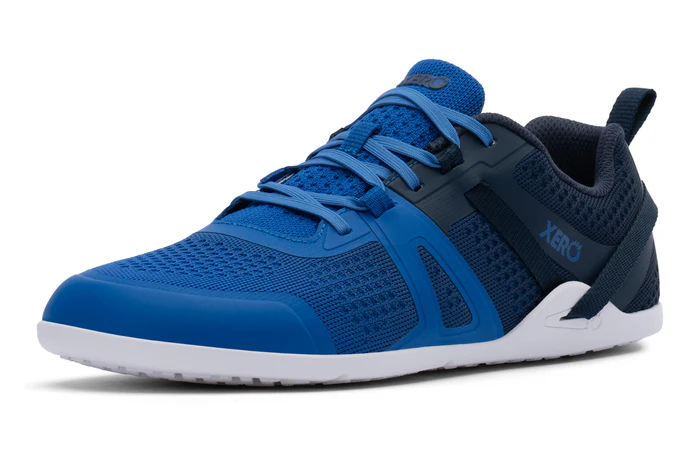
Prio Xero Shoes are a minimalist sneaker built for natural foot movement, everyday wear, and light training. If you want a barefoot-style shoe with a roomy toe box, flexible sole, and a more grounded feel, Prio is one of the most recognizable Xero models to start with.
At A Glance Prio works best for people who want a versatile barefoot sneaker for walking, gym sessions, short runs, errands, and all-day casual use. It is less about plush cushioning and more about ground feel, toe splay, and a secure, low-profile fit.
If you are still comparing Xero models, it helps to look at the broader barefoot-shoe coverage alongside focused guides like the Dillon review, since Dillon and Prio solve similar everyday-shoe problems in different ways.
Is Prio Xero Shoes Worth Buying?
For the right buyer, yes. Prio is a strong pick if you want a shoe that feels light, flexible, and natural without looking like a pure performance runner or a trail-first shoe. It is especially appealing if you want one pair that can handle the gym, daily walking, travel, and casual wear without fighting your foot shape.
The biggest reason people choose Prio is the balance it strikes: it keeps the barefoot profile Xero fans want while still feeling practical enough for daily use. The tradeoff is that it will not feel like a cushioned sneaker, so buyers looking for soft underfoot padding or a classic athletic ride should probably look elsewhere.
If your main question is whether Prio is better than another Xero everyday shoe, the answer often comes down to fit and feel. Prio tends to suit buyers who want a classic minimalist sneaker profile with enough versatility for training and errands, while other Xero models may lean more toward canvas styling, women-specific fits, or more specialized uses such as insoles, travel, or running-sandal setups.
What Makes Prio Different From Other Xero Models?
Prio’s main job is to be the dependable all-rounder in the lineup. It is not trying to be the most specialized running shoe, the most casual canvas sneaker, or the widest shoe in the catalog. Instead, it focuses on the middle ground: a flexible, stable-feeling barefoot shoe that can move from a workout to a coffee run without feeling out of place.
That distinction matters because a lot of Xero articles overlap at the edges. If you are shopping by use case, it is worth narrowing your search. For example, readers comparing foot-room and width often find it useful to check the widest Xero options, while readers focused on fit mechanics should review Xero fit guidance before choosing a size.
Compared with a more fashion-leaning casual pair, Prio usually feels more secure and performance-minded. Compared with a very specific training or trail model, it is easier to live with every day. That versatility is the reason it has remained one of the more prominent Prio searches and why it is often treated as the default starting point for people new to minimalist footwear.
Fit, Comfort, And Performance In Real Use
The first thing most buyers notice is the shape. Prio gives the toes room to spread, which can make standing, lifting, and walking feel more stable than a conventional narrow sneaker. The sensation is less about padding and more about freedom, with the shoe staying out of the way so the foot can do its job.
That low-profile feel can be a positive or a negative depending on your expectations. If you like ground contact and want to feel more connected to the surface beneath you, Prio is appealing. If you want foam underfoot and a soft landing, the barefoot design will probably feel firm at first. The benefit of that firmer feel is that it can encourage a more natural gait and a more deliberate stride during everyday movement.
For light training, the shoe’s stability is one of its strengths. Users often prefer a stable, flexible shoe for lifting, functional fitness, and indoor sessions because it does not create a wobbly platform. For walking, the breathability and light feel help the shoe disappear on the foot. For short runs, it can work well for buyers already adapted to minimalist footwear, though first-time barefoot-shoe users should ease in gradually.
Toe Box, Outsole Feel, And Day-To-Day Comfort
The toe box is one of the main reasons people buy Prio. When the front of a shoe allows the toes to sit naturally, the whole wearing experience changes: balance feels easier, pressure points are reduced, and the shoe is less likely to pinch over a long day. That is especially useful for people whose feet swell slightly through the day or who dislike the cramped feel of standard athletic shoes.
The outsole feel is also worth mentioning. Prio is built to stay flexible, so it bends with the foot rather than fighting it. That flexibility is central to the barefoot concept, but it also means the shoe is not designed to cushion every impact. Instead, it rewards more controlled movement and a body that is ready to adapt. For experienced minimalist users, that is a feature. For beginners, it may take a short adjustment period.
Best Fit Signal choose Prio if you want a shoe that can handle everyday movement without losing the barefoot feel. Skip it if you know you need strong cushioning, a narrow athletic silhouette, or a shoe that hides the sensation of the ground.
For shoppers comparing comfort-first Xero styles, the insole guide is useful if you want to adjust underfoot feel without abandoning a minimalist platform.
Who Should Buy Prio, And Who Should Pass?
Prio is a good match for people who already know they prefer minimalist footwear or who are willing to transition into it carefully. It also suits buyers who want one shoe for a lot of mixed use: walking to work, light training, quick errands, gym sessions, travel days, and casual weekends. If that sounds like your routine, the model has a strong case.
It is less ideal for someone who wants immediate plush comfort, especially if they are coming from thick running shoes or heavily structured sneakers. It is also not the best choice for buyers who want a specialized sport-specific shoe and do not care about versatility. In other words, Prio is a better purchase when your goal is a durable, everyday barefoot sneaker rather than a single-purpose performance tool.
If you are shopping by body shape or fit sensitivity, it can be smart to compare Prio against narrower or broader alternatives in the Xero range. Readers with broader forefeet may want to consult the women’s comfort guide or the wide toe-box explainer before deciding.
Sizing And Buying Tips Before You Order
Sizing matters more with minimalist shoes than it does with many conventional sneakers. Because Prio is designed to let the toes spread naturally, a pair that feels slightly too tight can defeat much of the point. The safest approach is to measure your feet accurately, compare against the brand’s sizing guidance, and think about the socks you will actually wear.
If you are between sizes, foot shape and intended use should guide you. People using the shoe for all-day walking may prefer a little extra front-room, while those using it for gym work may want a more locked-in feel. For a more systematic approach, the measuring guide and sizing guide are worth checking before buying.
A sensible first-time approach is to order when you have enough time to try the shoe indoors, walk in it, and decide whether the fit matches your expectations. If you are comparing pricing or shopping timing, start with the product page and then verify whether a better deal or return window makes sense for your purchase stage.
Ready To Check The Current Price?
If you have already decided that you want a versatile minimalist sneaker, the next step is to confirm today’s availability, colorways, and size options on the product page.
Common Questions About Prio Xero Shoes
Are Xero Prio Shoes Good?
Yes, especially if you want a flexible barefoot sneaker with a roomy toe box and a practical, everyday shape. They are less about soft cushioning and more about movement, stability, and natural feel.
What Is The Difference Between Prio And Prio Neo Xero Shoes?
The difference usually comes down to material feel, styling, and how each version presents the classic Prio idea. Shoppers comparing them should focus on upper construction, visual preference, and whether they want the most straightforward training-and-everyday version or a more style-forward update.
Why Are Xero Shoes So Expensive?
A lot of the price discussion comes down to design niche, material choices, and the specialized fit people expect from minimalist footwear. Buyers paying for Prio are usually paying for a focused barefoot-shoe experience rather than the kind of mass-market cushioning found in mainstream sneakers.
What Are The Disadvantages Of Xero?
The main drawbacks are the same ones that appeal to fans: less cushioning, a very different underfoot feel, and a transition period if you are new to barefoot shoes. That is not a dealbreaker for everyone, but it does make fit and expectations especially important.

Oliver Prescott is a dedicated author and content creator at My Shoes Finder, where he explores a diverse range of topics focusing on lifestyle, fashion, and personal development. With a keen eye for detail and a passion for storytelling, he connects with readers by providing insightful and engaging content. Oliver’s writing aims to inspire and inform, making complex ideas accessible and relatable to a broad audience. When he’s not writing, he enjoys exploring new shoe trends and sharing his findings with fellow enthusiasts.
See also:
 Xero Shoes For Children In 2025: Fit, Safety, And Best Models
 Xero Shoes For Bunions: What Helps, What Doesn’t, And Which Models Fit Best
 Xero Shoes Sandals Review: Fit, Feel, And Best Uses
 Xero Shoes Sale Guide: Where To Find The Best Discounts
 How To Measure Your Feet For Xero Shoes Size Fit
 Best Xero Shoes: Top Models By Use Case, Fit, And Comfort
I appreciate your insights on Prio Xero shoes and their contribution to promoting natural foot movement. It’s fascinating to see how our understanding of footwear has evolved, especially as we recognize the importance of honoring our body’s biomechanics. Personally, I ventured into the realm of minimalist footwear a couple of years ago after experiencing chronic foot discomfort, and the shift to barefoot styles was transformative for me.
I really appreciate your insights on Prio Xero shoes! I’ve been transitioning to minimalist footwear myself, and it’s been such a game changer for my foot health. I used to have constant aches after long days on my feet, but switching to barefoot-style shoes has helped me feel more grounded and connected to my movement.
It’s great to hear that your transition to minimalist footwear has been such a positive experience. Finding that connection to movement can really shift how we approach daily activities. I often hear from others who have shared similar journeys; they find that not only do their feet feel better, but their overall alignment and posture can improve as well.
I really resonate with your insights on Prio Xero shoes and the overall philosophy of minimalist footwear. The emphasis on natural foot movement strikes a chord with me, as I’ve personally experienced the transformative effect of transitioning to more barefoot-style shoes over the years. It’s fascinating how something as simple as our choice of footwear can significantly impact our health and well-being.
I completely agree with you about the transformative power of minimalist footwear. It’s interesting how our modern lives often push us toward shoes that could restrict our natural foot mechanics, yet reverting to a more barefoot-style approach can feel so liberating. I remember my own transition to minimalist shoes; it took some time for my feet to adjust, but the improvements in my posture and the way I perceive ground contact were remarkable.
I find your discussion on Prio Xero shoes to be incredibly enlightening, particularly the way you emphasize their role in reconnecting us with the natural functionality of our feet. It’s interesting to consider how much our modern lifestyles have altered our relationship with our bodies, especially our feet, which have evolved uniquely for movement across various terrains.
Reading your insights about Prio Xero Shoes struck a chord with me, as I have recently been on a personal journey to rethink my footwear choices and how they impact my overall health. The emphasis you placed on mimicking the barefoot experience resonates deeply, especially in a world where our lifestyles often hinder our natural movements.
It’s intriguing to see the rise of minimalist footwear like Prio Xero shoes, especially given the growing awareness around foot health and biomechanics. I’ve personally moved towards more minimalist options over the last few years, and I’ve noticed a significant improvement not just in foot comfort but also in my overall posture. However, I’m curious about the balance between minimalism and support. While the concept of mimicking barefoot conditions is compelling, for those with specific foot issues, do you think there’s a risk of exacerbating problems rather than alleviating them? It would be interesting to hear experiences from others who have transitioned to minimalist shoes and how they’ve navigated any initial discomfort or adaptation period.
It’s fascinating to see how the conversation around minimalist footwear is evolving, particularly with the introduction of Prio Xero shoes. I’ve personally transitioned to minimalist shoes over the past year, and the difference has been remarkable—not just in comfort, but in how I engage with different terrains.
I appreciate your detailed overview of Prio Xero shoes and their impact on the footwear industry. It’s fascinating to consider how a brand can not only introduce a product but also contribute to a broader movement toward health and well-being through better footwear choices. I’ve personally experienced the transition from traditional shoes to minimalist footwear, and it has been quite a journey. In the beginning, I was skeptical about wearing shoes that are so different from conventional designs. However, once I committed to embracing a more natural approach, I quickly noticed how much my feet appreciated the freedom of movement.
I really appreciate how you’ve laid out the philosophy behind Prio Xero shoes. It’s interesting to think about how far minimalist footwear has come, especially considering how many of us have spent years wearing excessively cushioned, structured shoes that often work against our natural biomechanics. I remember a few years back when I first tried a pair of minimalist shoes, and it was such a revelation. At first, it felt odd not having all that padding, but over time, I found my feet growing stronger and healthier. It’s almost like my feet were being liberated!
I really appreciate your insights on Prio Xero Shoes and the emphasis on natural foot movement. It’s refreshing to see a shoe brand that respects the biomechanics of our bodies and encourages a more authentic approach to walking and running. I’ve been experimenting with minimalist footwear for a while now, and I can definitely feel the difference in how my feet engage with the ground and how my posture has improved.
The concept of minimalism in footwear, particularly with Prio Xero shoes, really resonates with the growing trend toward natural movement and wellness. I appreciate that these shoes are designed to align with our body’s biomechanics, promoting a healthier way to move through our daily lives.
You’ve touched on a really important aspect of footwear that often goes overlooked. The shift toward natural movement isn’t just a trend—it’s a response to years of being told what our feet should look like and how they should move. With shoes like the Prio Xero, we’re getting back to what our bodies originally needed: freedom and flexibility.
I appreciate the emphasis on how Prio Xero shoes reflect a deeper understanding of foot biomechanics. It’s fascinating how our footwear choices can significantly impact our overall health, particularly given how many people spend most of their day in conventional shoes that constrain natural movement. I’ve personally found that transitioning to minimalist footwear has not only improved my foot strength but also changed my posture and overall comfort during daily activities.
Your exploration of Prio Xero shoes raises some interesting points about the intersection of footwear design and human biomechanics. As someone who has spent years navigating various terrains in traditional footwear, I can’t overstate how liberating it feels to transition into minimalist shoes. It’s fascinating how our modern lifestyles have distanced us from what our feet were naturally designed to do. When I first slipped into a pair of minimalist shoes, it was an eye-opener—not just in terms of comfort, but also in the way it prompted me to reassess my entire approach to movement.
I appreciate the emphasis on the natural function of our feet and how Prio Xero shoes embody that philosophy. It’s fascinating how minimalist footwear can lead to a deeper connection with our body mechanics, something many people overlook in their daily lives.
I really appreciate your thoughts on Prio Xero shoes and the whole minimalist footwear movement. It’s fascinating how our understanding of foot health has evolved over the years. I remember when I first switched to barefoot shoes; it felt a bit daunting at first, almost like learning to walk again. But that experience of connecting with the ground beneath my feet was something else. It’s a reminder of just how much our footwear can impact our overall health and movement.
I really appreciate how you highlighted the versatility of the Prio Xero Shoes—it’s so important to find footwear that balances comfort and functionality, especially in our increasingly active lives. I’ve been gravitating towards minimalist footwear myself, and I love how a shoe like the Prio encourages natural movement. It really makes a difference when we’re spending long hours on our feet, whether running errands or hitting the gym.
I appreciate how you highlighted the versatility of the Prio Xero Shoes. I’ve transitioned to more minimalist footwear over the past year, and I’ve noticed significant changes in my posture and overall comfort during daily activities. The roomy toe box and ground feel definitely resonate with my experience, especially when walking for long periods or during light workouts.