
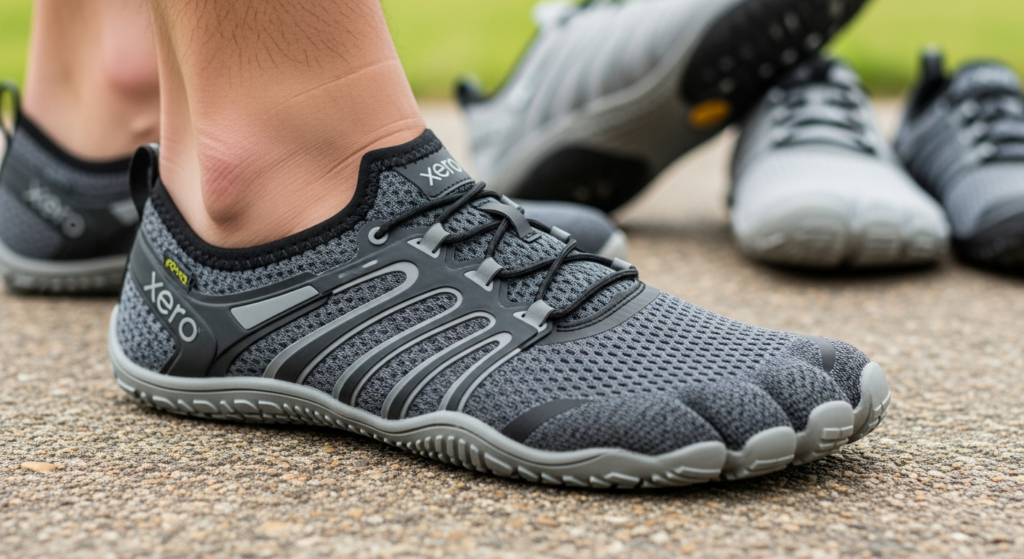
Xero Shoes can help support more natural foot movement, a wider toe splay, and a lighter feel underfoot. For many people, those changes make them a better everyday option than heavily cushioned shoes.
What Xero Shoes Are Best At
They’re strongest for people who want a barefoot-style shoe that lets the foot move more naturally, especially for walking, light training, travel, and everyday wear.
- People who want a zero-drop feel
- Wearers who prefer a roomier toe box
- Walkers and casual runners easing into barefoot footwear
If you’re comparing models and fit details, start with the broader Xero Shoes styles and benefits guide, then narrow down to the pair that matches your foot shape and use case.
| Decision point | What to look for in Xero Shoes | Why it matters |
|---|---|---|
| Foot shape | Wide toe box and natural forefoot room | Helps toes spread instead of being squeezed together |
| Stride feel | Zero-drop platform and low stack height | Supports a more natural walking or running pattern |
| Comfort window | Gradual wear-in period | Reduces the shock of switching from cushioned shoes |
| Return and sizing | Check sizing guidance and return policy before purchase | Barefoot shoes are fit-sensitive, so the first choice matters |
Why The Design Feels Different
The main benefit of Xero Shoes is not extra padding or arch structure. It is the combination of a minimalist build, a zero-drop platform, and a foot-shaped fit that lets your foot do more of the work itself. That design can feel more natural if you are used to shoes that guide the heel, compress the toes, or add a lot of cushion between you and the ground.
In practical terms, that means better ground feel, a lighter step, and more room for toe splay. For some wearers, those changes improve balance and make walking feel less restrictive. For others, especially anyone coming from traditional athletic shoes, the adjustment takes time.
- Lightweight Construction reduces bulk and makes the shoe easier to wear for long periods.
- Wide Toe Box gives toes space to spread naturally for a more stable base.
- Zero-Drop Sole keeps the heel and forefoot level to support a natural stance.
- Flexible Materials allow the shoe to bend and move with the foot instead of against it.
Who Tends To Benefit Most
Xero Shoes are a strong match for people who want a more natural footwear experience and are willing to transition gradually. They are often popular with walkers, travelers, minimalist-shoe beginners, and people who prefer shoes that feel less structured.
They can also appeal to people who feel cramped in conventional footwear, especially if they notice toe crowding or dislike a raised heel. For a broader comparison across everyday barefoot options, see barefoot walking shoes and compare how different styles handle comfort, flexibility, and daily wear.
Transition Tip
If you are new to barefoot footwear, start with short wear periods and easier surfaces before using them for long walks or workouts. That gradual approach is one of the best ways to reduce soreness during the adjustment window.
Benefits, Trade-Offs, And What To Expect
The benefits of Xero Shoes are easiest to understand when you pair them with the trade-offs. They can improve movement freedom and help you feel more connected to the ground, but they usually do not feel as plush or supportive as standard cushioned shoes. That is the point for many fans, but it is also why the right use case matters.
| Potential upside | What it may feel like | Main caution |
|---|---|---|
| Natural movement | Less interference from the shoe | May require a short adaptation period |
| Toe room | Less pinching across the forefoot | Sizing matters more than with bulky shoes |
| Ground feedback | You feel surface changes more clearly | Not ideal if you want max cushioning |
| Versatility | Works for walking, casual use, and some training | Choose the right model for the activity |
If your priority is comfort-first everyday wear, it may help to compare Xero’s broader lineup against other models before buying. The most useful next step is usually a style-level comparison, not another general benefit article. A good place to continue is Xero Shoes’ unique benefits and features, especially if you want a closer look at how one model differs from another.
Buying Considerations Before You Commit
Because barefoot shoes rely on fit and feel more than cushioning, the buy decision should be practical. Focus on toe room, heel lockdown, and whether the model suits the surfaces you actually walk on. If you are still refining the right size, use a size-specific reference such as finding your ideal comfort level or the Xero Shoes size guide before you place an order.
- Check The Return Policy helpful if you are between sizes or new to minimalist footwear.
- Measure Both Feet many fit problems come from assuming both feet are identical.
- Think About Socks thicker socks can change the fit significantly.
- Match The Model To The Task walking, travel, and trail use may each call for a different pair.
Best Next Step
If you already know you want a minimalist, foot-shaped shoe, move from general benefits to model selection. The most helpful next read is the best Xero Shoes buying guide, which is more useful once you are deciding what to buy.
If you are comparing this page against other Xero articles, the broader style-and-benefits hub should take priority, while this article works best as a support piece that explains the foot-health value and the trade-offs in plain language.
Common Questions About Xero Shoes
Are There Actual Benefits To Barefoot Shoes?
Yes, especially for people who want more toe room, less heel-to-toe drop, and a shoe that allows more natural foot motion. The trade-off is that the adjustment period can be uncomfortable if you switch too quickly.
Why Do Some Podiatrists Not Recommend Barefoot Shoes?
They can be a poor match for certain foot conditions, limited calf mobility, or people who need more support during recovery. Barefoot shoes are not one-size-fits-all, so the right answer depends on your feet and how you plan to use them.
What Do Xero Shoes Feel Like At First?
They often feel lighter, flatter, and less cushioned than standard shoes. Many new wearers need a short adaptation window before they feel comfortable for all-day use.
For readers who want to stay with the wider Xero ecosystem after understanding the benefits, the most relevant path is to compare fit, model type, and intended use before buying. That keeps the decision grounded in how the shoe will actually feel on your feet, not just in the brand promise.

Jessica Linford is an insightful author for My Shoes Finder, where she explores a wide array of general topics that resonate with everyday readers. With a passion for storytelling and a keen eye for detail, she brings a unique perspective to her writing, aiming to inform and inspire through her engaging content. Jessica’s diverse interests drive her curiosity, allowing her to connect with audiences on various subjects while sharing practical tips and relatable anecdotes.
See also:
 Xero Shoes For Children In 2025: Fit, Safety, And Best Models
 Xero Shoes For Bunions: What Helps, What Doesn’t, And Which Models Fit Best
 Xero Shoes Sandals Review: Fit, Feel, And Best Uses
 Widest Xero Shoes for Wide Feet: Models & Fit Guide
 Xero Shoes Sale Guide: Where To Find The Best Discounts
 How To Measure Your Feet For Xero Shoes Size Fit
I completely resonate with your perspective on barefoot shoes and their impact on foot health. Since I switched to barefoot footwear, I’ve noticed not only improved comfort during my workouts, but also a significant reduction in foot and ankle issues that plagued me for years. The freedom of movement they provide really allows the body to function as it’s meant to.
It’s really cool to hear about your experience with barefoot shoes. I think that’s the thing most people don’t realize—they often underestimate how much our footwear affects everything from comfort to overall movement. When you ditch the bulk and go for something more natural, it feels like the difference between being tied down and having the freedom to roam.
I resonate deeply with your insights on the importance of barefoot shoes for foot health. The concept of allowing our feet to function as they are naturally designed is something that often gets overlooked in a world where conventional footwear tends to prioritize aesthetic over function. It brings to mind the evolution of our footwear choices and how society’s shift in priorities could drastically alter our foot health and overall wellness.
You’ve touched on a really significant point about footwear design and its impact on our health. It’s fascinating to think about how our shoes have evolved over time. In many ways, they’ve transformed from being simple protective gear into complex fashion statements that don’t always serve our feet well. This shift has led us to prioritize style over the basic function of allowing our feet to move naturally.
I really appreciate your take on barefoot shoes and their impact on foot health. I’ve been trying to transition to more minimalist footwear myself, and I’ve noticed a significant difference in my comfort levels during runs. It’s fascinating how something as simple as shoe design can really influence our body’s mechanics. I often find that focusing on natural movement helps not just my feet but also my overall posture.
It’s really interesting to hear about your experience transitioning to minimalist footwear. I can relate to that shift—it took me a while to adjust, but once I did, I noticed some significant changes, especially in how I carried myself overall. It seems like there’s so much to explore in natural movement and its benefits beyond just our feet.
I completely resonate with your insights on the importance of barefoot shoes for foot health. Transitioning to a more natural footwear option has made a notable difference for me—especially in terms of comfort during my daily runs. I used to experience persistent soreness in my arches, but since I started wearing barefoot shoes, that discomfort has significantly diminished.
It’s great to hear that transitioning to barefoot shoes has made such a positive impact on your running experience. I can relate to that sense of comfort; my own journey into minimalist footwear also felt like a game changer for me. At first, I was skeptical about how much of a difference it could really make, but I’ve found that they allow for a more natural movement. It’s interesting how modern footwear often prioritizes cushioning over the more intuitive feel of the ground beneath us.
Your exploration of barefoot shoes and their impact on foot health resonates deeply with me, especially as someone who has transitioned to minimal footwear over the past year. The commitment to promoting natural foot mechanics is not just about comfort; it’s also about redefining how we perceive our interactions with the ground beneath us.
Your insights on barefoot shoes are refreshing and resonate with my own experiences. I’ve noticed significant improvements in my foot health since switching to a more minimalist style. It’s fascinating how something as simple as footwear can influence not just comfort, but also how we move and the strain on our bodies.
I completely agree with your take on barefoot shoes! Since switching to them a couple of years ago, I’ve noticed a significant drop in foot pain, especially after long runs. It’s fascinating how much a shoe can impact how we move and feel. I love the way barefoot shoes encourage a more natural stride; it feels liberating compared to the heavy cushioning of traditional trainers.
It’s fascinating to see the increasing recognition of barefoot footwear and its role in promoting foot health. I’ve personally switched to barefoot shoes over the past year, and I can definitely attest to the difference they make in overall comfort and foot strength. Initially, I was a bit skeptical about giving up the cushioned soles of traditional shoes, but once I adapted, I noticed a remarkable improvement in my posture and balance, especially during my runs.
It’s refreshing to see a focus on the benefits of barefoot footwear and its positive impact on foot health! I completely agree that the design of barefoot shoes encourages a more natural gait, which can ultimately prevent injuries. As someone who transitioned to barefoot shoes a couple of years ago, I’ve noticed a significant improvement in my comfort levels during both workouts and everyday activities.
It’s great to hear about your experience with barefoot shoes! It’s interesting how the shift to a more natural gait can really change how we feel during our daily activities. I’ve noticed that many people who make the switch often discover new strength in their feet and lower legs—something that our modern footwear can unintentionally neglect. Have you found any specific activities where you really notice the difference? Like certain workouts or even just going for a walk? It’s always enlightening to hear how different people adapt to the change.
I appreciate your insights on the benefits of barefoot shoes and their role in promoting natural foot mechanics. As someone who switched to barefoot footwear a few years ago, I’ve experienced firsthand how they encourage a more natural stride and improve overall foot strength. It’s fascinating to think about how traditional footwear can sometimes inhibit our natural movement patterns.
I completely agree that barefoot shoes can play a significant role in enhancing foot health. After switching to minimalist footwear a few years ago, I’ve noticed improved stability and less fatigue during my runs. Initially, it felt strange, but with time, my feet adapted, and I began to appreciate the freedom of movement they provide.
It’s great to hear how switching to minimalist footwear has positively impacted your running experience. The sensation of adapting to barefoot shoes can definitely feel unusual at first. Many people report a similar journey where their feet gradually gain strength and flexibility.
I find the emphasis on barefoot shoes quite compelling, especially in a world where many people prioritize aesthetics over foot health. It resonates with my personal experience; transitioning to a minimalist shoe has drastically improved my comfort during long runs. However, I wonder how sustainable these footwear options really are. While promoting natural foot mechanics is crucial, we also need to consider the environmental impact of producing such specialized footwear. Additionally, there’s the question of accessibility—are barefoot shoes truly a viable option for everyone, or do they come with an implicit privilege? How can we make this healthier choice available to a broader audience while maintaining a focus on quality and fit? I’d love to hear others’ thoughts on finding a balance between health benefits and sustainability in the footwear industry.
What a fascinating dive into the world of barefoot footwear! As someone who has gingerly tiptoed around the idea of minimalist shoes, I must say, this post has planted a funny little seed of curiosity in my brain — how often do we actually think about our feet, aside from the occasional pedicure or a moment of panic when we realize we’ve been wearing the same pair of sneakers for three months straight?
Your exploration of the benefits of barefoot shoes resonates deeply with my own experiences and observations in the world of footwear. I have increasingly come to appreciate how profoundly our choices in footwear can influence not just foot health, but overall wellbeing. Your emphasis on the natural foot mechanics promoted by barefoot shoes speaks to a broader conversation about how modern lifestyles often disconnect us from our bodies’ natural functions.
It’s interesting to see the increasing awareness around barefoot shoes and their impact on foot health. I’ve recently transitioned to wearing barefoot footwear for my daily runs, and I’ve noticed a significant improvement in my foot strength and overall posture. It’s fascinating how these shoes encourage a more natural alignment, which can help prevent injuries that often come from traditional footwear.
I really resonate with your thoughts on barefoot shoes! Since switching to a more minimalist footwear style, I’ve noticed a real difference in my foot strength and overall comfort, especially during my runs. It’s interesting how our shoes can impact our biomechanics, isn’t it? I’ve even read studies linking improved foot health to better posture and fewer injuries, which makes the choice of footwear feel even more crucial.
It’s great to hear you’re experiencing those benefits from minimalist footwear! There’s something fascinating about how our shoes can influence not just our foot mechanics but also our whole posture and movement patterns. Many people don’t realize just how much support or restriction a shoe can provide, which in turn can lead to changes in muscle activation and alignment.
It really is interesting how much our footwear can impact our overall movement. Since switching to minimalist shoes, I’ve noticed a significant change in the way I carry myself and how my body feels during and after activities. It’s almost like rediscovering how to walk—not just in a physical sense but in terms of connecting to my body’s natural mechanics.
It’s really interesting to see how the conversation around footwear has evolved, especially with the trend towards barefoot-style shoes like Xero Shoes. I’ve transitioned to a more minimal shoe approach myself, and it’s been quite a journey. I remember feeling skeptical at first, especially since I had relied on cushioned sneakers for years. But once I started easing into it, I noticed that my feet felt more mobile and my posture improved, too.
It’s fascinating how Xero Shoes emphasize the importance of natural foot movement. I’ve been exploring the concept of barefoot footwear for a while now, and it’s eye-opening to realize how much our shoes can impact our overall health and posture. I remember when I transitioned to a more minimalist style; it felt challenging at first, but the freedom in my toes and the way my feet connected with the ground was truly liberating.
I’ve been really curious about switching to barefoot footwear, especially after hearing how they can improve foot health and overall comfort. I love the idea of a wider toe splay—it sounds like it could make a huge difference during those long walks!
It’s refreshing to see a focus on natural foot movement and health in footwear discussions. I’ve personally experienced the difference since transitioning to minimalist shoes like Xero. My daily walks feel more connected to the ground, and I’ve noticed improved posture and balance over time. It’s fascinating how something as simple as a shoe can influence our overall well-being.
I’ve been really interested in barefoot footwear lately, especially with the rise of brands like Xero Shoes. The emphasis on natural foot movement feels so refreshing compared to traditional sneakers that often box in your feet. I love that they promote a wider toe splay, which is something I never thought about until I started doing more research into foot health. It’s fascinating how our footwear choices can really impact posture and overall body alignment.
I really appreciate how you highlighted the importance of considering fit and comfort when choosing the right Xero Shoes. As someone who has been gradually transitioning to a more minimalist style of footwear, I can definitely relate to the nuances of finding a shoe that allows for natural foot movement without sacrificing comfort. The broader toe box and zero-drop feature have been game-changers for me, especially during long walks or while traveling.