
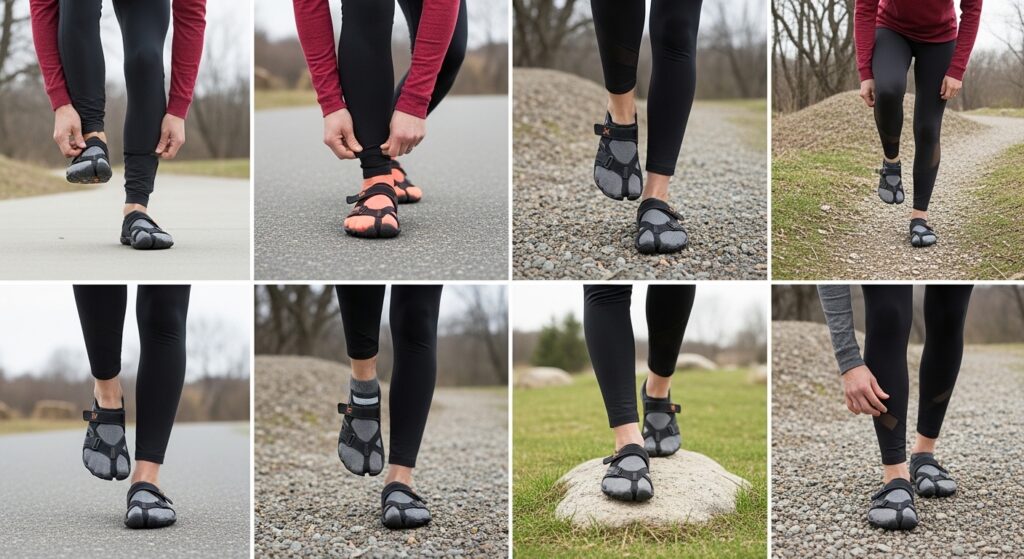
Xero Shoes usually fit close to true to size, but the right choice depends on toe room, foot width, and the model you pick. If you want the safest starting point, use the brand’s main sizing guide alongside the fit notes below.
Fit at a glance
- True To Size Most people start here.
- Size Up If you have wide feet, use thicker socks, or want extra toe room.
- Size Down Only if you are clearly between sizes and prefer a snug, locked-in feel.
- Best For Narrow Feet Choose models with a more secure midfoot and heel.
How Xero Shoes Fit In Practice
The main thing to understand about Xero fit is that the shoes are designed for natural foot shape rather than traditional padded structure. That usually means a roomier toe area, a lower-profile feel, and less of the “locked into a narrow chassis” sensation you get from many mainstream sneakers.
If you are still deciding between brands, it helps to compare the feel against another barefoot option such as Xero Shoes vs. Vivobarefoot. The difference is often less about one brand being universally bigger and more about how each model holds the heel, midfoot, and forefoot.
Practical rule:
If your toes feel lightly brushed at the front, but your heel stays secure, the size is usually close. If you feel pressure across the widest part of the foot, you likely need more room, not just a different lacing pattern.
When To Size Up Or Down
Sizing choices become clearer once you separate toe room from overall length. Many people assume they need a bigger number when what they really need is a wider-feeling model or a better fit in the forefoot.
- Size Up if you want more toe splay, wear thicker socks, or have one foot that is slightly longer.
- Stay True To Size if you want the most balanced fit for walking, training, or everyday wear.
- Size Down only when you are between sizes and dislike any extra space at the front.
For a broader measurement-driven explanation, the site’s sizing guide is the better resource. This page focuses on how the shoes feel once you put them on and how to interpret that feel in real use.
Wide Feet And Wide Toe Boxes
Wide-footed buyers should pay the most attention to width rather than length. Xero’s broad toe box is a major advantage, but not every model feels equally forgiving through the midfoot. If your feet spread more under load, compare the fit with this wide-feet guide and the deeper breakdown of the wide toe box features.
A good fit for a wide foot should feel spacious at the toes without the upper collapsing or the heel sliding around. If the toes have room but the instep feels cramped, moving up a size often helps more than switching to a looser lace pattern.
Model Differences Matter
One reason Xero fit questions get messy is that the brand’s models do not feel identical. A trail shoe, a casual slip-on, and a sandal-style model can all require different expectations even if the size number is the same.
For example, the Xero Prio tends to feel more secure and training-oriented, while the Xero Z-Trek has a more open, versatile feel. That means your usual size may stay the same, but your comfort threshold can change depending on the model’s structure.
Quick fit check before you keep them
- Toes can spread naturally without touching the front.
- Heel stays put when you walk downhill or turn sharply.
- Midfoot feels secure, not pinched.
- No hot spots appear after 15 to 20 minutes of wear.
Comfort, Break-In, And What To Expect On Foot
Xero shoes often feel unusually light and flexible at first, especially if you are coming from cushioned or structured footwear. That can be a comfort advantage, but it can also make sizing mistakes more obvious.
A good first wear should feel stable without pressure points. If the pair feels a little roomy at first, walk in them indoors before deciding they are too big; minimalist shoes often feel better once your foot starts moving naturally inside the upper.
For everyday wearers, the comfort question is less about plushness and more about whether the shoe disappears on foot. If you can walk, bend, and stand without the upper fighting your foot shape, you are probably in the right range.
Best Next Step If You Are Still Unsure
If you want the most reliable route to the right pair, compare your foot measurements with the site’s measurement walkthrough, then check the model-specific fit notes. That combination usually answers more than a single size number can.
Best companion pages
Start with the main Xero size guide, then check wide-feet recommendations if width is your main concern. If you wear sandal-style models, the Z-Trek review can help you judge fit expectations more accurately.
Frequently Asked Questions
Do Xero Shoes Run Big Or Small?
Most Xero Shoes are close to true to size, but many wearers size up for extra toe room, thicker socks, or a wider foot shape.
Should You Size Up Or Down In Barefoot Shoes?
Size up if you need more forefoot space or plan to wear thicker socks; size down only if you are between sizes and prefer a very snug fit.
Are All Xero Shoes Wide Toe Box?
No. Most have a foot-shaped front, but the amount of room in the midfoot and heel can vary by model.
How Do You Fit Xero Shoes Properly?
Aim for light toe clearance, a secure heel, and no pinching across the widest part of the foot. If one of those fails, the fit is probably off.

Henry Harrington is a passionate author and content creator at My Shoes Finder, where he explores a wide range of topics related to footwear, lifestyle, and personal growth. With a keen eye for detail and a love for storytelling, Henry engages readers by sharing insights, tips, and personal anecdotes that resonate with his audience. His commitment to delivering high-quality content has established him as a trusted voice in the online community, inviting readers to step into new perspectives and discover their unique paths.
See also:
 Vivobarefoots – Enhance Your Natural Foot Function
 Xero Shoes For Children In 2025: Fit, Safety, And Best Models
 How To Measure Your Feet For Xero Shoes Size Fit
 Xero Shoes Sale Guide: Where To Find The Best Discounts
 How To Measure Xero Shoes For The Right Fit
 Xero Shoes Sandals Review: Fit, Feel, And Best Uses
Your insights on the significance of choosing the right size and fit for Xero shoes are incredibly relevant, especially as more people are beginning to appreciate the benefits of barefoot footwear. The emphasis on comfort and natural foot movement you’ve highlighted resonates deeply with my own experiences. Transitioning to barefoot shoes has fundamentally altered how I approach both my daily activities and my fitness routine.
Your emphasis on accurately sizing Xero shoes is particularly relevant in today’s market, where the diversity of footwear can often lead to confusion. Personally, I have experience with various barefoot shoe brands, and I’ve found that size inconsistencies can really impact the overall comfort and utility of the shoes. It’s not just about finding the correct numerical size, but also how that size accommodates your natural foot shape, which can significantly affect your foot health over time.
You make a great point about the importance of accurately sizing Xero shoes, especially given the myriad of options available these days. It seems like so many brands approach sizing differently, which can definitely lead to confusion. Like you, I’ve tried several barefoot shoe brands, and I’ve experienced firsthand how much comfort can vary based on those small nuances in sizing and shape.
You really captured an essential aspect of finding the right shoe in the barefoot category. The variability in sizing and shape across different brands is striking, and it’s interesting how what works perfectly for one brand can feel completely off with another. It’s like each brand has its own personality.
I appreciate the emphasis on accurate sizing when it comes to barefoot footwear like Xero shoes. It’s interesting to consider how our approach to footwear can affect overall health and activity levels. For example, the shift towards minimalist shoes mirrors broader trends in health consciousness, as more people seek natural, functional approaches to fitness.
It’s great to hear your thoughts on barefoot footwear and the broader implications for health and fitness. The shift to minimalist shoes does reflect a growing awareness of how our choices in apparel can influence our movement patterns and overall well-being. Many people are discovering that by allowing their feet to function more naturally, they can strengthen muscles and improve balance.
I appreciate your insights on choosing the right size for Xero shoes! The emphasis on accurate sizing resonates deeply—I’ve found that the fit can significantly impact the natural movement and overall comfort of barefoot footwear. It’s fascinating how shifting to minimalist shoes can heighten our awareness of how we walk and even shift our posture over time.
I appreciate how you’ve highlighted the importance of accurate sizing in choosing Xero shoes. I’ve been transitioning to barefoot footwear myself, and I can attest that getting the right fit is crucial for both comfort and foot health. The concept of the “comfort window” you mention is particularly interesting; I’ve found that it varies significantly depending on the activity I’m doing. For instance, I might prefer a snugger fit during runs for better control but lean towards a looser fit for casual wear.
It’s great to hear about your experience transitioning to barefoot footwear. You’re spot on about the “comfort window” varying with different activities. It’s interesting how our feet respond uniquely depending on the context—like that snug fit for running giving you the control you need, while a looser fit for casual wear allows for more freedom and comfort throughout the day.
I appreciate the depth of insight provided in this post about Xero Shoes and barefoot footwear in general. The emphasis on proper sizing is crucial, especially since many consumers overlook how significant it is for both comfort and foot health. Having transitioned to barefoot shoes myself some years ago, I’ve found that understanding the nuances of sizing can significantly alter one’s experience.
I can totally relate to your insights on Xero shoes and the emphasis on finding the right fit. It’s so true that with barefoot footwear, the sizing can really make or break the experience. I had my own journey with barefoot shoes, particularly when I switched to minimalist footwear a while back. Initially, I thought I could just stick to my regular shoe size, but once I dove into the recommendations, I realized I had to be a lot more mindful about how my feet actually feel in them.
I completely get where you’re coming from. It’s interesting how many people jump into barefoot footwear thinking their regular size will cut it, only to discover it’s so much more personal than that. I remember my own experience—I felt like I was walking on clouds when I finally found the right fit, but it took some trial and error to get there.
Your insights on the importance of accurate sizing for barefoot footwear resonate with many who are navigating the world of minimalist shoes. I’ve recently transitioned to barefoot shoes myself after years of conventional supportive sneakers, and the difference in comfort and foot health has been substantial.
It’s great to hear about your experience transitioning to barefoot shoes. Many people underestimate just how much footwear can influence comfort and overall foot health. With conventional sneakers, the reliance on cushioning and support can sometimes mask underlying issues like improper foot mechanics or muscle weakness. Once you move to minimalist shoes, many find that their feet start to engage more naturally, which can lead to improved strength and alignment over time.
Your insights into Xero shoes and their emphasis on comfort and natural foot movement really resonate with me. As someone who has transitioned to barefoot footwear over the last couple of years, I’ve experienced firsthand the significant difference that proper sizing can make in achieving both comfort and enhanced foot health.
Your emphasis on the importance of accurate sizing in Xero shoes resonates with my own experiences. I switched to barefoot footwear a year ago, and I’ve found that the fit can make or break the transition. Many people overlook how traditional shoe sizing often leads to discomfort and long-term foot issues. It might be useful to mention that everyone’s foot shape is unique; for instance, I have a wider forefoot, which makes some models more suitable than others.
Your observations about accurate sizing really hit home. Transitioning to barefoot footwear can be such a journey, and finding that perfect fit is crucial. It’s interesting how many people might not realize just how much traditional shoe sizing can contribute to discomfort or even longer-term issues. A lot of these standard sizes don’t take into account the unique shapes and dimensions of our feet.
Your emphasis on the importance of accurate sizing in barefoot footwear is particularly relevant in today’s market, where so many consumers are transitioning to more natural forms of footwear. I’ve experienced firsthand how a proper fit can significantly affect not just comfort but also overall foot health.
I really appreciate how you’ve highlighted the importance of fit when it comes to barefoot shoes like Xero. I’ve had my own journey with finding the right size—what a difference it makes! Initially, I overlooked sizing and ended up with shoes that felt too snug. Once I took the time to measure my feet and consider the brand’s specific guidelines, it was like stepping into a whole new world of comfort.
I really appreciate your insights on the significance of finding the right fit for Xero shoes. I’ve found that the transition to barefoot footwear can be a bit daunting, especially when it comes to sizing. It’s interesting to see how many people overlook this aspect, which can lead to discomfort and even discourage them from adopting a more natural foot movement.
While I appreciate the focus on comfort and natural foot movement in Xero shoes, I wonder if the emphasis on sizing might overshadow other critical factors like sole flexibility and footbed design. In my experience with minimalist footwear, I’ve found that even a perfectly sized shoe can feel restrictive if it doesn’t allow for the natural splay of the toes or doesn’t have enough ground feel. Plus, the conversation around barefoot footwear often leaves out the varying terrain and activities people engage in. Does anyone have thoughts on how well these shoes perform in more rugged conditions? It would be interesting to see how they hold up compared to traditional athletic shoes in different environments.
It’s fascinating to see the growing emphasis on barefoot footwear and the importance of fit and sizing in enhancing foot health. I completely resonate with your assertion that comfortable, well-fitting shoes contribute significantly to our overall well-being. The shift toward designs that allow for natural foot movement aligns with a broader cultural trend toward more holistic health practices, where the focus is not just on aesthetics but also on functionality and well-being.
It’s fascinating to see how the discussion around barefoot footwear, like Xero shoes, is gaining traction. For those new to the concept, it’s interesting to note that the idea of barefoot or minimal footwear isn’t just a trend; it’s rooted in a growing understanding of foot health and biomechanics. I’ve personally found that moving to barefoot shoes has improved my balance and foot strength over time, a benefit many might overlook.
Reading your insights on the importance of finding the right fit for Xero shoes really resonated with me. As someone who has been exploring the world of barefoot footwear for a while now, I’ve come to appreciate not only how a well-fitted shoe can enhance comfort, but also how it can significantly impact overall foot health. It’s fascinating to consider how the movement toward more natural, minimalist footwear aligns with a broader shift in our society toward prioritizing well-being and holistic health.
It’s great to hear that my insights resonated with you. Your experience in the realm of barefoot footwear really highlights a growing awareness about the relationship between our choices in footwear and our overall health. Finding the right fit with Xero shoes or any minimalist footwear has been a game changer for many, as you pointed out.
The insights you’ve shared about Xero shoes and the importance of proper sizing really resonate with my own experiences in the world of barefoot footwear. It’s fascinating how much a shoe’s fit can dramatically impact comfort and even overall foot health. I remember my own transition to barefoot shoes, where I initially struggled with sizing due to the varying standards across brands. Your advice about understanding the comfort window and return policy is especially valuable; it reminds me of the importance of feeling confident in a purchase decision—something often overlooked by many.
The emphasis on accurate sizing for Xero shoes is spot on, especially when considering the potential benefits of barefoot footwear. I’ve found that many people underestimate how crucial fit is for maximizing comfort and maintaining natural foot movement. Personally, I made the mistake of choosing a size based on my previous shoe size without trying them on, and it wasn’t until I experienced discomfort during my daily walks that I realized how vital it is to prioritize the fit that aligns with barefoot principles.
I really appreciate how you broke down the sizing nuances for Xero Shoes in your post. It’s clear that finding the right fit can feel a bit like navigating a maze, especially for those of us who have wide feet or have a preference for thicker socks. I’ve tried a few models myself, and it’s interesting how even within one brand, the fit can vary so much.
This is such a practical breakdown of sizing for Xero Shoes! I’ve had my fair share of challenges when it comes to shoe fit, especially as someone with wide feet. I remember when I first tried minimalist shoes; I was so excited but ended up regretting my choice after feeling cramped in the toe box. It definitely made me realize the importance of understanding the specific fit nuances for different brands.
I can relate to your experience with finding the right shoe fit, especially when it comes to minimalist options. It’s interesting how each brand has its own approach to sizing and shape, which can really make or break the experience. For those of us with wider feet, getting that toe box right is crucial. Have you explored any specific styles from Xero that seem to accommodate wider feet better? Sometimes, even within a brand, certain models can fit differently. It’s all about finding that sweet spot where the shoe feels like it was made for you. Trying them on with different socks or even simply walking around a bit can also help gauge comfort before committing. What has been your go-to strategy for finding a better fit?
This guide on sizing really clarifies the often tricky process of finding the right fit for Xero Shoes. Personally, I have narrow feet and found that models with a more secure midfoot really make a difference in comfort and stability during my runs. It’s interesting how the fit can affect performance and even impact overall foot health; I’ve noticed less fatigue on longer jogs since I started considering the shape of my foot in relation to my footwear.
I’ve recently dived into the world of minimalist footwear, and I really appreciate how you broke down the sizing nuances for Xero Shoes. It’s such an essential aspect that can easily be overlooked when someone is just excited to try them out. For me, finding the right fit was a bit like Goldilocks trying porridge—some pairs were too tight, others too roomy, and a few just right.