
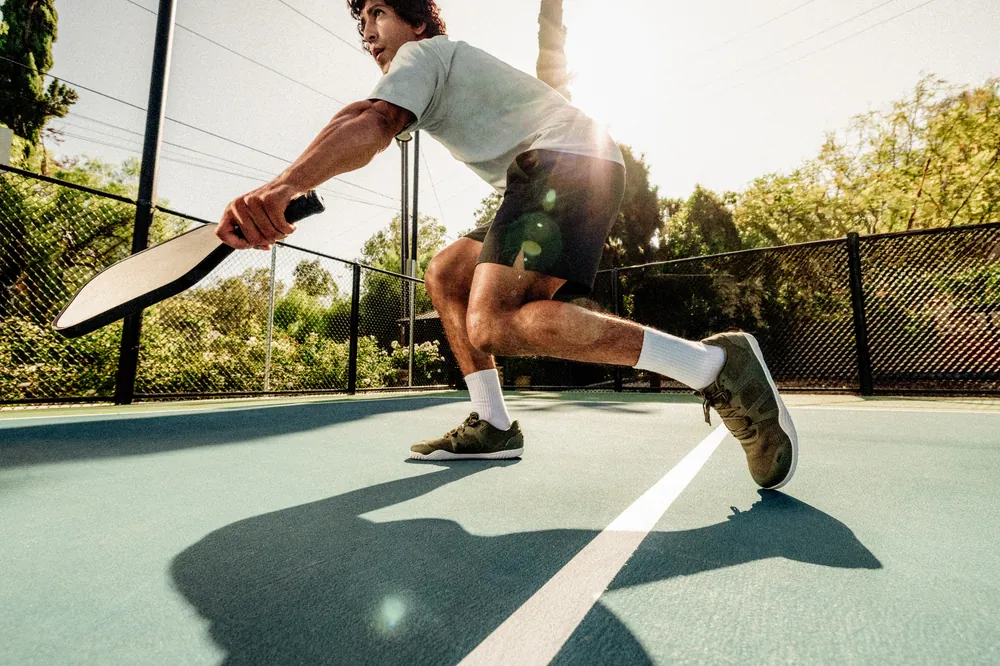
The Xero 360 Rally is built for players who want barefoot feel without giving up court-ready traction and lateral control. After six weeks and 40+ hours on pickleball and tennis courts, it looks like one of the most convincing minimalist court shoes yet.
Verdict at a glance
The 360 Rally is best for experienced barefoot-shoe wearers, competitive pickleball players, and tennis players who value ground feel, a wide toe box, and low-profile stability.
It is less ideal if you want traditional cushioning, need instant comfort with no adaptation, or spend most of your time on rough outdoor courts.
Best for
- Pickleball and tennis
- Natural toe splay
- Quick lateral movement
- Low-stack court feel
Skip it if
- You need soft cushioning
- You are injured or rehabbing
- You want zero break-in effort
What the Xero 360 Rally gets right
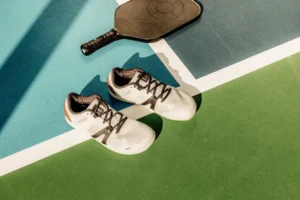
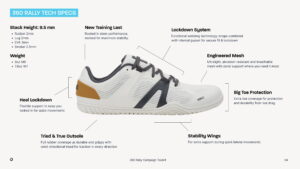
Xero’s first dedicated court shoe does not try to be a cushioned tennis sneaker with a minimalist label. It keeps the brand’s barefoot foundation and adds the pieces that matter for court sports: a zero-drop platform, a wide forefoot, zoned upper reinforcement, and lateral support that actually shows up during play.
The result is a shoe that feels light and responsive, but not flimsy. At around 9 ounces in a men’s size 9, it is lighter than most court shoes I have worn, yet it still feels stable enough for hard stops, side shuffles, and reaction-based movement around the kitchen line or baseline.
Traction
The omnidirectional tread grips confidently on indoor wood courts and newer outdoor hard courts. It bites hard enough for quick pivots without feeling sticky.
Stability
The stability wings add meaningful side-to-side support and help the shoe stay planted when you load up for lateral movement.
Court feel
The low stack gives excellent ground feel, which makes foot placement and weight transfer easier to read during fast exchanges.
How it feels on court
The biggest change versus a traditional court shoe is how connected you feel to the surface. In pickleball, that extra feedback makes micro-adjustments easier at the kitchen line. In tennis, it helps during split steps, recovery steps, and the first push into a ball.
That same low-profile feel also changes how your body works. With zero drop and less foam underfoot, your calves and feet do more of the work. I felt that in the first few sessions, especially after longer play, but it settled down as my feet adapted. If you are new to barefoot footwear, that adjustment is real and worth respecting.
Transition guide for first-time barefoot court shoe users
| Week | How to use it | What you may notice |
|---|---|---|
| 1 | Short sessions, 30 minutes or less | Calf work, lighter feet, more ground feedback |
| 2 | Increase to 45–60 minutes | Less soreness, better foot control |
| 3+ | Normal play and longer matches | The shoe starts to feel natural and stable |
If you want broader context on sizing across the brand, the Xero sizing guide and the wide-feet guide are the two most useful next reads. They help if you know you need room in the forefoot or you are debating whether to size up.
Fit, lockdown, and toe box
Fit is one of the strongest arguments for the 360 Rally. The wide toe box gives your toes room to spread, which matters more on court than it does in casual walking shoes. When you plant, push, and change direction repeatedly, a cramped forefoot becomes a liability.
The lockdown system is also better than I expected. The webbing and internal gusset pull the upper in evenly, so the shoe feels secure without creating obvious pressure points. That mattered most during longer sessions, when foot swelling usually starts making regular court shoes feel tighter and less predictable.
I also liked the big toe overlay. It gives extra protection where toe drag happens on serves and aggressive stops, but it does not make the shoe feel stiff or overbuilt.
Traction and durability after 40+ hours
Traction remained reliable across the court surfaces I tested: indoor wood, indoor hard court, outdoor hard court, and clay. Indoor courts were the standout. The outsole delivered a secure bite without overgripping, which is exactly what you want when you are stopping hard and reaccelerating in the next direction.
Outdoor hard courts were still strong, especially on newer surfaces. Older, rougher courts reduced that first instant of bite a little, but the outsole settled in quickly. On clay, the 360 Rally did well enough for mixed use, although loose aggregate can still create the usual minimalist-shoe limitations.
Durability has been encouraging. The outsole still looks sharp, the mesh upper has held up without tears, and the toe reinforcement is doing its job. After six weeks of testing, I would expect the shoe to reach a very respectable lifespan for a court model, especially if most of your play happens indoors or on well-kept surfaces.
How it compares with the closest alternatives
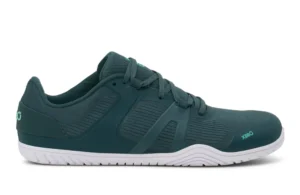
The most relevant comparison is not with a lifestyle barefoot shoe. It is with other Xero models and with standard court shoes that dominate pickleball and tennis shops.
If you are still deciding whether this brand and fit profile suit you, the men’s Xero buyer guide is useful for understanding how different models feel across daily wear and training, while the pickleball-focused recommendations help if your priority is choosing the best Xero for court play rather than only comparing this one shoe.
Who should buy it, and who should pass
Good fit if you are…
- Playing pickleball or tennis regularly
- Used to minimal or zero-drop shoes
- Wanting more toe room and court feedback
- Looking for a light, responsive shoe
Not the best fit if you are…
- Recovering from a lower-leg injury
- Expecting plush cushioning
- Playing mostly on rough courts
- Unwilling to adapt to barefoot mechanics
Where the 360 Rally makes the most sense
This shoe makes the strongest case for players who care about movement quality as much as comfort. If you want court shoes that support the way your foot naturally spreads and loads, the 360 Rally is one of the few options that truly feels built around that idea.
It is especially compelling for pickleball because the sport rewards quick reactions, lateral control, and a stable forefoot. Tennis players will appreciate the same qualities, though those coming from traditional shoes should expect a clear adjustment period.
Frequently asked questions
Do barefoot tennis shoes provide enough ankle support?
They do not support the ankle the way a high-collar or heavily structured court shoe does. Instead, they let your foot and ankle move naturally, which can feel more stable once you adapt. The 360 Rally uses its platform and lateral wings to support the foot without locking the ankle down.
Can you wear the Xero 360 Rally for pickleball and tennis interchangeably?
Yes. The 360 Rally handled both sports well in testing, and the outsole works across the quick shuffles of pickleball and the more linear, explosive movements of tennis. Surface still matters, so clay players should expect slightly more compromise than indoor players.
How should I size barefoot pickleball shoes?
Measure your foot from heel to longest toe and allow a little extra room for toe splay. If you are between sizes, Xero’s guidance to size up is sensible, and the brand’s fit resources can help you avoid a cramped forefoot.
What’s the difference between the 360 Rally and the regular 360 training shoe?
The Rally version adds court-specific traction, stability wings, extra toe protection, and a lockdown setup intended for rapid direction changes. The regular 360 is more of a training all-rounder.
Are barefoot court shoes durable enough for outdoor play?
Yes, for mixed use they can be. The 360 Rally held up well in testing, including outdoor hard courts, but any court shoe will wear faster outside than indoors. If most of your play is rough and abrasive, expect faster outsole wear than on indoor courts.
Final verdict
The Xero 360 Rally succeeds because it commits to a real barefoot court experience instead of softening the concept into a generic athletic shoe. It gives you the ground feel, toe room, traction, and lateral support that court sports demand, while staying light enough to feel fast and responsive.
If you already like zero-drop footwear or you want to move more naturally on court, this is an easy shoe to recommend. If you want immediate comfort and traditional cushioning, you should probably look elsewhere.
Rating: 9.2/10

Oliver Prescott is a dedicated author and content creator at My Shoes Finder, where he explores a diverse range of topics focusing on lifestyle, fashion, and personal development. With a keen eye for detail and a passion for storytelling, he connects with readers by providing insightful and engaging content. Oliver’s writing aims to inspire and inform, making complex ideas accessible and relatable to a broad audience. When he’s not writing, he enjoys exploring new shoe trends and sharing his findings with fellow enthusiasts.
See also:
 Best Xero Shoes For Pickleball: Which Models Work Best On Court?
 Barefoot-Inspired Shoes for Road Trips, BBQs, and Everyday Summer Wear: Xero Americana Collection Review
 Casual Barefoot Shoes That Don’t Look Like Fitness Shoes: Best Xero Picks for Everyday Style
 360 Rally – Barefoot Court Shoe
 Best Xero Shoes for Summer Travel: Lightweight Barefoot Picks for Road Trips, Flights, and Everyday Walking
 360 Rally – Barefoot Court Shoe
The introduction of the Xero 360 Rally as a true barefoot court shoe seems both exciting and timely, especially for those of us who have experienced the limitations of conventional athletic footwear. There’s often a misconception that supportive shoes provide all the needed advantages in terms of performance, yet my own journey with minimalist shoes echoes your sentiments: they can indeed feel constrictive, much like “wearing oven mitts on my feet,” as you eloquently put it. I’ve transitioned to barefoot options in my training—running and at the gym—and have noted how those styles of footwear don’t just enhance comfort; they promote a more naturally efficient movement pattern, allowing the body to function as it was designed.
What a great overview of the Xero 360 Rally! I totally relate to your experience with traditional court shoes feeling like they’re constricting your every move. It’s like trying to do the cha-cha in a pair of clunky winter boots—no thank you!
I completely get what you mean about traditional court shoes. It’s such a relief to ditch those constraints and find something that lets you move freely. The difference with the Xero 360 Rally is huge—it’s like switching from an old, clunky ride to a smooth, responsive one. It really lets you feel the court under your feet, which can change your whole game.
It’s so true, isn’t it? There’s something about the constricting nature of traditional court shoes that really takes away from the freedom of movement we all crave, especially when you’re trying to unleash your inner dancer. The image of cha-cha-ing in clunky winter boots is spot-on! It really highlights how essential the right footwear is to fully engaging with both the sport and the fun of it.
It’s so exciting to see Xero Shoes stepping into the court sports arena with the 360 Rally! As someone who also craves that barefoot feel while playing, I completely relate to your experience of feeling restricted in traditional shoes. It’s amazing how a good pair of shoes can transform your game, especially in sports that require quick lateral movements and agility like pickleball and tennis.
I love that you are venturing into the world of barefoot court shoes with the Xero 360 Rally! As someone who has dabbled in both pickleball and tennis (okay, mostly pickleball, but who’s counting?), I totally relate to the feeling of being strapped into traditional court shoes like a cat in a sweater—what a struggle!
It’s intriguing to see Xero Shoes venturing into the court sports arena with the 360 Rally. As a fellow pickleball enthusiast, I understand the struggle of finding footwear that balances mobility with protection. Your description of traditional court shoes feeling like “oven mitts on my feet” resonates deeply; I’ve faced similar restrictions that ultimately hinder gameplay.
Your reflections on the Xero 360 Rally resonate with many who are seeking a more natural feel in their athletic footwear. The quest for a barefoot-style shoe that can withstand the demands of pickleball and tennis is particularly relevant as more athletes recognize the importance of natural movement and foot health.
It’s exciting to see Xero Shoes stepping into the court sports world with the 360 Rally! I’m really curious about how the zero-drop design translates on the court, especially for lateral movements—which can be challenging in traditional shoes. I’ve tried barefoot running shoes before, and I loved the ground feel, but I sometimes wonder if they can keep up during intense rallies in pickleball or tennis.
I appreciate your insights on the Xero 360 Rally! As someone who has also been on the lookout for footwear that embraces a more natural movement while engaging in high-energy sports like pickleball and tennis, your experience resonates with me deeply. The quest for a shoe that offers both barefoot freedom and the necessary support for lateral movements has been an ongoing challenge.
Your detailed exploration of the Xero 360 Rally really resonates with me, particularly as someone who has also felt the constraints of traditional court shoes while playing pickleball. The imagery you use to describe restrictive footwear—like wearing oven mitts on your feet—perfectly captures the discomfort many of us feel during intense matches. The need for a shoe that supports our movements without suffocating our feet is something that those of us who engage in high-energy sports truly understand.
I really appreciate your insights on the Xero 360 Rally! As someone who’s also spent a fair amount of time on the courts—mostly tennis but dabbling in pickleball—I completely relate to the struggle of finding the right footwear. Traditional court shoes can definitely feel like they weigh you down, especially when trying to be quick and nimble.
It’s interesting to see how the barefoot movement is gradually making its way into more specialized areas, like court sports. The idea of a shoe that offers the freedom of barefoot movement while still providing the necessary support for quick lateral movements is incredibly appealing, especially for someone like me who also loves both pickleball and tennis.
Your exploration of the Xero 360 Rally really resonates with the ongoing conversation about the evolution of footwear in sports. As someone who also values the barefoot experience, I’ve often found that traditional athletic shoes can limit not just mobility but also a genuine connection with the ground, especially in dynamic sports like pickleball and tennis.
You had me at “barefoot freedom”! It sounds like these shoes are the holy grail for us pickleball and tennis enthusiasts. I’m all for ditching the restrictive traditional court shoes that make my feet feel like they’re trapped in a clown car. Quick pivots and aggressive plays are hard enough without worrying about little foot prisons!
I appreciate the insights shared about the Xero 360 Rally. As someone who has also struggled with the restrictive feel of traditional court shoes, it’s exciting to see a brand embracing the barefoot movement in such a competitive space. The concept of a zero-drop shoe designed specifically for the lateral demands of pickleball and tennis seems like a game-changer.
Your insights on the Xero 360 Rally really resonate, especially given the growing emphasis on natural movement in footwear. As someone who has experimented with minimalist and barefoot shoes in various sports, I’ve been on a similar journey to find the right balance between ground feel and performance. It’s unfortunate how many traditional court shoes prioritize cushioning over the natural biomechanics that our feet were designed for.