
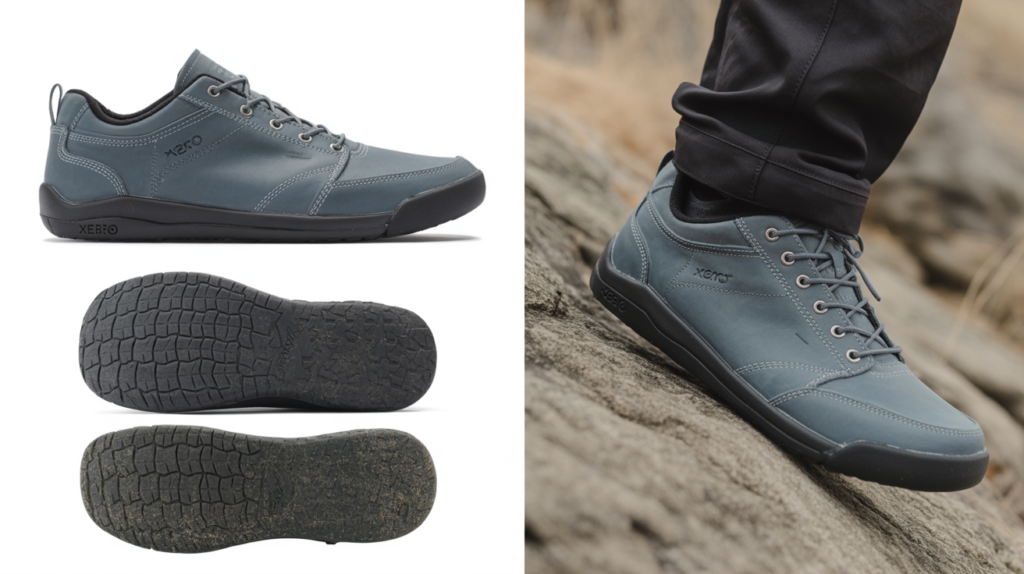
Xero Shoes Durability: How Long They Last and What Really Affects Longevity
When I look at Xero Shoes durability, I care a lot less about vague mileage promises and much more about what actually matters in real life: outsole wear, upper breakdown, daily use, terrain, and what Xero is genuinely willing to back with a warranty.
🛡️ 5,000-mile sole warranty
🧰 6-month defect coverage
🔍 Real wear factors
My short answer
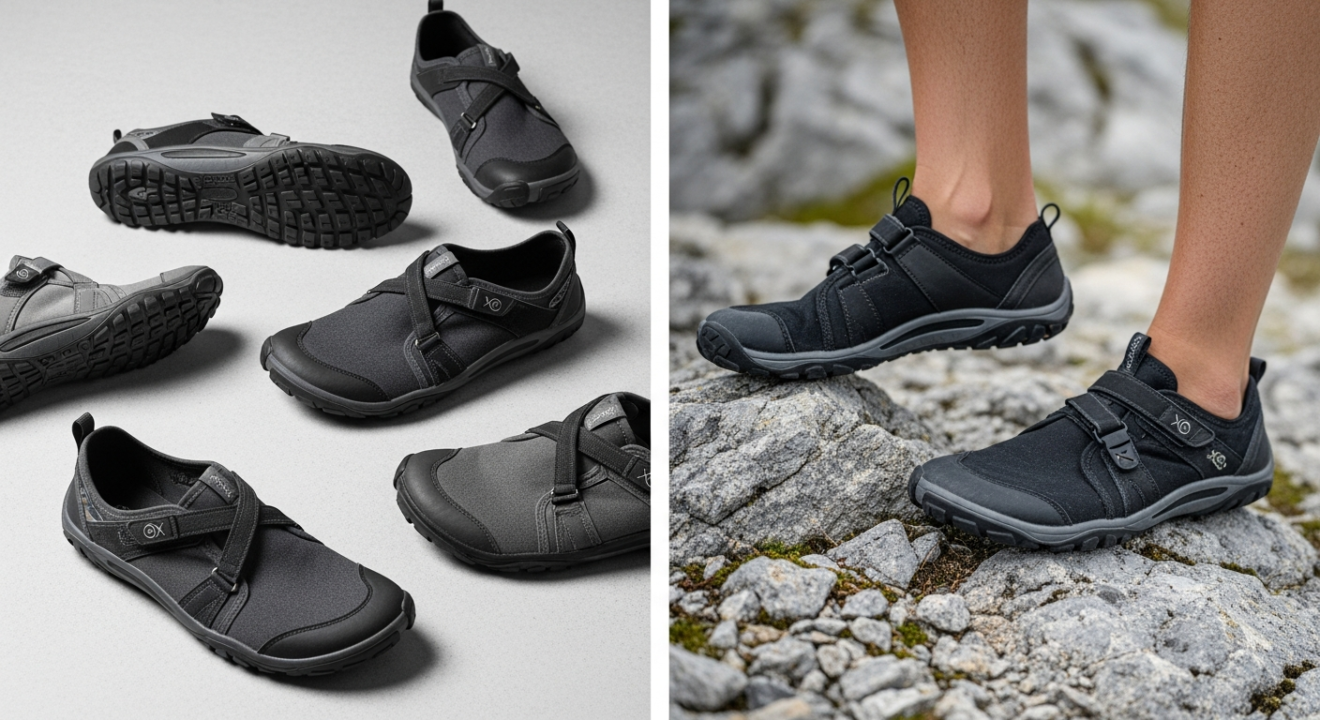
Xero Shoes can last a long time, but there is no honest one-number lifespan that applies to every model and every person. A sandal, a road shoe, and a trail model do not age the same way, and neither do shoes used on smooth pavement versus rough ground.
What makes Xero more interesting than a lot of footwear brands is that it gives a more concrete durability signal than most. The company backs eligible outsoles with a 5,000-mile sole warranty and also has a separate 6-month manufacturer’s limited warranty for qualifying defects.
What “durability” actually means with Xero Shoes
When someone asks me how long Xero Shoes last, I think there are really four different questions hiding inside that one sentence.
First, how long does the outsole hold up before traction and thickness become a real issue? Second, how well does the upper survive repeated flexing, rubbing, trail debris, and everyday wear? Third, how much does the type of use matter — casual walking, daily running, hiking, gym work, travel, or mixed use? And fourth, what does the brand actually stand behind if something goes wrong?
That is the right way to look at the topic, because durability is not just about whether the shoe still exists. It is about when the shoe stops performing the way I need it to. If you want a broader foundation for how minimalist footwear is supposed to behave over time, it also helps to understand how barefoot shoes work during the transition period, because expectations around flexibility and wear are often very different from conventional shoes.
The most important durability facts
| Topic | What matters |
| Outsole warranty | Eligible soles are backed by Xero’s 5,000-mile sole limited warranty |
| Threshold | Coverage applies when soles wear down to less than 1 mm thick |
| Replacement benefit | 60% discount on a new pair of the same style at full retail price |
| Defect coverage | 6-month manufacturer’s limited warranty for qualifying defects |
| Important limitation | Direct purchases only from Xero sites, not third-party sellers or Amazon |
| Not covered | Normal wear and tear, improper care, machine washing/drying, unauthorized repairs, and some outsole exceptions |
Why I trust the warranty more than generic mileage claims
A lot of durability content online jumps straight to a broad mileage estimate, but I think that usually creates more confusion than clarity. One person may use Xero Shoes mostly on smooth pavement, another on gravel or rocky trails, another for occasional gym sessions, and someone else as a full-time daily shoe. Those are completely different wear patterns.
That is why I think the warranty details matter more than a made-up average lifespan. The warranty gives a real framework. It tells me what Xero considers legitimate outsole wear, what the company counts as a qualifying defect, and where the limit between coverage and normal aging begins. If you are also comparing support policies, exchanges, and post-purchase expectations, see my guide to Xero Shoes return policy.
For me, that is a much more useful way to think about longevity than throwing out a single number and pretending it applies equally to every Xero model.
What usually affects Xero Shoes lifespan the most
- Surface type: abrasive pavement and rough trail conditions usually speed up wear compared with lighter casual use.
- Model category: sandals, road shoes, and trail shoes do not wear in the same way or at the same pace.
- Outsole usage: one pair worn daily for everything will age faster than shoes rotated for specific use.
- Upper stress: flex points, heel friction, mesh abrasion, and debris exposure can wear the upper before the sole is done.
- Care routine: extreme heat, direct sun, machine washing, and poor storage can shorten usable life.
If you want to understand the outsole side of this more deeply, my guide to shoe and boot sole types helps explain why different sole constructions age differently under pressure.
What I would look at first on an older pair
If I were checking whether a pair of Xero Shoes still had good life left in them, I would start with the outsole. Is the tread still doing its job? Has the rubber worn down evenly, or is one section disappearing much faster than the rest? Does the shoe still feel secure on the surfaces I actually use it on?
Then I would check the upper. I would look for thinning mesh, separation at stress points, heel wear, fraying around lace areas, and spots where repeated bending has weakened the material. This matters because the sole is not always the first thing that fails. In real life, a shoe can be “fine” underfoot but no longer feel trustworthy up top.
Finally, I would pay attention to how the shoe feels, not just how it looks. A shoe can still seem presentable while already being functionally tired. This is also where replacement versus repair becomes a practical question, so I’d compare the situation with my guide on repairing shoes vs buying new.
What Does the 5,000-Mile Sole Warranty Actually Mean?
Xero Shoes offers a 5,000-mile limited sole warranty for eligible FeelTrue outsoles and certain Michelin soles with Fiberlite technology. This should not be interpreted as a promise that every part of every shoe will remain unchanged for 5,000 miles.
The warranty concerns outsole wear. If an eligible outsole is worn down to less than 1 millimeter at the ball or heel, the current warranty terms may allow the original purchaser to replace the same product at a discounted price. Eligibility, exclusions and purchase requirements apply.
The separate manufacturer’s limited warranty currently covers eligible manufacturing defects for six months. Normal wear, damage caused by use and purchases made through unauthorized sellers may not be covered.
Because materials, terrain, walking or running style, body weight and care differ, there is no single reliable mileage figure for every pair. Outsole tread, upper condition, fit and comfort are better replacement indicators than mileage alone.
Before relying on warranty coverage: review the current terms on the official Xero Shoes warranty page.
How I’d make Xero Shoes last longer
If I wanted a pair of Xero Shoes to last as long as possible, I would do a few simple things consistently. I would clean them by hand with mild soap and warm water instead of treating them like laundry. I would let them air dry fully and keep them away from high heat. I would avoid leaving them in punishing sun or hot cars for long stretches, especially after use.
I would also rotate pairs if I wore Xero often. That is one of the easiest ways to reduce constant stress on a single outsole and upper. And I would be careful about model matching. A lightweight everyday model should not be judged by the same durability standard as a trail-focused one used on rough ground week after week.
For the care side specifically, I’d keep the routine simple and practical. My article on cleaning and caring for barefoot shoes is the most natural next read here.
When I’d replace them
- If the outsole is so worn that grip and confidence are clearly reduced
- If the sole thickness is approaching a point where durability and protection are compromised
- If the upper starts tearing, separating, or losing structural security
- If the shoe stops feeling reliable for the job I use it for
- If wear has moved from cosmetic to functional
My honest takeaway on Xero Shoes durability
I think the best way to talk about Xero Shoes durability is to stay specific. Not every model will wear the same. Not every user will get the same lifespan. And not every durability complaint is really about the outsole — sometimes it is the upper, sometimes it is the use case, and sometimes it is just unrealistic expectations.
What I do like is that Xero gives a clearer durability framework than many brands. The 5,000-mile sole warranty and 6-month manufacturer’s limited warranty make the discussion more concrete. They do not remove variability, but they do give me something real to measure against.
If I had to sum it up simply, I’d say this: Xero Shoes can last well, but their real longevity depends on the model, the terrain, the way they’re used, and whether I’m judging normal aging or an actual failure.
And if you want to compare that durability question against actual product categories, a good next step is to look at more model-specific pages like my men’s Xero Shoes buyer guide or the roundup on the best Xero Shoes.
Check Xero’s official warranty details
If you want the exact terms, exclusions, and claim process, it’s worth reviewing Xero’s official warranty page directly.
FAQ
How long do Xero Shoes usually last?
There is no single lifespan that fits every model or every user. How long Xero Shoes last depends on the outsole, the upper, the type of terrain, how often the shoes are worn, and whether they are used casually or more aggressively.
What is the Xero Shoes 5,000-mile sole warranty?
For eligible outsoles, Xero says that if the soles wear down to less than 1 mm thick, the company will offer a 60% discount on a new pair of the same style at full retail price.
Does the warranty cover normal wear and tear?
No. Xero explicitly says that normal wear and tear is not covered.
Are purchases from Amazon or other retailers covered by Xero’s warranty?
No, Xero states that purchases from independent retailers, Amazon, and other third-party sellers are not covered under the direct warranty terms listed on its official sites.
What usually wears out first on Xero Shoes?
That depends on the model and use case, but the two most important areas to watch are the outsole and the upper. Some users wear the sole faster, while others see upper wear first at flex points, heel areas, or abrasive contact zones.
How can I help Xero Shoes last longer?
Clean them gently by hand, let them air dry, avoid machine washing and drying, store them away from excess heat, rotate pairs when possible, and use each model for the type of activity it was designed for.

Jessica Linford is an insightful author for My Shoes Finder, where she explores a wide array of general topics that resonate with everyday readers. With a passion for storytelling and a keen eye for detail, she brings a unique perspective to her writing, aiming to inform and inspire through her engaging content. Jessica’s diverse interests drive her curiosity, allowing her to connect with audiences on various subjects while sharing practical tips and relatable anecdotes.
See also:
 Xero Shoes Return Policy: Returns, Exchanges, And Refunds Explained
 How Durable Are Xero Shoes? 5,000-Mile Warranty, Real-World Lifespan, And Wear Factors
 Barefoot Shoes and Sandals for Walking, Running and Hiking
 How Sustainable Are Xero Shoes? Materials, Ethics, And Trade-Offs Explained
 Xero Shoes Scrambler Low EV Review: The Lightweight Trail Shoe I’d Reach for Beyond the Hike
 Xero Shoes For Women: How To Choose The Right Fit, Comfort, And Style



You make a great point about the variability in how shoes wear down based on use. I’ve definitely noticed that my trail runners age way differently than my casual sandals, especially when I take them on rocky hikes versus just wearing them around town. The 5,000-mile warranty is reassuring, but I also think it’s important to pay attention to how we’re using each type of shoe.
I really appreciate how you dive into the nuances of Xero Shoes’ durability. It’s true—shoe lifespans can be such a mixed bag, depending on how and where you use them. I’ve had my share of barefoot shoes, and I’ve noticed that the terrain definitely plays a huge role. For instance, my trail shoes seem to wear down a lot faster than my road shoes, mostly because of all those rocky paths.
You make a solid point about Xero Shoes! It’s like trying to predict how long my favorite pair of jeans will last—they might withstand a couch potato existence, but throw in a few unexpected hikes, and suddenly I’ve got fashionably distressed denim.
I totally agree—trying to pin down a lifespan for Xero Shoes is like asking how long a piece of string is! Every run is different, and I’d argue the real testament to durability comes from those unexpected challenges—like when you accidentally take a detour through a muddy field because you got distracted by a particularly cute dog.
It’s interesting to see how Xero Shoes emphasizes real-world usage rather than relying solely on mileage claims. I’ve found that my footwear needs definitely vary depending on my activities—like hiking rocky trails versus casual walking on pavement. The 5,000-mile sole warranty is reassuring, especially since I’ve had shoes wear out much sooner than expected without that kind of backing.
Your analysis of Xero Shoes’ durability is refreshingly nuanced, and I appreciate how you emphasize the importance of real-world conditions over abstract mileage estimates. It’s true that footwear can endure very different experiences based on the user and their environment. The differentiation between various models—like sandals versus trail shoes—is particularly vital; each is designed with distinct purposes in mind, which inevitably influences how they hold up over time.
I really appreciate how you’ve articulated the nuances of Xero Shoes’ durability. It resonates with my own experiences as someone who values not just the longevity of footwear, but also how it performs in various environments. I’ve tried several minimalist shoes, and the differences in wear and tear can be night and day depending on how and where they’re used.
I hear you loud and clear on the whole mileage thing—it’s like trying to predict the lifespan of a cat that suddenly decides it’s an alligator during playtime. Personally, I’ve found that my Xero Shoes last longer when I treat them like delicate flowers on a soft carpet rather than rugged warriors on a rocky battlefield. I mean, I adore the outdoors, but I think I’ve made my sandals question their life choices a few times by taking them to the roughest trails and muddy puddles!
I love your take on Xero Shoes’ durability! It reminds me of that friend who’s always bragging about their impressive hiking mileage—while simultaneously living in a pair of flip-flops that are barely holding it together. Seriously though, the real-world factors you mention resonate deeply. I’ve sported different models for everything from leisurely strolls to wild trail adventures, and let me tell you, the wear patterns are as unique as fingerprints!
I appreciate how you dive into the nuances of Xero Shoes’ durability beyond just the typical marketing jargon. It resonates with me because I’ve had my fair share of footwear disappointments, where claims about longevity didn’t quite match up with reality. This exploration of how different terrains, usage patterns, and even the type of model can drastically impact a shoe’s lifespan is so necessary.
I appreciate your focus on the real-life factors that affect the longevity of Xero Shoes. It’s fascinating how our individual activities and the environments we tread can drastically change the lifespan of footwear. For instance, I’ve found that my trail shoes tend to wear out faster than my everyday sandals, and it’s not just the terrain but also the frequency of use.
It’s interesting how that works, isn’t it? The lifespan of footwear really does vary so much based on both the activity and the environment. I’ve noticed similar trends in my own experience. My trail shoes definitely see the most action when I’m out exploring, but I’ve found that the materials play a huge role too. Some shoes really hold up against the elements, while others seem to break down faster even with less intense use.
Your discussion on the durability of Xero Shoes raises some important considerations that often get overlooked in the broader footwear conversation. It’s refreshing to see a brand that prioritizes realistic expectations over inflated mileage claims, especially since so many manufacturers offer vague assurances that can be misleading.
Your exploration of Xero Shoes’ durability really highlights an important aspect of footwear that often gets overlooked: the specifics of real-life usage. I agree that shoe longevity can’t be boiled down to a single mileage number, as factors like terrain and personal usage patterns play a significant role. For instance, I’ve noticed that my trail shoes wear out much faster than my minimalist road shoes, partially due to the harsher conditions they encounter.
Your distinction between the various models and their respective durabilities really resonates with me. I appreciate how you emphasize the real-life factors that impact wear and tear rather than chasing after abstract mileage promises.
Your analysis of Xero Shoes’ durability highlights a key reality in footwear: a one-size-fits-all lifespan just doesn’t exist. I’ve personally experienced varying lifespans based on terrain and usage; for instance, my trail-running shoes wore down much faster on rocky paths compared to smooth pavement. The 5,000-mile warranty is reassuring, but I’ve often found that the way a shoe interacts with my daily activities—like walking versus running—really dictates its longevity.
Ah, the age-old question of footwear lifespan—it’s a bit like asking how long a pair of gym socks lasts after a week of intense cardio, isn’t it? Spoiler: it’s not pretty. Your insights about Xero Shoes hit the nail on the head! It’s fascinating that rather than just tossing out a ‘5,000 miles’ catchy number like some brands do (just to sell a few extra pairs), Xero actually seems to care about what happens in the real world—terrain, use, and even the inevitable shoe-eating sidewalk cracks.
I really appreciate the focus on real-life durability in this post. It’s refreshing to see a brand like Xero Shoes really break down the factors that affect longevity instead of just throwing out a mileage number that often doesn’t mean much in practical terms. The idea of a 5,000-mile sole warranty is impressive, and it seems like it reflects a genuine commitment to quality.
I appreciate your take on the durability of Xero Shoes! It’s refreshing to see a focus on real-world use rather than just mileage numbers that can feel arbitrary. I’ve tried a few different models—my experience with their sandals versus trail shoes has been eye-opening. The sandals seem to hold up reasonably well for casual walks and chill outings, but my trail shoes definitely show wear faster, especially after some rocky hikes.
You’ve made some excellent points about the variability in shoe durability based on usage. I’ve personally found that the environment significantly influences how my Xero Shoes hold up. For instance, my sandals have endured countless beach walks and hikes, while my trail shoes have faced rocky terrain and mud. It’s fascinating how different models cater to specific activities and conditions, affecting not just wear but also comfort and performance.
Your insights into the durability of Xero Shoes resonate with my own experiences as a long-time minimalist footwear enthusiast. I agree that focusing on real-life conditions—like terrain and usage patterns—provides a much clearer picture than just mileage statistics. I’ve found that the type of surfaces I run on or hike through significantly affects the longevity of my shoes.
You’ve hit on a critical point regarding durability that’s often glossed over in the shoe industry. It’s refreshing to see a brand like Xero Shoes approach longevity with such transparency. Personally, I’ve found that my own experience with barefoot-style footwear has been fascinating—both in terms of wear patterns and how different terrains affect the longevity of the shoes.
Your insights on the durability of Xero Shoes truly resonate with the complexities surrounding footwear longevity. As someone who has primarily used minimalist footwear for both daily walks and trail runs, I’ve experienced firsthand how varied the lifespan can be depending on the terrain and style. For example, my trail-specific Xero Shoes have shown different wear patterns compared to my road runners, underscoring your point about model-specific aging.
I appreciate your insights into the durability of Xero Shoes and the considerations that play a significant role in how long they actually last. It’s so true that the lifespan of footwear can be incredibly variable, shaped not only by the shoe model but also by the lifestyles and terrains we expose them to.
I love how you’ve dug into the nitty-gritty of shoe longevity! It’s so true that a shoe’s life depends more on where it’s been than how far it’s traveled. I mean, I’ve seen sandals that are practically fossilized after a summer at the beach but have barely touched a trail. Then there’s my so-called “daily driver” sneakers that mysteriously develop holes like they’ve been training for an escape artist competition.
It’s interesting to read your thoughts on Xero Shoes’ durability. I agree with you that mileage promises can often feel arbitrary, especially when considering personal usage and the type of terrain we regularly encounter. As someone who recently transitioned to barefoot footwear for my daily runs and hikes, I’ve noticed how much the environment plays a role in how my shoes hold up.