
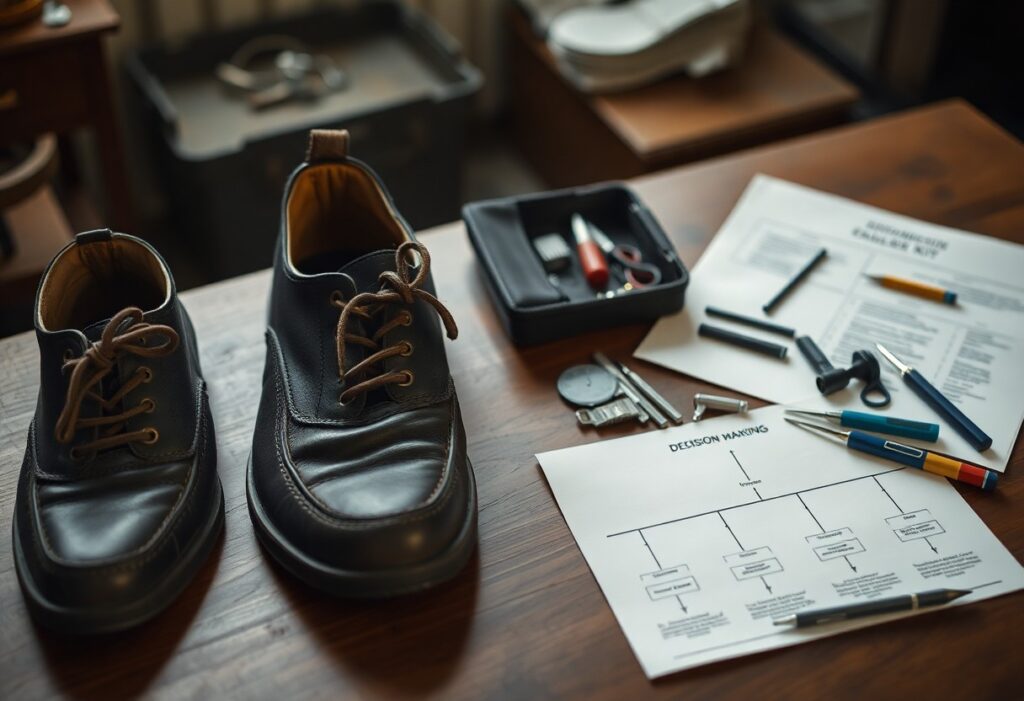
When shoes start to fail, the right choice is usually clearer than it seems: repair them if the damage is limited to replaceable parts, and replace them if the upper, insole, or structure is breaking down. The fastest way to decide is to compare damage severity, repair cost, and how well the shoe was built in the first place.
Decision box
- Repair if the sole, heel, or stitching is worn but the upper is still sound.
- Replace if the upper leather is cracked, the insole is collapsing, or several parts need work at once.
- Use Cost As A Guide: if repairs approach half the price of a similar new pair, replacement is usually smarter.
- Prioritize Safety when the shoe is smooth underfoot, unstable, or no longer protects you well.
The Repair-Or-Replace Checklist
The best decision starts with what has actually worn out. A shoe with a tired sole can often be restored, while a shoe with deep upper cracks, broken structure, or a failing insole usually reaches the point where repair becomes false economy.
| Repair usually makes sense | Replacement usually makes more sense |
|---|---|
| Worn soles with an intact upper | Cracked upper leather or torn uppers |
| Heel wear, loose stitching, minor scuffs | Damaged insole, broken shank, or structural failure |
| High-quality leather or welted construction | Low-cost cemented shoe with multiple worn parts |
| Repair cost stays well below 50% of new-pair cost | Total repair bill approaches or exceeds half the price of a better new pair |
What Usually Fails First
Most shoes do not wear out evenly. Soles and heel tips often go first, while upper damage and internal breakdown are the bigger warning signs that the shoe is nearing the end of its usable life. Understanding that difference helps you avoid replacing shoes too early or overpaying for repairs that will not last.
Uppers And Leather
Surface scuffs and light scratches are usually cosmetic. Deep creases, cracking, or widening splits are a different story, because once the upper material loses integrity the shoe becomes harder to restore neatly and may not hold up after repair.
Structure And Support
Separated soles, broken shanks, damaged welts, or crushed insoles change how the shoe feels and performs. At that point, repair is not just about appearance; it affects comfort, stability, and whether the shoe still does its job safely.
How Much Should A Repair Cost?
Cost is the second filter. A repair can be worth paying for even when it is not cheap, but it needs to make sense relative to the shoe’s quality and the price of a comparable replacement.
| Repair type | Typical cost | Best fit |
|---|---|---|
| Heel replacement | €15–30 | Minor wear, fast turnaround |
| Half sole repair | €70–120 | Good leather shoes with otherwise solid construction |
| Full sole repair | €130–200 | Premium shoes worth keeping in rotation |
| Heel lining or stitching repair | €25–60 | Comfort problems or local wear |
A good rule is simple: if the repair bill climbs toward 50% of a comparable new pair, the economics start to favor replacement. That threshold is not absolute, though. A high-quality welted shoe can justify a higher repair cost because it is designed to be serviced multiple times.
The Role Of Shoe Construction
Construction matters as much as damage. Welted leather shoes are usually repair-friendly, while cheaper cemented shoes with synthetic uppers or weak internal components often do not reward expensive repair work. If the shoe was built to be resoled, it can usually justify more than one round of maintenance.
When Replacement Is The Smarter Call
Buy new when the damage goes beyond surface wear. The clearest warning signs are cracked uppers, damaged insoles, multiple failed parts at once, or a shoe that no longer feels stable enough for regular use. If safety is in question, replacement should win even when the repair seems possible.
- Deep cracks across the upper leather
- Cracked or collapsed insole structure
- Several expensive fixes needed at the same time
- Worn-out traction or severe loss of support
- Safety requirements that the shoe no longer meets
A Practical Timing Rule: Repair Early
The best time to repair shoes is before damage spreads. Waiting too long usually turns a cheap heel fix into a more expensive sole replacement, or a simple stitching job into a larger structural repair. If you notice the first signs of uneven wear, it is worth acting quickly.
| Timing | Why it matters |
|---|---|
| Repair at the first sign of heel or sole wear | Stops small wear from becoming a full rebuild |
| Replace once upper cracks or insole failure appear | Avoids paying for repairs that will not restore comfort or support |
| Reassess after any major storm, worksite, or high-wear period | Heavy use can expose hidden damage sooner than expected |
If You Want The Longest Life From What You Already Own
Repair decisions become easier when you treat shoes as maintainable gear, not disposable items. Regular cleaning, conditioning when appropriate, and basic upkeep can delay the point where repairs become necessary. If you are trying to buy better next time, it also helps to compare used pairs carefully through our guide to buying quality secondhand shoes.
If you are shopping new because your old pair has reached the end, use that moment to choose a construction that fits your maintenance habits. That is where knowing when to condition new shoes and how materials age becomes useful.
Need The Short Version?
Repair shoes when the damage is local, the upper is still strong, and the cost stays well below replacement. Buy new shoes when the upper or insole is failing, the structure is compromised, or the repair bill is no longer a good use of money.
If the pair has strong sentimental value or excellent construction, it can justify a repair at a higher price point. If it is a low-cost shoe with multiple problems, replacement is usually the cleaner decision.
Next practical step
If your current pair is still worth keeping, compare the repair bill with the kind of shoe you would buy instead. For deeper context on durability and lifecycle choices, read Xero Shoes durability and lifespan, then use that same thinking to judge whether a better-built replacement would serve you longer.
Frequently Asked Questions
Is It Better To Repair Or Replace Shoes?
Repair is better when the damage is limited to replaceable parts like soles, heels, or stitching and the shoe is otherwise well built. Replace shoes when the upper, insole, or structure is damaged enough that the repair would be expensive or short-lived.
Is It Worth Getting Shoes Fixed?
Yes, if the pair is good quality and the repair cost stays comfortably below the price of a comparable new pair. Leather shoes, welted shoes, and comfortable favorites are often the best candidates.
What Is The Average Lifespan Of A Shoe?
It varies widely by material, construction, and use. A well-made shoe can last much longer than a cheap one, especially if you clean it regularly, rotate pairs, and repair wear before it spreads.
What Is The 3 Shoe Rule?
In footwear discussions, the “3 shoe rule” usually refers to owning multiple pairs so each pair can rest between wears. That rotation helps reduce breakdown and can delay the repair-or-replace decision.

Jessica Linford is an insightful author for My Shoes Finder, where she explores a wide array of general topics that resonate with everyday readers. With a passion for storytelling and a keen eye for detail, she brings a unique perspective to her writing, aiming to inform and inspire through her engaging content. Jessica’s diverse interests drive her curiosity, allowing her to connect with audiences on various subjects while sharing practical tips and relatable anecdotes.
See also:
 How Durable Are Xero Shoes? 5,000-Mile Warranty, Real-World Lifespan, And Wear Factors
 Best Insoles For Xero Shoes: Fit, Comfort, And Compatibility Guide
 How To Choose The Right Leather Type For Shoes And Accessories
 Barefoot Shoe Care: Cleaning, Drying, Storage, And Repair Tips
 Why Waterproofing Spray Can Ruin Smooth Leather Shoes
 Xero Shoes For Summer Travel And Hot-Weather Adventures



Your insights on the decision-making process surrounding footwear maintenance really resonate with me. I’ve found that investing in quality shoes not only signifies good style but also reflects a responsible approach to consumerism. The dilemma of repair versus replacement is something many of us face, especially when it comes to beloved pairs that have journeyed with us through countless adventures.
I really appreciate how you broke down the decision-making process between repair and replacement. I’ve often found myself torn when it comes to my well-loved shoes. For instance, I had a pair of quality leather boots that had lost their shine and developed some sole wear. Instead of tossing them aside, I took them to a cobbler who restored them beautifully. It was eye-opening to realize that with a little investment, I could extend their life significantly.
I completely relate to your experience with the leather boots. It’s interesting how we often think that well-loved items lose their value when, in reality, they can often be revitalized with some care and craftsmanship. The decision to repair instead of replace can sometimes feel daunting, but it’s rewarding when you see the potential for restoration.
I agree, there’s something really profound about valuing well-loved items like leather boots. They often carry memories and stories that new items just can’t replicate. I’ve had a pair of boots that I thought were beyond saving, but after taking them to a local cobbler, I was amazed at how a little skill and effort brought them back to life. It felt almost like giving them a second chance, a new lease on life.
It’s great to hear that you had such a positive experience with your boots! There’s something really special about a well-loved pair of shoes—they develop character and often tell a story. A good cobbler can work wonders, and it’s surprising how much life they can breathe back into footwear that seems beyond saving.
I totally agree—there’s definitely something special about a pair of boots that has seen some miles. They have this unique ability to remind us of experiences we might have otherwise forgotten. It’s interesting how footwear becomes part of our identity, isn’t it?
It’s interesting how tools like toe spacers can play a role in footwear comfort, much like a good cobbler can revive our favorite boots; I found an article that dives into whether they’re truly effective or just a passing fad.
‘Toe Spacers: Effective Solution or Just a Trend?’
https://myshoesfinder.com/toe-spacers-solution-or-trend/.
It’s fascinating how the decision between repair and replacement can stir up so many emotions, especially with items that have a story, like your leather boots. A cobbler can work wonders, can’t they? It’s more than just fixing something; it’s about respecting the craftsmanship and memories that come with those shoes.
I can totally relate to that feeling of being torn between repair and replacement, especially with items that have a story behind them, like your leather boots. It’s fascinating how a good cobbler can revive something that feels like it’s on its last legs, both literally and metaphorically. It’s almost like giving them a second chance to shine.
You’ve hit the nail on the head with that feeling of being torn between repair and replacement. There’s something unique about the connection we form with our belongings, particularly items like those leather boots you mentioned. They often carry memories, maybe even moments of joy or hardship, and it feels as if part of our own story is stitched into every crease and scar.
I completely relate to that feeling of nostalgia tied to our belongings. Each mark on those leather boots often tells a story—like that time they got scuffed while hiking up that steep trail, or when they kept my feet warm during a spontaneous weekend getaway. It’s interesting how we sometimes think about our items as extensions of ourselves, almost like they hold pieces of our identity.
That feeling of being torn between repair and replacement is such a relatable struggle. It’s almost like a reflection of our own lives, isn’t it? Sometimes we find ourselves in similar dilemmas, deciding whether to fix things that have a history or to let go and start anew. It’s interesting how objects can carry our stories—like those leather boots, worn in just the right places, each scuff telling a tale of adventure or moments shared.
I recently came across an interesting piece that dives into toe spacers, exploring whether they’re really a helpful remedy for foot discomfort or just another passing fad, and it might resonate with anyone who values both comfort and the stories tied to their favorite footwear.
‘Toe Spacers: Effective Solution or Just a Trend?’
https://myshoesfinder.com/toe-spacers-solution-or-trend/.
The connection you draw between the decision to repair or replace and our personal lives is thought-provoking. We often cling to objects that carry our experiences, like those well-loved leather boots you mentioned. Each mark and scratch really does tell a story, much like our relationships or memories.
I completely agree with your perspective on the tension between repair and replacement. It’s fascinating how our attachment to objects mirrors the choices we make in our own lives. Those leather boots you mentioned are a perfect example; each scuff and crease holds memories, and it often feels more meaningful to preserve those stories than to opt for the shiny new pair. There’s something so personal about the journey our belongings take with us, right?
It’s great to hear about your experience with your leather boots. It’s amazing how a skilled cobbler can breathe new life into something that seems worn out, isn’t it? I had a similar situation with my favorite sneakers. They were scuffed and lost that fresh look, but a little cleaning and some dedicated care brought them right back to life.
Speaking of extending the life of our favorite footwear, I recently came across some insights about barefoot shoes and their performance in wet hiking conditions that might help you make more informed choices for your adventures.
‘Are Barefoot Shoes Good for Hiking in Wet Conditions?’
https://myshoesfinder.com/are-barefoot-shoes-good-for-wet-hiking/.
It’s interesting how footwear can carry so many memories, isn’t it? Giving those sneakers a little TLC must have felt rewarding. It’s amazing what a good cleaning can do for the look and feel of our favorite pairs. I completely relate to that experience.
It’s really interesting to hear how you revived your sneakers. There’s something about giving well-loved items a second chance that feels so rewarding. I think it reflects a deeper appreciation for our possessions and environmental mindfulness. A good cleaning can really transform them, just like a cobbler can work wonders on leather.
I recently stumbled upon some helpful tips about barefoot shoes and how they hold up in wet hiking conditions, which I thought you’d find interesting given our chat about footwear care and longevity.
‘Are Barefoot Shoes Good for Hiking in Wet Conditions?’
https://myshoesfinder.com/are-barefoot-shoes-good-for-wet-hiking/.
I completely relate to your experience with well-loved shoes. It’s amazing how much emotional and practical value we can find in items that we’ve worn over time. Those leather boots, especially, have stories to tell and memories attached to them. The decision to repair rather than replace can feel like a reflection of our attachment to those memories.
I really found your insights on shoe repair versus replacement refreshing and practical! It’s such a common dilemma that many of us face, especially when we have that favorite pair of shoes that fit perfectly and carry a bit of emotional weight. I’ve always been a firm believer in the idea that clearly, not all shoes are created equal. There have been pairs in my closet that I wore incessantly for years because they were constructed so well, while others barely lasted a season before falling apart.
I totally get what you’re saying about the emotional weight that comes with a favorite pair of shoes. It’s interesting how a simple item can carry memories or represent milestones in our lives. Just the other day, I found a pair of old boots that I wore during a memorable trip. They’re scuffed and a bit worn, but they still fit like a glove, which is a rarity these days.
It’s fascinating how garments like shoes can encapsulate experiences in such a tangible way. That pair of old boots sounds like a wonderful reminder of the adventures you’ve had. The way they fit like a glove is a testament to the memories they’ve helped create.
I completely agree with you about the way shoes, or really any garments, can hold such rich narratives. Those old boots of mine have seen everything from muddy hiking trails to city streets bustling with life, and each scuff tells a part of the story. It’s interesting how our connection to objects can enhance our sense of place and identity.
I completely relate to that feeling of discovering an old pair of shoes that still fit perfectly! It’s fascinating how those scuffed boots can tell a whole story. They carry not just our weight but also memories, moments of adventure, and sometimes even challenges we faced along the way. Each mark tells a tale, right?
You’ve hit on a fascinating aspect of how we connect with our belongings on a deeper level. It’s amazing to think that a pair of shoes—something so functional and everyday—can become a vessel for our memories. Those old boots from your memorable trip carry not just the wear from the journey but also the stories of where they took you, right? Every scuff, every mark can tell a tale.
It’s interesting how much emotional weight our favorite shoes can carry. I totally relate to the dilemma of deciding between repair and replacement, especially with those pairs that just fit like a glove. It’s not just about the functionality; it’s about the memories tied to them and how they feel on our feet.
I enjoyed your thoughts on shoe repair; it reminded me of how crucial proper sizing is for our favorite pairs, which is something I recently explored in a guide that might help others navigate the nuances of finding the perfect fit.
‘Sizing Xero Shoes: The Ultimate Universal Guide’
https://myshoesfinder.com/sizing-xero-shoes-the-ultimate-universal-guide/.
You’ve hit on a really profound aspect of our relationships with shoes. They aren’t just tools for walking; they carry stories and experiences that can be hard to quantify but are deeply felt. The decision between repair and replacement often reflects more than just the condition of the shoes — it’s an emotional crossroads where nostalgia and practicality collide.
It’s great to hear that you resonated with the discussion on shoe repair versus replacement. Holding onto that favorite pair can feel like keeping a little piece of history, especially when they fit just right and take you back to meaningful moments. You’re spot on about the quality difference; some shoes have that magic combination of craftsmanship and comfort that makes them stand out.
I really appreciate how you’ve broken down the complexities of shoe damage and the decision-making process between repair and replacement. It’s something most of us probably take for granted until we’re faced with a worn-out pair of favorites. I’ve had my fair share of “what now?” moments with shoes that seemed good as new but revealed some hidden issues upon closer inspection.
It’s interesting to hear how many of us have those “what now?” moments when it comes to our shoes. It seems like they can disguise their wear until we look a little closer. I remember when I first discovered that my favorite pair of boots had a small tear at the seam. At first glance, they looked pristine, but once I noticed that small flaw, a whole list of questions popped into my mind: Should I fix them? Will the repair hold? Or is it time to let go and find a new pair?
Your post raises a crucial topic that often goes unnoticed in a world driven by fast fashion and disposable consumerism. The decisions we make about our footwear can indeed reflect broader values about sustainability, quality, and personal responsibility. I couldn’t help but think about my own journey with shoes and how it intertwines with the importance of valuing craftsmanship.
This is such an essential topic—I’ve definitely found myself in that dilemma of whether to repair or replace my favorite pair of shoes. I’ve had a pair of well-loved leather boots that I’ve had for years, and some parts were starting to show wear. It’s amazing how a skilled cobbler can breathe new life into them! I think it’s worth mentioning that the emotional connection we have to our footwear can influence our decisions too. For me, it’s not just about cost; it’s about the memories tied to those shoes. Have any of you had a similar experience where the sentimental value made you lean towards repairing instead of replacing?
Ah, the age-old dilemma of “to repair or to replace”—it’s like choosing between a heartwarming reunion with an old friend versus the excitement of meeting someone new. I recently faced this decision with my trusty pair of leather boots. The soles looked like they’d run a marathon on a gravel path, but the upper was still screaming, “Don’t throw me out just yet!” In the end, I opted for a repair, and they returned looking almost as good as new, with added character to boot (pun totally intended).
I love the idea of giving our beloved shoes a second chance! It’s like a makeover show for footwear—“So You Think You Can Walk: The Shoe Repair Edition.” I’ve definitely hesitated over whether to save a pair of my trusty loafers. They’ve survived spilled coffee, a rainy day sprint, and the horror of being accidentally worn to a mud-enthusiast party. But when the stitching started to look like modern art, I had to reconsider.
I totally get that hesitation with the loafers. It’s like they carry all those stories, each scuff and stain a badge of honor, reminding us of the adventures we’ve had. There’s something almost comforting about holding onto those shoes, especially when they’ve supported us through not-so-glamorous moments.
You captured that sentiment perfectly. It’s fascinating how items like our loafers can become almost like a personal diary, each mark telling a different story—from a rainy day trek to a spontaneous night out. The comfort of knowing they’ve been through so much with us really does create a connection that’s hard to shake off.