
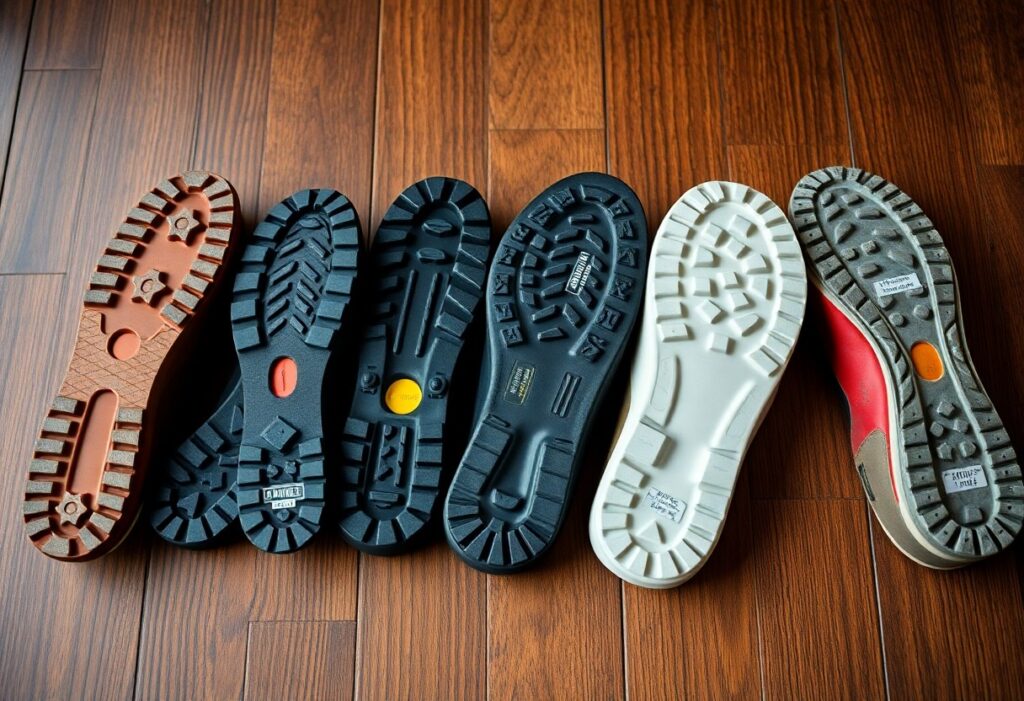
The right sole changes how a shoe feels, lasts, and performs in real weather. If you want the simplest rule, choose leather for formal dry wear, rubber for grip and wet conditions, and a hybrid or mixed sole when you want a balance of looks and practicality.
Quick way to choose
- Formal Office Or Dress Shoes single leather or city rubber.
- Daily Commuting And Rain rubber, Dainite, or city rubber.
- Comfort-First Casual Wear crepe or a lighter mixed sole.
- Outdoor Or Rougher Use double leather, nitrile cork, or studded rubber.
- Best All-Round Compromise hybrid options like Topy or HAF constructions.
For a deeper material comparison, the most useful companion read is this leather-versus-rubber soles guide, which helps you narrow the broadest choice before you compare the specific sole constructions below.
The Main Sole Families, Explained Clearly
Shoe and boot soles usually fall into three broad groups: traditional leather, rubber-based soles, and mixed or hybrid constructions. That distinction matters because it helps you separate style-driven choices from performance-driven ones before you get lost in individual names.
Leather Soles: The Classic Formal Choice
Leather soles are still the reference point for many dress shoes. They breathe well, feel refined underfoot, and develop a more personal fit over time as they soften and mold to the shape of your stride. That natural feel is a major reason leather remains popular in formal footwear.
The trade-off is predictability in wet weather. Leather gives excellent ground feel, but it is less forgiving on slippery pavement and needs more care to avoid premature wear. If you wear dress shoes mostly indoors, in offices, or in dry climates, leather remains an excellent and often elegant answer.
Single Leather, Double Leather, And Haf Constructions
A single leather sole is the lightest and most classic version. It flexes well, looks sleek, and suits shoes where a clean profile matters more than maximum protection. A double leather sole adds thickness and resilience, which is useful if you expect more daily wear, colder floors, or a little more protection from the ground.
HAF soles, where the forepart uses a more substantial build while the waist and heel stay lighter, aim for a practical middle ground. The logic is straightforward: reinforce the highest-wear areas without making the whole shoe bulky. That makes HAF a smart option for someone who likes the look of a dress shoe but wants a longer-lasting sole package.
Rubber Soles: The Practical All-Weather Pick
Rubber soles are the easiest answer when grip and water resistance matter. They handle wet sidewalks, unpredictable commutes, and repeated daily use better than leather, and they usually ask less of you in maintenance. If your shoes need to perform more than they need to impress, rubber is often the sensible choice.
The key benefit is traction. The downside is that rubber can feel warmer and less breathable, especially in hot weather. That said, modern compounds vary widely, so a slim city rubber sole can still look sharp enough for office wear while offering a noticeable gain in practicality.
City Rubber, Topy, Dainite, And Studded Patterns
City rubber is designed to keep a dressier outline while improving traction and weather resistance. It is a strong everyday option if you want a shoe that still looks polished on formal days. Topy takes a different approach by adding a thin rubber layer over leather, which helps extend life without changing the shoe’s overall character too much.
Dainite and similar studded soles are especially helpful for business casual shoes and dress boots. The studs improve surface contact and wear resistance while keeping the sole visually restrained. Just keep in mind that some rubber compounds can feel firmer in cold weather, so the exact material matters as much as the pattern.
Natural And Mixed Soles For Comfort And Versatility
Mixed soles blend materials to get around the limits of a single one. Nitrile cork soles are a good example: they combine lighter weight with durability and often show up on work shoes and boots. They sit in a practical middle band between the refinement of leather and the toughness of heavier rubber.
Crepe soles sit at the comfort end of the spectrum. They feel soft, absorb more impact, and suit casual shoes where all-day comfort is the priority. Their weakness is wear life and wet-surface predictability, so they are best for casual use rather than demanding conditions.
How To Choose By Use Case
The most useful way to choose a sole is to start with your routine, not with a material name. A beautiful sole that does not fit your weather or walking habits will still disappoint you.
For formal wear
Choose single leather if style and flexibility matter most. Choose city rubber if you still want a dressy look but need better traction for commutes or occasional rain.
For everyday use
Rubber, Dainite, or Topy-style soles usually make the most sense. They hold up better on sidewalks, parking lots, and mixed indoor-outdoor walking.
For boots and rougher wear
Double leather, nitrile cork, and studded rubber soles are strong options when durability and foot protection matter more than a slim profile.
For comfort-led casual shoes
Crepe can be the most comfortable-feeling choice, but only if you are comfortable replacing it sooner and avoiding wet or very hot conditions.
Weather, Timing, And When The Choice Changes
Timing matters more than many buyers expect. If you are shopping ahead of a wet season, winter travel, or a period of heavier daily walking, the right sole choice becomes more about traction and recovery than appearance alone.
If you are also deciding whether a shoe is worth repairing or whether you should start fresh, it helps to compare the sole against the rest of the build. That is where this repair-versus-replace guide becomes useful, especially when the sole is worn but the upper is still in good shape.
Maintenance That Actually Extends Sole Life
The same sole can age very differently depending on how you care for it. Leather needs moisture protection and a little patience after rain. Rubber needs cleaning so grit does not abrade the tread. Mixed soles need the same basic discipline: remove dirt, let them dry naturally, and avoid storing them while damp.
A few habits make a real difference: rotate pairs so one sole is not taking every day’s impact, keep shoes on trees when the upper design supports it, and check wear patterns before the tread is gone. Early edge wear, cracking, or a flattening tread surface usually tells you it is time to act before comfort and traction drop off.
If your footwear uses leather components as well as leather soles, material quality still matters. This guide to leather types and uses is a helpful companion when you want the sole choice to match the upper rather than fight it.
A practical takeaway before you buy
If you want the sharpest look, lean leather. If you want the safest everyday choice, lean rubber. If you want one pair to bridge both worlds, look for a hybrid or reinforced sole such as city rubber, Topy, Dainite, nitrile cork, or an HAF build.
When in doubt, start with your most common walking surface and your worst expected weather, not with the shoe’s marketing label.
For the clearest side-by-side material breakdown, revisit leather vs. rubber soles, then use the comparisons above to decide whether you need a classic, a practical daily option, or a compromise build.
Frequently Asked Questions
What Are The Different Types Of Shoe Soles?
The main types are leather soles, rubber soles, crepe soles, and mixed or hybrid soles. Within those groups you will also see variants such as single leather, double leather, HAF, city rubber, Dainite, Topy, and nitrile cork.
What Is The Most Comfortable Sole Type?
Crepe is often the softest and most cushiony feeling for casual wear, while leather can become very comfortable once broken in. The most comfortable choice depends on whether you want softness, flexibility, or all-day support in mixed conditions.
What Are The Benefits Of Double Soles Versus Single Soles?
Single soles are lighter, more flexible, and sleeker in appearance. Double soles are thicker, more durable, and better at handling rougher use or colder ground, though they usually take longer to break in.

Jessica Linford is an insightful author for My Shoes Finder, where she explores a wide array of general topics that resonate with everyday readers. With a passion for storytelling and a keen eye for detail, she brings a unique perspective to her writing, aiming to inform and inspire through her engaging content. Jessica’s diverse interests drive her curiosity, allowing her to connect with audiences on various subjects while sharing practical tips and relatable anecdotes.
See also:
 Xero Shoes For Achilles Tendonitis: 2025 Rehab Protocol And Loading Guide
 Leather Vs Rubber Soles: Which One Should You Choose?
 Xero Shoes For Office Workers: 2025 Style And Comfort Guide
 How To Choose The Right Leather Type For Shoes And Accessories
 Why Waterproofing Spray Can Ruin Smooth Leather Shoes
 Xero Shoes For Summer Travel And Hot-Weather Adventures
It’s fascinating how often the soles of shoes are neglected in discussions about footwear choice. I’ve always found that the right sole makes a huge difference! For instance, I once opted for a pair of double leather-soled shoes for a job interview, and not only did they offer incredible support, but they also molded beautifully to my feet over time. It’s interesting that while some prefer the classic aesthetic of leather, others might lean towards rubber for traction—especially in wet conditions.
You bring up a great point about the soles of shoes and their significant impact on overall comfort and functionality. When I think about it, the sole can completely change the character of a shoe, providing not just support but also influencing our confidence while we wear them. Your experience with double leather-soled shoes at a job interview really highlights how well-made footwear can offer both comfort and style when it matters most.
You make an interesting observation about the role of shoe soles in both comfort and confidence. I’ve found that the type of sole can really set the tone for not just how a shoe feels but also how we carry ourselves. I had a pair of well-cushioned sneakers that felt like walking on clouds, and wearing them would always boost my mood, especially during long days at work.
You make a really great point about how shoe soles can influence not just comfort but also our overall demeanor. It’s fascinating how something as seemingly simple as footwear can affect our mood and posture throughout the day. I can relate to that feeling you described with your cushioned sneakers. I have a pair of shoes that feel incredibly supportive, and on days when I know I’ll be on my feet a lot, I always reach for them. There’s something reassuring about knowing you have that little extra comfort beneath you.
You’ve nailed it! It’s wild how much our choice in footwear can set the tone for our day. Those supportive shoes aren’t just a luxury; they really boost your confidence and energy. It’s like having a solid foundation. When my sneakers cushion my steps, I feel more ready to take on whatever comes my way.
You’re spot on about that sense of support footwear can give us. It’s interesting how we often overlook the little daily choices, like our shoes, and how they can shift our whole vibe. I totally get the feeling you experienced with your cushioned sneakers. When I slip into my favorite pair, it’s like a small, comforting embrace.
It’s so true how the right shoes can change our mindset, isn’t it? I think the magic lies in that little boost of comfort and confidence. It’s like they create a mini sanctuary for our feet, allowing us to tackle the day more comfortably. It’s amazing to think that something as simple as footwear can influence our mood and even our interactions with others. Have you ever noticed how slipping on your favorite pair can make mundane tasks feel more enjoyable? It’s those small joys that really add up, creating a sense of well-being that can ripple through our day.
I really resonate with what you’re saying about the transformative power of the right shoes. It’s fascinating to consider how something as seemingly simple as footwear can have such a profound impact on our overall mindset and daily experiences. I often find that putting on my favorite sneakers instantly puts me in a better frame of mind, almost as if they carry a bit of that comfort and familiarity with them wherever I go.
I totally resonate with what you said about footwear’s role in our daily lives. It’s fascinating how something as simple as our shoes can influence how we feel, almost like setting the tone for our day. When I put on my favorite pair of sneakers, I also feel that little lift—it’s like a gentle reminder that I’m ready to take on whatever comes my way.
It’s really interesting how shoes can have such a psychological impact, isn’t it? Your experience with well-cushioned sneakers definitely resonates. When you’re comfortable, it naturally affects your mood and how you navigate your day. I think it goes deeper than just physical comfort, too—there’s something about the act of wearing shoes that make us feel more grounded or confident.
It really is fascinating how shoes play such a crucial role in our daily lives, isn’t it? I’ve noticed that when I wear my favorite well-cushioned sneakers, not only do my feet feel great, but my overall mood seems to lift. It’s like these shoes provide a little extra bounce in my step.
I completely relate to your thoughts on the importance of soles in footwear choice. It’s intriguing how often they’re overlooked, especially since the right sole can influence not just comfort but also performance. I’ve had my share of struggles with poorly constructed shoes that just didn’t hold up, particularly during long days.
I can relate to the importance of soles; I recently discovered some great options for barefoot sneakers that really prioritize comfort and support while still looking stylish.
‘Sneakers Barefoot: Shop Barefoot Sneakers for Women Now!’
https://myshoesfinder.com/barefoot-shoes-women/sneaker-shoes-for-women/.
It’s great to hear that you can relate to the significance of soles in footwear. It’s easy to overlook how crucial they are until we experience discomfort or fatigue during a long day on our feet. The experience of poorly constructed shoes can truly be frustrating; it often leads to a ripple effect, where the discomfort diminishes our overall performance and enjoyment, whether we’re at work, out for a walk, or hitting the gym.
I can definitely relate to your experience with soles in footwear. It’s remarkable how such a fundamental aspect of shoes can significantly impact our daily lives, especially when we rely on them for comfort and support during long periods. I know what it’s like to be on your feet all day and feel the difference when shoes don’t offer the right support.
I completely resonate with your insights on soles in footwear. It’s fascinating how the right support can make such a noticeable difference in our day-to-day activities. I remember a time when I was working long hours on my feet, and I tried various shoe brands, thinking it was all about style. It took a while to realize that comfort and proper support were priorities I shouldn’t compromise on.
I completely get where you’re coming from about the significance of soles in footwear. It’s interesting how something so fundamental can really make or break an experience, especially when you’re on your feet for long hours. I’ve had my fair share of uncomfortable shoes that left my feet begging for relief at the end of the day. It’s definitely a game-changer to invest in a good sole that not only supports you but also contributes to overall well-being.
You raise a great point about how often the soles of shoes get overlooked in these discussions. It’s true that the soul of a shoe—the sole—can significantly influence not just comfort but the entire experience of wearing them. You’ve shared a valuable personal touch with your choice of double leather soles for that job interview. The way shoes mold to your feet over time is a testament to the relationship we can build with our footwear. There’s something satisfying about a shoe that adapts to you rather than the other way around.
You really touched on something important there—the way the sole of a shoe can transform the entire wearing experience. I’ve always thought of shoes as more than just a covering for our feet; they’re almost like companions that we rely on through various life experiences.
You’ve highlighted such an interesting aspect of footwear that often gets brushed aside. The experience of finding that perfect shoe—one that becomes a part of you—is really unique. I think it ties into a larger conversation about how we sometimes overlook the importance of comfort in our fast-paced lives, not just in shoes but in many aspects of our daily routines.
You’ve highlighted such an interesting aspect of footwear that often gets brushed aside. The experience of finding that perfect shoe—one that becomes a part of you—is really unique. I think it ties into a larger conversation about how we sometimes overlook the importance of comfort in our fast-paced lives, not just in shoes but in many aspects of our daily routines.
You bring up a really important point about shoe soles, and it’s so true how often they get sidelined in the footwear conversation. A good sole can really make or break not just comfort, but also the overall style of the shoe. Your experience with the double leather-soled shoes is a perfect example; they really do have a way of forming to your feet and becoming unique to you over time. Leather can seem a bit rigid initially, but once it breaks in, it’s like having a custom mold that fits just right.
You bring up such a crucial point about shoe soles! It’s fascinating how often they’re an afterthought, despite their impact on our daily comfort and safety. Personally, I’ve always leaned towards rubber soles for my outdoor adventures. They really do provide that extra grip on slippery trails.
You make such a great point about the importance of shoe soles. It’s true; they often get overlooked, but they play a significant role in our overall experience, especially when we’re out in nature. I’ve also found that rubber soles are a game-changer, particularly on those unsteady trails where every step counts. It’s interesting how certain materials can drastically alter our interaction with the environment.
You touch on something really important about shoe soles that often goes unnoticed, and I’m glad you brought it up. While many people might focus on the upper part of the shoe—style, fit, materials—the sole is where the real functionality lies. It’s what connects us to the ground, and that connection can make or break our experience.
You’ve raised a compelling point about the often-overlooked importance of shoe soles, which are critical not just for comfort but also for overall safety and well-being. I appreciate how you’ve highlighted the diversity in sole materials and their practical implications, as this is something I believe many consumers tend to underestimate.
You nailed it with your observation about shoe soles. It’s easy to overlook them when we’re caught up in style or brand names. But that diversity in materials can really make a difference, especially if you’re on your feet all day or navigating tricky terrain.
This post really resonates with me, especially considering how often we overlook the soul of our shoes—quite literally! I can relate to the experience of investing in a good pair of shoes and then being disappointed because the soles were not suitable for the intended use. I once bought a lovely pair of leather-soled dress shoes for a wedding, which turned into a slippery nightmare on outdoor surfaces. The right sole can truly make a world of difference, and it’s intriguing how even minor choices in footwear can impact our comfort and safety.
I get where you’re coming from. It’s wild how something as simple as a shoe sole can turn an event from a stylish affair to a slippery struggle. You’d think that just because a pair of shoes looks sharp, they’d also be functional. But sometimes those leather soles are more for aesthetics than practicality—great for standing around in a hall, not so much for navigating grass or uneven surfaces.
I couldn’t agree more about the importance of shoe soles! It’s fascinating how often we focus on style or brand, overlooking what really supports us day in and out. I’ve found that investing in a good pair of shoes with quality soles can make a world of difference, especially for my daily walks. For instance, I switched to shoes with a rubber sole for rainy days and the grip is incredible—way less slipping around!
You’ve touched on a crucial aspect of footwear that often gets overshadowed by the latest style trends or brand names—shoe soles. It’s interesting how the sole can make such a significant impact on our overall experience with a pair of shoes. Personally, I’ve noticed that when I invest time in understanding the sole material and design, it pays off in comfort, performance, and even my health.
Ah, the humble shoe sole—a topic that many might sweep under the rug (or should I say, under the sole?) but one that quite literally supports our lives. It’s incredible how much thought goes into something we often take for granted! If shoe soles had a voting booth, I suspect they’d be running for the ‘Most Overlooked Hero’ award, right alongside the unsung cardboard box and that friend who always reminds us about the importance of hydration.