
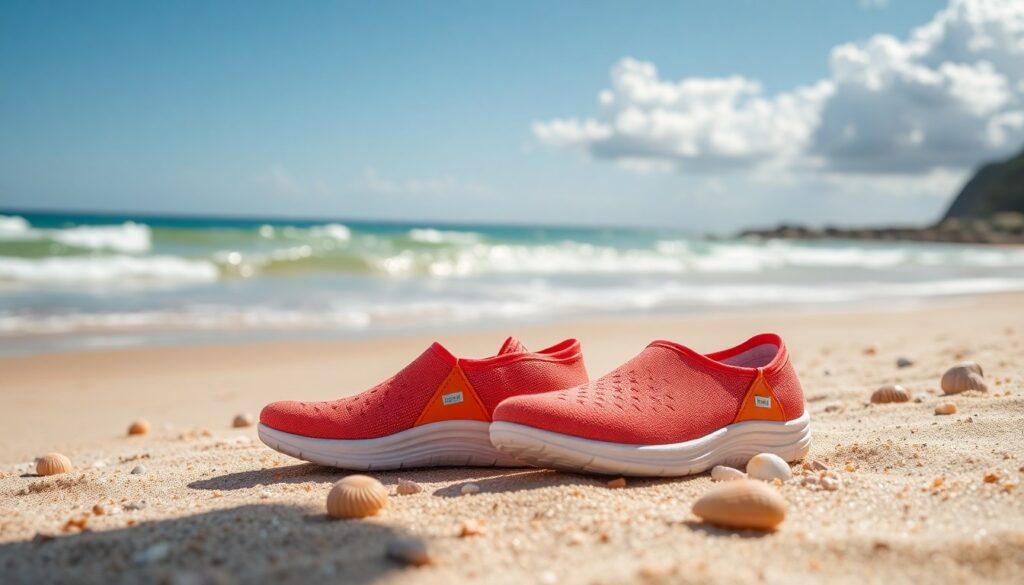
Barefoot shoes can be an excellent beach choice when you want more ground feel than a regular trainer and more protection than going fully unshod. The right pair handles hot sand, wet entries, shells, and slick rocks without feeling bulky.
Quick decision
Choose barefoot beach shoes if you want flexibility, quick drainage, and a natural stride on mixed sand and shoreline terrain. If you’ll spend most of the day in and out of the water or need maximum toe coverage around sharp reef, a dedicated water shoe may fit better. For long promenade walks or uneven boardwalks, a more cushioned walking shoe may be the safer pick.
| Beach scenario | Best option | Why it works |
|---|---|---|
| Soft sand and casual shoreline walking | Barefoot beach shoes | Light, flexible, and easy to move in without losing protection. |
| Rock pools, sharp shells, reef edges | Barefoot water shoes | More coverage and abrasion resistance for rougher terrain. |
| Long seaside walks with dry paths | Minimal walking shoes | A better option when you need all-day cushioning and less sand intrusion. |
| Sunrise jogs or travel days by the coast | Hybrid minimalist sandals | Useful when packability and fast drying matter most. |
If you want the broader barefoot-walking context after this beach-specific guide, see our general barefoot walking guide.
What Matters Most In Barefoot Beach Shoes
Beach footwear has a different job from a city walking shoe. Sand shifts, water gets in, heat builds quickly, and the ground can change from soft and forgiving to sharp and unstable in a few steps. The best barefoot beach shoes solve those problems without taking away the natural feel people want from minimalist footwear.
Grip On Sand, Not Just On Pavement
On the beach, traction is about more than tread depth. You want a sole that can handle soft sand, wet sand, and slippery rock without feeling stiff. Flexible rubber with a directional or micro-textured tread usually gives the best balance. Deep lugs can help on uneven shorelines, but if they are too aggressive, they trap sand and make the shoe feel clumsy.
Drainage And Drying Speed
A beach shoe should let water escape quickly. Mesh uppers, drainage ports, and non-absorbent materials keep the shoe from turning heavy after a wade. Fast drying matters just as much as quick drainage because damp shoes can cause rubbing, odor, and skin irritation before the day is over.
Shell, Coral, And Hot-Sand Protection
Minimalist does not have to mean exposed. A thin, puncture-resistant sole protects against shells and small stones while still letting you feel the ground. On hotter days, a slightly more substantial outsole can make the difference between an enjoyable walk and a painful one.
That’s why a good barefoot beach shoe is not just “light.” It is light, protective, quick to dry, and easy to move in when the terrain keeps changing.
A Practical Buying Checklist For The Coast
When you are choosing between beach shoes, sandals, and water-ready minimalist models, use the conditions of your actual trip to decide. The list below keeps the purchase focused on the terrain you will really face.
- Soft Sand pick a flexible sole and a secure fit so the shoe does not twist or fill with sand.
- Rocky Shorelines look for better outsole protection and a toe box that doesn’t compress when you step sideways.
- Tide Pools And Wet Entries prioritize drainage, quick-dry uppers, and grippy rubber that stays stable when wet.
- Hot Midday Walks choose breathable materials and enough sole thickness to keep heat from coming through too quickly.
- Travel And Packing keep weight low and favor shoes that dry overnight if they need to go back in a bag.
When to book or buy before a beach trip
If you are shopping for a coastal holiday, order early enough to test sizing and break the shoes in for at least a short walk. Minimalist footwear can feel different on sand than it does indoors, and a poor fit becomes more obvious after a long shoreline session or a wet crossing.
For travelers who want a packing-first approach, compare this guide with the travel packing guide and lightweight packable shoe options before you choose.
Beach Shoes, Water Shoes, And Minimalist Sandals: How They Differ
The biggest mistake shoppers make is treating all beach-ready footwear as the same. They are not. Each category solves a different problem, and the better choice depends on how much time you will spend walking, wading, or climbing over rough ground.
| Type | Best for | Strengths | Trade-offs |
|---|---|---|---|
| Barefoot beach shoes | Casual beach walking, soft sand, mixed shoreline use | Natural movement, low weight, easy packing, good ground feel | Less coverage than a full water shoe on rough reef or heavy debris |
| Water shoes | Swimming entries, rocky bottoms, tide pools | More protection, better for submersion, often stronger toe coverage | Can feel warmer and less natural underfoot |
| Standard walking shoes | Boardwalks, resort paths, long dry walks | More cushioning and all-day comfort on firm surfaces | Heavier, slower to dry, and less natural on sand |
| Minimalist sandals | Travel, hot climates, quick changes in and out of water | Very packable, breathable, and fast drying | Less enclosure, so fit security matters more |
If your beach plans overlap with summer road trips or mixed outdoor days, the broader seasonal roundup in the summer adventure guide can help you decide whether a beach-specific shoe is enough or whether you need something more versatile.
Models And Features Worth Looking For
The original article mentioned specific sandals and brands, and that direction still makes sense for beach use. The key is to judge them through the beach lens rather than through general barefoot-shoe language. On shoreline terrain, a model earns its place by staying secure, drying fast, and resisting sand buildup.
Features to prioritize include adjustable straps, easy on-off construction, flexible midsoles, and outsoles that remain grippy when wet. If you prefer a sandal-like feel, a minimalist sandal with stable straps may be enough. If you expect rocks, tide pools, or broken shell areas, a more enclosed model is safer. For readers who want a sandal-first path, our Xero sandal roundup is the most relevant next step.
For Soft Sand And Casual Strolls
A lighter, more flexible shoe usually feels best. You want enough structure to keep the shoe from folding awkwardly in the sand, but not so much that it becomes stiff or hot.
For Rockier Shorelines And Reef Edges
Choose more protective uppers and tougher outsoles. This is where a barefoot water shoe or a reinforced minimalist sandal can be worth the trade-off in bulk.
For Travel And Repeat Wear
Look for quick-drying materials and simple cleaning. Shoes that rinse well and dry overnight tend to hold up better when they are used every day on a trip.
Comfort, Foot Movement, And Why The Barefoot Feel Matters
Once the beach-specific decision is clear, it is worth revisiting why barefoot shoes appeal to so many walkers in the first place. The wide toe box, flexible sole, and low-profile build let your foot move more naturally than in a standard trainer. On sand, that can mean better balance, less stiffness, and a more responsive stride.
This natural movement is most useful when the surface is unstable. Sand gives way under pressure, so your feet and ankles constantly make small adjustments. A shoe that moves with your foot helps you adapt without feeling trapped by a rigid sole.
That said, barefoot shoes are not magic. If you are walking on very hot sand, sharp coral, or a beach with a lot of debris, the same minimal structure that feels freeing can also leave you underprotected. That is why the beach context matters more than the general “barefoot” label.
Good Rule Of Thumb choose the least shoe you can wear comfortably, but not less. For soft sand and easy shoreline walks, barefoot beach shoes are often enough. For sharp, wet, or uneven ground, move one step up in protection.
How To Use Them Safely On The Beach
Barefoot shoes improve comfort and protection, but they do not remove beach hazards. Use the shoes as part of a simple safety routine that takes the environment seriously.
- Check The Ground Before Stepping Onto Wet Rock Or Shell-Covered Sand. A quick look prevents most stubs and slips.
- Walk Shorter Steps On Slick Surfaces. This improves balance when the beach is wet or uneven.
- Rinse After Saltwater Use. Salt and grit shorten the life of straps, mesh, and stitching.
- Dry In The Shade. Direct heat can warp materials and make the shoe wear out faster.
- Test Fit Before The Trip. A shoe that feels fine indoors may rub once sand and water enter the picture.
If you are still in the research stage and want a broader brand-by-brand view, the pages on lightweight travel options and summer adventure use are useful complements, especially if your beach shoe also needs to work for airport days or city walks.
Care, Drying, And Keeping Beach Shoes In Shape
Beach conditions are hard on footwear. Sand works into seams, salt can wear down hardware, and repeated wet-dry cycles can break down adhesives if you are careless with cleaning. The good news is that barefoot beach shoes are usually easy to maintain when you build in a few habits from the start.
After The Beach
Shake out sand, rinse with fresh water, and remove salt residue before it hardens. If a model has drainage points, make sure they are clear so the shoe keeps drying efficiently.
During Drying
Air-dry in the shade. Stuffing them lightly with paper can help hold shape, but avoid direct sun or intense heat that can make rubber brittle.
For Storage
Keep them in a cool, dry place and let them fully air out before packing them away. A damp shoe stored in a closed bag is one of the fastest ways to invite odor and wear.
The same maintenance advice applies whether you choose sandals, low-profile shoes, or water-friendly minimalist models. The more often the shoes are exposed to salt, the more important routine care becomes.
The Bottom Line For Beach Buyers
Barefoot shoes are a strong choice for beach walking when you want a lightweight, flexible option that still protects your feet from shells, hot sand, and rough patches. They are especially useful for people who value natural movement and want footwear that can handle both sand and short water crossings.
They are not the best fit for every shoreline. If your beach day involves sharp reef, long periods in the surf, or a lot of wet-rock climbing, a water shoe or more protective hybrid may be smarter. If your day is mostly dry boardwalks and long stretches of firm ground, a different walking shoe may be more comfortable.
Need the broader barefoot-walking version?
If you want all-purpose minimalist shoe guidance rather than beach-specific advice, start with the general walking guide and then come back to this page for shoreline conditions.
Frequently Asked Questions
Are Barefoot Shoes Good For The Beach?
Yes, if you want natural movement with light protection. They work best on soft sand, mixed shoreline paths, and short wet crossings, but very rocky or shell-heavy areas may call for a more protective water shoe.
What Are The Best Shoes To Wear To Walk On The Beach?
The best choice depends on the terrain. Barefoot beach shoes are a strong fit for soft sand and casual walks, while water shoes are better for sharp reef or long periods in the surf. Standard walking shoes suit firm dry paths better than loose sand.
Can I Walk Barefoot At The Beach?
You can, but barefoot shoes add a useful layer of protection against hot sand, shells, glass, and hidden debris. If the beach is well-kept and the sand is cool, some people prefer going fully barefoot for short stretches.
Who Shouldn't Wear Barefoot Shoes?
People who need substantial cushioning, strong arch support, or maximum toe protection may prefer another shoe type. Anyone with a foot condition should consider their specific needs and choose footwear based on comfort, stability, and medical advice where appropriate.

Oliver Prescott is a dedicated author and content creator at My Shoes Finder, where he explores a diverse range of topics focusing on lifestyle, fashion, and personal development. With a keen eye for detail and a passion for storytelling, he connects with readers by providing insightful and engaging content. Oliver’s writing aims to inspire and inform, making complex ideas accessible and relatable to a broad audience. When he’s not writing, he enjoys exploring new shoe trends and sharing his findings with fellow enthusiasts.
See also:
 Barefoot Shoes For Tropical Weather: What To Wear In Heat, Humidity, And Rain
 Are Barefoot Shoes Good For Wet Hiking? What Works, What Fails, And When To Avoid Them
 Xero Shoes For Hot Weather: Breathable Picks For Cool, Dry Feet
 Xero Shoes For Children In 2025: Fit, Safety, And Best Models
 Summer Shoes For Beach Days, Travel, And Warm-Weather Adventures
 Xero Shoes For Travel: The Best Lightweight, Packable Options For 2025


Your vivid description evokes such a serene image of beach life that brings back fond memories of my own time spent along the shore. There’s something incredibly grounding about feeling the elements around us—sand beneath our feet, the sound of waves crashing, and the invigorating scent of salty air. I can certainly relate to the delight of walking barefoot as we connect with nature, yet I’ve also experienced the discomfort of unseen hazards like sharp shells or hot asphalt, particularly when transitioning from beach to boardwalk. It’s fascinating how barefoot shoes bridge that gap by allowing us to experience the earth beneath us while providing protection.
It’s interesting how the beach can evoke such powerful memories and sensations. I think you’ve captured the essence of that connection beautifully. The way nature envelops us, from the feel of the sand to the sound of the waves, creates a unique sense of peace.
I love how you’ve captured the essence of barefoot shoes! There’s something incredibly liberating about feeling the earth beneath your feet, yet I completely agree that having that extra layer of protection can make all the difference, especially in varied environments like beaches or rocky trails. It’s fascinating to think about how our footwear has evolved. I can’t help but compare it to the rise of minimalism in many areas of life, where we seek to return to basics while still enjoying the benefits of modern technology.
I’m glad you connected with the essence of barefoot shoes! That feeling of the earth beneath your feet really does tap into something primal, doesn’t it? There’s a unique joy in experiencing different surfaces—whether it’s soft sand or rugged terrain. It’s like our feet become more attuned to the environment around us. I think many of us can relate to that liberating sensation, especially when we spend so much of our lives in cushioned footwear.
Ah, the classic dilemma: do you want to feel the sand *between* your toes or risk a surprise encounter with a rogue seashell? It’s like a beachy game of “choose your own adventure!” Barefoot shoes sound like the perfect compromise—nature lovers can get that “I’m one with the Earth” vibe while keeping their feet intact.
I can totally relate to that feeling of freedom when you walk on the beach! Barefoot shoes really do seem like the perfect blend of nature and modern innovation. I recently got a pair and took them for a stroll down the coast—what a game-changer! The flexibility and comfort they provide made me feel way more connected to the ground, while still protecting me from those pesky shells.
Your description of barefoot shoes captures the natural synergy between comfort and protection wonderfully. I’ve always been drawn to the idea of feeling connected to the earth while still having some safeguards in place. It’s interesting to consider how these designs reflect a broader trend toward minimalism and a return to nature in various aspects of our lives—whether that’s in our food choices, lifestyle, or even the footwear we choose.
I love the way you describe barefoot shoes; they really do strike that perfect balance between feeling connected to the earth and keeping our feet safe from those little hazards we often overlook. I’ve recently started exploring different types of terrain while out for runs, and it’s such a game-changer to have shoes that allow my feet to move naturally. I’ve noticed they help me feel more grounded and aware of my surroundings, which is a refreshing change from traditional sneakers that can sometimes feel too clunky.
Your vivid depiction of barefoot shoes beautifully captures their essence and the unique blend they offer between comfort and protection. I’ve found that wearing them during my beach runs not only enhances my connection to the environment but also improves my overall foot strength and posture.
I completely resonate with your experience of barefoot shoes, especially during beach runs. There’s something incredibly grounding about feeling the sand beneath your feet while still having that level of protection. It’s fascinating how these shoes can enhance not only our physical connection to the environment but also empower our body’s mechanics.
Your depiction of barefoot shoes really resonates with me, especially the idea of balancing natural movement with protection. I’ve been exploring minimalist footwear recently, and I’ve found that it not only helps with foot strength but also enhances my connection to the ground. However, I wonder if there’s a trade-off between durability and the level of ‘barefoot’ experience these shoes provide. It seems like a fine line to walk—too much cushioning could detract from the natural feel, while too little might lead to discomfort in rough environments.