
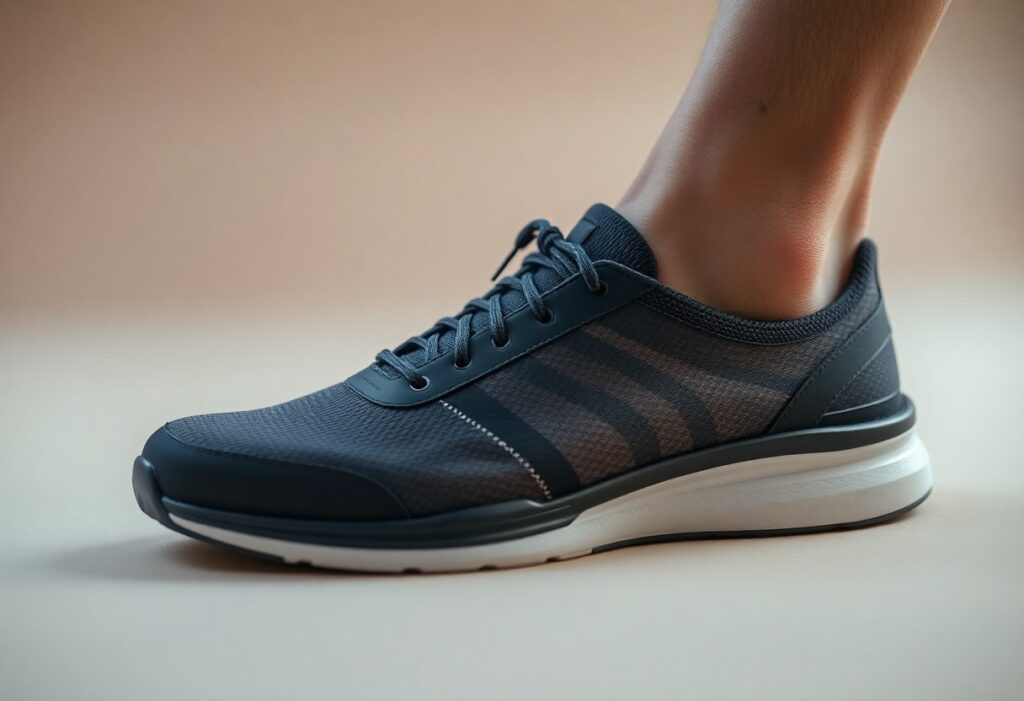
If you have diabetic neuropathy, the most useful shoes are the ones that reduce pressure, limit rubbing, and help you notice problems earlier. That means looking past marketing claims and focusing on practical safety features that support daily comfort and foot protection.
What matters most at a glance
Choose a roomy toe box, low-friction interior seams, stable cushioning, breathable materials, and a fit that stays secure without compressing the foot. If you want a broader safety framework for diabetic footwear, start with the diabetic safety guide and then come back to compare neuropathy-specific features.
Some advanced materials, such as antimicrobial linings or pressure-mapping insoles, can be helpful additions, but they should support safe fit and comfort rather than replace them.
The Features That Matter Most
The original article focused heavily on vibration, nanotechnology, and laboratory-style claims. Those ideas are interesting, but for real-world diabetic neuropathy care, the decision usually comes down to whether a shoe protects the foot from pressure points, heat, moisture, and friction. The best pair will not “reverse” neuropathy, but it can lower the chance of skin breakdown and make walking feel steadier and less irritating.
That is why the practical conversation should start with fit and construction. A shoe that is too narrow, has a stiff seam over a sensitive area, or traps moisture can create problems quickly. A shoe with more intelligent cushioning, better lining materials, and careful internal shaping can make everyday wear safer and more comfortable.
| Feature | What to look for | Why it helps in neuropathy |
|---|---|---|
| Toe box | Wide, tall, and uncramped | Reduces pressure on toes, bunions, and areas you may not feel rubbing right away |
| Sole and cushioning | Stable cushioning with enough ground protection | Helps absorb impact without creating a sloppy fit or unstable step |
| Seam placement | Smooth interior, minimal raised stitching | Lowers friction and blister risk, especially when sensation is reduced |
| Breathability | Mesh, moisture-wicking linings, or vented construction | Helps keep feet drier and may reduce the conditions that encourage skin irritation and odor |
| Antimicrobial lining | Treatments or fabrics designed to resist microbial growth | Can support hygiene, especially if feet sweat easily, though it should never be the only protection feature |
| Fit security | Snug heel hold without forefoot squeeze | Reduces sliding, which can create friction and hidden hotspots |
How Innovative Materials Can Help Without Overpromising
The original draft highlighted vibrational orthoses, stochastic resonance, and pressure-mapping systems. In a research setting, those technologies can be useful for understanding how forces move through the foot and how certain stimuli affect sensation. In a shopping or care context, though, the safer takeaway is simpler: advanced design can improve comfort and may help some people feel more stable, but it is not a substitute for proper medical care, inspection, and fitting.
If a shoe uses pressure-mapping data or adaptive cushioning, that may improve how the sole spreads load under the foot. For someone with neuropathy, that matters because fewer pressure spikes can mean less irritation in areas that are already vulnerable. Likewise, a moisture-managing lining can be helpful because sweat trapped inside a shoe can soften skin and make it more likely to break down.
The same logic applies to antimicrobial features. Materials treated to resist bacteria or fungi may support hygiene, especially if you wear the same shoes for long periods or live in a warm climate. But antimicrobial construction should be viewed as one layer of protection, not a guarantee. Regular sock changes, drying time, and foot checks still matter more than any single shoe technology.
A note on sensation-focused footwear
Claims that vibration can restore nerve function or reverse damage go beyond what most readers need and beyond what footwear can reliably promise. A better expectation is modest: some designs may improve comfort, awareness, or balance cues, but diabetic neuropathy still requires medical oversight and routine foot monitoring.
What To Check Before You Buy
A good diabetic neuropathy shoe should make inspection easy as well as walking comfortable. The interior should feel smooth when you run your hand through it. The toe area should not pinch when you stand, and the upper should leave enough room for mild swelling through the day. If you need a deeper comparison of comfort-oriented shapes and minimalist options, the neuropathy shoe guide is a useful next stop after this article.
- Try shoes later in the day, when feet are often slightly larger.
- Check both shoes for seams, folds, or hard edges inside.
- Make sure the heel holds securely without forcing the forefoot forward.
- Wear the socks you plan to use most often when trying them on.
- Look for enough depth to fit your foot without pressure from the upper.
When To Be More Cautious
If you have reduced circulation, a history of ulcers, foot deformities, or swelling that changes during the day, shoe choice deserves extra care. In those situations, even a well-made shoe can be wrong if the fit is off. People with diabetes should inspect their feet regularly and talk with a clinician, podiatrist, or diabetes care team if there are signs of redness, heat, cuts, blistering, or numb areas that are getting worse.
That advice matters because neuropathy can make an early problem feel minor or invisible. A shoe that seems comfortable at first may still create a hotspot over several hours of wear. If you notice a repeated pressure mark, that is a sign to reassess fit rather than “break in” the shoe and hope it improves.
Choose safety first, then add features
If your goal is protection, start with a safe fit and smooth construction. Then decide whether breathable materials, antimicrobial lining, or a more advanced sole actually adds value for your routine.
For readers comparing models in a broader barefoot or minimalist range, the diabetes safety guide is the better decision-stage resource, while this page helps you understand which advanced features are worth paying attention to.
Frequently Asked Questions
What Are The Best Shoes For Diabetic Nerve Pain?
The best shoes usually combine a wide toe box, smooth interior seams, stable cushioning, and a secure fit that does not compress the foot. If nerve pain is severe, a podiatrist can help match the shoe to your foot shape and risk level.
Do Neuropathy Shoes Really Work?
They can help when the design reduces pressure, friction, and moisture while improving comfort and stability. They do not cure neuropathy, but they can make daily wear safer and more manageable.
What Are The Worst Shoes For Neuropathy?
Shoes that are narrow, stiff, heavily seamed inside, or prone to slipping and rubbing are usually the worst choices. High heels, pointed toe boxes, and worn-out shoes can be especially risky.
Can You Reverse Neuropathy In Feet From Diabetes?
Footwear cannot reverse diabetic neuropathy. The realistic goal is to reduce irritation, protect the skin, and support safer walking while you work with a clinician on the underlying condition.
If you are comparing specific shoe families or want a more practical buying path, the safest next step is to review the diabetes safety guide first and then evaluate how each model handles fit, support, and interior smoothness.

Henry Harrington is a passionate author and content creator at My Shoes Finder, where he explores a wide range of topics related to footwear, lifestyle, and personal growth. With a keen eye for detail and a love for storytelling, Henry engages readers by sharing insights, tips, and personal anecdotes that resonate with his audience. His commitment to delivering high-quality content has established him as a trusted voice in the online community, inviting readers to step into new perspectives and discover their unique paths.
See also:
 Xero Shoes For Neuropathy: Are They Safe And Worth It In 2025?
 Are Xero Shoes Safe For Diabetic Patients? Risks, Fit Checks, And Podiatrist Guidance
 Vivobarefoots – Enhance Your Natural Foot Function
 How To Transition To Barefoot Shoes After 50: A Safe Step-By-Step Guide
 Therapeutic Benefits Of Xero Shoes: Who They May Help And When To Avoid Them
 Xero Shoes For Seniors: Comfort, Stability, And Fall-Prevention Considerations



It’s fascinating how technology is evolving to address specific health challenges like those faced by individuals with diabetes. The concept of vibrational foot orthoses really highlights the intersection of innovation and personal health. I can easily imagine how enhancing sensory feedback could empower wearers to engage more fully in activities they love, while also reducing risks that can often go unnoticed.
It’s great to hear your thoughts on vibrational foot orthoses. It really is a fascinating area of innovation. The way these devices can provide real-time feedback could change the game for individuals managing diabetes, especially in preventing complications. It’s not just about comfort but also about encouraging active lifestyles while keeping safety in mind.
It’s encouraging to see such a thoughtful perspective on this topic. The challenges faced by individuals with diabetes are often complex, and it’s refreshing to see technology stepping in to create meaningful solutions. Vibrational foot orthoses are a particularly exciting development because they not only offer a more intuitive way to manage health but also blend seamlessly into everyday life.
Ah, the age-old battle of keeping our feet happy and healthy while our taste buds often conspire against multiple rounds of dessert! As someone who has always lovingly referred to my feet as my “foundation of comfort,” it’s a bit startling to think about the unique challenges those with diabetes face, especially when it comes to foot health. The mention of diabetic neuropathy sends shivers down my spine—not just because of the potential for injuries, but also because it just plain sounds uncomfortable.
You’ve really hit the nail on the head with your thoughts on the delicate balance between satisfying our cravings and maintaining our health—especially when it comes to our feet, that foundation we often take for granted. The challenges faced by those with diabetes, particularly around foot health, can easily become a hidden struggle in daily life. You mention diabetic neuropathy, which is indeed a tough aspect to navigate. It’s not just about the discomfort; it can also mean being more vigilant about foot care because the nerves might not alert them when there’s an injury or issue.
This discussion on the challenges of diabetic neuropathy and the innovative solutions emerging in footwear technology strikes a nerve, quite literally, as it sheds light on a critical yet often overlooked aspect of diabetes management. The way diabetic foot health intertwines with sensory loss is something that people living with diabetes often grapple with in mundane yet significant ways. For many, it’s not just about managing blood sugar levels but also about safeguarding their mobility and overall quality of life.
The advancements in footwear technology and the introduction of vibrational foot orthoses (VFOs) are indeed fascinating! As someone who has witnessed the impact of diabetic neuropathy on loved ones, it’s encouraging to see innovative solutions that can potentially change lives. The ability to restore tactile feedback through calibrated vibration patterns is particularly promising; it connects the fields of technology and health in such a meaningful way.
The integration of vibrational foot orthoses (VFOs) into diabetes care highlights a significant advancement in managing diabetic neuropathy and its associated challenges. As someone with a deep interest in both technology and health, I find it fascinating how these innovations not only aim to restore sensory feedback but also empower individuals to take proactive steps toward their foot health.
Ah, the saga of diabetic foot health! If only our feet came with their own personal assistants, right? I mean, who wouldn’t want a little robot that gently taps you on the shoulder (or, um, the foot?) and says, “Excuse me, you might want to check that blister before it goes rogue on you!” But alas, until we invent that little gem, we have to rely on the blind faith that our normal sensory perceptions — or lack thereof — will guide us in our daily lives.
This whole topic on foot health and diabetic neuropathy is like realizing you’ve been walking around with a “do not disturb” sign on your feet. I mean, who knew that our toes could throw such a rebellious party when they lose their sensitivity? The innovations, like those vibrational foot orthoses (VFOs), are nothing short of a small miracle—turns out “vibrating shoes” can help with more than just annoying dance moves at weddings!
It’s funny to think of our feet like that—like they’ve got their own secret lives just waiting to be disrupted. That “do not disturb” sign really does capture the essence of how so many of us overlook foot health until issues arise. I can’t help but wonder how many people are walking around unaware of the little issues brewing because they’ve gotten so used to the numbness.
It’s fascinating to see how advancements in technology are genuinely transforming the approach we take toward managing diabetes, particularly in the realm of foot health. The role of vibrational foot orthoses (VFOs) seems promising, as it addresses a critical aspect of diabetic neuropathy: sensory perception. I often think about how something as simple as a lack of feeling in our feet can lead to significant challenges, not just physically but emotionally as well.
The discussion surrounding innovative footwear technologies and their implications for diabetic neuropathy is indeed crucial, particularly as the prevalence of diabetes continues to rise. As someone who has experienced the effects of reduced foot sensitivity firsthand, I appreciate the focus on how vibrational foot orthoses (VFOs) can potentially bridge the gap in sensory feedback.
Reading your post about the intersection of diabetes management and innovative footwear technologies opens up a wonderfully engaging dialogue on the often-overlooked aspects of diabetic care. The challenges posed by diabetic neuropathy, particularly concerning foot health and sensory perception, are something that many individuals living with diabetes must navigate daily. It’s not merely about keeping blood sugar levels in check; it’s about addressing the holistic health of the body, where feet often take a backseat until issues arise.
This discussion on diabetic foot health and the innovative solutions like vibrational foot orthoses really resonates with me. It’s enlightening to see how technology is merging with medical needs to create such tailored solutions. One of the most challenging aspects of managing diabetes is definitely the risk of unnoticed injuries, and I can relate to the anxiety that comes from worrying about foot complications.
Your exploration of vibrational foot orthoses (VFOs) raises some intriguing points about the intersection of technology and health, particularly for those managing diabetes. However, while the promise of enhanced tactile feedback is compelling, I wonder how accessible these innovations will truly be for the average patient.
It’s fascinating to see how innovation in footwear technology is addressing the unique challenges faced by those with diabetes. The discussion around diabetic neuropathy and its impact on foot health resonates deeply with many individuals, especially since the consequences can be dire if not properly managed. I have a close family member living with diabetes who has struggled with the discomfort and risks that come with decreased foot sensitivity. It’s heartbreaking to see the challenges they face daily, which lets me appreciate the importance of advancements like vibrational foot orthoses (VFOs).
Your exploration of diabetic foot health and the innovative technologies emerging to address these challenges is crucial, particularly given the rising prevalence of diabetes globally. While I find the advancements in footwear technology, including the proposed benefits of vibrational foot orthoses (VFOs), promising, there are underlying complexities that warrant deeper discussion.
Your observations on the complexities surrounding diabetic foot health really resonate with me. The rising prevalence of diabetes is indeed alarming, and with that comes the challenge of managing complications that can have a profound impact on quality of life. As for the innovations in footwear technology, like vibrational foot orthoses (VFOs), it’s fascinating how closely they’re tied to a better understanding of biomechanics and patient needs.
I appreciate the insights you’ve shared about the unique challenges posed by diabetes, particularly concerning foot health and sensory perception. As someone who has seen firsthand how diabetes can affect a loved one’s mobility and quality of life, I find the advancements in footwear technology and the role of vibrational foot orthoses (VFOs) particularly fascinating.
It’s fascinating to think about how technology is evolving to meet the specific needs of individuals living with diabetes, particularly when it comes to foot health. The concept of vibrational foot orthoses is particularly intriguing! As someone who has seen relatives struggle with diabetic neuropathy, I can’t help but appreciate how innovations like VFOs could truly make a difference in their everyday lives.
I completely agree with you about the fascinating advancements in technology for diabetes management, especially concerning foot health. Vibrational foot orthoses really stand out as an innovative approach to addressing issues like diabetic neuropathy. It’s heartening to think about a solution that could potentially lighten the load for those dealing with such challenges daily.
The insights on diabetic neuropathy and its implications for foot health resonate deeply with those of us navigating life with diabetes. The role of vibrational foot orthoses (VFOs) is particularly intriguing; it’s fascinating to see how technology can be harnessed not just for comfort but also to significantly improve sensory feedback.
The intersection of technology and health, particularly regarding diabetic foot health, is truly remarkable and essential for those of us living with diabetes. Your insights on the unique challenges we face, especially with diabetic neuropathy, resonate deeply with my own experiences. I recall a period when I neglected foot care due to the loss of sensitivity; it wasn’t until I faced some minor injuries that I realized the importance of attentive monitoring.
It’s really interesting to see how footwear technology is evolving in response to specific health challenges, particularly with conditions like diabetes. I remember when my grandma struggled with diabetic neuropathy; she often had no idea when she’d sustained injuries to her feet. It’s kind of alarming how easily something like that can happen. The idea of vibrational foot orthoses (VFOs) is particularly intriguing. The concept of using vibrations to regain sensory feedback is a clever blend of science and compassion.
You’ve touched on such a critical and often overlooked aspect of diabetes management! The challenges that come with diabetic neuropathy are indeed significant, especially regarding foot health. I’ve personally witnessed how devastating undetected injuries can be for friends and family members living with diabetes. It’s alarming how something as simple as numbness can lead to serious complications if not properly managed.
The challenges of foot health in people living with diabetes are indeed profound and often overlooked. As someone who has witnessed a family member managing diabetic neuropathy, I can attest to the importance of innovative solutions like vibrational foot orthoses (VFOs). It’s fascinating to see how technology can bridge the gap between sensation loss and proactive foot care.
I completely agree with you—the challenges of foot health in people with diabetes really do deserve more attention. It’s eye-opening how diabetic neuropathy can dramatically change someone’s day-to-day experience, and it’s often something people outside of that reality don’t fully understand. Your insight into vibrational foot orthoses (VFOs) highlights an exciting development in technology that seems to intertwine so well with personal health management.
The complexities surrounding foot health for individuals with diabetes are indeed profound and often overlooked. The rise of diabetic neuropathy and its subsequent impact on sensory perception is a significant concern that deserves attention. Interestingly, the innovations in footwear technology, particularly the introduction of Vibrational Foot Orthoses (VFOs), seem promising in addressing these specific challenges.
It’s fascinating to see how technology is evolving to address the specific challenges faced by those with diabetes, particularly regarding foot health. Diabetic neuropathy creates such a crucial gap in sensory perception that even minor injuries can have serious consequences. The development of vibrational foot orthoses (VFOs) really seems like a game-changer, as they could potentially restore some degree of sensitivity where it’s most needed.
The advancements in footwear technology, particularly the introduction of vibrational foot orthoses, truly resonate with the ongoing conversation surrounding diabetic health. As someone who understands the daily struggles associated with maintaining foot health, the idea of utilizing tactile feedback to enhance sensory perception is nothing short of inspiring. It’s fascinating to consider how these technologies might not only prevent injuries but also promote a sense of independence and mobility, which many take for granted.
You’ve touched on such an important aspect of diabetic health with those vibrational foot orthoses. It’s truly exciting to see how technology is stepping in to address the nuances of foot care—something that many people might overlook until they face challenges themselves.