
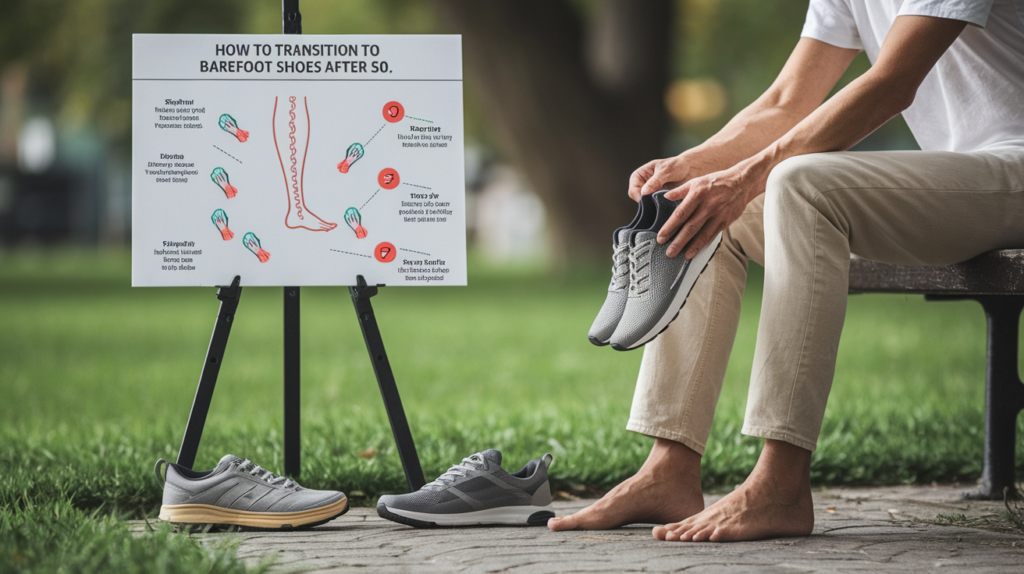
Transitioning to barefoot shoes after 50 can be a smart move, but the pace matters more than the promise. Older feet, calves, and tendons often need a slower adjustment, especially after years in cushioned footwear.
If you want the broader step-by-step transition method as well, the microdosing approach is the best companion read for building wear time without overdoing it.
Best-fit takeaway
Start with short, low-impact wear windows, give your calves and arches time to adapt, and treat any sharp pain as a signal to pause. After 50, the safest transition is usually measured in weeks and months, not days.
For a wider range of barefoot shoe options while you compare fit and feel, browse the barefoot shoes hub.
Why The Transition Feels Different After 50
Barefoot shoes are not inherently difficult for older adults, but the body may need more recovery time than it did at 30 or 40. That is the real adjustment to respect. Tendons, arches, and calves have to absorb more load when heel elevation and cushioning disappear, and that adaptation can be slower if you’ve spent decades in supportive shoes.
The goal is not to force a dramatic change. The goal is to let your feet relearn motion without creating a flare-up in the calves, Achilles tendon, forefoot, or plantar fascia. If you already have arthritis, bunions, plantar fasciitis, neuropathy, or balance issues, a slower ramp is usually the safer path.
What usually changes
Less padding, stiffer joints, slower tissue recovery, and more sensitivity to sudden workload increases.
What helps most
Short sessions, flat surfaces, wider toe boxes, and a willingness to pause when soreness lingers.
What to avoid
Long walks on day one, rigid rules about “pushing through,” and pairing the switch with a sudden increase in activity.
Choosing Shoes That Make The First Month Easier
The first shoe you buy can decide whether the transition feels manageable or irritating. For older beginners, the safest starting point is usually a shoe with a flexible sole, a genuinely wide toe box, and a low or zero-drop platform that does not force the heel upward. If the upper pinches the forefoot or the sole resists bending, your feet will work harder than they need to.
This is also where a good transition strategy differs from a general footwear overview. If you want to compare barefoot models by everyday wearability rather than age alone, the essential transition tips guide is a useful next stop.

A Practical 3-Phase Transition For Older Beginners
A safer transition plan should be boring in the best possible way: short, repeatable, and easy to recover from. That is why the early weeks matter more than the first impression. If your feet feel “fine” during the walk but complain later that night or the next morning, the load was probably too high.
Phase 1: Reintroduce The Foot To The Shoe
For the first one to two weeks, wear barefoot shoes for short, predictable windows: around the house, on errands, or for very short flat walks. Keep sessions conservative enough that you finish feeling like you could have done more. That restraint is the point.
- Limit exposure to 30-90 minutes at a time.
- Choose flat, even ground.
- Stop if you notice pinching, toe numbness, or a rising ache in the Achilles area.
Phase 2: Add Time Only When Recovery Is Clean
In weeks two through four, increase wear time gradually and keep your walks short. The key marker is recovery, not toughness. If your calves or arches feel normal the next day, you can slowly add minutes. If they feel loaded or sore for more than a day, hold the line or back off.
This is where a microdosing approach is especially useful. For a more granular plan that breaks the process into tiny increments, revisit the microdosing barefoot shoes transition guide and use it to pace your wear time more precisely.
Phase 3: Move Toward Everyday Use Carefully
By weeks five to eight, you may be ready for longer wear and more routine walking, but daily use should still be earned. The body usually signals readiness through smooth recovery, easier balance, and less fatigue across the foot and lower leg. At that point, the transition becomes less about endurance and more about consistency.
If you want a broader range of articles on fit, comfort, and walking-specific benefits, the walking benefits guide is a good way to decide when your routine is ready for longer distances.
Signs You Should Slow Down
Some discomfort is normal when your feet are adapting, but there is a clear line between mild adjustment and a warning sign. After 50, it is worth respecting that line early, because the recovery cost of a misstep is often higher than it would be for a younger beginner.
Pause or scale back if you notice:
- Sharp pain instead of dull muscle fatigue
- Swelling in the foot, ankle, or Achilles area
- Soreness that lasts into the next day or worsens with each session
- Numbness, tingling, or pressure points that do not improve after removing the shoes
- A change in gait that makes you limp, brace, or shorten your stride unnaturally
If you have diabetes, neuropathy, arthritis, a prior tendon injury, or recurrent balance problems, it is wise to check in with a podiatrist or physiotherapist before you build up wear time. Barefoot shoes may still be an option, but the transition may need to be much slower and more individualized.
What Helps Balance, Form, And Recovery
The transition is easier when you give your feet a little support in the form of movement habits, not shoe padding. Simple foot work can help wake up muscles that have been underused for years. That matters more after 50 because the goal is not just to wear a lighter shoe; it is to move in a way that the shoe allows.
- Toe Spreads encourage toe splay and help you notice forefoot tension.
- Calf Raises build tolerance in the lower leg gradually.
- Ankle Circles improve mobility without adding much load.
- Balance Drills Near A Wall reduce fall risk while your proprioception adapts.
If your main goal is posture or lower-back relief, it can help to understand the broader mechanics first. The article on barefoot shoes for back pain and posture explains why a cleaner gait can reduce strain upstream.

When To Be Extra Cautious
Barefoot shoes are not a universal solution, and that matters more with age. If you have significant arthritis, severe bunions, active Achilles pain, diabetic foot concerns, or a history of stress fractures, the smartest approach is to get medical guidance before increasing wear time. In some cases, the answer may be a transitional minimalist shoe, not a fully bare feel right away.
Fall-prone users should also think about where the shoes will be worn. Smooth indoor floors, carpet, grass, and short walks on level sidewalks are better early choices than uneven trails or slippery surfaces. Confidence should come from repetition, not from testing your limits too early.
If you are choosing your first pair now
Start with a shoe that gives your toes room, keeps the sole flexible, and feels comfortable on the first try. Then build up slowly rather than waiting for the shoe to “break in” and solve the problem on its own.
For shopping context and a wider overview of what barefoot shoes are meant to deliver, the science of barefoot shoes is a strong background read before you commit to a pair.
Frequently Asked Questions
Am I Too Old To Start Wearing Barefoot Shoes?
Usually not, but you may need a slower transition than a younger beginner. The main concern is not age itself; it is how much load your feet, calves, and balance system can tolerate while adapting.
Should Older People Wear Barefoot Shoes?
Many older adults can wear them, especially if they transition gradually and choose the right model. They are best for people who want more ground feel, toe room, and a less restrictive walking experience.
Why Do Podiatrists Caution Against Barefoot Shoes?
They are usually cautious because a sudden switch can strain the calves, Achilles tendon, arches, or forefoot, especially in people with existing foot problems or weak balance.
How Long Does It Take To Fully Transition?
Many people need several weeks to several months. After 50, the timeline often depends on your starting strength, how often you wear the shoes, and whether your recovery stays clean between sessions.
Ready for the next step?
If you want to move beyond the first month, use this guide together with the main transition resources and keep the change gradual. That is the safest way to get the benefits without creating a setback.

Ethan Marshall is a passionate writer and content creator at My Shoes Finder, where he explores a diverse range of topics, from lifestyle and fashion to innovative products and personal development. With a keen eye for detail and a commitment to delivering engaging and informative content, Ethan connects with readers by sharing insights that inspire and inform. He believes in the power of storytelling to influence positive change, and he continually seeks to provide valuable perspectives that resonate with his audience.
See also:
 How To Transition To Barefoot Shoes Safely: A Beginner’s Guide
 Xero Shoes For Achilles Tendonitis: 2025 Rehab Protocol And Loading Guide
 Do Barefoot Shoes Help Active Recovery? Benefits, Limits, And Best Use Cases
 Transitioning To Xero Shoes: A Safe Beginner’s Guide For 2025
 When Do Xero Shoes Go On Sale? Best Buy Windows, Discounts, And Alerts
 Running In Xero Shoes: Who They Suit And How To Transition Safely


Transitioning to barefoot shoes after 50? Now that’s a journey I can relate to! It’s like trying to remember how to ride a bike after a few decades of driving—slightly terrifying but full of potential for newfound freedom!
Transitioning to barefoot shoes after 50 really resonates with me. I’ve been exploring this journey over the past few months, and while the initial challenge seemed daunting, the benefits have been worth the effort. It’s striking how much our bodies can adapt when we approach change with patience. I remember my first few weeks; I could only do short strolls around the block. Each little increase in distance felt like an achievement, and noticing the development in my foot strength was fascinating.
It’s interesting to consider how our foot health often gets overlooked as we age, especially regarding footwear choices. Transitioning to barefoot shoes certainly aligns with the broader trend towards minimalism and a more natural connection to our environment, not just for our feet but in lifestyle choices overall.
Transitioning to barefoot shoes after 50 resonates with me on so many levels. I can relate to that moment of hesitation when considering a significant shift in footwear—it feels like such a daunting leap, especially after years of relying on more structured, traditional shoes! But as you mentioned, it’s really about taking those first small steps.
I appreciate your insights on transitioning to barefoot shoes after 50. It’s true that the journey can be challenging, but it’s fascinating to think about how reconnecting with our natural stride can enhance overall health. I made the switch a couple of years ago, and I remember starting with short, gentle walks just as you suggested. I found that focusing on my posture and landing midfoot made a noticeable difference in how my body felt afterward.
It’s great to hear that you had a positive experience making the switch to barefoot shoes. The way you approached it with short, gentle walks really sets the stage for a successful transition, especially after 50 when our bodies can be more sensitive to sudden changes. Focusing on posture and landing midfoot can truly transform the way we move; I’ve found it creates a more grounded feeling.
It’s great to hear about your experience with barefoot shoes; I recently came across an insightful piece that delves into the neurological benefits of products like Xero Shoes and Naboso Insoles, which might complement your journey perfectly.
‘Xero Shoes & Naboso Insoles: 2025 Guide to Neurological Benefits’
https://myshoesfinder.com/xero-shoes-and-naboso-insoles-2025-neurological-benefits-guide/.
Ah, the great barefoot shoe transition—it’s akin to teaching an old dog (or in this case, a well-worn human foot) a new trick! Welcome to the flip-flop lifestyle… just without the flip-flop part. I love how you describe the journey as being like training wheels for our feet; it really captures that delicate balance of excitement and trepidation we feel when stepping (quite literally) into new territory.