
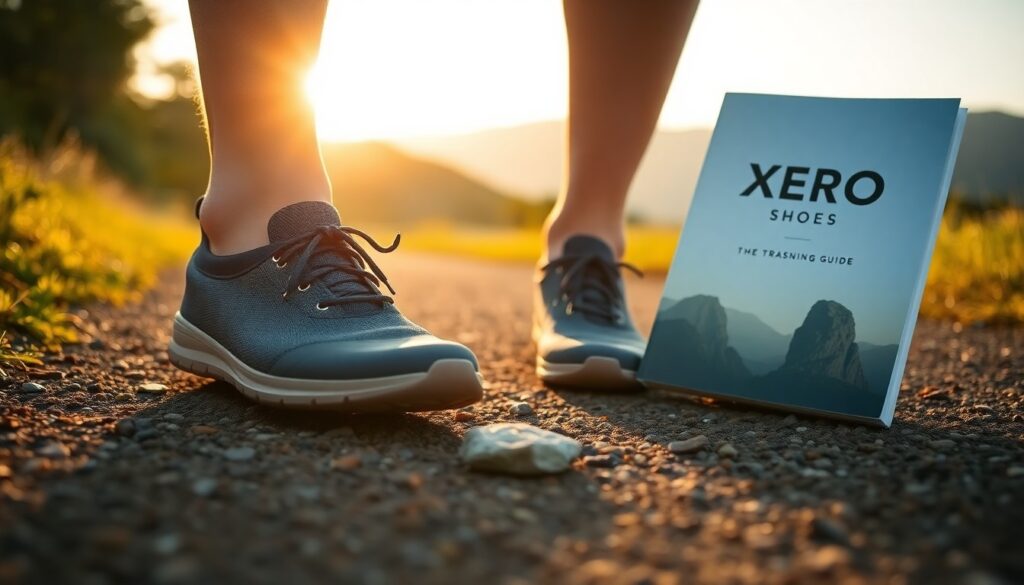
Switching to Xero Shoes works best when you treat it like a gradual training block, not a wardrobe swap. Start with short wear sessions, watch for calf or arch soreness, and build up only when your feet feel steady.
If you want the broader minimalist-shoe method behind this approach, the transition framework in our microdosing barefoot shoes guide is a useful companion read. This page stays focused on Xero Shoes specifically so you can choose when to wear them, how fast to progress, and what to adjust if your feet protest.
If fit is the part you are still unsure about, check our Xero Shoes fit guide before you increase wear time. A correct size makes the transition feel easier, especially if your toes need more room than you are used to.
What Makes The Xero Shoes Transition Different
Xero Shoes are built around a zero-drop, wide-toe-box, minimalist feel, so the main adjustment is not just comfort — it is how your foot loads, bends, and stabilizes through the day. That is why the safest entry point is usually a low-dose routine rather than all-day wear on day one.
In practical terms, beginners do best when they use Xero Shoes for short walking blocks, easy errands, and controlled indoor time first. That approach gives your calves, Achilles tendon, and intrinsic foot muscles time to adapt without forcing your stride to change abruptly.
For a wider buying decision, our best barefoot shoes for beginners guide can help if you are still comparing brands. If you already know you want Xero, this page is the safer place to focus on transition speed and usage.
How To Start Without Overdoing It
The biggest beginner mistake is treating Xero Shoes as if your feet are already conditioned for them. They may feel great immediately, but that does not mean your calves, arches, and walking pattern are ready for a full day of use.
The safest pace is usually to increase one variable at a time: either duration, terrain, or activity intensity. Do not raise all three together in the same week. If you are planning to use them for fitness work, pair this guide with the fit and use cases in Xero Shoes for wide feet if you need extra forefoot room, or save stronger workouts for later in the transition.
What To Expect In The First 12 Weeks
The first month is usually about novelty, not mastery. The next month is where your feet start building tolerance, and the third month is where Xero Shoes can start to feel like part of your normal rotation rather than a special case.
Weeks 1 — 4: Short Exposure And Awareness
Focus on short, repeatable wear sessions. You are looking for calm adaptation, not performance. If your feet feel better after removal than they do while wearing them, your dose is probably too large.
Weeks 5 — 8: Gradual Outdoor Use
Add easy outdoor walks and simple daily tasks. At this stage, many people notice better ground contact, more toe freedom, and less need to consciously think about the shoe.
Weeks 9 — 12: Real-World Integration
If the earlier stages went smoothly, you can start using Xero Shoes for longer errands, more standing, or easy training sessions. Keep the progression honest; the goal is durable comfort, not a fast badge of honor.
Common Problems And How To Fix Them
Most problems come from loading the foot faster than it can recover. Fortunately, the fixes are usually simple once you know what to watch for.
- Calf tightness: shorten your wear window and keep the first walks flat and easy.
- Arch fatigue: reduce volume and avoid back-to-back long sessions until the sensation settles.
- Toe crowding: revisit sizing before assuming the shoe is the problem.
- Skin irritation: use socks if needed and make sure the upper is not rubbing because of a poor fit.
A lot of confusion clears up once fit is handled correctly, which is why the Xero Shoes size guide is worth checking before you decide the transition is not working. If your foot shape is wider than average, that matters even more than your usual sneaker size.
When Xero Shoes Make The Most Sense
Xero Shoes are a strong fit when you want more ground feel, a wider toe box, and a more natural foot position during everyday movement. They are especially useful for walking, light training, travel, and day-to-day wear where comfort comes from freedom rather than cushioning.
They are less ideal as a first choice if you have a current foot injury, a flare-up of Achilles pain, or a history of reacting poorly to sudden footwear changes. In those cases, a slower transition plan or professional advice is the smarter first step.
If you need help deciding which pair to start with, the simplest next step is to compare fit and beginner-friendly models before adding more wear time.
Faqs About Transitioning To Xero Shoes
How Long Does It Take To Adapt To Xero Shoes?
Many beginners need a few weeks for basic comfort and closer to two or three months for fuller day-to-day confidence, depending on prior footwear habits and how slowly they progress.
Is It Worth Transitioning To Barefoot Shoes?
It can be worth it if you want more toe space, more ground feel, and a shoe that encourages natural foot use, but the value depends on whether you are willing to transition gradually.
What Do Podiatrists Think Of Zero-Drop Shoes?
Opinions vary, but many foot professionals care less about the label and more about fit, load management, and whether the shoe matches the wearer’s current foot health and activity level.
What Is The 3 Shoe Rule?
A practical version of this idea is to keep multiple shoe types in rotation so your feet are not forced into the same stress pattern every day during the transition.
How Do I Know I Am Progressing Too Fast?
If soreness lingers, your gait changes, or you keep needing to “push through” discomfort, you are likely increasing wear time too quickly and should scale back.
If you are still narrowing down your first pair, the most useful companion read is best barefoot shoes for beginners. If you already own Xero Shoes, the next decision is simply how fast to add wear time without letting your mechanics get sloppy.

Henry Harrington is a passionate author and content creator at My Shoes Finder, where he explores a wide range of topics related to footwear, lifestyle, and personal growth. With a keen eye for detail and a love for storytelling, Henry engages readers by sharing insights, tips, and personal anecdotes that resonate with his audience. His commitment to delivering high-quality content has established him as a trusted voice in the online community, inviting readers to step into new perspectives and discover their unique paths.
See also:
 Xero Shoes For Children In 2025: Fit, Safety, And Best Models
 Xero Shoes For Bunions: What Helps, What Doesn’t, And Which Models Fit Best
 Widest Xero Shoes for Wide Feet: Models & Fit Guide
 Xero Shoes For Office Workers: 2025 Style And Comfort Guide
 Xero Shoes For Achilles Tendonitis: 2025 Rehab Protocol And Loading Guide
 Are Xero Shoes Good For Cycling? 2025 Comfort And Efficiency Review
I appreciate your emphasis on the gradual transition to barefoot shoes like Xero Shoes. It’s reminiscent of when I first switched from traditional running shoes to minimalist footwear; I realized how much my foot strength and natural gait improved over time. This conscious shift not only fostered a deeper connection with the ground but also changed my approach to overall fitness.
It’s really interesting how such a simple shift in footwear can lead to such profound changes in not just our physical abilities but also our overall approach to movement and fitness. I remember my own transition to minimalist shoes and feeling more in tune with my body and the ground beneath me. It’s fascinating how many people overlook the impact of foot strength on overall performance and injury prevention.
Your exploration of Xero Shoes and the concept of barefoot footwear sparks an interesting dialogue about our relationship with the ground beneath us. I’ve recently made the transition to minimalist shoes, and I can wholeheartedly agree with your point about easing into it. It’s almost akin to learning a new sport; starting slow allows us to not only build the necessary muscle strength but also to listen to our bodies as they adapt.
The journey into minimalist shoes really does mirror the experience of picking up a new sport. Each step feels like a fresh adventure, and you start to become acutely aware of how much our feet can communicate with us. Transitioning to barefoot footwear isn’t just about choosing a different shoe; it invites us to rethink how we connect with the earth.
I can relate to your experience with transitioning to minimalist shoes. It’s fascinating how something as simple as footwear can shift our perception of how we engage with our environment. I remember when I first made the switch; it was a bit of a revelation, both physically and psychologically. The connection to the ground felt much more immediate, almost primal, like my feet were rediscovering the earth after being cooped up in more traditional shoes for so long.
I recently came across a neat resource on Xero Shoes and their approach to managing Achilles tendonitis, which aligns perfectly with what you’ve mentioned about easing into minimalist footwear and tuning into our bodies.
‘Xero Shoes for Achilles Tendonitis: 2025 Rehabilitation Protocol’
https://myshoesfinder.com/xero-shoes-for-achilles-tendonitis-protocol-2025/.
I appreciate how you’ve framed the transition to barefoot shoes as akin to training wheels for the feet. It’s such an important perspective, especially when many people jump in too quickly without understanding the potential adjustments their bodies need to make. I had a similar experience when I first transitioned to minimalist footwear—it took time, but gradually I noticed how much more connected I felt to the ground and my own movements.
The concept of transitioning to barefoot shoes really resonates with me, especially the idea of treating it like training wheels for your feet. I remember when I first made the switch to minimalist footwear; it felt strange at first, but gradually, my feet and legs adapted, and I could feel the difference in my posture and overall comfort.
It’s great to hear your thoughts on transitioning to barefoot shoes. That initial strangeness can really throw you off, but it’s fascinating how quickly our bodies can adapt when we give them the chance. As you experienced, it often leads to a new awareness of how we move.
It’s interesting to hear how your experience with minimalist footwear unfolded. I can relate—when I first switched to barefoot shoes, it was definitely a mix of excitement and discomfort. It took a little time for my feet to adjust, but that period of adaptation was really revealing. I noticed not just improvements in posture, but also how my body felt more connected to the ground.
I totally understand that journey—transitioning to barefoot shoes can feel a bit awkward at first, but I came across an article that really breaks down how to make the switch safely and highlights who might benefit from it.
‘Running In Xero Shoes: Who They Suit And How To Transition Safely’
https://myshoesfinder.com/running-in-xero-shoes-explore-the-advantages/.
I appreciate how you framed the transition to barefoot shoes as a sort of training wheels for our feet. It’s such a crucial point! I think many people underestimate the impact that traditional cushioned footwear has on our natural movement patterns.
Your exploration of barefoot shoes, particularly the emphasis on Xero Shoes, resonates deeply with my own experiences in redefining what comfort and connection with the ground mean for my body. When I first transitioned to minimalist footwear, the approach of taking baby steps—both literally and figuratively—was crucial. The analogy of “training wheels for your feet” is spot on; I found myself gradually acclimating over weeks, starting with short walks to build up the necessary strength and flexibility in my muscles and tendons.
I can totally relate to what you’re saying about redefining comfort and connection with the ground. It’s interesting how we often overlook what our feet are capable of until we strip away all that extra padding and structure.
This is a fascinating introduction to the world of barefoot shoes and the role Xero Shoes can play in that transition. I’ve been curious about minimalist footwear for a while, especially after hearing about how they can promote better posture and alignment. I appreciate your emphasis on a gradual transition—it’s something I learned the hard way during my own shift to a more minimalist approach. I started with short walks and slowly increased my distance, which has really helped my feet adapt rather than forcing them into a sudden change.
It’s interesting to hear about your experience with transitioning to minimalist footwear. The idea of promoting better posture and alignment really resonates with me. I think it goes hand in hand with a broader awareness about how much our everyday choices impact our overall health. It’s fascinating to see how many people are becoming more conscious about their footwear and its effects on their bodies.
It’s great to hear that the idea of better posture and alignment resonates with you. It’s kind of wild how much footwear can play into our overall well-being. When I first made the switch to minimalist shoes, I noticed that not only did my feet feel freer, but my whole body seemed to adjust.
I love the analogy of “training wheels for your feet”! It’s so true – my first couple of runs in a pair of minimalist shoes felt like I was learning to walk all over again. I half expected to have my mom chasing after me with a set of elbow pads!
Your insights into the journey of transitioning to barefoot shoes, specifically Xero Shoes, resonate deeply with my own experience. It’s fascinating how the paradigm of footwear has shifted in recent years, emphasizing not just comfort but also functionality and connection to our natural movement patterns. When I first ventured into minimalist footwear, I approached it much like you suggested—gradually.
I’ve always been intrigued by the concept of barefoot shoes, especially how they encourage a return to natural movement. I started my own journey with minimalist footwear a few months ago, and I can definitely relate to the importance of transitioning gradually. At first, it felt a bit strange—like my feet were awakening from a long slumber!
It’s fascinating how barefoot shoes can really shift our perspective on movement and connection to the ground. I remember my first experiences with minimalist footwear felt similar—each step was almost like rediscovering how my feet were meant to move. It’s interesting to think about how our modern lifestyles have distanced us from that natural way of walking, often leading to issues with posture and foot health.
It’s great to hear about your journey with minimalist footwear; if you’re looking for where to find Xero Shoes and explore more options, I found a helpful guide that might make your transition even smoother.
‘Xero Shoes: Where to Find Stores Worldwide’
https://myshoesfinder.com/xero-shoes-where-to-find-stores-worldwide/.
It’s great to hear about your journey with minimalist footwear. That sensation of your feet “awakening” is something many experience, as our bodies adapt to a more natural way of moving. It’s fascinating how our feet are often tucked away in traditional shoes, and stepping into barefoot shoes can feel like rediscovering a part of ourselves.