
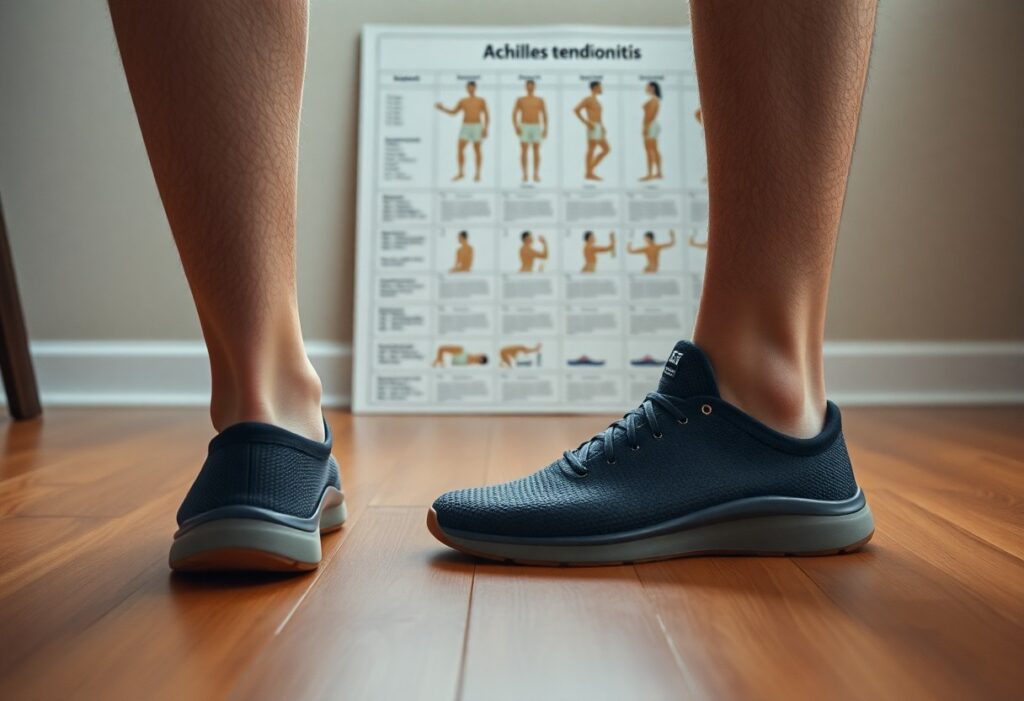
If you’re trying Xero Shoes for Achilles tendonitis, the safest use case is usually a gradual transition alongside load management and rehab work—not a sudden switch. They can be helpful for some people with mid-portion or insertional tendinopathy, but they are not appropriate for every stage or every injury.
For a broader look at minimalist footwear and recovery, see our therapeutic benefits guide; this page stays focused on the Achilles-specific protocol and when to use it.
Quick decision guide
| Situation | Xero Shoes use | Pace |
|---|---|---|
| Acute Flare With Sharp Pain | Usually hold off or limit to short, symptom-led wear | Very slow, guided by pain response |
| Mid-Portion Tendinopathy | Often reasonable in a graded transition | Progress over weeks, not days |
| Insertional Tendinopathy | May help if heel compression is controlled | Keep range and volume conservative |
| Suspected Rupture Or Severe Swelling | Do not self-manage with minimalist shoes | Seek medical assessment promptly |
Safety first
Stop and get checked if you have a sudden pop, marked weakness, inability to push off, rapid swelling, significant bruising, or pain that worsens sharply with walking. Xero Shoes are not a substitute for urgent care or a structured rupture-recovery plan.
Who This Protocol Is For
This guide is for people with Achilles tendon pain who want a practical, staged way to use zero-drop footwear without overloading the tendon. It is most useful when you already have a working diagnosis of tendinopathy, are being treated conservatively, and want to decide how to combine footwear with graded loading.
If you need a slower entry point into minimal footwear generally, the barefoot-shoe transition guide is a useful companion article. The goal here is not a wholesale footwear makeover; it’s a controlled protocol for the Achilles specifically.
Why Xero Shoes Can Help, And Why They Can Also Irritate The Tendon
Xero Shoes use a zero-drop, flexible platform that can reduce heel elevation and encourage a more natural foot position. For some people, that means better tolerance for controlled calf work, clearer proprioception, and a more deliberate way to rebuild tendon capacity. That is the core appeal of minimalist footwear in rehab: it changes the loading environment, which is exactly what the Achilles tendon responds to.
But that same change is why a sudden switch can backfire. A tender Achilles may react to extra calf demand, more ankle motion, or too much walking volume before the tissue is ready. The shoe is only one variable; your current pain level, recent activity load, and stage of recovery matter more than the brand name on the upper.
That’s why the right question is not “Are Xero Shoes good?” but “At what stage, and under what limits, are they useful?”
A Simple Stage-Based Plan
The safest way to use Xero Shoes is to match them to the stage of the tendon. This is a rehabilitation tool, not a performance challenge.
| Stage | Footwear choice | What to do | Progress only if… |
|---|---|---|---|
| Acute Flare | Supportive shoe first; Xero only in brief test windows if tolerated | Reduce aggravating volume, use pain-calming loading, keep walks short | Morning stiffness and walking pain are trending down |
| Rebuild Phase | Alternate supportive shoes and Xero Shoes | Add controlled calf strength work and short walking bouts | Symptoms stay stable for 24 hours after loading |
| Return-To-Activity Phase | Xero Shoes for longer daily use if walking is comfortable | Reintroduce faster walking, hills, and eventually running drills | Next-day pain does not escalate meaningfully |
| Rupture Recovery | Only under direct clinical guidance, if at all | Follow the post-rupture plan from your clinician | Your care team clears footwear progression |
The 12-Week Rehabilitation Framework
The outline below is intentionally conservative. It treats Xero Shoes as one part of a graded-loading plan rather than the whole answer.
Weeks 1-4: Calm The Tendon And Test Tolerance
Start with the footwear that allows the least irritation during normal life. If you can tolerate Xero Shoes, use them in brief, controlled blocks rather than all day. Ten to twenty minutes at a time is often enough for an early test, especially indoors or on flat ground. If symptoms spike, return to supportive footwear and reduce the dose.
- Keep daily walking volume modest.
- Avoid hills, speed work, jumping, and long barefoot sessions.
- Use pain-guided calf isometrics or other clinician-prescribed loading if they calm symptoms.
- Track morning stiffness and next-day soreness, not just how you feel during the walk.
Weeks 5-8: Build Strength And Introduce Controlled Calf Loading
Once walking tolerance is steadier, begin structured strength work. This is where Xero Shoes can become more useful, because the shoe’s low heel-to-toe profile can make the calf and Achilles do the work they need to regain capacity. Keep the dosage modest at first and progress only if the tendon remains settled the next day.
- Begin or continue heel raises, heel drops, or other calf-strength exercises as tolerated.
- Use slow tempo and controlled range rather than aggressive depth.
- Alternate between supportive shoes and Xero Shoes if the tendon gets more reactive later in the day.
- Keep the total load consistent for several sessions before increasing it.
For readers who are still learning how to transition away from traditional shoes, the transition guide gives a good framework for pacing, while this article stays focused on tendon-specific rehabilitation.
Weeks 9-12: Return To Normal Shoes-And-Activity Decisions
If the tendon is tolerating everyday walking and basic strength work, you can expand Xero use to longer daily wear and begin more demanding activities in small doses. That may include brisk walking, short jog intervals, or sport-specific drills if your clinician has cleared the progression.
- Increase one variable at a time: duration, speed, incline, or exercise load.
- Keep a 24-hour symptom check after every meaningful increase.
- Back off if next-day stiffness rises or if pain starts appearing earlier in the day.
- Use shoes that allow the tendon to work, but do not chase minimalism for its own sake.
Progression rule of thumb
Move forward only when pain stays stable during activity and does not meaningfully worsen the next morning. If your tendon reacts, the right response is usually a smaller dose, not more determination.
What To Watch For As You Transition
The Achilles often tells you when it dislikes a change. Early warning signs are easy to miss if you only judge the day by a short walk or a single workout.
- Morning stiffness that lasts longer than usual.
- More pain after resting than during movement.
- Soreness that builds over several consecutive days.
- Compensation in your gait, such as limping or avoiding push-off.
- Swelling, heat, or focal tenderness that keeps increasing.
If you notice a consistent flare, reduce walking time, simplify the exercise plan, and consider temporarily returning to more supportive shoes. The point is to keep the tendon in a recoverable zone, not to prove you can tolerate minimal footwear immediately.
How Xero Shoes Fit With The Rest Of Rehab
Minimalist shoes are most effective when they sit inside a broader plan that includes strength work, load management, and sometimes physical therapy. That is the real advantage of this approach: the shoe helps you practice the loading pattern you are trying to restore, but it does not replace the rehab itself.
A therapist can help decide whether eccentric heel work, heavy slow resistance, calf isometrics, mobility work, or gait changes make sense for your presentation. If your case is more general and you want to understand how barefoot-style footwear is used across conditions, the therapeutic benefits hub gives that wider context.
If your Achilles pain started after a big footwear change, you may also want to compare this with our broader article on how Xero Shoes are used in foot-pain recovery, since some transition principles overlap even though the tissue problem is different.
Before you buy or switch
If your goal is rehab, choose the shoe that lets you follow the plan without provoking a flare. That may be Xero Shoes, but it may also be a temporary return to more supportive footwear while you build capacity.
Why The Evidence Is Promising, But Not Universal
Research on zero-drop and minimalist footwear is encouraging, but it should be interpreted carefully. The general pattern is that reducing heel elevation can change calf demand and movement mechanics, which may be helpful in a controlled rehab setting. That does not mean every Achilles tendon likes the same amount of minimalism, or that all stages of injury respond the same way.
The clinical takeaway is simple: use the shoe to support a loading strategy, not to replace judgment. Claims about faster return to activity are only meaningful when the person, the injury stage, and the progressions are appropriate. This is why the protocol matters more than the product alone.
That caution also explains the contraindications. A recently ruptured tendon, severe acute swelling, or a rapidly worsening presentation needs proper assessment before any minimalist transition is attempted.
Practical Buying Considerations If You Do Move Ahead
If your clinician agrees that a gradual transition makes sense, look for a model that gives you enough protection to walk comfortably while still allowing the foot to move naturally. A wide toe box, low stack, and flexible sole usually matter more than any marketing label.
- Choose the least aggressive minimalist option that still matches your current tolerance.
- Start on flat, predictable surfaces before testing long days or uneven ground.
- Pair the shoe change with a calendar-based progression so you do not rely on guesswork.
- Do not assume more barefoot time is better; only enough load to stimulate adaptation is useful.
If your search is really about whether minimalist footwear belongs in a broader plan, the therapeutic benefits article is the right background read. If your question is how to transition without provoking your tendon, keep this Achilles-specific protocol open alongside it.
Frequently Asked Questions
If you want to keep exploring the foot-health side of minimalist footwear, the broader shoe-and-foot-health overview is a useful next read, but it should sit behind the more specific Achilles protocol when this is the main problem you are solving.

Natalie Harper is a versatile author and content creator at My Shoes Finder, where she explores a wide range of general topics that resonate with diverse audiences. With a passion for storytelling and a keen eye for detail, Natalie crafts engaging articles that provide valuable insights and inspire readers. Her commitment to quality and relatability makes her work a trusted resource for those seeking both information and inspiration in their daily lives.
See also:
 Xero Shoes & Naboso Insoles: Compatibility, Benefits, And Best Uses (2025)
 Barefoot Shoes And Knee Pain Prevention: What The Science Suggests In 2025
 Therapeutic Benefits Of Xero Shoes: Who They May Help And When To Avoid Them
 Xero Shoes For Children In 2025: Fit, Safety, And Best Models
 Barefoot Footwear Biomechanics: What The Evidence Says About Clinical Outcomes
 Xero Shoes + Naboso Insoles: Compatibility, Benefits, And Best Use Cases

What an insightful exploration of rehabilitation for Achilles tendon issues! It’s fascinating how the details of footwear can significantly influence recovery and performance. I’ve always been intrigued by how our choice in shoes can play such a crucial role in our body’s mechanics. I remember when I transitioned to zero-drop shoes several months ago; the initial adjustment period highlighted how much more engaged my calves were, and that’s really in line with what you mentioned about enhanced calf activation.
You touched on a really interesting point about footwear and its impact on our bodies. The way our shoes can shape our movement and recovery is often overlooked, but it’s great to see more people paying attention to it. When you switched to zero-drop shoes, how did that adjustment process feel overall? I imagine it must have been a mix of discomfort and awareness, but also an exciting challenge to your body’s natural mechanics.
Transitioning to zero-drop shoes was definitely an intriguing journey for me. The initial adjustment period was a mix of discomfort and newfound awareness of how each part of my body was engaged during movement. It felt like my feet were being re-educated, and I had to pay close attention to my gait, which I hadn’t really considered before.
It’s interesting how something like footwear can really change how we move, isn’t it? When I made the switch to zero-drop shoes, the adjustment felt like stepping into a whole new way of running. At first, my feet and calves were definitely not happy with me. There was that initial discomfort as my body adapted to a more natural position, reminding me of the muscles I hadn’t used as much before.
I appreciate how you’ve outlined the effectiveness of Xero Shoes in rehabilitating the Achilles tendon; it’s fascinating to see how something like footwear can play such a significant role in recovery and athletic performance. Your mention of the clinical evidence supporting zero-drop shoes really resonates with me, especially given how often we overlook the impact that our daily footwear choices can have on our body mechanics.
I appreciate the depth and practicality of your insights on utilizing Xero Shoes for Achilles tendon rehabilitation. It’s interesting to see how footwear technology can play a pivotal role in recovery processes, a topic that often gets overshadowed by more traditional rehabilitation methods. Your mention of zero-drop footwear and its impact on tendon elasticity and calf muscle activation resonates with me deeply, as I’ve been exploring various ways to support my own recovery journey.
This is such a fascinating perspective on Achilles tendon rehabilitation! I’ve been on a journey to recover from my own tendon issues, and it’s interesting to see how footwear can play such a significant role. I’ve found that switching to minimalist shoes has really improved my overall foot strength and awareness, although it took some time to adjust.
It’s fascinating to see how the principles of progressive loading in weight training can be applied to something as specific yet impactful as Achilles tendon rehabilitation. Your insights on Xero Shoes and their role in enhancing tendon elasticity resonate deeply with my own journey. I’ve struggled with Achilles tendonitis in the past, and it was only through understanding the balance between support and allowing natural movement that I truly began to heal.
This is such an insightful post about recovering from Achilles tendonitis! It’s fascinating how something as simple as changing our footwear can have such a profound impact on our body mechanics. I recently switched to minimalist shoes myself, and I’ve definitely noticed increased engagement in my calf muscles, especially during my daily runs. It’s intriguing to think about how that improved calf activation could enhance performance overall.
It’s interesting how footwear can influence our running mechanics so significantly. I’ve been curious about minimalist shoes too; the way they encourage a more natural foot strike seems to resonate with so many runners. I remember when I made a shift to more supportive shoes after dealing with some joint pain, only to learn later that it might not have been the right approach for me.
It’s fascinating to see the connection drawn between gradual, progressive loading through weight training and the use of Xero Shoes for rehabilitating the Achilles tendon. I’ve experienced my own share of frustration with Achilles tendonitis, so I can truly appreciate the significance of this approach. The fact that transitioning to a zero-drop shoe can actually improve tendon elasticity and calf activation is a game-changer. It really aligns with a more holistic view of injury management—one that emphasizes understanding the body’s mechanisms and working with them.
I can relate to the struggle with Achilles tendonitis; it can really throw a wrench in your active lifestyle. Your point about the connection between gradual, progressive loading and Xero Shoes resonates with me. It’s intriguing how something as simple as footwear can have such a profound effect on our biomechanics and overall recovery.
This approach to treating Achilles tendonitis resonates with me, especially the emphasis on gradually introducing zero-drop footwear. I’ve recently switched to minimalist shoes for running, and I’ve noticed a significant change in my running form and overall comfort. It’s fascinating how the body can adapt to different types of support when given the chance.
I really appreciate how you highlighted the role of zero-drop footwear in rehabilitating the Achilles tendon. I’ve personally experienced the challenges of Achilles tendonitis, and the shift to more minimalist shoes made a noticeable difference for me. It’s fascinating how the right footwear can influence our biomechanics and overall recovery.
This is a compelling examination of the role that footwear plays in managing conditions like Achilles tendonitis. I’ve personally navigated the challenges of this injury over the past few years, and your insights resonate with my experiences.
It’s interesting to hear about your personal journey with Achilles tendonitis. I can imagine how challenging that must have been, especially considering how much we rely on our feet for everyday activities. Footwear really does play a crucial role in either exacerbating or alleviating those types of injuries. I found that selecting the right shoes can often feel overwhelming given the abundance of options out there.