
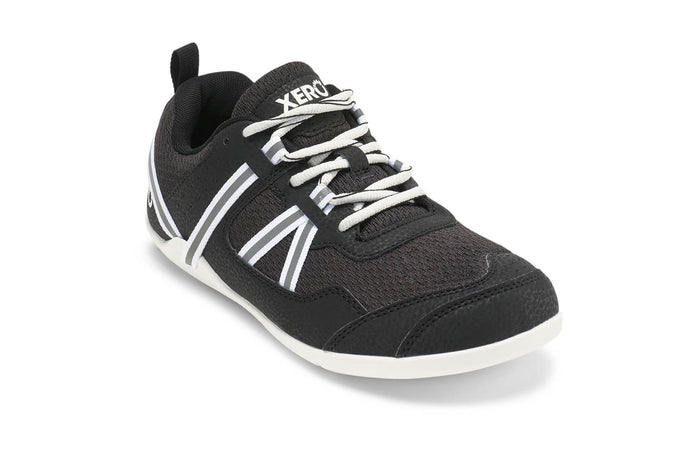
Xero Shoes Prio Women’s is a minimalist, zero-drop sneaker built for people who want a lightweight everyday shoe with a natural feel. It makes the most sense if you value ground feel, flexible movement, and a roomier barefoot-style fit.
If you’re comparing sizes or deciding whether the Prio line suits your feet, start with this fit guide and keep the return policy in mind before you order.
Quick Buying Take
The Prio Women’s is a strong pick for casual wear, walking, light training, and anyone moving into barefoot shoes who wants a versatile starter model. It is less ideal if you want cushioning, weather protection, or a snug performance-racing feel.
- Best For Everyday wear, gym sessions, walking, and relaxed all-day use
- Main Strength Lightweight feel with a flexible zero-drop platform
- Main Caution Transition time matters if you are new to barefoot footwear
- Before Buying Check width, toe room, and the seller’s return policy
Why The Prio Women’s Stands Out
The design is intentionally simple: a breathable upper, a flexible sole, and a zero-drop platform that supports natural foot positioning. That makes it a better fit for readers who want movement freedom over plush cushioning.
For broader brand context, the main Xero Shoes overview explains the barefoot concept in more detail, but this page stays focused on whether the Prio Women’s is the right model to buy.
| Decision factor | What to expect | Why it matters |
|---|---|---|
| Fit | Roomier barefoot-style fit with a flexible feel | Helpful if you need toe space or dislike tapered sneakers |
| Use case | Walking, travel, light training, casual wear | Good all-rounder, but not built as a max-cushion comfort shoe |
| Weight | About 6.5 ounces per shoe | Light feel matters for all-day comfort and natural movement |
| Materials | Breathable mesh upper with a high-abrasion rubber sole | Balances airflow, durability, and traction |
| Buying caveat | Sizing and transition period can affect satisfaction | Barefoot shoes feel different; measure carefully before checkout |
Fit, Comfort, And How It Wears Day To Day
The strongest case for the Prio Women’s is how naturally it moves with the foot. The shoe is light, flexible, and easy to wear for long stretches if you prefer a less restrictive feel. Many buyers like it for errands, commuting, gym classes, and casual walks because it does not feel bulky or stiff.
That said, barefoot shoes are not for everyone on day one. If you are coming from traditional sneakers, give your feet time to adapt. A gradual transition is usually the safest way to avoid soreness, especially if you plan to wear them for workouts or longer walks.
If you need help confirming your size, compare your measurements with how to measure for Xero Shoes and then check the broader Xero size guide before ordering.
How To Decide If It’s The Right Pair
Choose the Prio Women’s if you want a lightweight barefoot shoe that works across several everyday settings and you are comfortable with a lower-drop, less cushioned ride. Skip it if you want a soft, padded sneaker or if you need a shoe for prolonged wet weather.
Maintenance And Lifespan
Care is straightforward: wipe away dirt with a damp cloth, use mild soap when needed, and let the shoes air dry fully. Keeping them out of direct sun during storage helps preserve the materials.
- Avoid soaking them for long periods.
- Let them dry completely after rain or sweat exposure.
- Check the sole and upper regularly if you use them for daily training.
If durability is a deciding factor for you, it also helps to understand the brand’s broader construction approach. The article on Xero Shoes durability and lifespan gives useful context for long-term wear expectations.
Where To Go Next
If the Prio Women’s looks close but you still want a broader brand comparison, the next step is to compare it with the main Xero lineup or refine your fit before checkout. That usually gives you the clearest answer on whether this specific model belongs in your rotation.
Faqs
Are Xero Shoes Prio Women’s Suitable For Running?
They can work for light running and mixed training, especially if you already like barefoot footwear. For more serious running needs, compare them with other Xero running-focused options first.
Do Xero Shoes Prio Women’s Fit True To Size?
Many buyers find them close to true to size, but barefoot shoes can feel different depending on foot width and toe shape, so measuring first is the safest move.
Can I Wear Them For Hiking?
They can handle light trails and casual outdoor use, but they are not the best choice if you want a protective hiking shoe with heavier weather coverage.
Are They Waterproof?
No, the Prio Women’s is not waterproof, so they are better for dry conditions and everyday wear than for persistent rain.
How Should I Clean Them?
Use a damp cloth with mild soap, avoid harsh chemicals, and let them air dry naturally to keep the materials in good shape.

Natalie Harper is a versatile author and content creator at My Shoes Finder, where she explores a wide range of general topics that resonate with diverse audiences. With a passion for storytelling and a keen eye for detail, Natalie crafts engaging articles that provide valuable insights and inspire readers. Her commitment to quality and relatability makes her work a trusted resource for those seeking both information and inspiration in their daily lives.
See also:
 Who Founded Xero Shoes? The Origin Story Behind The Brand
 Xero Shoes For Back Pain And Posture: What Helps, What Doesn’t, And How To Transition
 Xero Shoes For Walking: Comfort, Fit, And Who They Suit Best
 Xero Shoes For Children In 2025: Fit, Safety, And Best Models
 How To Measure Your Feet For Xero Shoes Size Fit
 Best Xero Shoes: Top Models By Use Case, Fit, And Comfort
You’ve touched on a crucial topic regarding footwear and its impact on foot health. As someone who has transitioned to barefoot shoes myself, I can personally attest to the benefits of promoting natural foot movement. Initially, I faced some discomfort during the adjustment period, but I soon found that my overall foot strength and comfort improved significantly.
I appreciate the emphasis on the importance of barefoot shoes for foot health, as it resonates with my personal journey toward finding the right footwear. For quite some time, I struggled with discomfort and even pain while wearing conventional shoes that often didn’t allow my feet to function as they were naturally designed. It wasn’t until I began exploring barefoot footwear that I noticed profound changes in my foot health and overall well-being.
It’s interesting to hear about your journey with footwear and how barefoot shoes have made such a noticeable difference for you. I can relate to that experience; I too spent years wearing conventional shoes that offered what seemed like support but ultimately restricted my feet’s natural movement. It’s remarkable how something as simple as the right shoes can have such a profound impact on our health and comfort.
I completely relate to your journey; I’ve also found that embracing barefoot shoes has made a significant difference in my comfort, and I recently came across an insightful review that might help others looking for the right fit.
‘Xero Prio Coast Review: Hands-Free Barefoot Shoe for Travel, Campus and Daily Walking’
https://myshoesfinder.com/xero-shoes-prio-coast-review-my-honest-take-on-the-new-slip-on/.
It’s inspiring to see the emphasis on barefoot shoes and their profound impact on foot health. Personally, switching to barefoot footwear transformed my own experience with daily activities. I used to struggle with discomfort, but embracing the natural movement allowed me to reconnect with my body’s mechanics.
It’s intriguing to see how the shift towards barefoot shoes reflects a deeper understanding of how our footwear impacts our overall health. I’ve experienced firsthand the transformative benefits of barefoot shoes; they not only encourage a more natural gait but also help alleviate issues like plantar fasciitis that traditional shoes can exacerbate.
I couldn’t agree more about the importance of barefoot shoes for foot health. It’s fascinating how many people overlook the significance of how our footwear affects our overall comfort and posture. About a year ago, I made the switch to barefoot shoes after dealing with persistent foot pain from traditional athletic shoes, and the difference has been remarkable.
I really vibe with your take on barefoot shoes and their impact on foot health. Since transitioning to barefoot footwear myself, I’ve noticed a remarkable difference in how my feet feel, especially after long runs or hikes. It’s fascinating how something so simple can encourage our feet to function as they were naturally intended.
Your insights on barefoot footwear certainly resonate with my own experiences. I’ve found that transitioning to barefoot shoes significantly improved my foot strength and overall posture, particularly after spending years in conventional, cushioned shoes. The natural movement they promote aligns closely with how our feet evolved to function, and it’s fascinating to see more and more studies backing the benefits of this design approach.
Ah, barefoot shoes! A topic close to my heart—and feet! It’s funny how something as simple as a shoe can spark such a debate, isn’t it? When I first dipped my toes—literally—into the world of barefoot footwear, I half expected to feel like I was walking on clouds. Spoiler alert: I didn’t, at least not immediately. My first impression was more like: “Why do my toes feel so much like they’re being given a wake-up call at 5 AM?”
You bring up a great point about the initial experience with barefoot shoes. That “wake-up call” for your toes is so common! When we shift from traditional footwear to barefoot options, our feet often struggle a bit as they adjust. It’s like switching from a cozy chair to sitting on the floor; it takes time to get used to a different kind of support.
I can totally relate to your experience! When I first tried barefoot shoes, I had this vision of gliding effortlessly, like I was channeling my inner woodland creature. Instead, it felt more like my feet were suddenly auditioning for a role in a reality show called “The Real Houseplants of Sidewalks.” The adjustment period was interesting, to say the least.
I couldn’t help but think of your barefoot journey when I came across a review of a new shoe that promises to blend comfort and style for daily adventures—it’s definitely worth a look.
‘Xero Prio Coast Review: Hands-Free Barefoot Shoe for Travel, Campus and Daily Walking’
https://myshoesfinder.com/xero-shoes-prio-coast-review-my-honest-take-on-the-new-slip-on/.
I really appreciate your insights on barefoot shoes and their role in promoting foot health. It’s fascinating how many people still don’t realize the influence that footwear can have on overall well-being. Personally, I’ve noticed a significant difference since transitioning to barefoot shoes. There’s something refreshing about letting my feet move more naturally, and it has improved my comfort levels during long walks and hikes.
I completely agree that barefoot shoes are like giving your feet a vacation from all that tight, confining footwear. I mean, it’s about time our toes got some breathing room! It’s fascinating how these shoes can impact not just our foot health but our entire posture.
I completely resonate with your insights on barefoot shoes! The way they encourage natural foot movement is a game-changer for anyone who’s spent too long in traditional footwear. I recently transitioned to barefoot sneakers myself and noticed an immediate improvement in my posture and overall comfort. It’s fascinating how something as simple as a shoe can impact our health in such profound ways.
It’s interesting to see the growing conversation around barefoot shoes and their impact on foot health. I’ve personally experienced the difference that a well-fitted barefoot shoe can make. Transitioning to barefoot footwear helped me regain strength in my arches and improved my overall posture.
I couldn’t agree more that barefoot shoes are like a breath of fresh air for our feet—like letting them finally escape from a stuffy room! It’s almost as if they’ve been waiting for the chance to feel the ground beneath them, and we’re just the lucky ones to help them out. Personally, slipping into a pair of barefoot shoes was like saying “goodbye” to that awkward teenage phase; suddenly, my feet felt like they could dance like nobody was watching!
I completely agree that barefoot shoes play a crucial role in supporting our foot health. I’ve been on a journey to improve my own comfort and have found that switching to barefoot or minimalist footwear has made a noticeable difference in how my feet feel throughout the day. It’s fascinating how our modern shoes often restrict natural movement and can lead to discomfort or even injuries.
I appreciate your insights on the Xero Shoes Prio Women’s! I’ve recently been switching to more minimalist footwear, and I can totally relate to the whole “ground feel” aspect. It’s amazing how much more connected you feel to the ground when you’re not walking on cushiony soles. I’ve found that it has definitely improved my balance and even my posture when walking.
I really appreciate how you highlighted the essentials of the Xero Shoes Prio Women’s! It’s fascinating how minimalist shoes are becoming more mainstream as people lean towards natural movement and foot health. I remember switching to a barefoot-style shoe a couple of years ago; it took some getting used to, but my foot strength improved drastically.
It’s fascinating to see how shoes like the Xero Shoes Prio Women’s can really connect us back to our natural movement. As someone who transitioned to minimalist footwear a couple of years ago, I can testify to the incredible difference it makes in terms of foot health and overall comfort. The idea of promoting a ground feel and flexibility aligns with so many of the insights I’ve read about how our footwear can affect our posture and alignment.
The Xero Shoes Prio Women’s really resonates with me as someone who has been exploring minimalist footwear. I appreciate the emphasis on ground feel and flexible movement—it’s fascinating how going barefoot can truly change our perception of comfort and connection to the ground. I’ve noticed that transitioning to minimalist shoes has improved my posture during activities like walking and yoga.
The Xero Shoes Prio Women’s appears to align well with the growing trend towards minimalist footwear, which many enthusiasts swear by for promoting natural foot mechanics. As someone who made the switch to barefoot-style shoes a couple of years ago, I can attest to how liberating that ground feel can be.
I found your insights on the Xero Shoes Prio Women’s compelling, especially considering the ongoing conversation surrounding minimalist footwear and its potential benefits for foot health. It’s fascinating how the trend toward barefoot-style shoes seems to coincide with a growing awareness of natural movement and body mechanics in fitness and wellness circles. The Prio line, in particular, appears to strike a wonderful balance between providing a lightweight feel and encouraging a more natural posture while walking or running.
The Xero Shoes Prio Women’s seems to offer an intriguing alternative for those of us exploring a more natural approach to footwear. I appreciate how the focus on ground feel and flexibility aligns with the growing conversation around minimalist living and connecting with our environment. As someone who has transitioned to barefoot-style shoes in the past, I can attest to the benefits of a roomier fit and the importance of allowing the foot to move more naturally.
Your insights on the Xero Shoes Prio Women’s really resonate with my experiences transitioning to minimalist footwear. I appreciate how you highlight the importance of ground feel and flexibility, as these elements have significantly improved my foot strength and overall comfort during daily activities.
I appreciate your insights on the Xero Shoes Prio Women’s! I’ve been on the lookout for shoes that promote a more natural foot movement, especially since transitioning to a more minimalist approach has really helped with my foot strength over the last year. The emphasis on ground feel and flexibility resonates with me as I’ve noticed how much my overall comfort increases when my footwear doesn’t restrict my natural motion.