
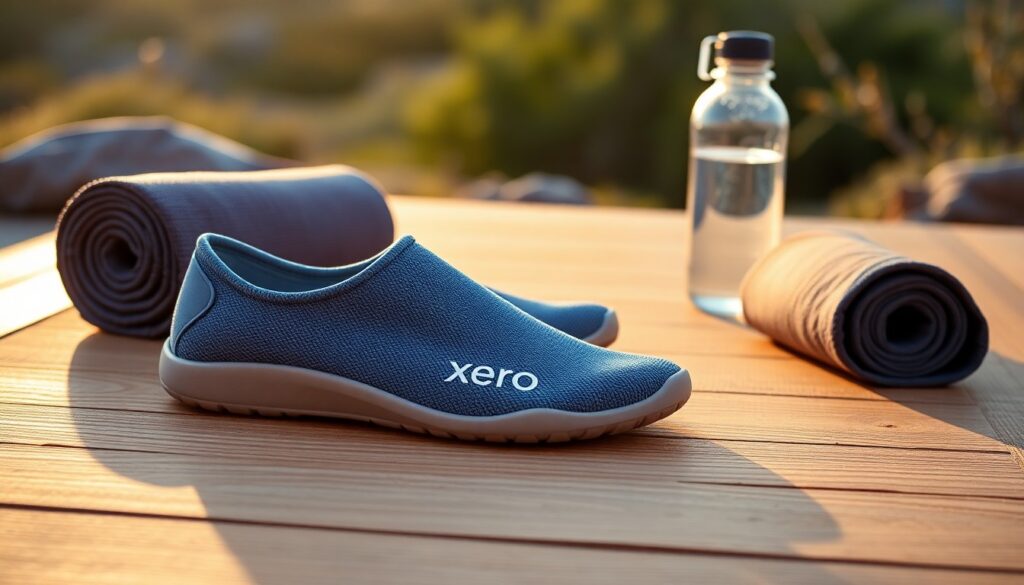
Barefoot shoes can be a smart choice for yoga and meditation, but they are not automatically better than practicing barefoot. The best option depends on your footing, your studio surface, and how much sensory feedback you want.
Quick decision
If you want a little protection without losing the floor feel, barefoot shoes are often a strong fit for yoga, standing meditation, and short studio transitions. If your class is calm, your floor is clean, and you prefer maximum feedback, going barefoot still wins. If you need arch support, warmth, or slip resistance because of a specific foot issue, choose carefully and consider a more supportive option.
If you are still comparing the broader barefoot-footwear category, start with the main minimalist-footwear benefits guide and then come back to this yoga-specific use case.
This page is about one question: whether barefoot shoes make sense for yoga and meditation in real life. The short answer is yes for many practitioners, especially if you want a light layer of protection while keeping good floor contact, and no if your practice is best done fully barefoot or you need true support features that minimalist shoes do not provide.
If you already know you want to explore the broader category, the barefoot shoes hub is the best place to browse the full range first. For readers who think in terms of use case, this guide is narrower: it focuses on grounding, balance, grip, and whether the shoe helps or gets in the way during yoga and meditation.
What Barefoot Shoes Actually Change In A Yoga Class
The most useful thing barefoot shoes do in yoga is reduce the gap between your foot and the floor. They keep the toes free, the heel unraised, and the sole thin enough that your body can still feel the ground. That matters in standing postures, balance work, slow transitions, and even seated meditation when you want stable contact without distraction.
The original post got this part right: barefoot shoes are not about adding performance gear on top of yoga. They are about stripping away unnecessary structure so your feet can work more naturally. That means a wide toe box, a flexible upper, and a zero-drop platform that does not tilt you forward or backward. Those features can support better alignment because they let your body organize itself instead of fighting a stiff sole.
A good minimalist shoe can also help if you dislike the direct feel of a studio floor. Some practitioners want the sensory feedback of being barefoot but prefer a small barrier for hygiene, temperature, or protection. In that middle ground, barefoot shoes are useful because they preserve much of the tactile connection without turning the practice into a shoes-on workout class.
Best Fit Barefoot shoes tend to work best for yoga when you want a little protection, frequent balance work, or a studio environment where fully barefoot practice does not feel ideal.
Why They Can Help With Balance, Grounding, And Posture
Yoga is built on tiny adjustments. The more clearly you can feel the floor, the easier it is to notice weight shifts in poses like Tree, Warrior III, Half Moon, or any sequence that asks for one-foot stability. Barefoot shoes improve that floor awareness because they keep the sole thin and the toe box spacious, allowing the foot to spread rather than collapse inward.
That toe splay is more than a comfort detail. It creates a larger base of support and helps distribute force more evenly across the foot. In standing poses, that can reduce the feeling of wobble. In meditation, it can help you settle into a posture without constantly shifting because the foot no longer feels compressed.
The same goes for posture. Traditional shoes often raise the heel or add structure that changes how the ankle, knee, hip, and spine stack. A zero-drop design keeps you closer to a neutral stance, which can make upright meditation more comfortable and can reduce that subtle forward pitch many people develop in everyday shoes. That is one reason barefoot shoes are often described as grounding. The grounding is partly physical: you can sense the floor. It is also postural: your body has less artificial shaping to work around.
For more on how minimalist design affects movement outside yoga, the barefoot walking guide is a useful companion read. It helps explain why the same foot mechanics that matter on a walk also matter in a quiet studio setting.
Where The Grounding Feeling Comes From
People often use the word grounding in a spiritual sense, but there is a practical side to it. Your feet are packed with sensory receptors, and those receptors help the brain know where the body is in space. When a shoe is thin, flexible, and not overly cushioned, those signals stay clearer. That does not create magic on its own, but it can make the practice feel calmer and more controlled because you are less disconnected from the surface beneath you.
In meditation, that sensory clarity can be enough to change how stillness feels. Instead of floating between awareness and distraction, you may find it easier to settle into your seat, feel the floor under the heel or forefoot, and keep your posture organized. For some people, that is more effective than being fully barefoot, because a small amount of coverage removes the mental friction of a cold floor, rough mat, or slightly unclean studio surface.
When Barefoot Shoes Are Better Than Going Barefoot
Barefoot shoes are not always the best possible choice for yoga. They become more useful when protection and structure matter just enough to improve comfort without dulling the practice. That can happen in a few common situations.
- You practice in a studio where the floor is cool, hard, or slightly abrasive.
- You want a hygienic buffer but still want direct-feeling movement.
- You sweat heavily and prefer a bit more grip and foot security.
- You do occasional outdoor yoga and need light protection from grit or uneven ground.
- You are transitioning away from traditional shoes and want a softer entry into minimalist movement.
That last point matters more than many people think. A person who has spent years in cushioned, structured shoes may find fully barefoot practice surprisingly intense at first. Barefoot shoes can serve as a bridge. They let the foot experience more of its natural mechanics while still offering a layer of protection, which is often enough to make the transition more comfortable and sustainable.
For readers who are specifically exploring that adjustment process, the barefoot transition guide covers the pacing side of the equation in more detail. It is especially relevant if yoga is your first step into minimal footwear and you do not want to overdo it.
A Useful Timing Guide: When To Buy, Break In, And Use Them
The audit specifically called for timing guidance, and it matters here because barefoot shoes should not be treated like a last-minute purchase the day before class. If you are new to minimalist footwear, plan a short break-in window so your feet and calves can adapt before longer sessions.
If you are comparing brands and style options rather than the principle itself, the best time to make that decision is before you commit to a long practice block. Try them first in a short session, then judge whether you still notice the floor, feel stable in balance poses, and can move through transitions without your toes feeling squeezed.
What To Look For In A Yoga-Friendly Barefoot Shoe
The right model is less about fashion and more about the mechanics of your practice. A barefoot shoe for yoga should disappear as much as possible while still serving the practical need for protection. That means the fit matters as much as the design philosophy.
1. A Wide Toe Box
Your toes should be able to spread naturally, especially when you press through the forefoot in standing postures. A cramped toe box works against balance and can make the shoe feel more like a constraint than an aid.
2. Zero Drop
A flat heel-to-toe profile keeps your body from leaning into a built-in slope. That can make seated posture more neutral and can also improve how your weight settles in standing work.
3. Thin But Durable Sole
For yoga, ultra-thick soles usually add more distance than benefit. A thin sole is better because it lets you feel the mat or floor. It still needs enough durability to survive repeated use and enough grip to keep you from sliding in transitional movements.
4. Secure But Not Restrictive Upper
The shoe should stay on during movement without pinching across the arch or top of the foot. If the upper pulls at the toes, it will distract you. If it is too loose, it may feel unstable in flow sequences.
5. A Surface That Matches Your Environment
A studio shoe does not need the same rugged outsole as a trail model. If you use the pair mainly indoors, prioritize flexibility and floor feel. If you move between indoor classes, outdoor breaks, and errands, a slightly more durable sole makes sense.
A simple practical rule
If you cannot spread your toes, feel the mat, and complete a balance pose without thinking about the shoe, it is probably not the right barefoot shoe for yoga.
Readers who want broader selection advice can also use the general women’s barefoot shoes guide or men’s barefoot shoes guide if fit, sizing, and style are part of the decision. Those pages are not yoga-specific, but they help narrow the model search once you know you want a minimalist foundation.
How This Differs From Other Barefoot-Shoe Content
This page should not try to replace a general explanation of minimalist footwear. That is why the dominant broader topic page still belongs elsewhere in the cluster. The broader topic covers benefits across many use cases, while this guide answers the narrower question: are barefoot shoes useful for yoga and meditation specifically?
That distinction matters for both readers and search engines. A broad benefits article is the right place for general mechanics, history, and overall minimalist-shoe theory. A yoga-specific page should spend its energy on practice relevance, which means balance, grounding, posture, grip, and whether shoes help or hinder in a studio. The original draft spent too much time proving that barefoot shoes are good in general. The better angle is more specific: when, why, and for whom they help in yoga and meditation.
If you are looking for the broader minimalist rationale, use the main minimalist-benefits page as the anchor. If you are deciding whether this exact use case fits your routine, keep reading here. That division reduces overlap and gives each page a clearer job.
Popular Examples From The Original Draft, Kept In Context
The previous version named a few specific models, and that was useful because readers often want a concrete feel for what a yoga-friendly barefoot shoe looks like. The important part is not the brand itself, but the pattern those models represent.
Z-Trail Ev Sandals
A strong option when breathability matters most, especially for hot studios or outdoor sessions. The open design makes the ground feel immediate, but it offers less warmth and coverage than a closed shoe.
Prio Neo
A more versatile closed-shoe choice for practitioners who want a secure fit and better all-around coverage. It is still minimalist, but the slightly fuller build can soften ground feedback compared with the thinnest options.
Those examples highlight the trade-off every buyer faces: more openness gives more sensory feedback, while a little more structure adds convenience and versatility. Neither is right for every person. The question is whether your yoga practice is served better by sensitivity or by slightly more protection.
Who Should Be Cautious
Barefoot shoes are not a universal recommendation. Some readers should be careful, and the original article hinted at this but did not make it clear enough. If you already have an injury, recurrent pain, or a condition that affects sensation, start slowly and get individual advice if needed.
- People with significant foot pain should avoid assuming minimalist shoes will solve the problem immediately.
- Anyone who uses orthotics or has specific clinical instructions should ask a professional before changing footwear.
- Practitioners with neuropathy or reduced foot sensation need extra caution because the feedback barefoot shoes rely on may be unreliable.
- If your yoga is mainly restorative and you already feel comfortable barefoot, a shoe may add more than it gives.
This caution is not a warning against barefoot shoes. It is a reminder that minimalist footwear works best as a gradual tool, not a forced upgrade. The best yoga footwear is the option that lets you stay stable, focused, and comfortable enough to breathe and move without distraction.
How To Test A Pair Before You Commit
A yoga shoe should be tested like a practice tool, not like an outfit. Walk, squat, balance, and sit in it. Then ask whether it disappears or demands attention. That is the clearest test.
- Stand in Mountain Pose and notice whether your toes can spread naturally.
- Move into a single-leg balance and see if the sole feels stable rather than slippery.
- Try a seated meditation posture and check whether the shoe disappears from attention.
- Perform a slow transition, such as step-throughs or gentle lunges, to judge flexibility.
- After ten to twenty minutes, confirm whether anything pinches, rubs, or dulls your sense of the floor.
If the pair passes those checks, it is probably a strong yoga candidate. If not, you may be better off with your mat alone or with a different minimalist model that has a thinner sole, a roomier toe box, or a more secure upper.
Choose the right next page
If you want the full minimalist-footwear backdrop behind this topic, read the main barefoot-shoe benefits article. If you want to keep browsing by use case, the broader barefoot shoes hub is the best place to continue.
For readers who are already planning a transition, the next smartest move is to test a pair for short yoga sessions first, then expand to walking or daily wear once your feet have adjusted.
Frequently Asked Questions
Are Barefoot Shoes Good For Yoga?
Yes, for many people they are. Barefoot shoes preserve more floor feel than traditional shoes, give your toes room to spread, and can add a useful layer of protection in studios or outdoor settings. They are especially helpful if you want a compromise between fully barefoot practice and regular footwear.
Are You Supposed To Be Barefoot For Yoga?
Usually, yes, because yoga is traditionally practiced barefoot and that gives the most direct tactile feedback. But “supposed to” is not the same as “always best.” Barefoot shoes can be a practical alternative if you want hygiene, warmth, or a little extra protection while still keeping the practice minimal.
What Shoes Do You Wear During Yoga?
Most people wear no shoes at all. If shoes are needed, a minimalist or barefoot shoe is usually the most yoga-friendly option because it avoids heavy cushioning and rigid structure. For many practitioners, a bare mat, a thin minimalist shoe, or a sandal-style option are the only real choices worth considering.
What Should I Look For If I Need Barefoot Shoes For Meditation Too?
Look for a zero-drop sole, a roomy toe box, and a soft upper that does not press into the top of the foot. For meditation, comfort in stillness matters as much as grip in motion. If the shoe disappears while you sit, it is doing its job.
What If I Have Foot Pain Or A Condition Like Plantar Fasciitis?
Be cautious. Barefoot shoes are not a cure-all, and a transition that feels good for one person can irritate another. If you have foot pain, start slowly and consider individual guidance. For a more focused overview of that topic, see the plantar fasciitis guide.
Barefoot shoes can absolutely earn a place in yoga and meditation, but they work best as a purposeful tool rather than a universal upgrade. If the shoe helps you feel steady, grounded, and unbothered, it belongs in your practice. If it distracts you or adds strain, go barefoot instead and keep the choice simple.

Henry Harrington is a passionate author and content creator at My Shoes Finder, where he explores a wide range of topics related to footwear, lifestyle, and personal growth. With a keen eye for detail and a love for storytelling, Henry engages readers by sharing insights, tips, and personal anecdotes that resonate with his audience. His commitment to delivering high-quality content has established him as a trusted voice in the online community, inviting readers to step into new perspectives and discover their unique paths.
See also:
 Xero Shoes For Children In 2025: Fit, Safety, And Best Models
 Are Barefoot Shoes Good For Wet Hiking? What Works, What Fails, And When To Avoid Them
 Xero Shoes For Bunions: What Helps, What Doesn’t, And Which Models Fit Best
 Transitioning To Xero Shoes: A Safe Beginner’s Guide For 2025
 Widest Xero Shoes for Wide Feet: Models & Fit Guide
 Unleash Your Natural Movement with Barefoot Shoes for Men

You bring up an intriguing perspective on the intersection of bamboo-grounded footwear and yoga practice. While I appreciate the intention behind barefoot shoes, I wonder if there is a potential downside that isn’t often discussed. For instance, transitioning from traditional footwear to barefoot shoes can be a significant shift for many, leading to discomfort or injury if not approached gradually.
I’ve never really thought about how much my footwear could affect my yoga practice until I read this. I often find myself feeling a bit disconnected when I wear traditional shoes, especially when I’m trying to focus on grounding in poses like Tree or Downward Dog. The idea of barefoot shoes makes so much sense, almost like a natural extension of the earth beneath me.
It’s interesting how footwear can shape our connection to the ground, especially during yoga. I’ve felt a similar disconnection in traditional shoes, particularly in balance poses like Tree or when I’m trying to find that grounded feeling in Downward Dog. Since switching to barefoot shoes for my practice, I’ve noticed a significant difference in my awareness of the earth below me—it’s almost like I can feel each point of contact more clearly.
I find the discussion around barefoot shoes intriguing, especially given the growing awareness of how footwear affects our overall health. Having transitioned to minimalist shoes in my own practice, I’ve noticed a significant improvement in both my stability and comfort during yoga sessions. However, I wonder about the potential downsides—like the adjustment period required for those who are used to traditional footwear and might be at risk of injury during that transition.
It’s great to hear how your shift to minimalist shoes has positively impacted your yoga practice. The enhancement in stability and comfort can certainly transform the experience. You raise an important point about the adjustment period that comes with transitioning to barefoot or minimalist footwear.
I couldn’t agree more about the impact of footwear on our yoga practice. Since switching to barefoot shoes, I’ve noticed a huge difference—my balance feels more grounded, and I’m more aware of how my feet interact with the mat. It’s interesting to think about how society has pushed us toward traditional shoes, often prioritizing style over function. I’ve found that embracing the natural movement of my feet has not only helped in yoga but also in everyday activities.
It’s great to hear how switching to barefoot shoes has positively impacted your yoga practice. That feeling of being more grounded can really enhance your connection to the mat. It’s so true that our society often prioritizes comfort and style over functionality in footwear, which can create a disconnect from our bodies. As you’ve discovered, allowing your feet to move more naturally not only improves balance during yoga but can definitely influence how we feel during daily activities.
I’ve never really thought about how my footwear affects my yoga practice until now. It makes sense that wearing shoes designed to mimic barefoot movement would enhance not just balance but also my overall sense of connection to my practice and to the environment around me. I often find that when I’m grounded, both physically and mentally, I can flow more deeply into each pose.
This is such an interesting point! I never really thought about how my shoes could be contributing to my chakras until now. It’s like I’ve been trying to flow with one foot stuck in a concrete block! I mean, using barefoot shoes feels like training my feet to do yoga while they’re still trying to master the art of balancing my Netflix binge-watching. Plus, I can’t help but imagine the moment when my toes finally get their freedom. They might throw a party!
It’s fascinating to think about how our footwear can impact our overall energy and balance, isn’t it? The idea of being stuck in a concrete block while trying to flow really resonates. It’s kind of like how we often ignore the little things, like our posture or the alignment of our bodies, that can throw off our entire sense of well-being.
The connection between our footwear and our practice really does seem to be an under-discussed aspect of yoga and meditation. I’ve recently started practicing in barefoot shoes, and I’ve noticed a significant difference in how grounded I feel during my sessions. It’s fascinating how something as simple as footwear can alter our balance and body awareness. I’ve also read about the concept of proprioception, which refers to the body’s ability to sense its position and movement, and I can see how barefoot shoes could enhance that awareness.
I really appreciate your insights on the interplay between footwear and mindful practices like yoga and meditation. I’ve personally transitioned to barefoot shoes over the past few months, and the difference in how connected I feel to the ground is remarkable. It’s fascinating to consider how something as simple as what we wear on our feet can affect our overall balance and stability throughout our practice.
You make a compelling case for barefoot shoes as essential tools for amplifying our yoga and meditation practices. I’ve personally experienced how transitioning to minimalist footwear has transformed not just my alignment but also my overall mindfulness during sessions. There’s something grounding and liberating about feeling the texture of the earth beneath your feet.
I completely resonate with what you’re saying about barefoot shoes transforming your alignment and mindfulness in yoga and meditation. There’s something quite special about that direct connection to the ground—it almost feels like a reminder to be present and engaged with the moment.
I completely relate to your experience with barefoot shoes and how they can deepen your yoga and meditation practices. There’s something truly special about connecting with the ground in such a direct way. Feeling the textures beneath your feet not only enhances our physical awareness but also encourages a sense of presence that can extend beyond our practice.
I recently came across some helpful tips on keeping our shoes in top shape, especially with winter salt stains, and it ties in nicely with the way we care for our feet during yoga and meditation practices.
‘How To Remove Salt Stains From Shoes And Prevent Winter Damage’
https://myshoesfinder.com/tips-for-preventing-and-removing-salt-stains-from-shoes/.
You know, the idea of barefoot shoes really tickles my fancy! I mean, it’s about time our footwear caught up with our Zen practices, right? When I first tried yoga, I was a bit stiff—both mentally and physically. I remember wearing these clunky, heavily cushioned shoes that felt more like ankle weights than supportive companions. I’d stumble through my downward dogs like an unintentional comedy routine. I could practically hear my feet shouting, “Let us breathe!”
I totally get what you mean about clunky shoes being like an added weight in yoga. It’s funny how our footwear can almost dictate our movement, isn’t it? I remember when I first switched to minimalist shoes as well; it really made me more attuned to my balance and alignment. Suddenly, I felt more connected not just to the ground but to my own body.
I totally get where you’re coming from about barefoot shoes. It’s interesting how our footwear often feels so disconnected from our natural movements, especially when we’re trying to find that balance on the mat. I remember my early yoga days too—those heavy shoes seemed like they were always trying to sabotage my practice. It’s almost as if our feet have become an afterthought in the design of modern shoes, right?
I completely get what you mean about the clunky shoes; it’s like they’re designed to hold us back instead of freeing us up! I used to wear those padded runners, and every time I stepped onto my yoga mat, I felt like I was lugging a weighty burden. It really does seem like a paradox—our bodies crave connection to the ground, yet we cover them with massively cushioned soles.
This perspective on barefoot shoes really resonates with me. I’ve always felt that the connection to the earth is crucial in both yoga and daily life. I recently switched to barefoot shoes during my practice, and the difference in my stability and balance has been profound. It’s fascinating how something as simple as footwear can enhance our mindfulness and bring us closer to that feeling of being grounded.
Your insights on the role of footwear in yoga practice resonate with my own experiences. Transitioning to barefoot shoes has indeed transformed my connection with the mat and the ground beneath me. I’ve noticed that the flexibility and wide toe box not only enhance my balance during poses but also encourage a more mindful approach to my practice.