
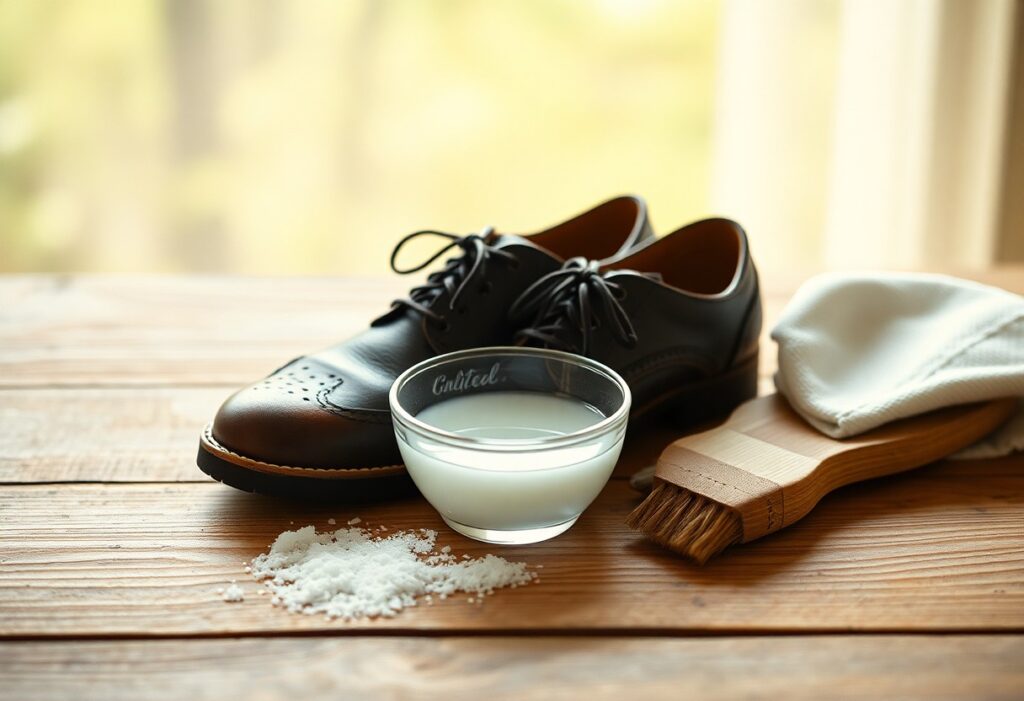
Road salt can leave shoes looking chalky, dried out, and neglected fast. The good news is that most salt stains can be removed safely if you act early and use the right method for the material.
Fastest way to handle salt stains
Brush off loose salt, wipe the area with a lightly damp cloth, then clean with a material-safe solution. If the shoe is leather, condition it after drying. For suede, use as little moisture as possible and finish with a suede brush.
If you want a broader winter-care refresher, the companion guide on cleaning shoe residue effectively covers related buildup problems, while this article stays focused on salt specifically: how to remove it, when to use a homemade mix, and how to stop it from coming back.
At A Glance: What To Do By Shoe Material
| Material | Best first move | What to avoid |
|---|---|---|
| Leather | Wipe with damp cloth, then use a mild vinegar-water mix and condition after drying | Soaking, harsh detergents, direct heat |
| Suede | Dry brush first, then use minimal moisture only if needed | Oversaturating, rubbing hard, oil-based cleaners |
| Canvas | Wipe, spot-clean gently, then air-dry fully | Bleach, hot drying, scrubbing too aggressively |
| Synthetic | Use a soft cloth and mild cleaner; rinse residue carefully | Strong solvents and abrasive pads |
Why Salt Stains Happen And Why They Matter
Salt stains are not just a cosmetic issue. When slush and road salt dry on shoes, the residue pulls moisture from the material and leaves behind white patches, rings, crusty deposits, or discolored spots. On leather, that drying effect can lead to cracking and stiffness. On suede, the problem often shows up as rough white buildup that is harder to remove once it settles into the nap.
The earlier you treat the stain, the better the result. In practice, the safest window is the same day you notice it. If salt sits too long, it can break down natural oils in leather and make the surface harder to restore later. That is why a quick response matters more than using an aggressive product.
How To Remove Salt Stains Safely
Start with the gentlest method that fits the material. For most shoes, a soft cloth and plain water are enough to remove the first layer of residue. Wipe in one direction, refresh the cloth often, and avoid rubbing the salt back into the surface.
- Brush or wipe away loose salt and dried grit first.
- Dampen a clean cloth with lukewarm water and wipe the stained area gently.
- If residue remains on leather, use a mild mix of equal parts water and vinegar, or water, vinegar, and a small amount of lemon juice.
- Never saturate the shoe; work in light passes only.
- Let the shoe air-dry naturally at room temperature.
- Finish leather with conditioner once fully dry, and brush suede back into shape if needed.
Simple Homemade Mix For Leather
A common DIY solution is equal parts water, vinegar, and lemon juice. Apply it with a soft cloth, wipe in one direction, and stop as soon as the salt lifts. Test it on a hidden area first, especially on finished leather or dyed materials.
For readers who also care about weatherproofing before winter arrives, these waterproofing techniques are a useful next step. A good barrier will not make shoes immune to salt, but it can reduce how much of the residue reaches the upper in the first place.
Prevention That Actually Works In Winter
Prevention is easier than restoration, especially on leather. Before the season gets rough, apply a leather conditioner and then a waterproofing spray or wax-based protector. That combination helps the shoe resist salt-laden water and makes cleanup faster when you do get caught in slush.
- Treat shoes before the first freeze, not after the first stain.
- Reapply protection every 2 to 4 weeks during heavy use.
- Keep cleaning cloths at home and work so you can wipe shoes quickly.
- Use shoe trees to help shoes dry evenly and keep their shape.
- Rotate pairs so one wet day does not become a repeat problem every day.
This is also where winter habits matter. Check weather forecasts for wet, salty days, and wipe shoes the same evening rather than waiting until the weekend. For barefoot and minimalist footwear owners, the broader care advice in cleaning tips for barefoot shoes can help you keep lighter materials in better condition through repeated exposure.
Timing Guide For Cleaning And Re-Protection
Salt care is mostly about timing. A fast response keeps stains from setting, and a steady maintenance rhythm helps prevent the next round of damage.
| When | What to do | Why it helps |
|---|---|---|
| Immediately after wear | Wipe away salt and moisture | Prevents residue from drying into the material |
| Within 24 hours | Use a mild cleaning solution if needed | Improves stain lift before damage sets in |
| Every 2 to 4 weeks in winter | Reapply protective spray or conditioner | Maintains the barrier against salt and moisture |
| Weekly in heavy winter use | Inspect seams, uppers, and soles for buildup | Catches early damage before it spreads |
When To Choose Diy, And When To Buy A Cleaner
DIY cleaning is usually enough for fresh or moderate stains, especially on everyday leather shoes. The water-vinegar-lemon method is inexpensive, accessible, and often effective when used carefully. Commercial cleaners make more sense when the shoes are expensive, the stain is old, or the material is delicate and you want a more specialized formula.
Whatever you choose, avoid harsh chemicals that strip oils or discolor the upper. That warning matters most for leather, but it also applies to suede and nubuck, where an aggressive cleaner can alter the texture permanently. If your shoe needs deeper restoration after repeated winter damage, the guide to mold prevention and removal for leather shoes is a useful related read because it reinforces the same principle: dry the shoe properly, then restore the material instead of overworking it.
Want the fuller winter shoe-care framework?
If you are building a more complete protection routine for leather and everyday footwear, start with the main winter-cleaning archive and then return here for the salt-specific steps.
Frequently Asked Questions
Salt stains are one of the easiest winter shoe problems to prevent and one of the most frustrating to ignore. A quick wipe, the right cleaner, and a steady protection routine will keep the damage manageable and help your shoes last much longer through the season.

Oliver Prescott is a dedicated author and content creator at My Shoes Finder, where he explores a diverse range of topics focusing on lifestyle, fashion, and personal development. With a keen eye for detail and a passion for storytelling, he connects with readers by providing insightful and engaging content. Oliver’s writing aims to inspire and inform, making complex ideas accessible and relatable to a broad audience. When he’s not writing, he enjoys exploring new shoe trends and sharing his findings with fellow enthusiasts.
See also:
 Xero Shoes For Cold Weather Trekking: What Works, What Doesn’t, And When To Upgrade
 Nubuck Vs Suede Vs Roughout Leather: Differences, Care, And Best Uses
 Xero Shoes Winter Boots Review: Best Picks For Warmth, Waterproofing, And Traction
 Barefoot Shoe Care: Cleaning, Drying, Storage, And Repair Tips
 How To Keep White Shoes Clean Without Damaging Them
 Neutral Wax On Shoes: When To Skip It And What To Use Instead



I can totally relate to the struggle of keeping shoes in good shape during winter. I remember the first time I made the mistake of wearing my favorite leather boots in slushy weather—what a mess! I’ve found that a good waterproof spray can be a lifesaver before the snow hits, but I still end up doing some cleaning mid-season to keep them looking decent. Have you tried any specific products or techniques for treatment? I’m curious if there are any new tips or tricks that have emerged since last winter. Plus, it’s interesting how our footwear maintenance can really reflect how we engage with our local environment, especially in places where winter feels relentless! Would love to hear more methods anyone else has found effective!
I totally get what you mean about the struggle with winter shoes. That first time ruining leather boots in slush is a rite of passage for many! Your tip about the waterproof spray is spot on. I’ve used it too, and it really makes a difference, especially with those unexpected wet patches.
I can relate to that first experience of ruining leather boots; it’s almost a rite of passage we all seem to share. I remember my first pair of nice boots, and it felt like a heartbreak when I realized I couldn’t protect them from the winter slush. It’s funny how footwear can hold so many stories about our experiences with the elements.
It’s interesting how a pair of leather boots can turn into a piece of our personal history, isn’t it? There’s something about investing in a nice pair that makes you feel like you’re stepping into a new chapter, but then the reality of the elements hits hard. That heartbreak you mentioned resonates so deeply. It’s like we share this unspoken bond over the little tragedies of life—like fighting against winter slush and losing, or struggling with a stubborn stain that just won’t budge.
It really is fascinating how something as seemingly simple as a pair of boots can carry so many stories and memories. Investing in a quality pair does feel like a rite of passage, doesn’t it? It marks the start of new adventures, but as you said, reality often interjects with the elements. I can’t help but think of how those little tragedies reflect on our resilience.
It’s true, a good pair of boots can feel like a passport to new experiences. Investing in them really does feel like taking a step into unknown territory—literally and metaphorically. And those little dramas we face in the great outdoors? They really do test our mettle. I think about all the times I’ve been caught in the rain, mud caked on my boots, or trekking through challenging terrain. Each scuff tells a new story, and when you look back, those little mishaps often turn into fond memories. They remind us that it’s not just about the destination; it’s about how we handle the bumps along the way. Plus, there’s something about the wear on a good pair of boots that reflects our journey through life, right? Each scuff, a badge of honor. What’s your favorite adventure that left its mark on your favorite pair?
You really hit the nail on the head with that perspective—those scuffs and scratches are like a visual diary of our adventures. I remember a hike I did in the Pacific Northwest a couple of years back. We started off in this lush, green forest, and as we made our way up the mountain, the weather took a turn. We ended up navigating through a heavy downpour that turned the trails into slippery mudslides. My boots were completely coated by the end of it, but the feeling of triumph when we finally reached the summit was worth every squelchy step.
Speaking of stepping into new experiences, have you ever considered how the right footwear can elevate your adventures?
‘Toe Ring Barefoot Sandals: Step up your style’
https://myshoesfinder.com/xero-sandals/toe-ring-barefoot-sandals/.
I completely resonate with that idea of boots being more than just footwear—they’re like companions on our adventures, each telling a story of where we’ve been. I remember one particular hike that tested my boots and my resolve. It was one of those unexpected weekends where the weather turned sour. I was meandering along a familiar trail, but this time, the rain transformed it into a muddy challenge.
It’s interesting to think about how much a pair of boots can symbolize. For me, investing in a quality pair has always felt like a blend of practicality and symbolism. On one hand, they’re meant to endure the elements, which can be seen as a reflection of what we face in life—those little tragedies you mentioned often remind us of our own resilience.
It’s really intriguing how something as simple as a pair of boots can hold so much meaning. I agree that the practicality aspect is essential—especially when you think about the different terrains we traverse, both literally and metaphorically. Boots are built to withstand harsh weather and tough conditions, which is a great parallel to our own experiences of facing challenges and learning to adapt.
You’ve hit the nail on the head with how boots symbolize more than just footwear; they’re like our personal armor for life’s adventures. When you think about it, every scuff and mark on those boots tells a story. They’ve probably walked through mud, braved rain, and endured the chill—all situations that mirror our own ups and downs.
You bring up such a meaningful perspective on a pair of boots. They really do serve as a kind of canvas for our lives, don’t they? Every scuff or mark tells a story, and as you mentioned, investing in a quality pair feels like stepping into a new chapter. I remember when I bought my first pair of hiking boots; they were an investment, but they became companions on so many unforgettable journeys.
It’s so true how a pair of leather boots can embody so much more than just footwear. They often carry the imprints of our lives, don’t they? I remember buying my first pair of quality boots, feeling like I was making a tangible commitment to stepping out into the world with purpose. It’s fascinating how these items, once pristine, transition into vessels of memories, each scratch and mark telling a story of its own.
Speaking of stepping into new chapters, I recently came across this piece on toe ring barefoot sandals that explores how the right footwear can elevate our style while keeping comfort in mind, even as we tackle those everyday challenges.
‘Toe Ring Barefoot Sandals: Step up your style’
https://myshoesfinder.com/xero-sandals/toe-ring-barefoot-sandals/.
You’ve captured something really special there. It’s interesting how leather boots evolve into more than mere accessories; they become witnesses to our journeys, holding moments that resonate with our personal stories. Each mark really does contribute to a unique narrative, reflecting not just the places we’ve been but the experiences we’ve gathered along the way.
It’s interesting to hear how much a pair of leather boots can mean to someone. They really do carry our stories, don’t they? I often find myself reflecting on my own experiences with footwear. I remember my first pair too; they felt like an invitation to adventure and independence. Each scuff and mark truly represents a moment—be it hiking through muddy trails or navigating city streets on busy days.
It’s interesting how we tend to attach memories and emotions to our footwear, isn’t it? Those first experiences really do shape our perspective on the journey we take with our things. I remember the crunch of snow underfoot and the sinking feeling when I first noticed the scuff on my boots after a day out. It’s a reminder of our own vulnerability against the elements and how sometimes, despite our best efforts, things don’t stay pristine.
I completely agree with you about the memories we tie to our footwear. It’s fascinating how something so seemingly mundane can hold such profound significance. I vividly remember my first pair of hiking boots—a sturdy pair that accompanied me on my first solo backpacking trip. Each scuff and mark they collected tells a story of triumph and challenge, from trekking through muddy trails to conquering my first mountain summit.
I find it fascinating how our belongings can embody such rich narratives. Footwear seems particularly symbolic; each scuff or mark tells a story. That crunch of snow underfoot brings back memories for me too. On a snowy day, my first pair of winter boots was a mix of functional and sentimental, and as I stomped through the drifts, every step felt like an adventure.
It’s true how our shoes carry memories; if you’re looking to keep those sentimental journeys going for longer, I found some helpful tips that might make a difference.
‘Tips for extending the life of your shoes’
https://myshoesfinder.com/tips-to-prolong-your-shoes-lifespan/.
You really tapped into something special with your memories about footwear. It’s amazing how what we wear, like those winter boots, can tie us to specific moments and feelings. Each scuff or mark is like a little badge of honor, isn’t it? Whether it’s the crunch of snow or the feeling of warm sidewalks under your feet, those sensations stick with us long after the moment has passed.
I can definitely relate to that struggle with winter shoes. It’s almost like you have to choose between style and staying dry. I remember my first pair of leather boots too—they looked so good until they met a muddy sidewalk for the first time. It’s funny how those little experiences can teach you so much about the importance of taking care of your gear.
I think it’s interesting how winter shoes can really shape our entire cold-weather experience. The struggle with finding that balance between style and practicality can feel daunting. I remember my first pair of leather boots; I cherished them until one day they encountered a surprise slush puddle. That was a harsh lesson in winter readiness.
It’s so true that winter footwear can significantly impact how we experience the season. There’s definitely an art to finding that sweet spot between style and practicality. I remember my first pair of winter boots too; they were gorgeous but didn’t have any waterproofing to speak of. I learned after a similar incident—the regret of soggy socks is a lesson no one forgets easily.
I completely relate to what you’re saying about finding that balance between style and practicality in winter shoes. It’s such a nuanced struggle, especially when you want to look good but also need to stay warm and dry. Your experience with the slush puddle is all too familiar. I remember my first pair of stylish winter boots, which turned out to be more about aesthetics than function. They looked great until I stepped into a deep puddle, and my socks were soaked through.
I totally get that struggle—finding the right shoes for winter can be tricky, especially when it comes to keeping them looking good; I recently came across some tips that really helped me tackle those pesky plastic residues on shoes, which might come in handy for your next pair.
‘How To Remove Plastic Residues From Shoes Safely’
https://myshoesfinder.com/tips-for-effective-cleaning-of-shoe-residues/.
I totally get what you mean about the struggle with winter footwear. That first snow always catches me off guard, and I’ve made similar mistakes with my favorite boots! Last winter, I invested in a waterproofing product from a local brand that’s been getting good reviews. It’s a spray that you apply heavily before the snow starts, and it claims to create a pretty solid barrier against slush and salt. I’m hopeful that it’ll help keep my shoes in better shape this year.
I hear you about that first snow—it always catches me off guard too. It’s like you just get used to the fall leaves and suddenly it’s a winter wonderland. I’ve had my share of boot mishaps as well, especially with all the slush and salt wreaking havoc on anything I wear.
I hear you on that winter footwear struggle—finding the right fit can be a real challenge, but I recently came across some handy tips for finding the perfect shoes, especially for those of us with wider feet.
‘Finding the perfect shoes for wide feet tips and recommendations’
https://myshoesfinder.com/tips-for-finding-perfect-shoes-for-wide-feet/.
I totally get that feeling of being caught off guard by the first snowfall. It transforms everything so quickly, and suddenly you have to adjust to new routines—mixing in the winter gear is always a challenge. I remember the first time I stepped out into the snow with boots that were more fashion than function. Let’s just say I learned my lesson the hard way.
You’ve hit the nail on the head with that feeling of being caught off guard. It’s like Mother Nature throws a surprise party, and we show up in our summer shorts, completely unprepared. I can still picture that first snow of the season; the world outside goes from drab to dazzling, but my wardrobe remains stuck in the past.
It’s so true—there’s definitely something magical about that first snowfall. It’s like the world gets a fresh coat of paint, and suddenly everything feels different, even if we’re left shivering in our flimsy attire. I remember last winter, I made the mistake of thinking a random warm spell meant I didn’t need to dig out my winter gear. Then, out of nowhere, the snow fell and I was stuck in sneakers while everyone else twirled by in cozy boots.
It’s interesting how that first snowfall can really catch us off guard, isn’t it? The way it blankets everything can feel almost magical at first, but then reality sets in—like the reality of winter gear. Your experience with the fashion-over-function boots resonates with many of us; it’s a classic pitfall. It’s funny how we can be so focused on the visual aspect that we forget practicality, especially when navigating slushy streets.
I totally relate to that moment when the snow starts falling, and everything shifts right under your feet. The mix of excitement and adjustment can be a real juggling act. Your story about the boots is a classic! It’s funny how we often prioritize style over practicality until the snow shows us otherwise. Those instances force us to rethink our essentials. I’ve gone through a similar phase with gloves—lost half of them because they looked nice but were useless in the cold. Have you found any winter gear that manages to be both functional and stylish? It’s a bit of a holy grail in the winter wardrobe game.
It’s so relatable to feel blindsided by that first snowfall. Those surprise moments can really make us rethink our footwear choices. It sounds like you found a solid solution with that waterproofing spray. I’ve heard good things about similar products too. It’s impressive how much a little prep can change things up when you’re up against slush and salt.
I can definitely relate to that experience. It’s such a bummer when you have to deal with scuffed or water-damaged shoes, especially when you love them so much. I’ve had a few pairs suffer the same fate, where slush is basically a shoe’s worst nightmare. Using that waterproof spray has helped me a lot, too. I tend to do a couple of layers, just to be safe, and some brands even say it can provide some UV protection, which is an added bonus for the summer months.
I completely get where you’re coming from. It’s like our favorite shoes can sometimes turn against us, especially in those messy conditions. The slush really is a sneaky culprit, creeping up when we least expect it. Your approach with the waterproof spray sounds smart; layering up definitely gives that extra peace of mind.
It’s so true—the way our favorite shoes can betray us really highlights how unpredictable the weather can be. It’s like walking through a winter wonderland one minute and facing a mini swamp the next. I’ve had my fair share of ruined sneakers after that sneaky slush gets in.
I can relate to your experience with slush—it feels like it has a personal vendetta against our favorite shoes. It’s almost like we can predict the weather, and the moment we step out in those fresh kicks, a storm rolls in. Using that waterproof spray has been a game changer for me as well; I’ve found that applying several layers not only helps with protection but also gives me peace of mind when I’m out on rainy days.
I completely understand where you’re coming from. It’s amazing how much we can grow attached to certain pairs of shoes, only to have them betrayed by the elements. Slush really does feel like a shoe’s worst nightmare; it’s like a hidden trap waiting to ruin your day. I’ve had my fair share of water-damaged shoes too, and it’s always so frustrating.
You’re definitely not alone in that struggle with winter footwear. Slushy weather can really take a toll on shoes, especially when it comes to leather. I had a similar experience my first winter out with new leather boots, and now I try to be much more proactive with them.
I totally get what you mean about the struggle with shoes in winter. That first muddy slushy walk can be a bit of a wake-up call, for sure. I’ve made similar mistakes with my own boots, and it’s always a mix of regret and wishing I had taken better care of them beforehand.
This post brings up an issue that many of us often overlook until it’s too late. Living in a colder climate, I’ve encountered firsthand the challenges that road salt presents to our footwear. It’s intriguing how something as mundane as winter weather can have such a profound impact on the longevity of our shoes.
You bring up a really important point, and it’s something many of us can relate to, especially during those long winter months. When you live in a cold climate, those seemingly innocent little piles of road salt can wreak havoc on our favorite shoes without us even realizing it at first. It’s one of those things that’s easy to overlook until you notice how worn out your footwear seems, or worse, find yourself replacing them more often than you’d like.
You’re right, it’s one of those issues that seems minor until it starts affecting our daily lives. Living in a colder climate often means we have to deal with that constant battle between staying warm and keeping our gear in good shape, and road salt can be a real nemesis for our footwear. It’s not just the initial damage, but the fact that it can lead to ongoing problems if not addressed.
You’ve captured a key point there. The wear and tear from road salt can really sneak up on us, especially in colder climates where we rely on our shoes for warmth and safety. It’s easy to forget how harsh those winter conditions can be on our footwear until we start noticing cracks or discoloration.
It’s true—road salt can sneak up on you, right? One day your shoes look great, and the next, they’re battling scuffs and stains that seem impossible to remove. Living in a colder climate, I’ve had my fair share of ruined footwear as well. It’s funny how something so essential for road safety can also wreak havoc on our favorite pairs of shoes.
Your insights on protecting shoes during winter resonate deeply with me. Living in a region where winters can be brutal, I’ve faced the dilemma of maintaining my footwear while trying to brave the cold and slush. I’ve learned that regular maintenance is indeed essential, especially the importance of waterproofing treatments and the right materials.
It’s great to hear your thoughts on this! Winter can really be tough on shoes. I’ve found that choosing the right materials makes a huge difference. For instance, leather is fantastic for style, but it definitely needs a good waterproof treatment to hold up in slushy conditions. And I totally agree on the regular maintenance—just a quick wipe down after being outside can really extend the life of your shoes.
I really appreciate the insights you’ve shared about protecting footwear during the winter months. Living in a cold region myself, I can definitely relate to the struggle of keeping shoes looking pristine amidst the brutal combo of snow and road salt. It’s disheartening to invest in a good pair of leather boots only to see them succumb to those unsightly stains.
I truly appreciate this discussion about the challenges posed by winter and the relentless road salt on our footwear. Living in a colder region myself, I can attest to the damage that salt causes—not just to shoes but to our wallets as well, when we have to repeatedly replace them. Your emphasis on prevention through regular cleaning and care resonated with me, as I’ve often found that my shoes fare much better with some proactive measures rather than waiting until the damage is done.
I completely resonate with your experience regarding the winter challenges and how road salt can be a real nuisance for footwear. It feels like a never-ending cycle of maintenance just to keep our shoes looking decent. I’ve started to view shoe care almost like a preventative health measure; just as we take care of our bodies to ward off illness, a little attention to our footwear can save us from the financial drain of constant replacements.
It’s interesting to see how something as seemingly mundane as road salt can have such a profound impact on our footwear. I’ve often found myself neglecting my shoes during winter, thinking they could withstand the elements without any special care. However, the reality has been harsh—a couple of seasons with little maintenance have left my favorite pair of leather boots looking worn and stained from salt damage.
You’re spot on about how road salt can sneakily wreak havoc on our shoes. It’s easy to overlook the little things when we’re just trying to get through the winter months. I’ve been there too—those leather boots that once looked pristine can end up looking like they’ve been through a war zone after a couple of winters without care.
You bring up a great point about how road salt can sneak up on us and wreak havoc on our shoes. It’s easy to underestimate just how harsh winter conditions can be, especially when we’re rushing out the door or thinking that our footwear is tougher than it really is. Leather boots, while sturdy, can really suffer if we don’t give them a little TLC during the colder months.
It’s fascinating how something as simple as road salt can wreak havoc on our favorite shoes during the winter. I’ve definitely learned the hard way about the importance of preventive care! One technique I’ve found really helpful is applying a waterproof spray before the first snowfall; it creates an extra barrier that helps repel salt and moisture.
You’re spot on about the winter challenges and how road salt can really take a toll on our shoes. It’s one of those things that often flies under the radar until you notice those unwanted white stains creeping in. It’s great to hear that you’ve found a technique that works for you with the waterproof spray before the snowfall. That’s such a proactive approach and really shows how small actions can lead to better outcomes.
You’ve hit the nail on the head with road salt and shoes. It’s funny how we often don’t think about something so seemingly innocuous until it’s too late. It’s like the classic winter battle: try to look stylish while avoiding the inevitable salt stains. Your strategy with the waterproof spray is spot on. I’ve found that it makes a real difference, especially with more delicate materials like leather.
I found your insights on protecting shoes during winter incredibly relevant, especially since I’ve seen friends make the mistake of neglecting their footwear during these months. It’s so easy to forget that our shoes endure weathering just like we do, and with winter’s onslaught of snow, ice, and road salt, they really need our attention!