
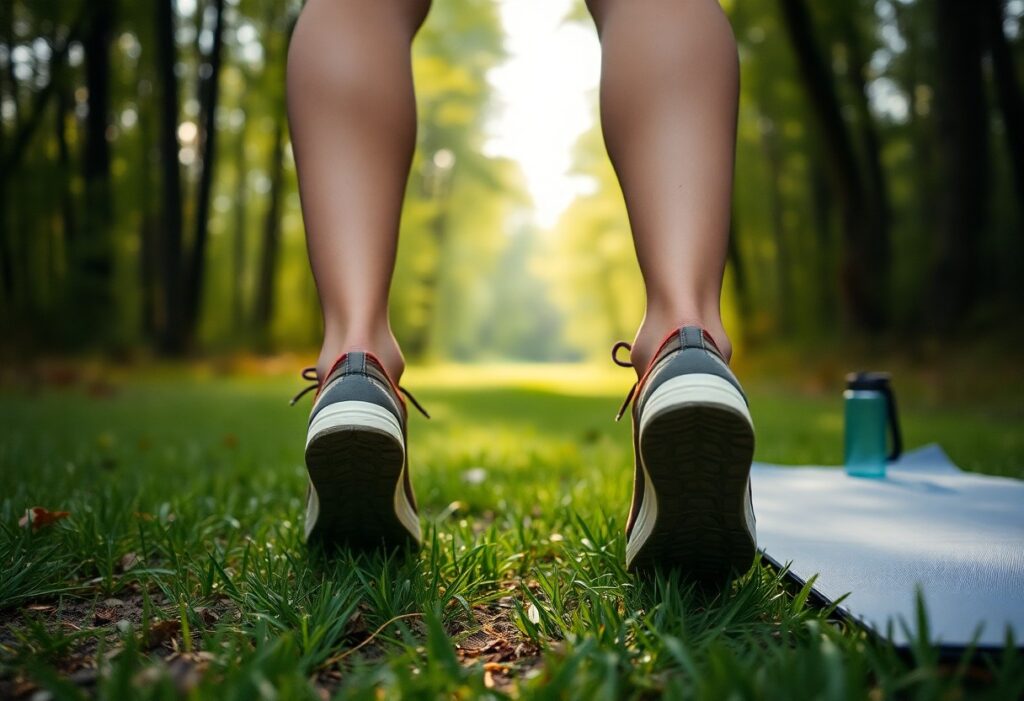
Barefoot shoes can help active recovery for some people, especially after low-to-moderate training, because they encourage natural foot motion, sensory feedback, and a lighter feel underfoot. They are not a universal recovery fix, though, and they work best when your body already tolerates minimalist footwear well.
Quick decision: are barefoot shoes a good recovery choice?
| Situation | Barefoot shoes may help if… | Better option instead |
|---|---|---|
| Light Recovery Walk | You want gentle movement, a roomy toe box, and more ground feel without adding stiffness. | Comfortable walking shoes with some cushioning if your feet feel sore. |
| Post-Run Cooldown | You are already adapted to minimalist footwear and want easy movement after training. | A soft, stable recovery shoe if your calves, Achilles, or forefoot are irritated. |
| Heavy Leg Day | You only need a short reset and your feet feel fresh. | More cushioning or even sandals/slides if you mainly want rest. |
| Foot Pain Or Injury Recovery | Your clinician has already cleared minimalist footwear and you have no flare-up signs. | Use the recovery plan your clinician gave you; minimalist shoes may be too aggressive. |
If you want the broader biomechanics context behind minimalist footwear, the most relevant companion piece is the science of barefoot shoes and their benefits. This article stays focused on post-workout recovery so the advice is easier to apply.
How Barefoot Shoes May Support Active Recovery
The most realistic recovery benefit is not magic muscle repair. It is a combination of lighter foot motion, better sensory input, and less interference with how your feet naturally move after activity. For some people, that can make a cooldown walk or gentle mobility session feel smoother and less restrictive.
That matters most when recovery is active rather than passive. A short walk, relaxed standing, easy errands, or mobility drills are the kinds of situations where barefoot shoes can feel useful. They may help your feet stay engaged without the locked-in feel of a stiff trainer, which is one reason they are often discussed alongside barefoot shoes for walking.
What they can do well
- Encourage natural toe spread and foot placement after exercise.
- Provide more ground feel, which can increase awareness during an easy cooldown.
- Reduce the bulky, compressed feeling some people dislike in traditional shoes.
- Support low-intensity movement when your goal is to keep blood moving.
Why The Recovery Effect Feels Different From Regular Shoes
Barefoot shoes are usually built with a wide toe box, little or no heel-to-toe drop, and a flexible sole. Those features change how your feet load the ground. Instead of being held in a heavily cushioned structure, your foot has to manage more of the movement on its own, which can make easy walking feel more natural.
That extra movement can be useful after training if you want to keep the lower leg and foot lightly active. It may also support proprioception, the sense of where your body is in space. Many wearers describe that as feeling more “connected” to their feet after a workout, which is a practical reason some athletes prefer minimalist shoes during cooldowns.
Still, the same features that help one person recover can irritate another. If you are already sore through the calves, Achilles tendon, or forefoot, the added demand on small stabilizing muscles may feel like too much. In those cases, recovery is usually better served by a softer, more forgiving shoe.
The Circulation Question
People often ask whether barefoot shoes improve circulation directly. The honest answer is that they may support circulation indirectly by making light movement more comfortable, not by creating a special physiological shortcut. A short post-exercise walk, calf pump, or mobility session helps blood move whether you wear minimalist footwear or not.
If barefoot shoes make that movement easier to sustain, they can be a useful recovery tool. If they make your feet tense or your stride awkward, they are probably not helping recovery at all.
When To Use Them, And When To Skip Them
A recovery shoe should match the job. The job is not always the same after every workout, so the right choice changes with the type of session you just finished.
If your goal is simply to recover faster from a foot or lower-leg flare-up, the more direct resource is tips for faster foot recovery and healing. That page is a better fit when the question is treatment and rehabilitation rather than footwear choice.
How To Use Barefoot Shoes In An Active Recovery Routine
If you decide to try them, start small. Active recovery should feel easier than the workout that came before it, so the shoe should not introduce new stress. A short adaptation period is usually the safest way to test whether minimalist footwear actually helps you recover better.
Start with
15–30 minutes of easy walking or standing after training.
Build gradually
Increase wear time only when your feet and calves feel normal the next day.
Watch for
Persistent soreness, sharp pain, Achilles tightness, or toe irritation.
A few practical cues matter more than brand claims. Choose a wide toe box, low or zero drop only if your body can handle it, and a sole flexible enough for easy movement. If the shoe forces your toes together or makes your stride feel artificial, it is not a good recovery shoe for you.
Transition pace matters as much as design. Many people do better by wearing minimalist shoes only after shorter sessions first, then extending use once they know the shoes do not trigger soreness. That conservative approach is especially important if you are coming from highly cushioned shoes or you already have a history of calf or Achilles issues. For readers still adapting to the category more broadly, barefoot-shoe transition tips can help prevent doing too much too soon.
What To Look For In Recovery-Focused Barefoot Shoes
Recovery footwear should feel easy, not demanding. The useful features are the ones that let your foot relax while still moving naturally.
- Wide Toe Box gives the toes space to spread after activity.
- Flexible Sole allows easy foot motion during a cooldown walk.
- Lightweight Build reduces the sense of drag or stiffness.
- Breathable Upper keeps the foot more comfortable after sweating.
- Low-Profile Shape avoids adding unnecessary bulk to an easy recovery session.
If you also care about day-to-day comfort beyond recovery, the broader buyer perspective in are barefoot shoes actually comfortable can help you judge whether the feel matches your routine.
Best fit for this article’s question
Barefoot shoes can help active recovery when the goal is gentle movement with more natural foot function, not when the goal is maximum cushioning or protection during a flare-up.
If you are looking for the broader posture angle, the more relevant companion page is do barefoot shoes enhance posture. That page covers alignment and posture; this one is focused on how barefoot shoes behave after exercise.
A Credible Bottom Line
Barefoot shoes can be a smart active-recovery option, but only in the right context. They may help you stay lightly mobile, feel more connected to the ground, and avoid the restrictive feel of traditional shoes after a workout. They are less helpful when your feet are already irritated or when you need softness and protection more than movement.
The safest way to think about them is as a tool for specific recovery sessions, not a universal answer. Start with short wear periods, keep the activity easy, and choose shoes that give your feet room without forcing a dramatic transition.
Frequently Asked Questions
Do barefoot shoes actually speed recovery?
They may support recovery indirectly by making light movement easier and more natural, but they do not guarantee faster healing on their own.
Can I wear barefoot shoes right after every workout?
Not always. They are more suitable after low-to-moderate sessions and after your body has adapted to minimalist footwear.
What are the warning signs that they are not helping?
Persistent soreness, sharp foot pain, calf tightness, Achilles irritation, or a feeling that your feet are working too hard are signs to back off.

Ethan Marshall is a passionate writer and content creator at My Shoes Finder, where he explores a diverse range of topics, from lifestyle and fashion to innovative products and personal development. With a keen eye for detail and a commitment to delivering engaging and informative content, Ethan connects with readers by sharing insights that inspire and inform. He believes in the power of storytelling to influence positive change, and he continually seeks to provide valuable perspectives that resonate with his audience.
See also:
 Xero Shoes For Achilles Tendonitis: 2025 Rehab Protocol And Loading Guide
 Xero Shoes For Children In 2025: Fit, Safety, And Best Models
 Therapeutic Benefits Of Xero Shoes: Who They May Help And When To Avoid Them
 Xero Shoes For Bunions: What Helps, What Doesn’t, And Which Models Fit Best
 Widest Xero Shoes for Wide Feet: Models & Fit Guide
 Transitioning To Xero Shoes: A Safe Beginner’s Guide For 2025

The discussion around barefoot shoes and their role in enhancing recovery is truly fascinating. I personally transitioned to minimalist footwear after noticing persistent discomfort in my feet during and after workouts. The shift to barefoot shoes has not only improved my foot mechanics but also deepened my connection to the ground, allowing for a more natural movement pattern.
I must admit, the idea of barefoot shoes has me torn between embracing my inner caveman and worrying about stepping on rogue Lego pieces. It’s funny how we’ve gone from cushioned sneakers that feel like marshmallows to the minimalist approach that demands us to reconnect with our primal instincts. Are we channeling our ancestors who sprinted after their dinner, or are we just trying to avoid the “clumpy foot” stroll?
You bring up a really interesting point about barefoot shoes and that struggle of finding balance between embracing our primal instincts and navigating modern life, particularly with those rogue Lego pieces lurking around. It’s funny how we’ve gone from that cushioned sneaker era—where it felt like we were walking on clouds—to this minimalist movement that encourages a return to basics.
You really highlight an intriguing tension there. It’s true that while we’ve shifted back toward minimalist footwear and the idea of reconnecting with our natural movement patterns, modern life presents its own unique challenges. Those rogue Lego pieces are just the tip of the iceberg. When I think about it, it’s not just about physical safety—it’s also about how we navigate our environments amid all the comforts and conveniences we’ve come to rely on.
You touch on an interesting contradiction in our relationship with footwear. The allure of cushioned shoes is hard to ignore—there’s something comforting about the idea of walking on clouds, especially after a long day. But when you think about it, our feet were designed for a different kind of movement. Barefoot shoes tap into that primal instinct to connect with the ground more naturally, which can lead to better posture and overall foot health.
You’ve captured that struggle perfectly. It’s interesting to think about how our relationship with footwear reflects broader shifts in health and wellness philosophy. Going from those heavily cushioned sneakers to barefoot shoes definitely feels like a rebellion against the excesses of modern life.
Speaking of balancing our primal instincts with modern quirks, I recently came across a piece that dives into how Vivobarefoots can really enhance our natural foot function while still navigating the little challenges of everyday life.
‘Vivobarefoots – Enhance Your Natural Foot Function’
https://myshoesfinder.com/barefoot-shoes/vivobarefoots-enhance-your-natural-foot-function/.
I get what you mean about that tug-of-war feeling with barefoot shoes. It’s like we’re caught in this fascinating paradox—on one side, we’re embracing the natural way of moving, and on the other, we’re navigating a world that’s designed for modern conveniences, including those treacherous Lego pieces.
There’s a real tension in navigating our natural instincts and the world’s conveniences, isn’t there? It feels like a balancing act where every step we take challenges those norms we’ve grown up with. On one hand, barefoot shoes invite us to reconnect with our bodies, reminding us that they’re designed to move in certain ways. On the other, we have a landscape littered with hazards—like those dreaded Lego pieces—that push us toward more protective footwear.
You’ve captured that balancing act perfectly. It really does feel like a daily negotiation between our instincts and the conveniences that modern life throws at us. I often find myself longing for the simplicity of movement, like when I think back to my childhood adventures—running about barefoot in the grass or feeling the earth beneath my feet. There’s something inherently grounding about that connection.
You’ve really captured that conflict well. It’s like we’re being pulled in two directions—wanting to feel more connected to our bodies and movement, while still trying to navigate a world filled with unexpected hazards. Those tiny Lego pieces on the floor can suddenly remind us of the reality we’re in.
You’ve captured that tension really well. It’s true—embracing barefoot shoes can feel a bit like balancing on a tightrope. On one hand, there’s this instinctive drive to reconnect with how we moved before our lives were filled with cushioned soles and supportive structures. We want to tap into our natural mechanics and feel the ground beneath us, almost like rediscovering a part of ourselves.
I get where you’re coming from—barefoot shoes do feel like a leap back in time, don’t they? It’s fascinating how we alternate between different eras in footwear, like one minute we’re on clouds, and the next, we’re trying to channel our inner hunter-gatherer.
I find the conversation around barefoot shoes and their impact on active recovery so fascinating! As someone who has dabbled in various forms of exercise—yoga, running, and even rock climbing—I’ve noticed how the shoes I wear can profoundly affect my performance and recovery.
I find this conversation about barefoot shoes and their impact on active recovery truly fascinating. It’s intriguing to consider how something as simple as changing our footwear can lead to profound changes in our overall health and recovery processes. The idea that barefoot shoes could unlock our body’s natural healing mechanisms resonates deeply, especially in a culture that often prioritizes style over functionality.
I find the premise of barefoot shoes in enhancing recovery quite compelling. Personally, I’ve noticed a significant difference during my own post-workout routines since transitioning to more minimalist footwear. The improved ground contact seems to encourage better alignment and proprioception, which can make a surprising impact on overall recovery.
I can relate to that experience with barefoot shoes and how they change your routine. Transitioning to minimalist footwear has really shifted how I approach my workouts, too. There’s something about that direct connection to the ground that just feels more natural. I’ve noticed improvements in my balance and stability, especially during recovery when I’m focusing on mobility stretches.
It’s fascinating to consider how barefoot shoes can influence not just our physical health but also the broader conversation around active recovery. I’ve been exploring the connection between footwear and foot health myself, particularly as someone who has spent years in traditional athletic shoes. Transitioning to barefoot models was initially daunting, but I found the experience surprisingly liberating and beneficial.
It’s really interesting how you’ve highlighted the broader conversation around active recovery in relation to barefoot shoes. I think many people don’t realize just how much our footwear choices can influence our overall well-being.
This discussion on barefoot shoes and their impact on active recovery is quite fascinating. I’ve been experimenting with minimalist footwear for a while, and I can attest to how they encourage a more natural gait, similar to what you described. However, I often wonder about the potential downsides. For instance, transitioning to barefoot shoes too quickly can lead to discomfort or even injury for those who are used to more supportive footwear.