
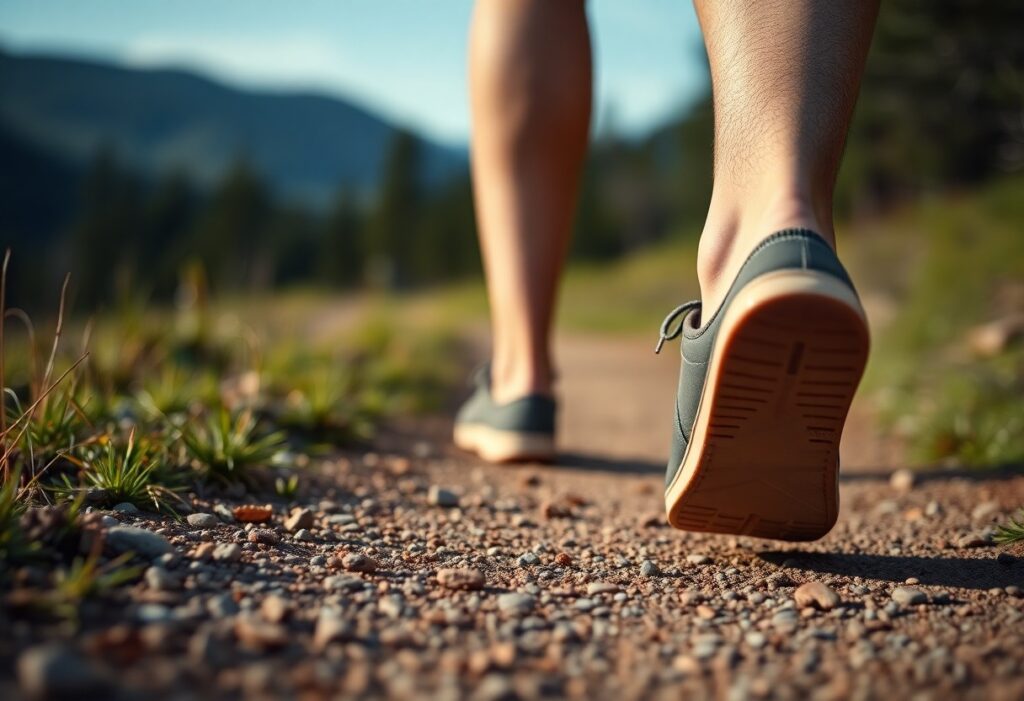
Barefoot shoes can help posture for some people, but they are not a universal fix. Their main value is that they reduce interference from the shoe itself, which may improve foot strength, balance, and the way you stack your body over time.
If you are comparing them with other minimalist models, start with the science of barefoot shoes for the broader biomechanics context, then come back here for the posture-specific part.
| May Help When You | Need better foot awareness, spend long hours in stiff shoes, or want a more natural stance and gait. |
| May Not Change Much When You | Have posture issues driven mainly by desk habits, weak core strength, pain avoidance, or an old injury pattern. |
| Use Caution If You | Have severe foot pain, recent lower-limb injury, or need medical footwear guidance for a specific condition. |
What Barefoot Shoes Can Realistically Do For Posture
The posture benefit is usually indirect. Barefoot shoes do not magically straighten your spine, but they can change the way you load your feet and lower body. A wider toe box, zero drop, and a more flexible sole may let your feet spread, your balance receptors work better, and your ankles and hips move with less restriction.
That matters because posture is a chain, not a single position. When the feet are trapped in a narrow or elevated shoe, your body often adapts upward through the ankles, knees, hips, and spine. For readers researching other gait-related benefits, barefoot shoes for walking are worth comparing because walking comfort and posture improvements often overlap, but they are not the same goal.
Why Footwear Affects Alignment
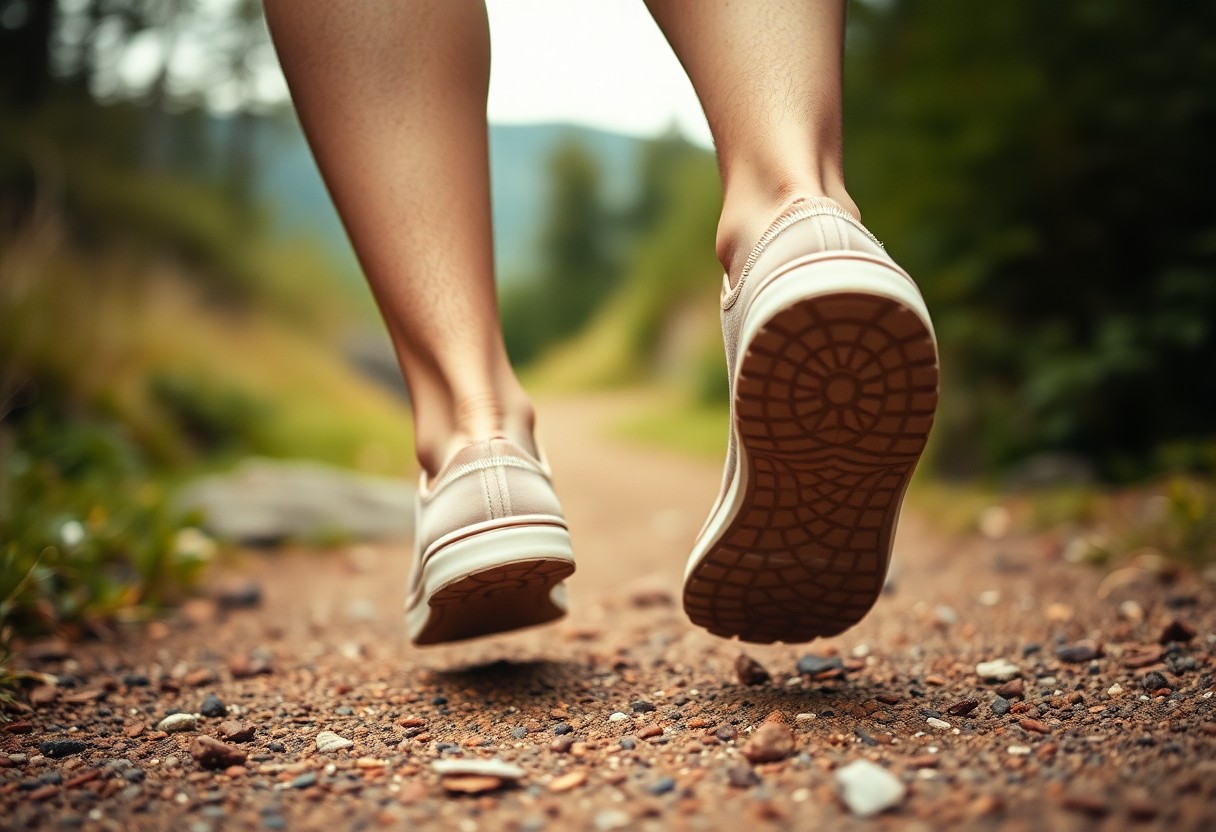
Traditional shoes often add heel height, narrow the forefoot, and reduce sensory feedback from the ground. Those design choices can alter how you stand and walk, especially if you wear them all day. Over time, less toe splay and less ground contact can reduce foot muscle activity and make your body rely more on compensation than on natural support.
Barefoot shoes try to remove those constraints. The result is not guaranteed better posture, but it can create better conditions for better posture: more stable foot contact, more awareness of how you distribute weight, and a stronger cue to keep your alignment organized from the ground up.
Key Design Features That Matter
- Zero Heel Drop may reduce the forward shift some people get from raised heels.
- Wide Toe Box lets the toes spread, which can improve balance and load distribution.
- Thin, Flexible Soles increase ground feedback and can sharpen body awareness.
- Lightweight Construction may reduce the feeling of being “held up” by the shoe.
What The Evidence Suggests
The evidence is more persuasive for improved foot strength, balance, and proprioception than for a dramatic overnight posture correction. In practical terms, that means barefoot shoes may help you stand and move more naturally, but they work best as part of a wider strategy that includes movement habits, strength, and mobility.
That distinction is important for readers who are really chasing pain relief. If your main issue is lower-back discomfort rather than posture alone, this back-pain and posture guide is the better next read because it covers a closer outcome-based match. If knee tracking is the bigger concern, barefoot shoes for knee pain prevention is the more specific angle.
What Improvement Usually Looks Like
Most people should expect subtle changes first. You may notice that standing feels more grounded, your feet do more of the work, and your gait becomes less dependent on the shoe’s structure. If the shoes are helping, the improvements usually show up as better balance, easier toe spread, and less stiffness during walking or standing.
If you feel worse immediately, that does not necessarily mean barefoot shoes are wrong for you, but it does suggest the transition is too fast or the shoe is not the right fit for your current needs.
How To Transition Without Creating New Problems
The transition matters as much as the shoe. People who jump straight into all-day wear often confuse adaptation discomfort with benefit. A gradual approach helps your feet, calves, and posture muscles catch up to the new demands.
- Start with short wear periods for walking, errands, or time at a desk.
- Alternate with your regular shoes if you feel fatigue in the arches or calves.
- Use simple foot work such as toe spreads, calf raises, and controlled barefoot standing on safe surfaces.
- Watch your walking pattern: avoid overstriding and let your steps stay light and quiet.
If you want a more complete transition framework, this transition guide covers the early adaptation stage in more detail.
When Barefoot Shoes Are A Good Posture Experiment
Barefoot shoes make the most sense if you want a more natural walking feel, already know your feet tolerate low-support footwear, or have noticed that your current shoes make you feel unstable or compressed. They can also be useful if you want to improve body awareness during standing, walking, or strength training.
They are less compelling if your posture issue is mostly driven by sitting all day, a pronounced mobility limitation, or a medical condition that changes how you load your feet. In those cases, the shoe can be part of the solution, but it will not be the whole solution.
Choose barefoot shoes if you want to test whether less shoe interference improves your stance, balance, and movement quality over time.
Be conservative if you have pain, instability, or a history of lower-limb injury and treat the transition like a gradual training change.
If you are comparing posture benefits with the wider performance and recovery story, the cluster overview at active recovery and barefoot shoes is the best next stop. It covers the shared mechanisms without turning this article into a general barefoot roundup.
For a more general primer on the category, the barefoot shoes FAQ is useful after you finish the posture-specific read.
Frequently Asked Questions

Natalie Harper is a versatile author and content creator at My Shoes Finder, where she explores a wide range of general topics that resonate with diverse audiences. With a passion for storytelling and a keen eye for detail, Natalie crafts engaging articles that provide valuable insights and inspire readers. Her commitment to quality and relatability makes her work a trusted resource for those seeking both information and inspiration in their daily lives.
See also:
 Xero Shoes For Children In 2025: Fit, Safety, And Best Models
 Barefoot Shoes For Climbing And Bouldering: When They Work, When They Don’t
 Are Barefoot Shoes Good For Wet Hiking? What Works, What Fails, And When To Avoid Them
 Unleash Your Natural Movement with Barefoot Shoes for Men
 Are Barefoot Shoes Good For Yoga And Meditation? A Practical Guide
 Widest Xero Shoes for Wide Feet: Models & Fit Guide

I found your insights on barefoot shoes and their impact on posture quite enlightening. It’s interesting how often we overlook the role our footwear plays in our overall health. Personally, I transitioned to minimalist shoes a couple of years ago after experiencing persistent lower back pain, which I later learned was linked to poor footwear choices.
It’s great to hear about your experience with minimalist shoes and how they helped with your lower back pain. It’s true that many of us don’t realize how much our footwear impacts our daily comfort and overall health until we start to notice the effects.
It’s interesting how often we overlook something as fundamental as our footwear and its ripple effects on our health. When I first started wearing minimalist shoes, I was surprised by how quickly I noticed changes—not just in my lower back, but in my overall posture and even my energy levels throughout the day. It’s almost like my body had been holding onto tension from ill-fitting shoes without me realizing it.
You might also find this article useful: ‘Xero Shoes for Back Pain Relief and Improved Posture’.
Read more here: https://myshoesfinder.com/xero-shoes-for-back-pain-relief-and-improved-posture/
‘Xero Shoes for Back Pain Relief and Improved Posture’
https://myshoesfinder.com/xero-shoes-for-back-pain-relief-and-improved-posture/.
It’s great to hear about your experience with minimalist shoes and how that choice has positively influenced your back pain. It’s fascinating how something as simple as our footwear can play such a critical role in our bodies’ mechanics. Many people aren’t aware that traditional shoes can contribute to poor posture and even affect our alignment.
It’s great to hear that you found the piece helpful. The connection between footwear and our physical well-being often flies under the radar, doesn’t it? Your experience with minimalist shoes is a common one—many people don’t realize how much traditional footwear can contribute to issues like lower back pain.
I really resonate with your thoughts on the impact of footwear on posture. It’s interesting how something as simple as the shoes we choose can have such a profound influence on our overall alignment and well-being. I made the switch to barefoot shoes a year ago after struggling with back pain from my usual sneakers. At first, it felt a bit weird—like my feet were rediscovering how to function properly—but over time, I noticed a significant improvement in my posture and even my balance.
Switching to barefoot shoes is like having an unfiltered conversation with your feet, isn’t it? I mean, they’ve been trying to talk to you for ages, and finally, they get to express themselves without the typical sneaker confine. I can just imagine your feet having a little ‘dance party’ after cutting loose from the usual stiffness, saying, “Freedom at last!”
You’ve captured the essence of barefoot shoes perfectly. It’s fascinating to think about how much our feet have been muted by traditional footwear. When you slip on a pair of minimalist shoes, it’s like they finally get a chance to engage with the ground in a more natural way.
It’s fascinating how footwear choices can shape not just our posture but also our overall sense of connection with the ground. I can relate to that initial weirdness you felt when switching to barefoot shoes; it’s like your feet are getting a crash course in their natural mechanics. I made a similar switch a while back, and at first, I wasn’t sure if I was doing the right thing. But it was eye-opening to realize how much we’re conditioned to rely on arch support and cushioning, often at the expense of our natural alignment.
You bring up such an interesting perspective on footwear and our connection to the ground. That weirdness at the start really hits home. I remember feeling like I was stepping onto a whole new planet when I switched to barefoot shoes—the sensations were so different from what I was used to. It’s like my feet were getting this wake-up call after years of being cushioned and supported in ways that, while comfortable, didn’t let them do their natural thing.
It’s funny you mention that “weirdness”—it’s like our feet are saying, “Hey, remember us?” after years of being all cozy and cushioned. Switching to barefoot shoes can feel like initiating a long-lost friendship with your own toes. It’s a bit like trying to reconnect with a friend you haven’t seen since middle school; awkward at first but surprisingly enlightening.
I completely resonate with what you’re saying about footwear and its impact on our posture and connection to the ground. When I first tried barefoot shoes, it was definitely an adjustment. It felt like my feet were rediscovering their capabilities, similar to how we sometimes feel when we step away from technology for a bit—it’s like we’re reminded of what our bodies are truly capable of.
I can relate to your experience with barefoot shoes—it really is fascinating how our footwear can either support or hinder our bodies. When I first made the switch as well, it felt like my feet were waking up in a way. The initial awkwardness gave way to a newfound appreciation for the way my body moves and reacts to the ground.
Your insights on the impact of footwear on posture and overall health resonate deeply with me. It makes perfect sense that our daily choices, even down to what we wear on our feet, can influence our alignment and physical well-being. I’ve personally experienced the difference that shifting to shoes with a more minimalist design can make. After years of discomfort and issues such as lower back pain and tightness in my legs, I decided to try barefoot shoes, and the changes were quite striking.
I really appreciate your perspective on the impact of footwear on posture and health. It’s fascinating how something as simple as our shoes can play such a significant role in our overall alignment and comfort. I can relate to your experience with barefoot shoes; I made a similar shift after years of dealing with foot pain, and it was surprisingly transformative.
I came across this insightful piece on barefoot shoes that really expands on how our footwear choices can profoundly affect our posture and overall health, much like what you’ve experienced.
‘The Science Behind Barefoot Shoes: Why Making the Switch Matters’
https://myshoesfinder.com/the-science-of-barefoot-shoes-and-their-benefits/.
It’s great to hear you’ve had a similar experience with barefoot shoes! It’s funny how a simple change in footwear can ripple out to so many other aspects of our daily lives. I remember when I switched, it took me a little while to adjust, but once I did, everything felt more natural.
It’s interesting how footwear choices can have such a ripple effect on our overall well-being. I resonate with your experience; switching to barefoot shoes really shifted my perception of foot health as well. It’s amazing how something as fundamental as our connection to the ground can impact everything from our posture to joint health.
I came across a really insightful article that dives into how switching to barefoot shoes can make a notable difference in our posture and overall well-being, much like your own experience.
‘The Science Behind Barefoot Shoes: Why Making the Switch Matters’
https://myshoesfinder.com/the-science-of-barefoot-shoes-and-their-benefits/.
It’s interesting how our footwear choices can shape not just our comfort but also our entire posture. I relate to your experience with barefoot shoes—a shift that often feels more like a return to something natural rather than just a change in style. For years, I thought discomfort was just part of life, but switching to barefoot shoes opened my eyes to how much footwear can influence our well-being.
It sounds like you’ve gone on an epic quest for footwear enlightenment, and I’m here for it. The impact of what we shove onto our feet is often underestimated. It’s kind of like wearing a suit of armor that doesn’t quite fit – sure, it looks flashy, but if it’s too tight or awkwardly designed, you’ll find yourself unable to swing the sword of daily life without discomfort.
It’s fascinating to hear how your experience with footwear has genuinely transformed your daily comfort and overall health. The way we choose to protect our feet can often be overlooked, yet they play a crucial role in our entire body’s alignment. Shifting to something like barefoot shoes is a big move, and I applaud your willingness to experiment with your choices!
I found your insights on the relationship between footwear and posture particularly enlightening. It’s interesting how something as simple as shoe design can have such profound effects on our physical health. I’ve personally experienced how traditional shoes, with their often rigid structures, can lead to discomfort and poor posture. Transitioning to barefoot shoes has been a transformative journey for me, allowing my feet the freedom to move naturally.
Your insights on how footwear impacts posture resonate deeply with my experiences. I’ve recently transitioned to barefoot shoes and have noticed a significant shift in how I carry myself, both in terms of balance and comfort. It’s fascinating to consider how something as simple as our choice of footwear can influence our overall alignment and well-being.
You raise an incredibly important point about the often-overlooked connection between footwear and posture. I’ve become increasingly aware of how our shoes can significantly influence our everyday movements and long-term health. A few years back, I found myself struggling with lower back pain and recurring foot fatigue, which led me to explore various footwear options. After switching to barefoot shoes, I experienced transformative changes in my posture and overall body alignment.
It’s fascinating to hear about your journey with footwear and how it’s impacted your health. Many of us don’t realize just how much our shoes can shape our posture and comfort until we start experiencing issues. Switching to barefoot shoes seems to have opened a new path for you.
You make a valuable observation about the way our choice of footwear impacts both our movement and long-term health. It’s fascinating how something as seemingly simple as shoes can have such a profound effect on our bodies. Many people, like yourself, often find that their footwear choices can lead to significant changes in their comfort levels and overall wellbeing.
Your insights on the impact of footwear on posture resonate deeply with my own experiences. I switched to barefoot shoes a few months ago, and the difference has been noticeable—not just in terms of comfort, but also in my overall alignment. It’s fascinating to consider how conventional shoes, with their cushioning and arch support, can distort natural movement patterns that our bodies have evolved to perform.
Ah, barefoot shoes—the perfect excuse to ditch the “I’m wearing these just for show” fashion footwear while giving my arches a much-needed vacation. It’s like transforming my feet from overworked office drones into free-spirited hippies wandering barefoot through a meadow!
It’s interesting how barefoot shoes can really shift our perspective on comfort and health, isn’t it? I love the imagery you used of overworked office drones becoming free-spirited hippies; there’s something so freeing about that idea. It seems that many of us spend so much time in restrictive footwear, often prioritizing style over comfort.