
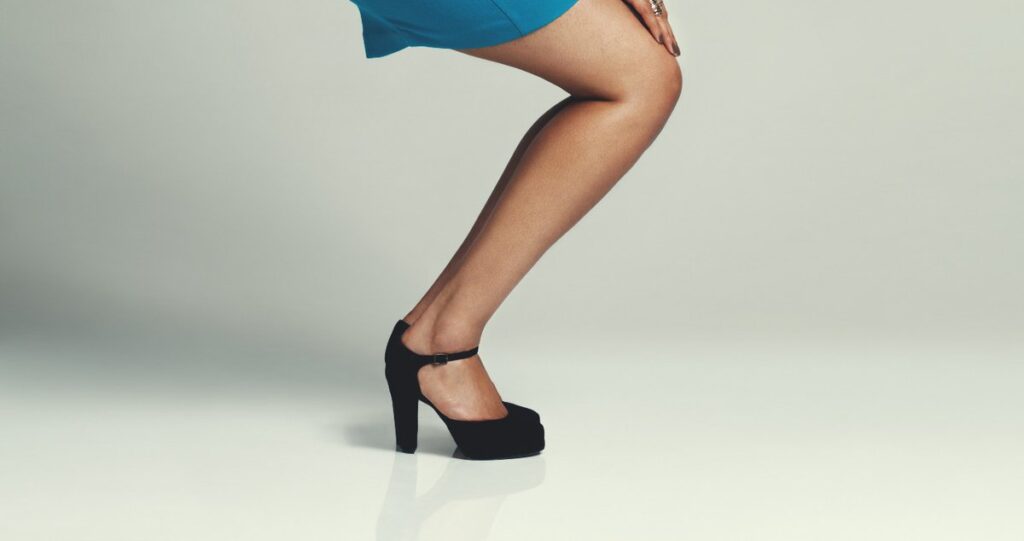
The fastest way to make feet look smaller is to choose shoes that shorten visual length, soften width, and keep the silhouette streamlined. That usually means rounder toe shapes, darker shades, a moderate heel, and fewer exposed straps.
If you also need help with actual fit, you can compare this styling advice with our guide to choosing shoes for wide feet so you can keep the look slim without forcing a bad fit.
Quick decision guide
The Styling Rules That Matter Most
Foot size is only part of the picture. What people notice first is proportion: the toe line, the amount of skin showing, the height of the heel, and how strongly the shoe contrasts with the leg. When those details work together, feet read as smaller even when the actual size does not change.
That is why this topic is best treated as an aesthetic styling question, not a fit problem. If you want both visual balance and comfortable room in the forefoot, the article on comfortable shoes for wide feet is a useful companion read.
Toe Shape, Silhouette, And Opening
Round-toe and softly almond shapes are usually the most flattering because they avoid extending the visual line of the foot. Very pointed styles can add length, while square shapes may widen the front of the shoe and create a heavier look.
Coverage also matters. Shoes with a moderate vamp, a clean topline, or a shallow opening tend to look more compact than wide-open sandals or designs that expose a lot of the top of the foot.
Heel Height And Proportion
A modest heel around 2 to 3 inches often gives the best balance. It creates lift through the leg, which helps the foot look shorter in relation to the rest of the body. Very flat shoes can emphasize length, especially when the toe box is long or the vamp is wide.
The shape of the heel matters too. A medium-width heel usually feels stable and looks refined. Thin stilettos can make the shoe look visually delicate in some outfits, but they can also exaggerate the length of the foot; heavy platforms can add bulk and work against the slimming effect.
Color And Finish: The Easiest Way To Create A Smaller Look
Dark colors remain the simplest choice when you want shoes to recede. Black, deep brown, charcoal, and navy visually compress the foot because they absorb more light and keep the shoe from becoming the focal point.
Finish matters just as much as shade. Matte leather, brushed textures, suede, and microfiber usually look slimmer than glossy patent finishes, which reflect light and draw attention to the outline of the shoe. If you like contrast, keep it subtle and place the darkest parts at the heel and toe so the shoe feels visually shorter.
A practical rule: the more visual interruptions you add, the larger the foot can appear. That means fewer bright panels, fewer oversized buckles, and fewer horizontal strap lines.
When To Choose Certain Styles
Timing matters when you are shopping for appearance and comfort at the same time. Feet naturally swell during the day, so late afternoon is usually the best time to try on shoes. That gives you a truer fit and helps you avoid buying something that only looks slim because it is too tight.
If you are comparing silhouettes rather than style alone, it helps to check whether your foot needs extra width or toe-box room first. Our simple methods to check for wide feet can clarify whether you should prioritize a more refined look, more space, or both.
What To Avoid If You Want A Smaller-Looking Foot
- Very pointed toes that stretch the shoe line forward.
- Wide-open sandals that expose the full top of the foot.
- Bright colors and loud patterns that pull attention to the shoe.
- Glossy finishes that reflect light and emphasize shape.
- Bulky platforms, oversized buckles, and heavy straps that add visual mass.
The goal is not to hide your feet; it is to keep the eye moving smoothly. A shoe that looks balanced with your leg line nearly always reads smaller than one with sharp contrast, extra shine, or bulky hardware.
A Note On Confidence And Fit
It is normal to notice your feet more than anyone else does. Style helps, but comfort helps just as much: if shoes pinch, slide, or spill over the edges, they will look less elegant no matter how flattering the shape is.
That is why width, arch support, and toe room still matter in the background. If your main challenge is finding enough space without losing a sleek outline, the guide to footwear for wide feet offers a practical next step, while this article stays focused on the visual result.
Where To Book Your Next Pair
When you are ready to buy, start with styles that already match the visual rules above: dark color, moderate heel, softer toe shape, and minimal exposed straps. If you need a broader shortlist for comfort and width before choosing the style finish, browse our wide-work-shoes recommendations or revisit the fit checks before committing.
For readers who want the look to stay refined without forcing the foot into a narrow profile, the next useful step is the wide-feet sizing guidance and then a style-first comparison of toe shape and heel height.
Frequently Asked Questions
Which Shoe Styles Make Feet Look Smaller Without Sacrificing Comfort?
Round-toe shoes with a moderate heel and minimal openings are usually the most flattering. Dark colors such as black or navy help the shoe recede, while a stable heel around 2 to 3 inches improves proportion without making the shoe feel extreme.
What Shoe Features Should I Avoid?
Avoid sharply pointed toes, oversized straps, glossy finishes, and bulky platforms if your goal is a smaller visual profile. These details tend to stretch or widen the outline of the shoe and pull attention to the foot.
How Do I Keep The Look Slim If I Need A Roomier Fit?
Choose a shoe with a clean upper, low contrast, and a shape that ends close to the natural toe line. Then make the fit decision separately by checking width and toe-box room, so comfort does not force you into a bulky-looking style.

Henry Harrington is a passionate author and content creator at My Shoes Finder, where he explores a wide range of topics related to footwear, lifestyle, and personal growth. With a keen eye for detail and a love for storytelling, Henry engages readers by sharing insights, tips, and personal anecdotes that resonate with his audience. His commitment to delivering high-quality content has established him as a trusted voice in the online community, inviting readers to step into new perspectives and discover their unique paths.
See also:
 How To Buy Shoes When One Foot Is Bigger: Fit Tips That Actually Help
 Xero Shoes For Children In 2025: Fit, Safety, And Best Models
 How To Shop For Shoes When Your Feet Are Different Sizes
 Widest Xero Shoes for Wide Feet: Models & Fit Guide
 Apron Front Vs Split Toe Seams: What They Are And How To Spot Good Craftsmanship
 Xero Shoes For Bunions: What Helps, What Doesn’t, And Which Models Fit Best

Your insights on the psychology of shoe size resonate with me deeply. It’s fascinating how something as seemingly simple as footwear can shape our self-image and confidence. I’ve often found that when I choose shoes that I believe flatter my feet—like pointed toes or block heels—I not only feel better about my appearance but also walk with more assurance.
I really appreciate your insights on the connection between shoe size and self-image—it’s such a nuanced topic that doesn’t always get the attention it deserves. The fact that 75% of women feel conscious about their foot size really resonates with me, as I’ve often found myself gravitating towards styles that I believe will minimize the visual impact of my feet.
I found your insights on shoe choices and their impact on self-image particularly resonant. It’s fascinating how something as seemingly simple as selecting the right footwear can shift our perception of ourselves and enhance confidence. I’ve personally experienced this myself; after experimenting with different styles, I discovered that pointed-toe shoes really do create that illusion of a narrower foot. It’s not just about aesthetics – the right shoes can truly transform how we carry ourselves.
I completely relate to what you’re saying about the impact of shoe choices on self-image. It’s interesting how something that seems so minor can have such a profound effect on our confidence levels. I remember trying on a pair of sleek ankle boots that somehow made me feel more put-together, even if I was just wearing jeans and a t-shirt. It’s like the right shoes can act as a sort of armor – they change our posture and the way we present ourselves to the world.
I really appreciate this discussion on foot size and its impact on self-image. It’s interesting how something as seemingly minor as shoe choice can play such a significant role in our confidence. I remember back in high school, I was super self-conscious about my larger feet compared to my peers. It can feel isolating, especially when you notice the emphasis society places on aesthetics.
This post really resonates with me, particularly the part about how our perception of foot size can directly influence our self-image and confidence. I remember struggling with my own foot size during my teenage years—I felt less confident wearing certain shoes because I thought they made my feet look larger. It’s interesting how personal experiences can shape our perspectives on something as seemingly trivial as shoe size.
It’s refreshing to see a conversation about foot size and self-image that promotes confidence rather than insecurity. I’ve often found that our perceptions of ourselves can be vastly influenced by societal standards, meaning something as simple as footwear can carry a lot of weight (no pun intended!).
You bring up a significant point about societal standards shaping our self-image, especially with something as seemingly trivial as foot size and footwear. It’s interesting how, in a world that’s obsessed with appearance, something as basic as the shoes we wear can become not just a fashion statement but a symbol of social acceptance or rejection.
You’ve touched on a really important point. The way we see ourselves, especially when it comes to something as straightforward as foot size, can definitely be swayed by what society deems “normal” or “desirable.” There’s this interesting tension between individual comfort and the pressure to fit into certain molds. It can be frustrating, especially since footwear is such a personal choice that reflects our style and identity.
This is such an important topic that touches on both style and self-image! I truly resonate with the idea that our perceptions of foot size can shape our confidence. Growing up, I remember feeling awkward about my own feet, especially during those formative years when image was everything. However, once I started exploring different shoe styles, I found that certain shapes and colors could really enhance my overall look, making my feet feel less of a focal point.
You’ve captured a really nuanced aspect of self-image, particularly when it comes to something as seemingly simple as foot size. It’s interesting how the connection between our perceptions of various body parts and our confidence can evolve over time. Your experience highlights how the journey towards embracing our unique features often involves exploration and experimentation.
I genuinely appreciate this insightful exploration of how our shoe choices can influence not only our style but also our self-perception. It’s interesting to think about how something as seemingly trivial as foot size can have a profound effect on our confidence and self-image. I can relate to the feelings of self-consciousness around foot size—I’ve often found myself in the same boat. Growing up, I had larger feet than my friends, and it felt like a constant source of insecurity.
It’s interesting how something as specific as foot size can carry so much emotional weight. I can completely relate to the experience of feeling self-conscious about it. Growing up, I remember often comparing myself to my peers, not just in foot size but in all kinds of physical traits. It’s a reminder of how much pressure we can feel to conform to certain standards, even when those standards are rooted in something as arbitrary as shoe size.
It’s so true how something like foot size can tap into deeper feelings of self-consciousness. I think you’ve hit on an important point about societal standards, especially when it comes to appearance. Growing up, I also found myself caught up in comparing various traits to fit some kind of ideal that was often unrealistic.
Your insights on the psychology of shoe size really resonate with me. It’s interesting how so many of us internalize societal standards of beauty, including the idea that smaller feet are more desirable. I’ve often found myself gravitating towards certain shoe styles, not necessarily because I love them, but because I think they’ll make my feet appear smaller.
It’s fascinating how deeply societal standards can shape our preferences and self-image, isn’t it? I completely resonate with what you’re saying about gravitating towards certain shoe styles to create an illusion of smaller feet. It really highlights how our perceptions of beauty are often influenced by trends and expectations, sometimes to the point of overshadowing our personal tastes.
You bring up a really important point about how societal standards shape not just our preferences but also our self-image in profound ways. It’s interesting to think about how what we find appealing can shift so dramatically based on trends and cultural narratives. Shoe styles are a perfect example. We constantly see different aesthetics celebrated in the media, and those images can subtly—sometimes not so subtly—influence the choices we make daily.
It’s fascinating how deeply these societal ideals shape our choices, isn’t it? The way we perceive beauty can often lead us to make choices that divert from our authentic selves. Your experience of gravitating toward certain shoe styles—not out of genuine affection but to conform to an ideal—says a lot about how ingrained these standards are in our culture. There’s a certain irony in the fact that something as mundane as footwear can become a symbol of self-perception and societal approval.
I found your insights on foot size and self-image really resonating. It’s interesting how deeply intertwined our perceptions of our body parts can be with our overall confidence. I’ve struggled with foot size myself, often feeling limited in my choice of shoes. It’s refreshing to see practical solutions that don’t compromise on style.
I can totally relate to what you’re saying about foot size and how it can mess with your confidence. It’s kind of wild, isn’t it? We often focus on bigger issues tied to self-image, but the little things, like the size of our feet, can weigh on us just as much. And you nailed it with the shoe selection struggle. It can feel limiting, like you’re missing out on styles that everyone else gets to enjoy.
It’s interesting to think about how our perceptions of specific body parts can impact our self-image and confidence. Foot size seems to be one of those areas where societal standards play a big role. I’ve definitely witnessed how footwear influences how people carry themselves. It’s not just about aesthetics; it’s about how comfortable and confident we feel in what we wear.
It’s interesting to see how shoe size can significantly affect self-image and confidence. I wonder if the emphasis on aesthetics in fashion often overshadows the importance of comfort and foot health. Many people may feel compelled to squeeze into smaller sizes or uncomfortable styles just for the sake of appearance, which can lead to long-term foot issues.
You raise a great point about the tension between aesthetics and comfort in fashion. It’s so easy to get caught up in trends and the pressure to look a certain way, especially with shoes. Many of us have felt that moment where we choose a pair of heels or a narrow fit not because they feel good, but because they look good.
You’ve raised a really important point about the intersection of self-image, fashion, and comfort. I’ve definitely felt that pressure before—it’s like there’s this unspoken rule that we should conform to certain aesthetic ideals, even if it means sacrificing our comfort and health.
It’s really interesting to hear that you’ve felt that pressure, too. It’s almost like a silent agreement we have, where we prioritize what looks good over what feels good, right? The fashion world often pushes a specific image that can be so difficult to break away from, especially with social media amplifying these ideals daily.
It’s refreshing to see someone acknowledge the pressure that comes with self-image, especially in the context of fashion. The idea that we should conform to certain aesthetic ideals can be suffocating. Fashion has this incredible power; it can express who we are, but it often feels like it comes with a hidden cost—our comfort and sometimes even our health.
It’s such a nuanced topic, isn’t it? The relationship between shoe size, self-image, and confidence feels particularly relevant today, especially with social media constantly pushing idealized images. Many folks do struggle with the pressure to conform to certain beauty standards, and that can lead them to prioritize aesthetics over comfort and health. I’ve found that the shoes I feel best in are often not the ones that get the most compliments—they’re usually just functional and supportive.