
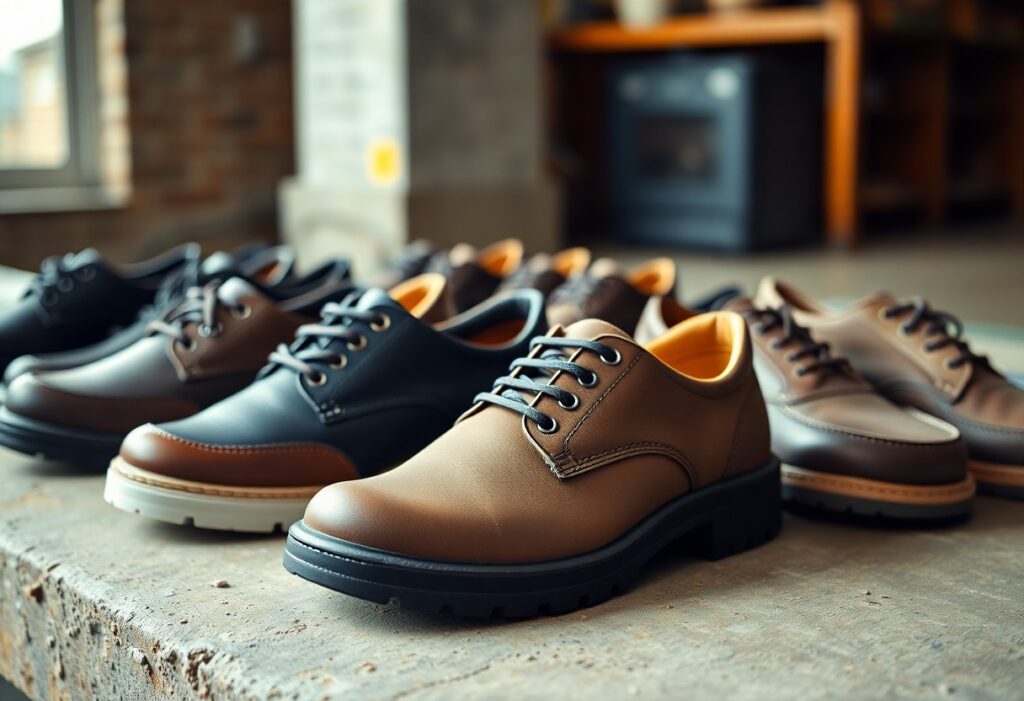
Finding work shoes for wide feet is different from buying casual wide-fit shoes. In a work setting, you need room in the toe box, reliable support, and the right traction or safety features without sacrificing a professional look.
The quick decision
If your job keeps you on your feet, prioritize a wide toe box, a stable sole, cushioned support, and the right workplace rating. If you only need a broader fit, the broader wide-feet guide covers general fit choices, while this page focuses on work-ready pairs.
| What matters most | Why it matters at work | Best fit for |
|---|---|---|
| Wide toe box | Reduces pinching during long shifts and helps toes spread naturally | Standing jobs, retail, service work |
| Slip resistance | Improves traction on smooth or wet floors | Food service, healthcare, back-of-house roles |
| Cushioning and arch support | Helps manage fatigue and pressure through an entire shift | All-day standing, walking-heavy roles |
| Professional appearance | Keeps the shoe appropriate for office or client-facing settings | Office, hospitality, retail management |
| Safety features | Protects toes and feet in higher-risk environments | Warehouses, construction, light industrial work |
The right pair depends on your work setting, but the sizing principles stay the same. If you need help confirming whether your feet are actually wide, start with simple methods to check for wide feet before you shop.
How To Choose Work Shoes That Fit Wide Feet
Work shoes need to do more than fit length and width. They should support your foot under load, stay comfortable after hours of standing, and still meet your workplace dress code or safety rules. That is the main difference between a general wide-feet shoe and a work-specific option.
1. Measure At The Right Time
Measure at the end of the day when your feet are slightly larger. Standing and walking can make feet expand, and that change matters if you work long shifts. If one foot is wider than the other, fit the larger one first and avoid assuming both feet need the same width.
2. Focus On The Toe Box, Not Just The Label
A shoe marked wide is not always roomy where it counts. Look for a deep, rounded toe box that gives toes space to spread and prevents rubbing across the forefoot.
3. Match The Shoe To The Job
An office shoe does not need the same outsole or protection as a kitchen or warehouse shoe. Choose the features your role actually requires so you do not overbuy comfort features you will never use—or miss the safety features you do need.
If you want a broader overview of width letters, fit categories, and sizing traps, the guide to footwear for wide feet is a useful companion read. This page stays centered on workplace use so it does not repeat the general buying guide.
Workplace-Specific Features That Matter Most
The best work shoes for wide feet balance fit, support, and job performance. Construction details become more important once you are on your feet for hours.
Support And Cushioning
Look for a stable midsole, enough arch support for your foot shape, and cushioning that softens impact without making the shoe feel unstable.
Breathable Materials
Leather, mesh panels, and flexible synthetics can help reduce heat and pressure. Breathability matters even more when your feet swell during long shifts.
Seam Placement And Interior Finish
Smooth interiors reduce rubbing across the forefoot and little toe, which is especially useful if your workday includes a lot of walking or standing.
Removable Insoles
Removable footbeds make it easier to use orthotics or swap in a better insole if you need more room or support.
Choose By Workplace, Not By Brand Alone
The same wide-foot fit can work very differently depending on where you wear it. These use cases keep the decision practical.
| Work setting | What to prioritize | What to avoid |
|---|---|---|
| Office or client-facing roles | Polished upper, wide fit, low-profile cushioning, clean silhouette | Narrow dress lasts, stiff uppers, cramped pointed toes |
| Retail and hospitality | All-day support, breathable lining, slip resistance, easy break-in | Heavy shoes that create fatigue or hot spots |
| Food service and healthcare | Slip-resistant outsole, secure heel fit, wipeable materials | Slick soles and soft uppers that collapse too quickly |
| Warehouse, construction, light industrial | Protective toe cap, stable platform, durable upper, approved safety rating | Fashion-first shoes without workplace protection |
If you are shopping specifically for a wide toe area, this wide toe box feature guide can help you compare shape and roominess more precisely. It is especially useful when one brand runs wide in the forefoot but still feels narrow through the midfoot.
Fitting Tips That Reduce Returns And Blisters
Trying shoes on carefully matters just as much as choosing the right model. A work shoe that feels fine for two minutes can turn into a problem after a full shift.
- Wear the socks you actually use at work.
- Check fit on both feet, since one foot may be wider.
- Walk on hard and smooth surfaces, not just carpet.
- Make sure the widest part of your foot is not compressed.
- Leave enough toe room for swelling during the day.
Most work shoes also need a short break-in period. Start with shorter wear times and stop if you feel sharp pressure, heel slip, or hot spots that do not improve after a few uses.
Brands And Styles To Shortlist
Some brands consistently offer wider size runs or more foot-shaped designs, but the model matters more than the logo. Traditional makers such as Allen Edmonds, Red Wing, and Clarks often provide extended widths in certain styles, while comfort-focused brands like New Balance Work, Orthofeet, and Drew Shoe are known for roomier construction and removable insoles.
If your job leans casual or you prefer a more natural foot shape, you may also want to compare the broader wide-foot options in this wide-feet model guide. That article is better for general model browsing, while this page stays focused on work suitability.
Need the broader fit guide?
If you are still narrowing down your overall foot shape, start with the broader best wide-feet shoe guide and then come back here to choose a work-appropriate pair.
For a more technical look at fit and construction, the footwear sizing guide is the best next step before buying.
Care And Replacement
Work shoes wear down faster than casual pairs, especially if you use them daily. Clean them regularly, let them dry between shifts, and replace insoles or outsoles when support starts to fade. Shoe trees can help preserve shape, and rotating between two pairs gives each pair time to recover.
Once the sole feels uneven, the upper stretches too much, or the shoe no longer feels stable in the heel, it is time to replace it. For workers who stand all day, worn support often shows up as fatigue before visible damage.
Frequently Asked Questions

Natalie Harper is a versatile author and content creator at My Shoes Finder, where she explores a wide range of general topics that resonate with diverse audiences. With a passion for storytelling and a keen eye for detail, Natalie crafts engaging articles that provide valuable insights and inspire readers. Her commitment to quality and relatability makes her work a trusted resource for those seeking both information and inspiration in their daily lives.
See also:
 Xero Shoes Vs Steel Toe: 2025 Workplace Safety Requirements Guide
 Barefoot Footwear For Standing Jobs: Is It The Right Work Shoe For Long Shifts?
 Xero Shoes Work Boots: Which Models Make Sense For Durability And Comfort?
 Widest Xero Shoes for Wide Feet: Models & Fit Guide
 Xero Shoes For Children In 2025: Fit, Safety, And Best Models
 Occupational Footwear And Stability: What Shoe Design Means For Safety At Work



I can relate to the struggle of finding work shoes that accommodate wide feet without sacrificing style or support. It’s surprising how often shoe brands overlook the need for wider options, especially considering the increasing awareness of foot health in our workforce. I’ve invested in shoes that claim to be ‘wide’, only to find out later that they pinch in all the wrong places by mid-afternoon.
Finding the right work shoes can be such a tricky balance, can’t it? It’s frustrating when something marketed as “wide” turns out to be more of a marketing term than a practical solution. I’ve been on that journey too, chasing comfort without the bulky styles that often come with wider options. It really makes you question why there isn’t more emphasis on creating fashionable, supportive styles that cater to varied foot shapes.
Finding the right work shoes really can feel like a never-ending quest. I totally understand your frustration with “wide” being more of a marketing label than a true reflection of fit. It’s surprising in a world where we have so much technology and innovation that shoe design hasn’t kept up with our diverse needs.
It’s really refreshing to hear your experience because so many people share that same struggle when it comes to finding the right work shoes. The disconnect between shoe brands and the real needs of those with wide feet is frustrating. You’re spot on about how crucial it is for brands to step up their game, especially now that there’s a growing awareness around foot health in the workplace.
I completely understand where you’re coming from with the struggle for stylish shoes that don’t compromise on comfort and support, especially for wider feet. I’ve gone through my share of disappointing investments, despite the promise of being ‘wide.’ It’s frustrating when shoes pinch or don’t offer the right arch support, especially if you’re on your feet all day.
I totally get what you mean about the struggle with wide shoes; I recently came across some minimalist barefoot sandals that might just hit the sweet spot between comfort and style for wider feet.
‘Minimalist Barefoot Sandals: Shop Minimalist Barefoot Sandals for Women’
https://myshoesfinder.com/xero-sandals/minimalist-barefoot-sandal-options/.
Oh, the quest for the holy grail of work shoes! I spent years thinking my wide feet were just a quirky personality trait—like my affinity for pineapple on pizza—until I discovered the importance of a good fit. Measuring both length and width sounds like a great idea, but let’s be honest, it feels like prepping for a foot Olympics!
It’s funny how we sometimes overlook our feet until they start sending us not-so-subtle hints, right? That struggle of finding a shoe that fits well is like an ongoing treasure hunt. Measuring length and width can feel like a mini-event—like you said, prepping for the foot Olympics can be a bit much. But it’s amazing how much difference it makes.
I can totally relate to that! Finding the right pair of shoes feels like navigating an obstacle course sometimes, especially when you have wide feet. It’s wild how something as simple as a shoe can have such a big impact on our comfort and overall well-being. I once spent an entire afternoon in a store trying on various brands, only to realize that the shoes I thought would work weren’t doing my feet any favors.
I totally get the feeling of measuring your feet like you’re training for a foot Olympics! It sounds a bit over the top at first, but taking both length and width into account can really make a difference in comfort. We often settle for shoes that look good or are on sale, ignoring how crucial fit is—especially for wide feet. It’s easy to dismiss the discomfort until you’re halfway through your day, right?
You’re right on the money about shoe fit. It can feel a bit like a shoe Olympics, but measuring your feet properly really does change the game. Many of us have fallen into the trap of prioritizing style or deals over comfort, especially when we’re out shopping. It’s wild to think that a tiny difference in width can make such a huge difference in how our feet feel throughout the day, especially for those of us with wider feet.
This post brings to light an often-overlooked issue in workplace attire. As someone who has struggled to find shoes that fit well without sacrificing style, I completely resonate with the importance of proper fit and support. It’s fascinating how something as simple as a well-fitted shoe can enhance productivity and well-being.
Finding comfortable work shoes for wide feet can indeed be a frustrating journey. I’ve struggled with this myself, especially on days when I’m on my feet for extended periods. It’s interesting how our feet change throughout the day—I’ve noticed that what feels comfortable in the morning can end up being quite painful by afternoon.
This is such an important topic, especially since many people underestimate the impact of proper footwear on overall well-being. My own experience underscores this: I’ve struggled with finding comfortable work shoes that accommodate my wide feet, and it often feels like a losing battle. The mention of how feet can swell throughout the day really resonates with me. I’ve learned the hard way that my shoes can feel fine in the morning but become uncomfortably tight by afternoon.
Your insights about finding the right work shoes for wide feet resonate with me deeply. I’ve always struggled with proper footwear, especially in a professional setting where appearance matters as much as comfort. It’s frustrating how limited the options can be for those of us with wider feet; often, the choices lean more toward style rather than support and fit.
Your insights on finding comfortable work shoes for wide feet are spot on! As someone who has struggled with foot pain during long shifts, it’s so refreshing to see a focus on both comfort and professionalism in footwear. I agree that getting an accurate measurement is crucial; I learned the hard way to always measure my feet in the afternoon when they’re at their largest.
It’s great to hear you’ve found the article helpful! Foot pain can really take a toll, especially during long shifts. I totally relate to that experience. Measuring in the afternoon is such a smart tip; it’s like our feet have a mind of their own and swell from all that standing.
This topic resonates with me deeply, given my own struggles with finding suitable work shoes that accommodate my wider feet. I remember the first time I disregarded the importance of proper shoe fitting; I thought I could just “break them in” and carry on with my day, but I ended up enduring so much pain that it impacted not just my comfort, but also my productivity at work.
It sounds like you’ve had quite the journey with finding the right shoes for your wider feet. That experience of thinking you can just “break them in” is something many of us can relate to, isn’t it? There’s that temptation to push through discomfort, assuming it’s just a phase. But as you experienced, the ramifications can stretch beyond just physical pain—you really notice how it can dampen your mood and affect your focus throughout the day.
I can totally relate to your experience with finding the right work shoes. It’s interesting how many of us overlook the significance of proper fitting until we’re faced with discomfort. I had a similar moment when I first started working long hours. I thought I could tough it out, but by the end of the week, my feet were killing me, and my focus just wasn’t there.
I totally relate to your experience with finding the right shoes; I recently came across some insights on footwear options that are particularly helpful for dealing with issues like Achilles tendonitis, and they really resonated with my own journey to comfort and support.
‘Xero Shoes for Achilles Tendonitis: 2025 Rehabilitation Protocol’
https://myshoesfinder.com/xero-shoes-for-achilles-tendonitis-protocol-2025/.
I can totally relate to your experience with finding the right shoes for wider feet. It’s surprising how much we underestimate the importance of a good fit until we’re already in discomfort. I had a similar realization when I thought I could tough it out with a pair of trendy shoes that ended up being a nightmare for my feet. It’s fascinating to think about how so many of us prioritize aesthetics over comfort, especially in a work environment where we’re on our feet for long periods.
This discussion on finding comfortable work shoes for wide feet resonates deeply with me, especially as someone who has experienced the challenges that come with limited options in professional footwear. Navigating the balance between comfort, proper support, and maintaining a polished appearance can often feel like a daunting task.
This topic is especially relevant for those of us who spend long hours on our feet at work. I’ve struggled with finding suitable shoes for my wide feet for years, and it often feels like a game of trial and error. The idea that our foot width can change throughout the day is something that many people overlook. Having measured my feet multiple times, I’ve realized just how much variation can exist—not to mention the additional discomfort from styles that lack sufficient support or that don’t accommodate swelling.
Finding the right shoes can feel like searching for a needle in a haystack, especially for those of us with wide feet. It’s a real challenge, and your experience is something so many can relate to. The idea that our foot width fluctuates throughout the day is fascinating, but also frustrating. It’s surprising how many people aren’t aware of this, and it can impact your comfort drastically.