
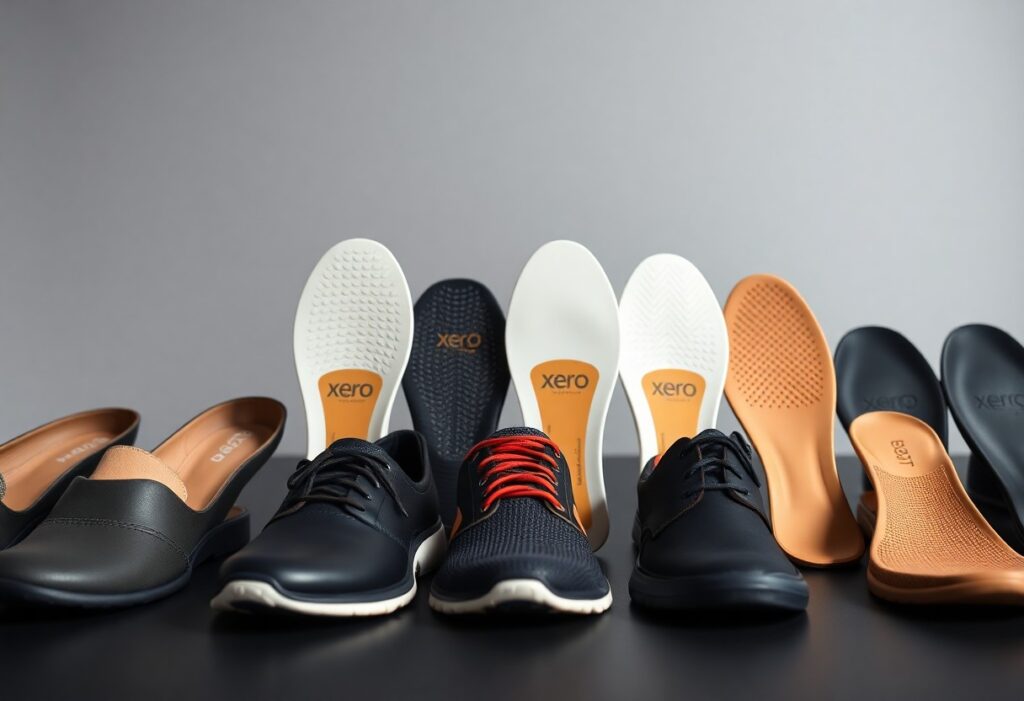
Xero Shoes can work with custom orthotics, but only if the shoe has enough internal volume, a removable insole, and an orthotic that suits a minimalist platform. The best setup is usually a low-profile insert in a roomier Xero model, fitted with a careful break-in period rather than forced into the shoe.
If you are choosing a pair now, start with the broader Xero model guide so you can narrow the shape and volume before you think about inserts. That order matters more than most shoppers expect.
Compatibility at a glance
Use Xero Shoes with custom orthotics when the insert is low enough to preserve fit, the shoe has removable stock insoles, and your condition actually benefits from support. Skip the setup if the orthotic is thick, rigid, or full-length enough to crowd the toe box, lift the heel, or remove the barefoot feel you bought the shoe for.
| What to check | Best fit | Risk level |
|---|---|---|
| Orthotic thickness | Thin or low-profile | Low |
| Shoe volume | Roomy toe box, extra depth | Low to moderate |
| Orthotic type | Semi-rigid, accommodative, or 3/4 length | Moderate |
| Rigid full-length insert | Only in deeper models after a fit check | Higher |
| Use case | Walking, light training, symptom management | Depends on condition |
What Actually Makes The Pairing Work
The main issue is not whether Xero Shoes are “orthotic friendly” in the abstract. It is whether your exact orthotic can sit inside the shoe without changing the fit so much that you lose the benefits of the minimalist platform. A shoe that is wide in theory but shallow in practice can still fail once the insert goes in.
Three things matter most: depth, flexibility, and how much support your orthotic is trying to deliver. Xero’s wide toe boxes help with toe splay, but a toe box is not the same thing as vertical volume. If the orthotic fills the shoe too much, the upper can press down on the top of the foot, the heel can lift, or the toes can lose room to move.
Orthotic Types And How They Behave In Barefoot Shoes
The most reliable matches are usually low-profile custom devices with enough contour to guide the foot but not so much bulk that they fight the shoe. A 3/4-length orthotic often works better than a full-length one in a very minimal shoe because it leaves more room in the forefoot and keeps the fit cleaner.
Rigid orthotics
Best only when the shoe has enough depth and structure to hold them securely. In very flexible Xero models, rigid inserts can overpower the shoe and reduce ground feel.
Semi-rigid orthotics
Often the safest middle ground for people who need some structure but still want to keep the shoe’s natural bend and light feel.
Soft or accommodative orthotics
Better when comfort, pressure relief, or sensitive feet are the goal. They are easier to fit, but they can compress more than you expect inside a low-volume shoe.
Full-length vs. 3/4 length
Three-quarter inserts are usually easier to combine with a minimalist shoe. Full-length versions can work, but they are more likely to crowd the front of the shoe or alter the foot’s natural relationship to the sole.
If your orthotic was made for a conventional sneaker or work shoe, it may be too tall, too stiff, or too long for Xero’s lower-profile designs. In that case, the shoe may still be the right shape, but the insert needs to be reassessed before you buy a second pair.
Which Xero Models Tend To Fit Orthotics Better
Not every Xero model behaves the same way. Some are easier to use with orthotics because they offer removable insoles, a slightly deeper build, or closures that let you fine-tune the hold around the midfoot and heel.
For many shoppers, the most useful starting point is a model guide that compares shape, volume, and intended use. If you want a broader sense of which models are more forgiving before you buy, the Xero insoles and comfort guide is helpful for understanding how the platform changes once you add support.
For people who need more space or are comparing multiple shapes, the best next step is often to compare the roomier styles first and then test the orthotic in the pair you’re most likely to keep. If you want to stay inside the Xero ecosystem, the model comparison in HFS Original vs. HFS II can help you think about volume, fit tweaks, and closure differences in a practical way.
How To Test The Fit Before You Commit
A good orthotic fit in Xero Shoes should feel secure, flat, and calm under load. The shoe should not force the insert to buckle, slide, or dome upward. If you feel pinching at the midfoot or your toes start losing their natural spread, the combination is probably too tight for everyday use.
Fit Check Sequence
- Remove the stock insole if the model allows it and compare the orthotic against the footprint inside the shoe.
- Check whether the orthotic lies flat without curling at the edges.
- Put the shoe on and make sure your heel locks in without grinding against the back.
- Stand and walk on a hard floor before judging comfort on carpet or a soft surface.
- Notice toe room, top-of-foot pressure, and whether the shoe still bends naturally at the forefoot.
- Wear the pair for a short session before you decide the fit is final.
The most common mistake is testing orthotics only while standing still. Minimalist shoes can feel fine for two minutes and become irritating after ten or fifteen once the foot starts moving naturally. Walk, turn, crouch, and climb a few stairs if you can.
Common Problems And What They Usually Mean
- Heel Slip The orthotic may be too thick, or the shoe is too shallow for the foot to settle properly.
- Toe Crowding The insert is taking up too much length or the model is not deep enough in the forefoot.
- Top-Of-Foot Pressure The orthotic stack height is too high for the upper and lacing pattern.
- Arch Irritation The shape of the orthotic is too aggressive for the shoe or your current tolerance level.
- Loss Of Ground Feel The insert is too rigid or too thick for the reason you bought Xero Shoes in the first place.
When To Try, When To Wait, And When To Choose Another Shoe
Timing matters because orthotic users often need a short adjustment period, but they also need an honest read on whether the setup is sustainable. If you are adapting to a new orthotic and a new shoe at the same time, give yourself enough time to separate temporary adaptation from a real fit problem.
| Situation | What to do | Why it matters |
|---|---|---|
| New orthotic, familiar Xero model | Start with short wear sessions | Lets you isolate orthotic tolerance from shoe fit |
| Familiar orthotic, new Xero model | Test for volume and hold first | The shoe may be the limiting factor |
| Pain relief is the goal | Use a clinician or orthotist check-in before increasing wear time | Support needs can change with workload and activity |
| Training or long walking days | Choose the least aggressive setup that still feels stable | Overcorrection is the fastest way to make a barefoot shoe miserable |
If your condition is part of a larger foot-health plan, pair this article with a more specific support page rather than guessing. For heel pain, the plantar fasciitis guide is the stronger companion read. For posture-related comfort, the back pain and posture article gives a better context for when barefoot-style footwear helps and when it does not.
A Practical Setup Path For 2025
For most readers, the best 2025 approach is simple: choose the least restrictive Xero model that still gives your orthotic enough space, test it with the exact insert you already own, and get professional feedback if you have a pain condition rather than a comfort preference. That keeps the shoe honest and avoids buying into a look that doesn’t match your actual support needs.
If you are ready to narrow your options
Use a roomier Xero model first, then check whether your orthotic remains flat and comfortable after a short walk. If you still need help choosing between minimalist comfort and corrective support, compare models with a specialist and then revisit the pair that best matches your use case.
Care And Maintenance After The Fit Is Sorted
Once the pair works, maintain both pieces. Orthotics can warp, compress, or lose shape over time, and Xero Shoes can lose their clean fit if the upper stretches too much or the footbed gets dirty and slippery. Keep the system simple: dry, clean, and checked regularly.
If you wear the same orthotic across multiple shoes, you may need a separate fit check for each pair. One insert can work beautifully in a daily trainer and feel cramped in a trail style with a more sculpted sole. That is why the orthotic-shoe relationship should be reassessed when either piece changes.
For readers exploring barefoot shoes beyond orthotics, the bigger performance context is worth a look in the science of barefoot shoes. If you want a complementary insole-specific angle, the Xero and Naboso insoles guide is the closest related read.
Bottom line
Xero Shoes and custom orthotics can be a good match, but the success of the pairing depends on insert thickness, shoe depth, and whether the model still feels natural once the orthotic is inside. If you need a short, honest answer: low-profile orthotics in roomier Xero models are usually the safest place to start.
Frequently Asked Questions
Can You Wear Orthotics In Xero Shoes?
Yes, in many cases you can, especially if the model has removable insoles and enough internal volume. The fit is most reliable with low-profile or three-quarter-length orthotics rather than thick inserts that crowd the shoe.
What Do Podiatrists Think About Zero Drop Shoes?
Opinions vary because zero-drop shoes can support natural movement for some people but irritate others if the transition is too fast or the foot condition needs more structure. Podiatrists usually care more about the individual fit and the reason you are wearing the shoe than the label itself.
What Are The Best Shoes To Put Custom Orthotics In?
The best shoes are stable enough to hold the orthotic flat, deep enough to avoid pressure on top of the foot, and wide enough that the insert does not crowd the forefoot. In the Xero lineup, that usually means the roomier everyday or walking styles rather than the thinnest performance models.
Can I Put Orthotics In Barefoot Shoes?
Often yes, but the shoe has to have enough volume and the orthotic has to be low-profile enough to keep the fit usable. Barefoot shoes are less forgiving than standard sneakers, so the insert needs to complement the platform instead of taking it over.
Do Xero Shoes Have Insoles?
Many Xero models include a removable insole or footbed layer, which is helpful when you need to make room for a custom orthotic. Always verify the exact model before buying, because fit details can differ across styles.
What Are The Disadvantages Of Zero Drop Shoes?
The main drawback is that they can feel demanding during transition, especially for people used to cushioned shoes or those who need more underfoot structure. If you add a bulky orthotic on top, you may also lose the very ground feel and toe freedom that make zero-drop shoes appealing.

Ethan Marshall is a passionate writer and content creator at My Shoes Finder, where he explores a diverse range of topics, from lifestyle and fashion to innovative products and personal development. With a keen eye for detail and a commitment to delivering engaging and informative content, Ethan connects with readers by sharing insights that inspire and inform. He believes in the power of storytelling to influence positive change, and he continually seeks to provide valuable perspectives that resonate with his audience.
See also:
 Best Insoles For Xero Shoes: Fit, Comfort, And Compatibility Guide
 Widest Xero Shoes for Wide Feet: Models & Fit Guide
 Xero Shoes + Naboso Insoles: Compatibility, Benefits, And Best Use Cases
 Xero Shoes & Naboso Insoles: Compatibility, Benefits, And Best Uses (2025)
 Xero Shoes For Children In 2025: Fit, Safety, And Best Models
 Xero Shoes For Bunions: What Helps, What Doesn’t, And Which Models Fit Best
Ah, the delicate ballet of foot health and shoe compatibility! It’s like trying to find the perfect dance partner—too many missteps and you might just end up on your backside. I totally get how tricky it can be to pair Xero Shoes with custom orthotics. I’ve been down that rabbit hole, and let me tell you, I once wore orthotics that had me feeling like I was clomping around in clown shoes. You know, “hey, is this a foot or a marshmallow?”
It’s fascinating how our understanding of foot health has evolved alongside innovations in footwear. Personally, I found that transitioning to minimalist shoes like Xero has not only improved my foot strength but has enhanced my overall posture and balance. It’s interesting to consider the role of custom orthotics in this equation, especially as more people become aware of the benefits of going barefoot or minimalist.
Your insights on the pairing of Xero Shoes with custom orthotics resonate deeply with my journey towards embracing natural foot function. I can relate to the challenges that arise from finding the right shoe-orthotic combination. When I first transitioned to minimalist footwear, I experienced a myriad of discomforts due to the ill-fitting styles I had tried. It was enlightening to realize that the solution wasn’t just the orthotics—they needed to work in harmony with the shoe design to truly support my feet.
I’ve found the integration of Xero Shoes with custom orthotics to be a bit of a game changer for my own foot health journey. I have flat feet, and while I appreciate the minimalist design, I struggled to find that perfect balance at first. It’s interesting to see how the shoe’s wide toe box really does make a difference, allowing my toes to spread out naturally, which I never realized was something I needed until I actually tried them on.
I appreciate your insights into the importance of pairing Xero Shoes with custom orthotics! It’s intriguing how the design of minimalist footwear can really influence our foot health, especially in a world where many of us face foot-related issues from traditional shoe designs.
It’s cool that you found the connection between Xero Shoes and custom orthotics interesting! The reality is, a lot of people aren’t aware of how much our footwear shapes our foot health. Traditional shoes can really mess with our natural biomechanics, and a lot of us only realize it when we start experiencing pain or discomfort.