
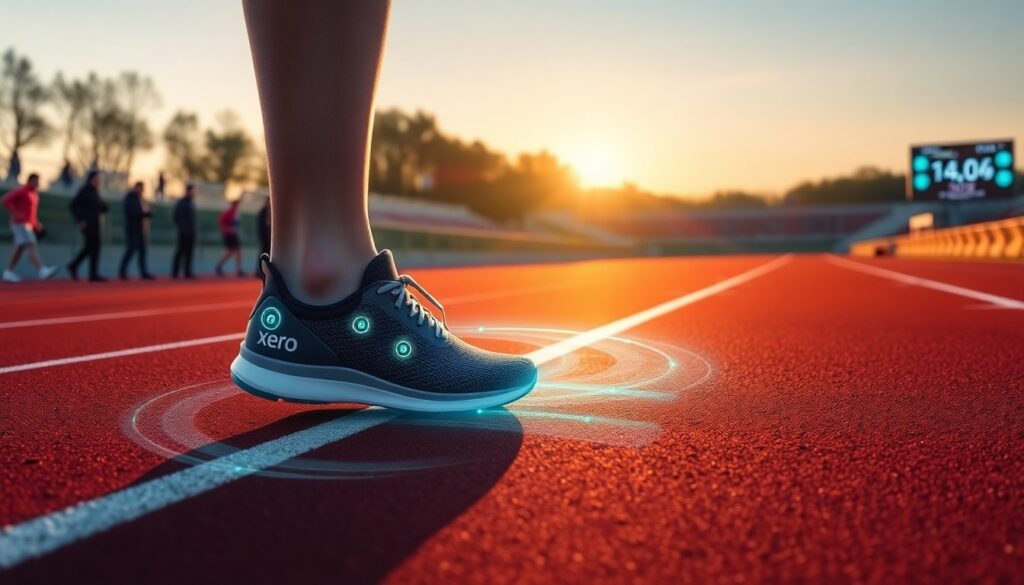
Xero’s XB+ SmartShoe isn’t trying to be another standard running shoe review. It’s a CES-style glimpse at where minimalist footwear may be headed: built-in sensors, live biomechanical feedback, and form coaching for runners who want data, not just cushioning.
What to make of the XB+ SmartShoe
Think of it as an emerging tech product for runners who care about form optimization, not a conventional lab-tested shoe. If you want the broader performance-shoe comparison first, start with the Speed Force II lab test review; if you’re specifically interested in how minimalist shoes change mechanics, the running-in-Xero-shoes guide gives the foundation.
Where The Xb+ Fits In Xero’s Lineup
The audit on this page is clear: it should stand apart from Xero’s broader performance-review cluster. The XB+ SmartShoe is most useful as a CES innovation explainer and an emerging-tech product analysis, because its real story is the sensor system, the feedback loop, and the promise of run-form optimization. That makes it distinct from a normal shoe review while still staying relevant to barefoot and minimalist runners.
If you’ve already read a standard performance review and want the running-science angle next, this page should answer a different question: what does a smart shoe actually do, how does it help, and where does it stop short of being a full coaching platform?
What The Sensor System Is Trying To Solve
The central promise of the XB+ is simple: help runners see what their body is doing while they move. That’s why the original article’s strongest material is the sensor stack, the feedback system, and the way the shoe turns raw movement into coaching signals.
According to the concept described in the source, the shoe uses 16 embedded sensors and machine-learning processing to measure metrics such as foot strike angle, ground contact time, pressure distribution, acceleration, and motion trajectory. In practical terms, that means the shoe is designed to flag patterns like overstriding before they become habit.
Why this matters for runners
For many runners, form problems are hard to feel in real time. A sensor-driven shoe can turn invisible mechanics into actionable cues, which is why the XB+ concept is more interesting as a coaching tool than as a simple product launch story.
What The Data Can Actually Tell You
The article’s strongest performance claims revolve around overstriding reduction and form correction. The source cites a 29% reduction in overstriding in testing, along with foot-strike analysis within ±2° accuracy. Those figures are exactly the kind of details that distinguish a smart-shoe concept from a normal minimalist model.
- Pressure Mapping helps show how weight shifts across the foot.
- Gyroscopic Tracking helps identify motion path and rotational patterns.
- Accelerometry helps interpret changes in speed and impact.
- Ground-Contact Tracking helps estimate how long each foot stays on the ground.
The value is not just collecting numbers. It’s narrowing the gap between what runners think they are doing and what they are actually doing at speed.
Clinical Claims, Use Cases, And The Limits Of The Concept
The original article leans heavily on clinical-style language, so it’s worth keeping the claims in context. The source references a study involving 124 recreational runners and reports potential improvements in overstriding and running economy. That makes the concept compelling, but it also means the product should be read as an emerging technology story rather than a settled mainstream shoe recommendation.
That distinction matters. A standard running shoe review answers whether the shoe feels good, fits well, and performs on the road. The XB+ story is different: it asks whether adding sensors, feedback, and app-based analysis meaningfully improves technique for the runners who will actually use it.
Best Use Case
Runners who want feedback during training sessions, not after the fact.
What It Won’t Replace
A coach, a gait lab, or a properly built training plan.
Potential Downside
More tech to manage, charge, and interpret than a standard shoe.
How The App And Feedback Layer Change The Experience
The mobile app is central to the XB+ concept because it turns sensor output into readable training guidance. The original content describes visual dashboards, trend charts, scoring systems, audio prompts, and haptic feedback. Those features matter because the shoe’s usefulness depends on whether the runner can understand the data fast enough to act on it mid-run.
That makes the product feel less like a novelty and more like a live coaching interface. For runners working on cadence, foot strike, or ground contact time, that could be valuable. For someone who simply wants a light barefoot feel, it may be unnecessary complexity.
Comfort, Fit, And The Barefoot Question
Because this is still a barefoot-inspired shoe, the fit and feel still matter. The source describes a lightweight build, breathable materials, flexible construction, and a minimalist profile that should appeal to runners already comfortable with low-stack footwear. That’s also where the page’s secondary intent lives: the XB+ sits inside the larger barefoot conversation, not outside it.
If you want to understand the bigger philosophy behind that kind of footwear, it’s worth reading the science of barefoot shoes and their benefits. That context helps explain why Xero would pair a minimalist platform with sensor-driven feedback in the first place.
The likely audience is narrower than a typical running shoe buyer. This concept makes the most sense for runners who already care about technique, are willing to interact with an app, and want real-time coaching more than maximum cushioning.
What To Keep In Mind Before Treating It Like A Buying Guide
A key part of the audit was to reduce the page’s tendency to behave like a generic product review. That means the practical framing should stay grounded: the XB+ is an innovation story, and any buying interest should flow from that story, not replace it.
A useful way to think about it is this: if your priority is day-to-day performance testing, comfort comparisons, and conventional shoe evaluation, the dominant review page is the better starting point. If your priority is learning how smart footwear could influence form, feedback, and injury prevention, the XB+ page earns its place.
Where to go next
If you want the performance-first angle on Xero footwear, the strongest related read is the Speed Force II lab test review. If you want to stay in the minimalist-running lane, the treadmill and indoor workouts guide is the better practical companion.
Frequently Asked Questions
The XB+ SmartShoe is strongest when read as a sign of where running footwear may be heading: less static product, more responsive training system. For runners who want that future, it’s a genuinely interesting CES concept.

Henry Harrington is a passionate author and content creator at My Shoes Finder, where he explores a wide range of topics related to footwear, lifestyle, and personal growth. With a keen eye for detail and a love for storytelling, Henry engages readers by sharing insights, tips, and personal anecdotes that resonate with his audience. His commitment to delivering high-quality content has established him as a trusted voice in the online community, inviting readers to step into new perspectives and discover their unique paths.
See also:
 Widest Xero Shoes for Wide Feet: Models & Fit Guide
 Xero Shoes For Children In 2025: Fit, Safety, And Best Models
 Transitioning To Xero Shoes: A Safe Beginner’s Guide For 2025
 How Durable Are Xero Shoes? 5,000-Mile Warranty, Real-World Lifespan, And Wear Factors
 Are Xero Shoes Good For Standing All Day? Best Uses, Limits, And Comfort Tips
 Xero Speed Force Ii Lab Test: 2025 Minimalist Running Shoe Review
The concept of a smart shoe tailored to enhance running form is fascinating, yet I can’t help but wonder about the balance between technology and natural biomechanics. While the prospect of real-time feedback is appealing, there’s also a risk that runners might become overly reliant on data at the expense of their innate awareness of body mechanics.
You raise a very important point about the intersection of technology and natural biomechanics, especially when it comes to smart shoes designed to improve running form. The allure of real-time feedback can be powerful, but your concern about the potential over-reliance on data is one that merits serious consideration.
The concept of a smart shoe that tracks and optimizes running form is intriguing, particularly how the embedded sensors can provide real-time feedback. However, I can’t help but wonder about the trade-offs between relying on technology and developing an innate sense of body awareness. There’s value in understanding your own biomechanics without constant data feedback, but for those of us who struggle with form, tools like the XB+ could make a tangible difference. It raises an important question about how technology mediates our bodily experiences—is it enhancing our natural abilities or making us reliant on gadgets? I’m curious to hear what others think about the long-term implications of integrating such tech into our routines—especially among young athletes who might be more susceptible to over-reliance on data.
The introduction of the Xero XB+ SmartShoe is indeed a fascinating development in the intersection of technology and physical performance. As a runner myself, I can’t help but reflect on how much our understanding of biomechanics has evolved over the last few years. The concept of using embedded sensors to provide real-time feedback is not just innovative; it seems almost essential given how much we’ve learned about the intricacies of human movement.
The introduction of the Xero XB+ SmartShoe is indeed a fascinating development in the realm of running technology. The integration of 16 embedded sensors to provide real-time feedback highlights the potential for data-driven performance analysis to revolutionize how runners of all levels approach their training. This kind of technology reminds me of advancements in sports science, where biomechanical analysis often relied heavily on expensive lab equipment and expert observation.
It’s true that the Xero XB+ SmartShoe is a game changer for runners. The way those 16 embedded sensors can track metrics in real time makes running feel less like an isolated activity and more like a data-driven journey. You mentioned the shift away from expensive lab setups in sports science, and that’s a really important point. For years, serious runners had to rely on skilled trainers with high-tech gear to provide insights into their form and performance. Now, this shoe can put that level of analysis right at people’s feet.
It’s interesting to think about how the Xero XB+ SmartShoe could democratize access to performance analysis. Traditionally, as you mentioned, serious runner education and insights often came with a hefty price tag—something that limited many athletes from truly understanding their biomechanics. With technology like this, it feels like those insights are becoming more attainable for everyone, not just elite athletes or those with deep pockets.
The concept of integrating real-time feedback into running with the XB+ SmartShoe is fascinating. As someone who has struggled with maintaining proper form, the idea of having sensors guide my mechanics feels both innovative and necessary. It reminds me of how technology has transformed other sports, like how wearables have shifted the way cyclists train and recover.
The concept of a smart shoe like the Xero XB+ is intriguing, particularly the idea of integrating technology to enhance our natural movements. As a weekend runner, I’ve often found myself struggling with form—sometimes feeling like I’m not making the most of my workouts. The reduction in overstriding you mentioned really stands out; it’s encouraging to think that such a significant improvement is possible with real-time feedback.