
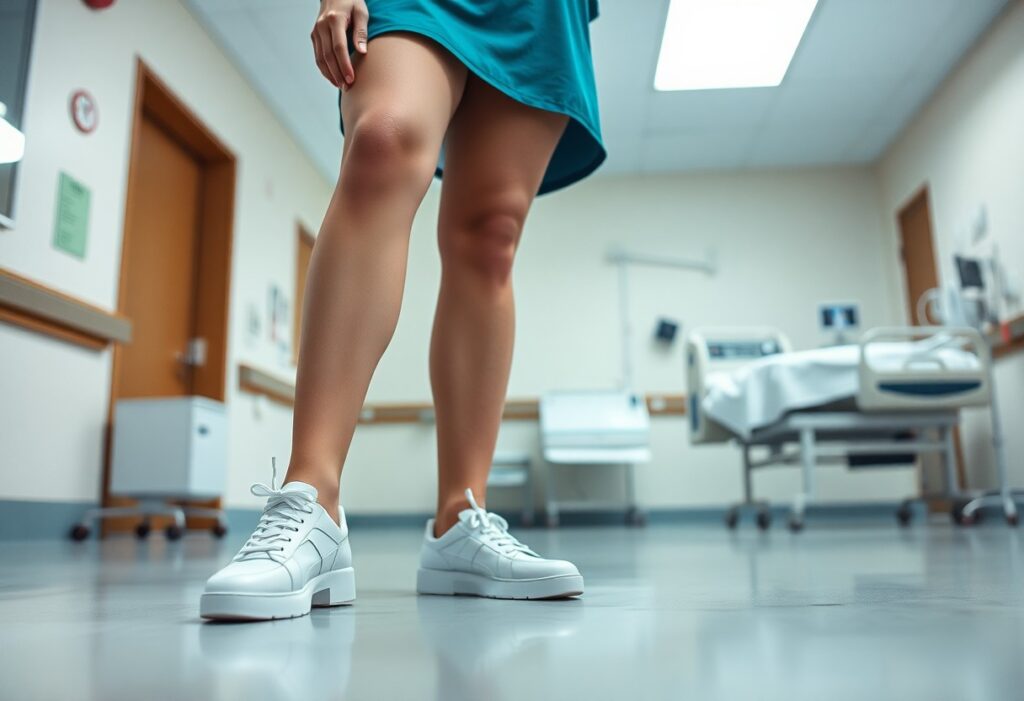
Xero Shoes can be a smart choice for nurses who want a wide toe box, zero-drop alignment, and a lighter feel through long shifts. They are less ideal if you need soft cushioning first or a highly protective, work-shoe feel from day one.
Best fit in one glance
If your shift involves a lot of standing, fast walking, and foot swelling by the end of the day, Xero’s shape and low-profile design can feel better than narrow, padded nursing shoes. If your workplace demands extra cushioning, immediate arch support, or a more traditional security feel, compare them against the 12-hour shift survival guide before you buy.
For nurses, the real question is not whether barefoot shoes are fashionable. It is whether they help your feet feel better after hours on hard floors, repeated turns, and a shift that never really slows down. If your feet swell, your toes feel squeezed, or you hate heavy shoes by hour eight, Xero Shoes may solve the part of the problem that traditional nursing shoes often miss.
What Matters Most On A Nursing Shift
A nurse-friendly shoe has to balance comfort, traction, cleanability, and all-day wearability. That is why the right choice depends as much on your floor surface and shift length as it does on brand preference. If you want a wider look at how Xero models behave beyond nursing, the all-day comfort guide is a useful companion read.
| Decision factor | How Xero Shoes perform | Why it matters for nurses |
|---|---|---|
| Shift comfort | Strong if you prefer light, flexible, low-drop footwear | Helps reduce the heavy, trapped feeling that can build through long rounds |
| Toe-box room | Excellent | Useful when feet swell or when you hate cramped toes by the end of the shift |
| Slip resistance | Model-dependent | Worth checking closely if your unit has wet floors or frequent spills |
| Easy cleaning | Moderate | Important in healthcare settings where quick cleanup matters |
| Break-in time | Usually noticeable | Barefoot shoes often feel best after gradual adaptation, not on the first wear |
Why The Barefoot Design Can Help
The big advantage of Xero Shoes is not extra cushioning. It is the shape and mechanics. A zero-drop platform keeps heel and forefoot level, while the wide toe box gives your toes room to spread instead of collapsing inward. For nurses who spend hours standing and pivoting between tasks, that combination can feel more stable and less tiring over time.
That said, barefoot shoes are not magic. If you are used to thick midsoles, a sudden switch can make your calves and feet work harder at first. The better approach is to think of Xero Shoes as a shift-friendly biomechanical option, not a universal replacement for every nurse and every unit.
Where They Make The Most Sense
Xero Shoes tend to make the most sense for nurses who want roomier toe splay, lower overall shoe weight, and a closer-to-ground feel. They can be especially appealing if your legs feel less tired in lighter footwear or if traditional shoes leave your forefoot feeling compressed after a long day.
Where To Be Cautious
Be more cautious if your unit requires immediate traction on wet or polished floors, if you want maximum cushioning from the start, or if your feet are sensitive to low-stack footwear. In those cases, the smarter decision may be to compare fit and use case against a more traditional model first, then decide whether barefoot style is a realistic long-term fit.
Fit, Sizing, And The First Few Shifts
Fit is the part most buyers underestimate. A shoe that feels roomy in the store can still pinch once you add compression socks, swelling, and a full shift. Before ordering, review the fit guide and the sizing guide so you are not guessing on length or width.
If you are between sizes, have wide feet, or notice uneven fit from one foot to the other, size selection matters even more. The right pair should leave enough room for toe spread without letting your heel slide when you move quickly between beds, carts, and stations. For nurses who walk a lot outside of work too, that same fit logic carries over to the back-pain and posture guide.
Best next step if you are close to buying
If your main goal is choosing one pair for long shifts, open the 12-hour shift survival guide first, then use the sizing pages above to lock in the right fit. That sequence gives you the clearest comparison between comfort, support, and real workplace use.
If your decision is still open, start with the nurse-specific fit question rather than asking whether Xero is automatically the “best” barefoot shoe. That narrower question is what keeps the choice useful.
What Nurses Usually Notice First
Most nurses notice three things quickly: the shoes feel lighter than expected, the forefoot has more room than a standard work shoe, and the ground feel is more direct. That can be a major upgrade if your current pair feels restrictive or heavy by midday. It can also feel unusual at first if you are coming from a highly cushioned shoe with a built-up heel.
The benefits described earlier are real, but they are most convincing when you connect them to the actual shape of your shift. Long standing periods reward a stable, level platform. Fast turns and room changes reward lightweight footwear. End-of-shift fatigue often improves when your toes are not pinned together. That is the practical case for Xero Shoes, not a blanket promise that they suit every nurse.
A Practical Verdict
Xero Shoes are a strong barefoot-shoe option for nurses who value toe room, low weight, and natural foot mechanics more than plush cushioning. They are best for readers who already know they like minimal footwear, or who are willing to adapt gradually for a better long-term fit.
If you need maximum padding, instant comfort, or the most traditional nursing-shoe feel, keep them on the shortlist but do not assume they are the default winner. Use the shift guide, then confirm sizing before you commit.
Ready to compare the full nurse-shift lineup?
Use the dominant shift guide for the main decision, then check fit and sizing so the pair you choose actually works on a real floor, in real socks, during a real shift.
Frequently Asked Questions
Are Barefoot Shoes Recommended For Nurses?
They can be, especially if you want more toe room, less weight, and a flatter platform. The tradeoff is that barefoot shoes usually ask more of your feet and calves, so they are best when you are willing to adapt gradually.
What Xero Shoes Are Best For Nurses?
The best model depends on your unit rules, grip needs, and whether you prefer a shoe that feels more like a trainer or a lower-profile barefoot option. Start with the shift guide, then check model-specific fit and sizing before narrowing it down.
Do You Wear Socks With Xero Shoes?
Many nurses do, especially for longer shifts, sweat management, and a little extra comfort inside the shoe. The main point is to choose a sock thickness that still leaves the toe box and midfoot feeling natural.
What Shoes Are Good For 12 Hour Nursing Shifts?
The best shoes for 12-hour shifts are the ones that match your floor conditions, support preference, and fit needs. For some nurses that means a cushioned work shoe; for others, it means a lighter barefoot option like Xero with the right size and break-in plan.

Henry Harrington is a passionate author and content creator at My Shoes Finder, where he explores a wide range of topics related to footwear, lifestyle, and personal growth. With a keen eye for detail and a love for storytelling, Henry engages readers by sharing insights, tips, and personal anecdotes that resonate with his audience. His commitment to delivering high-quality content has established him as a trusted voice in the online community, inviting readers to step into new perspectives and discover their unique paths.
See also:
 Xero Shoes For Nurses: Best Picks For 12-Hour Shifts
 Xero Shoes For Children In 2025: Fit, Safety, And Best Models
 Barefoot Shoes For Retail Workers: Comfort, Alignment, And Shift Endurance
 Xero Shoes For Bunions: What Helps, What Doesn’t, And Which Models Fit Best
 Are Xero Shoes Good For Standing All Day? Best Uses, Limits, And Comfort Tips
 Widest Xero Shoes for Wide Feet: Models & Fit Guide



It’s refreshing to see a focus on the importance of appropriate footwear for nurses. As someone who has spent many hours in similar situations, I can certainly relate to the acute awareness that comes with being on your feet all day. The idea that Xero Shoes could be a game-changer for healthcare professionals is intriguing. The features you mention, such as the zero-drop design and foot-shaped toe box, seem like they could genuinely contribute to a healthier, more comfortable experience for those of us who spend so much time on our feet.
It’s great to know you feel that way about the importance of proper footwear for nurses—standing for long hours can really take a toll on your body. It’s interesting how much we often overlook the impact of our shoes until we’re dealing with foot pain or fatigue. For those of us in demanding professions, finding that right balance of comfort and support can make a world of difference.
Your insights on the challenges nurses face in selecting appropriate footwear resonate deeply with the experiences many of us encounter in healthcare. The emphasis on a zero-drop design and a foot-shaped toe box is particularly intriguing, as it aligns with current trends in holistic health approaches that prioritize natural body mechanics. Having shifted to minimalist footwear in my own practice, I’ve noticed a significant reduction in foot fatigue during long shifts, which has, in turn, enhanced my overall well-being.
It’s great to hear how your transition to minimalist footwear has positively impacted your experience in healthcare. The connection between our footwear choices and how we feel throughout long shifts can really be remarkable. A lot of nurses and healthcare professionals often overlook that aspect, but it’s such a vital part of maintaining our well-being.
It’s refreshing to hear that navigating the treacherous terrain of healthcare footwear has led to your own epiphany. It’s like finding a unicorn in a field of clogs and dubious sneakers. You’ve taken the plunge into the minimalist world and emerged victorious—your feet are now singing sweet melodies instead of staging a protest by the end of your shift. That’s quite the achievement!
It’s great to hear that the piece resonates with your experiences in healthcare. The transition to minimalist footwear is an interesting one, and it’s becoming clear that more of us are recognizing how vital our footwear choices are, particularly in high-stress environments like hospitals.
It’s interesting how our footwear can really shape our daily experiences, especially in such demanding settings like hospitals. The shift toward minimalist footwear does seem to be gaining traction, doesn’t it? Many of us spend long hours on our feet, and traditional options often don’t consider the unique pressures we face.
It’s true—our choice of footwear can significantly influence how we feel throughout the day, especially in demanding environments like hospitals. I’ve personally found that after just a few shifts in traditional shoes, my feet and legs would feel so fatigued, almost as if they were protesting the long hours. The minimalist footwear trend is intriguing because it encourages a more natural movement, which feels more in tune with how our bodies are designed to function.
You raise a great point about the toll traditional footwear can take during long shifts. The fatigue you experience sounds frustrating, especially in such a demanding field. Many people don’t realize how much our choice of shoes can impact our overall well-being and energy levels.
It’s interesting to see how footwear can impact our daily work, especially in environments like hospitals that put such stress on our bodies. Transitioning to minimalist footwear can be a game changer; it often promotes a more natural gait and can reduce the strain many of us experience from long hours on our feet. I’ve found that trying out different types of footwear has not only enhanced comfort but has also encouraged me to be more mindful of my movements throughout the day.
It’s great to hear that you’ve made the shift to minimalist footwear in your practice. I completely agree that addressing foot fatigue is crucial for nurses since long shifts can be incredibly taxing. The idea of a zero-drop design and foot-shaped toe box really does seem to promote a more natural posture, which can lead to less strain on the body overall.
I recently came across a guide that delves into how Xero Shoes can really help nurses tackle those long shifts, and it builds beautifully on the idea of minimalist footwear for better comfort and support.
‘Xero Shoes for Nurses: 12-Hour Shift Survival Guide (2025)’
https://myshoesfinder.com/xero-shoes-12-hour-shift-survival-guide/.
I really appreciate this deep dive into the importance of proper footwear for nurses. It’s a topic that doesn’t usually get enough attention, yet it plays such a crucial role in our daily lives, especially when we’re on our feet for 12-hour shifts.
It’s so true that proper footwear often gets overlooked, yet it can make such a significant difference, especially for nurses on those long shifts. I remember when I first started, I didn’t think much about my shoes and paid the price with back pain by the end of my shift. Finding shoes that offer the right support can feel like a game changer.
I found this article really insightful; it emphasizes just how crucial the right footwear can be for nurses tackling those long shifts.
‘Xero Shoes for Nurses: 12-Hour Shift Survival Guide (2025)’
https://myshoesfinder.com/xero-shoes-12-hour-shift-survival-guide/.
It’s refreshing to see a focus on footwear that genuinely considers the unique challenges faced by nurses. Working long shifts can really take a toll on our feet, and the right shoes can make a world of difference. I’ve personally experienced the discomfort that comes from traditional nursing shoes. They often prioritize style over comfort and support, leading to fatigue and discomfort that can linger long after the shift ends.
It’s fascinating to see how the design of nursing footwear can significantly impact a nurse’s daily experience. Having spent several years in healthcare, I can attest to the toll that long shifts can take on our bodies, especially our feet and backs. The emphasis on features like a zero-drop design and foot-shaped toe box in Xero Shoes reflects a growing understanding of human biomechanics, which is crucial for preventing injuries.
It’s so true that nurses face unique challenges with their footwear! I remember when I first started my nursing career, the pain from traditional shoes was almost unbearable by the end of a shift. The zero-drop design of Xero Shoes definitely piques my interest, especially since I’ve been exploring more natural movement practices lately. It’s fascinating how the right footwear can improve not just comfort but also prevent long-term issues.
It’s interesting how many nurses go through that initial struggle with footwear. I hear it a lot from folks in the field. The long shifts can really put your feet through the wringer. I think the zero-drop design of Xero Shoes is worth looking into, especially as it aligns with those more natural movement practices you mentioned.
It sounds like you went through the classic nurse-shoe struggle! It’s like a rite of passage, right? One minute you’re stepping onto the scene ready to save lives, and the next you’re regretting every footwear choice that led you to those soul-crushing clogs. You’ve got a shift to survive, and your feet are throwing a rebellion party. It’s like they didn’t get the memo about teamwork.
You’ve raised a really important point about the unique demands placed on nurses and the critical need for appropriate footwear. After spending many long hours on my feet during my own shifts, I’ve come to realize how much our choice of shoes can impact our overall health and well-being. The minimalistic design of Xero Shoes, particularly the zero-drop features, sounds intriguing as it aligns well with the principles of natural movement and foot wellness.
You’ve hit the nail on the head about the impact of footwear on our overall health, especially for those of us in demanding roles like nursing. It’s pretty eye-opening how much the right shoes can influence everything from comfort during long shifts to how our bodies feel at the end of the day.
You’ve touched on such an important issue in the nursing profession. The physical demands on nurses are relentless, and the right footwear can make all the difference in managing not just comfort, but overall well-being. Personally, after years of enduring traditional nursing shoes, I switched to a minimalist design, and the improvement was significant. My foot pain lessened, and I felt more agile during long shifts.
You’ve really highlighted a crucial aspect of nursing that often gets overlooked. The physical demands on nurses can indeed be relentless, and finding the right footwear is such an individualized journey. It’s interesting to hear about your switch to a minimalist design—sometimes the simplest changes can make the biggest impact. I can imagine how it must feel to experience less foot pain and improved agility during those long shifts.
You’ve captured the essence of the challenges nurses face so well. The quest for comfortable footwear can often feel overwhelming, especially with so many choices out there. When I made the switch to a minimalist design, I was surprised at how much more connected I felt to the ground. It’s interesting to notice how our bodies respond to changes, even those that seem small at first.
Finding the right footwear as a nurse can feel like searching for a needle in a haystack. I’ve spent countless shifts in shoes that promised comfort but ultimately betrayed my feet. Xero Shoes seem to address the core issues many of us face, especially with their zero-drop design and emphasis on natural movement.
Finding the right footwear for the demands of nursing is such a critical concern, isn’t it? Your exploration of Xero Shoes as a solution really resonates with me. I remember when I worked long shifts, my feet would often feel like they were on fire by the end of the day.
Finding the right footwear for the demands of nursing really is a critical concern. I can relate to that feeling of your feet being on fire after those long shifts. It’s surprising how much we overlook the importance of our shoes until we’re forced to feel the consequences. I’ve found that when you’re on your feet for hours, proper support makes all the difference.
It’s refreshing to see a focus on the critical role of footwear in nursing, especially given how demanding our shifts can be. I’ve spent years trying to find the right balance between comfort and support, often wrestling with the aches that come from long hours on my feet. Traditional nursing shoes never seemed to cut it—too rigid and lacking the natural feel that our bodies crave.
You’ve really hit on something important there. The struggles with finding the right balance between comfort and support can feel like a never-ending challenge, especially given the demands of our shifts. I can definitely relate to the aches that come from long hours on our feet; it feels particularly tough when you want to take care of your patients but your own body is protesting.
It sounds like you’ve really put in the effort to find the right footwear that meets your needs. The struggle for that perfect blend between comfort and support can feel never-ending. It’s surprising how something as simple as shoes can have such a significant impact on our daily experience, especially during those long shifts.
Finding that perfect pair of shoes can often feel like a personal journey rather than just shopping. It’s fascinating how something seemingly simple can play such a pivotal role in our daily comfort, especially when you’re on your feet for long periods. I’ve spent countless hours trying on various brands and styles, searching for that elusive balance of comfort and support that keeps my feet happy during those marathon shifts.
I really appreciate the focus on the unique challenges that nurses face when it comes to footwear. It’s something that I think gets overlooked far too often, especially in a profession that demands so much physically. I can’t tell you how often I’ve seen nurses struggle with their shoes during long shifts. The comfort level can drastically affect not just their performance but also their overall well-being.
I really appreciate this exploration into the importance of good footwear for nurses. As someone who has worked alongside healthcare professionals, I’ve seen firsthand how grueling those shifts can be. The way your feet feel at the end of a 12-hour shift can really make or break your experience. It’s crazy to think how often we overlook such a vital component of our health and wellness, especially in a profession that’s so demanding.
It’s interesting how often the importance of proper footwear is overlooked in the healthcare profession, considering how much time nurses spend on their feet. I can really relate to the struggle of finding shoes that not only support us during those long shifts, but also contribute to our overall foot health. I’ve seen firsthand how wearing the wrong footwear can lead to chronic pain—particularly in the back and joints.
I completely relate to what you’re saying about the struggle with footwear in healthcare. It’s pretty surprising how much of an impact shoes can have, especially for those of us spending long hours on our feet. I’ve definitely had my share of trial and error trying to find the right pair that balances support and comfort.