
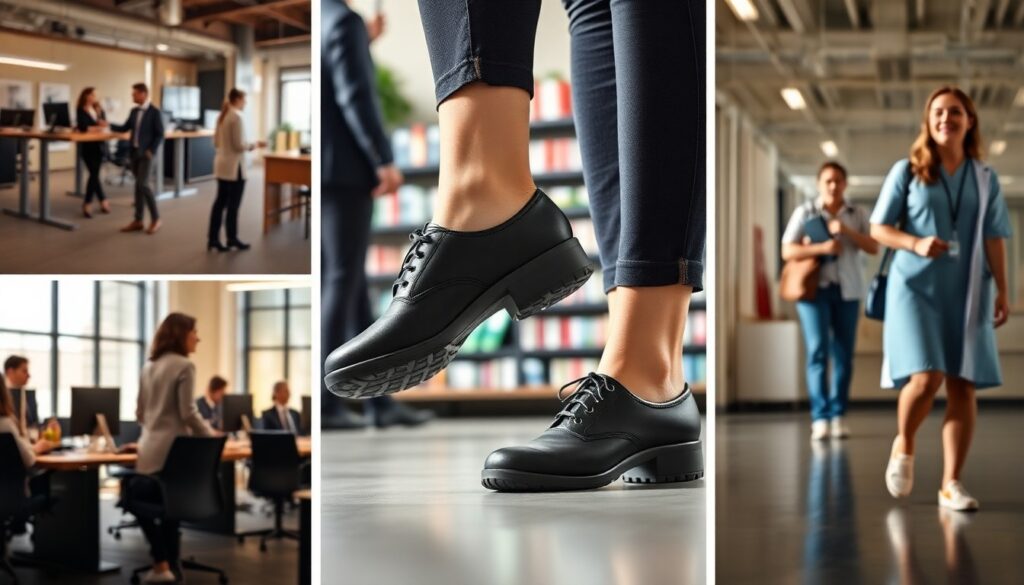
Barefoot footwear can be a smart option for some standing jobs, but it is not the best fit for every workplace or every foot. The right choice depends on your shift length, surface, safety rules, and how quickly your feet adapt.
Best Fit workers who want a wide toe box, flexible ground feel, and a more natural foot shape during long shifts.
Use Caution if your job requires strict slip resistance, toe protection, or you are new to minimalist shoes, build in a transition period.
For the broader injury-prevention and posture side of the topic, start with the occupational footwear biomechanics guide and then come back here for standing-job fit.
What Barefoot Footwear Can Do For Standing Professions
The appeal is simple: less squeezing, more toe room, and a shape that lets the foot work the way it was designed to. For people who stand for hours in healthcare, retail, teaching, salons, or food service, that can mean less pressure around the forefoot, better stability, and less end-of-shift fatigue.
That said, barefoot footwear is not a miracle fix. The benefits tend to show up when the shoe matches the job and the wearer has enough adaptation time. A minimalist shoe that feels great in the fitting room can still be a poor choice if the floor is slick, the shift is unforgiving, or your calves and feet are not ready for the change.
What The Evidence Suggests For Long Shifts
The strongest theme across occupational studies is not that barefoot footwear works for everyone, but that it may improve comfort and load distribution for some standing workers. In the original research roundup, nurses showed reduced pressure points and lower muscle strain in minimalist options, while retail staff saw meaningful reductions in low back discomfort over time.
Those findings matter because standing jobs rarely stress just one part of the body. Feet, calves, hips, and lower back tend to share the load. If a shoe narrows the forefoot or forces the body into compensations, fatigue can climb quickly. Barefoot footwear aims to reduce that squeeze and let posture stay more natural, but the trade-off is that your muscles must do more of the work.
Who Is Most Likely To Benefit
- Workers who stand on firm floors and want more toe splay and flexibility.
- People whose main complaint is forefoot pressure or cramped shoes.
- Experienced minimalist-shoe wearers who already tolerate low-drop footwear well.
Who Should Be More Cautious
- New users who are jumping straight into 8- to 12-hour shifts.
- Jobs that require certified slip resistance, protective toes, or highly specific safety standards.
- Workers with recent foot, tendon, or calf issues unless they are easing in under guidance.
If you want the broader science behind posture, balance, and injury prevention, the occupational footwear biomechanics article is the best companion read. This page stays focused on whether barefoot footwear makes sense specifically for standing all day.
How Different Standing Jobs Should Think About The Choice
Nurses And Healthcare Staff
Barefoot footwear can help if your feet feel compressed by standard clogs or sneakers, but safety rules matter first. If your unit requires a defined slip-resistance standard or toe protection, check those requirements before comfort features.
Retail Workers
Retail is often the clearest use case because the job usually involves long standing, frequent walking, and fewer formal safety demands. For a deeper fit-by-job view, see the retail worker guide.
Teachers
Teachers spend long hours standing, pacing, and moving between hard floors, so comfort and all-day wearability matter more than the gym-shoe feel. If that describes your routine, the teacher-focused article is a useful next step.
Food Service Workers
For kitchens and hospitality floors, traction and cleanup requirements can outweigh the benefits of minimalist design. Start with the job constraints first, then compare barefoot options against safer, more structured alternatives. The food service footwear guide is the better match when spills and slip risk are part of the job.
How To Choose A Pair For Long Shifts
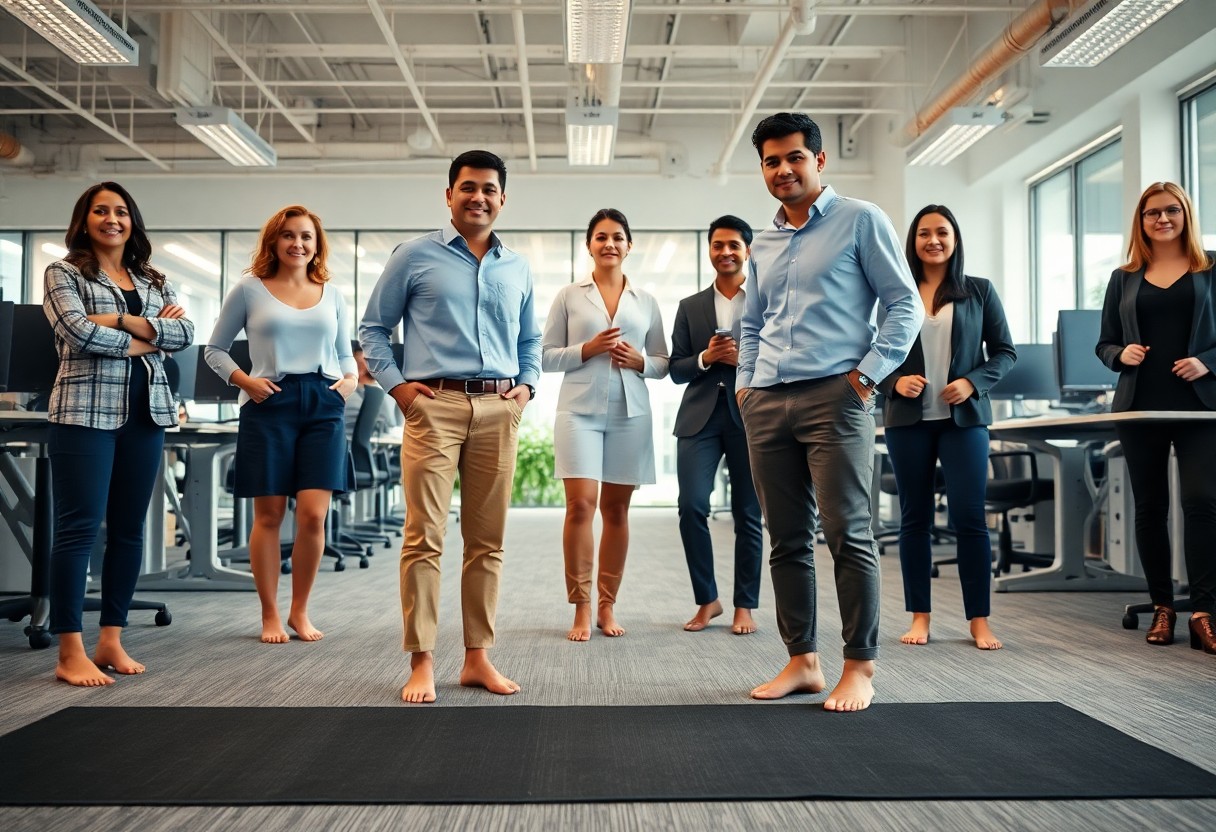
The best barefoot work shoe for standing all day is not just the lightest or thinnest option. Look for a wide toe box, a secure midfoot fit, a grippy outsole, and enough durability for your floor surface. If the pair is so minimal that it feels unstable, it will likely create more problems than it solves.
- Toe Shape your toes should spread naturally without the upper pressing inward.
- Outsole traction matters more than marketing language, especially in food service or healthcare.
- Drop And Stack lower can feel better, but too abrupt a change can overload calves and arches.
- Upper Security the shoe should hold the foot without clawing at the toes or heel.
- Transition Plan start with short wear periods before a full shift.
That transition point is easy to overlook. Some workers feel fine on day one and then notice calf tightness, arch soreness, or foot fatigue a week later because the body is doing more stabilizing work than it did in cushioned shoes. A gradual switch usually gives the feet a better chance to adapt.
If You Are Deciding Between Barefoot And Conventional Work Shoes
Choose barefoot footwear if your main pain point is cramped toes, limited flexibility, or a shoe that feels too rigid for your shift. Choose a more structured work shoe if your job demands strong slip resistance, toe protection, or immediate comfort without a break-in period.
If you are still evaluating the wider biomechanics side, the dominant biomechanics guide explains why stability, load distribution, and injury prevention matter across occupational footwear choices.
A Few Practical Takeaways From The Research
- Barefoot footwear can reduce forefoot pressure and improve comfort for some standing workers.
- Benefits appear strongest when the work environment matches the shoe’s strengths.
- Safety requirements still come first in clinical, kitchen, and industrial settings.
- Adaptation matters: a gradual transition lowers the chance of soreness or strain.
- For retail, teaching, and some healthcare roles, a minimalist shoe can be a practical ergonomic tool.
A Good Next Step Before You Buy
If your job is mostly standing and walking on indoor floors, barefoot footwear deserves a serious look. If your role includes slip hazards, strict compliance rules, or a history of foot pain that worsens when support changes, keep your current shoe profile more conservative and compare options carefully.
For readers who want the broader framework first, revisit occupational footwear stability and injury prevention. For job-specific buying guidance, the relevant worker pages above are the most useful next clicks.
Choose barefoot footwear when the job rewards natural toe room and flexibility.
Keep a more structured work shoe in play when safety standards, slip resistance, or a no-transition fit matter more than minimal feel.
Frequently Asked Questions
Which Shoes Are Best For Standing Jobs?
The best shoes for standing jobs are the ones that match your floor surface, safety rules, and comfort needs. For some workers, barefoot footwear is a strong choice because it allows more toe room and flexibility; for others, a structured shoe with more support and slip resistance is the better option.
Can Barefoot Shoes Help If I Stand All Day?
They can help some people by reducing compression, improving foot movement, and making long shifts feel less restrictive. The key is gradual adaptation and choosing a model that still meets your job’s safety needs.
Are Barefoot Shoes Safe For Work?
They can be safe in the right setting, but safety depends on the workplace. If your role requires certified slip resistance or toe protection, those requirements should come before minimalist style.
How Long Does It Take To Adjust To Barefoot Footwear?
Most people need a transition period rather than an immediate full-shift switch. Start with short wear times and build up slowly so your feet, calves, and arches can adapt without unnecessary strain.

Henry Harrington is a passionate author and content creator at My Shoes Finder, where he explores a wide range of topics related to footwear, lifestyle, and personal growth. With a keen eye for detail and a love for storytelling, Henry engages readers by sharing insights, tips, and personal anecdotes that resonate with his audience. His commitment to delivering high-quality content has established him as a trusted voice in the online community, inviting readers to step into new perspectives and discover their unique paths.
See also:
 Occupational Footwear And Stability: What Shoe Design Means For Safety At Work
 Are Xero Shoes Good For Standing All Day? Best Uses, Limits, And Comfort Tips
 Xero Shoes Vs Steel Toe: 2025 Workplace Safety Requirements Guide
 Xero Shoes Work Boots: Which Models Make Sense For Durability And Comfort?
 Barefoot Shoes For Retail Workers: Comfort, Alignment, And Shift Endurance
 Barefoot Shoes For Retail Workers: When They Help, When They Don’t
This discussion around barefoot footwear resonates deeply with me, especially considering the demands of standing professions like nursing and teaching, where employees often endure long hours on their feet. I’ve experienced firsthand the discomfort and fatigue that can come from wearing traditional shoes. It was only after switching to barefoot-style footwear that I began to notice a remarkable difference in my overall comfort and endurance throughout the day.
It’s interesting to see how barefoot footwear is gaining attention for its ergonomic benefits, especially in roles that require prolonged standing. However, I wonder about the potential downsides. While the natural foot posture is emphasized, not everyone has the same foot structure or health conditions that might benefit from this style. For instance, individuals with flat feet or specific arch issues might find that barefoot shoes lack the necessary support they require. I’m curious about how these designs take varying foot needs into account. Additionally, in high-tech environments, are there any innovative materials or technologies being explored to enhance comfort in conjunction with the barefoot philosophy? It would be valuable to hear from others who have had both positive and negative experiences with barefoot footwear in their professions.
I appreciate your exploration of barefoot footwear in the context of demanding work environments. It’s fascinating how something as seemingly simple as a shoe can have such profound effects on our overall well-being, especially in professions that require prolonged standing.
Your exploration of barefoot footwear and its potential benefits for individuals in standing professions opens up an important dialogue about how our choices in footwear can directly impact our health and productivity. Having spent several years in a role that requires long hours on my feet, I have personally experienced the challenges posed by conventional footwear, such as discomfort and fatigue.
It’s great to hear your perspective on this. Working long hours on your feet, I can imagine how conventional footwear can turn into a kind of daily battle. Many people share similar experiences and slowly start to realize that their shoes can affect not just their comfort but also their overall well-being and productivity.
It’s great to hear how your experience in a standing role has shaped your understanding of footwear’s impact on daily life. Many people don’t realize how conventional shoes can lead to discomfort and fatigue, especially during long hours of standing.
Your exploration of barefoot footwear’s impact on comfort and posture in standing professions really resonates with me. In my own experience working in a healthcare setting, I’ve often grappled with the challenges of prolonged standing. After making the switch to barefoot shoes, I’ve noticed a significant difference in my overall energy levels throughout my shifts, as well as a reduction in the common aches that typically accompany a long day.
I really appreciate your insights on barefoot footwear! As someone who spends long hours on my feet, I’ve noticed a significant difference since I switched to barefoot shoes. It’s fascinating how something like footwear can impact our overall well-being and performance, especially in demanding jobs. I’ve found that not only has my foot strain reduced, but my energy levels are also higher throughout the day.
I’ve got to say, barefoot footwear sounds like the adult version of walking around in socks all day—except with way fewer chances of stepping on Lego pieces! The idea of mimicking the natural shape of your foot while boosting circulation is brilliant. I’m intrigued by how this could change the experience in professions where people are glued to their feet all day. Just imagine breaking the office mold by starting a ‘barefoot day’ at work—if only to stir up some friendly debates about office attire!
You’ve hit on something interesting with the whole barefoot footwear idea. It really does evoke that cozy vibe of being in socks, but with a twist that’s actually good for your feet. No more Lego minefields, indeed! The natural foot shape concept is fascinating and speaks to a lot of people who are stuck in unsupportive shoes for hours on end, especially in professions where standing or walking is part of the daily grind.
I really appreciate this exploration into barefoot footwear! It’s fascinating how something as simple as our shoes can have such a profound impact on our daily lives, especially in professions where standing for long periods is the norm. I’ve recently switched to a pair of minimalist shoes at my job, and I’ve noticed a significant difference in my comfort levels throughout the day.
It’s interesting how our choice of footwear can really reshape our daily routines. Having switched to minimalist shoes, you’ve probably felt that connection to the ground a lot more, right? For many of us, it’s easy to forget how much our feet do for us, especially when we’re on them all day. Those cushy shoes often marketed for comfort can sometimes trap our feet in a way that doesn’t allow them to move naturally.
It’s great to hear about your experience with minimalist shoes at work. Making the switch can be eye-opening, especially in professions where we’re on our feet for hours. There’s something so refreshing about feeling more connected to the ground, isn’t there? I’ve spoken to quite a few people who’ve found that the right footwear not only enhances comfort but also encourages a more natural gait.
I found your exploration of barefoot footwear and its ergonomic benefits particularly compelling, especially the emphasis on how it can alleviate discomfort for those in standing professions. As someone who has spent years working in environments where long hours on my feet were the norm—such as retail and hospitality—I can’t help but reflect on my own experiences with footwear choices and their impact on both my physical health and overall job satisfaction.
Your exploration of barefoot footwear’s role in enhancing the experience of those in standing professions really resonates with me. As someone who has spent years on my feet in a demanding job, I’ve often grappled with discomfort and fatigue, which undoubtedly affected my productivity and overall well-being.
Your exploration of barefoot footwear highlights some critical elements that many in standing professions may overlook. As someone who has spent years working in both retail and hospitality, I can genuinely relate to the profound impact that proper footwear can have on comfort and productivity. The natural foot posture you mentioned resonates with me, as I’ve often noticed that traditional shoes, with their restrictive designs, tend to exacerbate fatigue and discomfort over extended periods.
This exploration of barefoot footwear is particularly relevant for those of us who spend long hours on our feet. I’ve recently transitioned to barefoot shoes, and I’ve noticed a marked improvement in my comfort and overall posture during my shifts. The idea that these shoes can facilitate better biomechanics aligns with research on how natural foot movements can enhance stability and even productivity in work environments.
This post really resonates with me! As someone who spends long hours on my feet in a retail environment, I’ve often overlooked how much my footwear choice affects my overall health and productivity. Making the switch to barefoot footwear has been a game changer for me. I noticed that my foot fatigue has decreased significantly, and I feel more grounded throughout my shifts.
This post genuinely resonates with me, especially as someone who has spent years in a profession that demands extended periods of standing, often leaving my feet aching and my body fatigued by the end of the day. The discussion around barefoot footwear and its potential transformational benefits really underscores an evolving understanding of ergonomics, not just in terms of comfort but also in how it impacts our overall health.
It’s fascinating to read about the growing recognition of barefoot footwear, particularly in professions that involve long hours of standing. As someone who has spent numerous seasons working in environments where my feet take a real beating—from retail to event management—I can certainly attest to the importance of finding the right footwear for our physical well-being.
Your exploration of barefoot footwear and its impact on individuals in standing professions raises some fascinating points about how our choices in footwear can influence our overall well-being. As someone who has spent considerable time on my feet in a demanding work environment, I completely relate to the benefits you mention regarding posture and foot strain.
This is a fascinating exploration of barefoot footwear, and it really hits home. As someone who has slogged through countless hours on my feet, whether it’s during shifts at a bustling café or standing long hours at events, I can relate to the hunt for the holy grail of comfort. The idea of footwear mimicking the natural shape of your foot feels revolutionary, especially when you think about the alternatives we often endure—shoes that look great but feel like a medieval torture device (I’m looking at you, cute but impractical ankle boots!).
You raise some really valuable points about the struggle for comfort in footwear, and it’s refreshing to hear you share your own experiences. The quest for shoes that both look good and feel comfortable is something many of us can relate to, especially when the demands of standing for hours can take a genuine toll on our bodies. The idea that we can have shoes designed to celebrate the natural shape of our feet opens up a broader conversation about how our footwear choices can impact not just our comfort, but also our health in the long run.
It’s intriguing to see how barefoot footwear is gaining traction, especially in professions that require long hours of standing. I’ve personally noticed a substantial difference since switching to minimalist shoes. The enhanced circulation and improved biomechanics you mentioned are vital not just for comfort, but also for maintaining focus throughout the day.
It’s great to hear how switching to minimalist shoes has made a significant difference for you. Your experience highlights something many people overlook: the importance of footwear in professions where standing for long periods is the norm. It’s interesting to think about how we often prioritize aesthetics or brand names over comfort and functionality, especially when it comes to our feet.
This definitely resonates with me! As someone who’s spent years working on my feet in a busy retail environment, I can vouch for how crucial the right footwear is. I’ve tried various brands, but barefoot shoes really changed the game for me by allowing my feet to move more naturally. It’s surprising how much your footwear can influence not just foot comfort, but also your entire body posture and energy levels throughout the day.
This post really resonates with me, especially as someone who has spent years working in a standing profession. I can attest to the toll that prolonged standing takes on the body, particularly on the feet and lower back. I recently made the switch to barefoot footwear and noticed a remarkable improvement in my overall comfort and stamina during long shifts. It’s fascinating how something as simple as footwear can have such a profound impact on our well-being.
I love the idea of barefoot footwear! It’s like giving your feet a little vacation while you clock in those long hours. I can totally relate to the struggle of standing all day—I’ve found myself daydreaming about a couch or at least a trampoline to bounce around on. The science behind it is fascinating, too—who knew our footwear could be the key to better biomechanics? It makes me wonder if there’s a balance between our obsession with the latest sneaker trends and the practical, health-conscious designs like barefoot shoes.
I’ve been interested in barefoot footwear for a while now, especially since I work long shifts on my feet. It’s fascinating how our shoes can influence everything from posture to fatigue levels. I remember switching to a barefoot model a few years back, and the difference was remarkable—not just in comfort, but I also felt more grounded and stable.
It’s great to hear about your experience with barefoot footwear, especially given the demands of long shifts on your feet. It really is eye-opening how something as simple as a shoe can affect everything from how we stand to how we feel at the end of a long day.
It’s interesting how much of a difference footwear can make, especially during long shifts. The way shoes can affect our posture and fatigue is something a lot of people might not think about until they experience it themselves. When you switched to a barefoot model, did you notice any changes in your foot strength or mobility over time?