

Food service shifts punish your feet fast, so the best shoes do two jobs at once: keep you steady on slick floors and keep you comfortable for hours. If you’re choosing between clogs, sneakers, or minimalist options, start with fit guidance and slip resistance before you worry about style.
Quick recommendation
For most food service workers, the safest starting point is a True Non-Slip Work Shoe with a stable base, moderate cushioning, a roomy toe box, and materials that clean easily. Servers often benefit from lighter shoes that reduce leg fatigue, while kitchen staff usually need stronger traction and easier cleanup.
If your current shoes feel tight, pinchy, or unstable after a full shift, check the width and sizing basics before replacing them.
What Food Service Shoes Need To Do
The right pair should reduce slips, absorb long-hour impact, and hold up to grease, spills, and constant movement. In food service, comfort matters, but it should never outrank traction and workplace safety.
Best Shoe Types For Servers, Chefs, And Kitchen Staff
There is no single best style for every role. The right choice depends on your floor conditions, how much you stand, and how much cleanup your job demands.
Servers
Look for lightweight non-slip shoes with enough cushioning to handle long walks, quick turns, and repeated steps between dining room and back-of-house areas.
Chefs
Prioritize slip resistance, easy-clean materials, and a stable platform that can handle hot, greasy, fast-paced kitchen conditions.
Kitchen Staff
Choose the most secure outsole you can find, plus a toe box that does not crowd your feet when you are standing in one place or moving fast.
Traditional Versus Modern Options
Traditional clogs and leather work shoes remain popular because they are easy to clean and generally hold up well. Athletic-style non-slip shoes can feel lighter and more flexible, which helps if you spend the day moving quickly. Barefoot or minimalist designs may appeal to workers who want more ground feel and a roomy toe box, but they are not the best answer for everyone, especially if you need more cushioning or you are new to minimalist footwear.
If you are comparing a minimal shoe against a more structured work model, it helps to think about the whole shift instead of the first five minutes of wear. For readers exploring that tradeoff, the guide on barefoot shoe posture and comfort benefits gives useful context.
Materials, Fit, And Durability
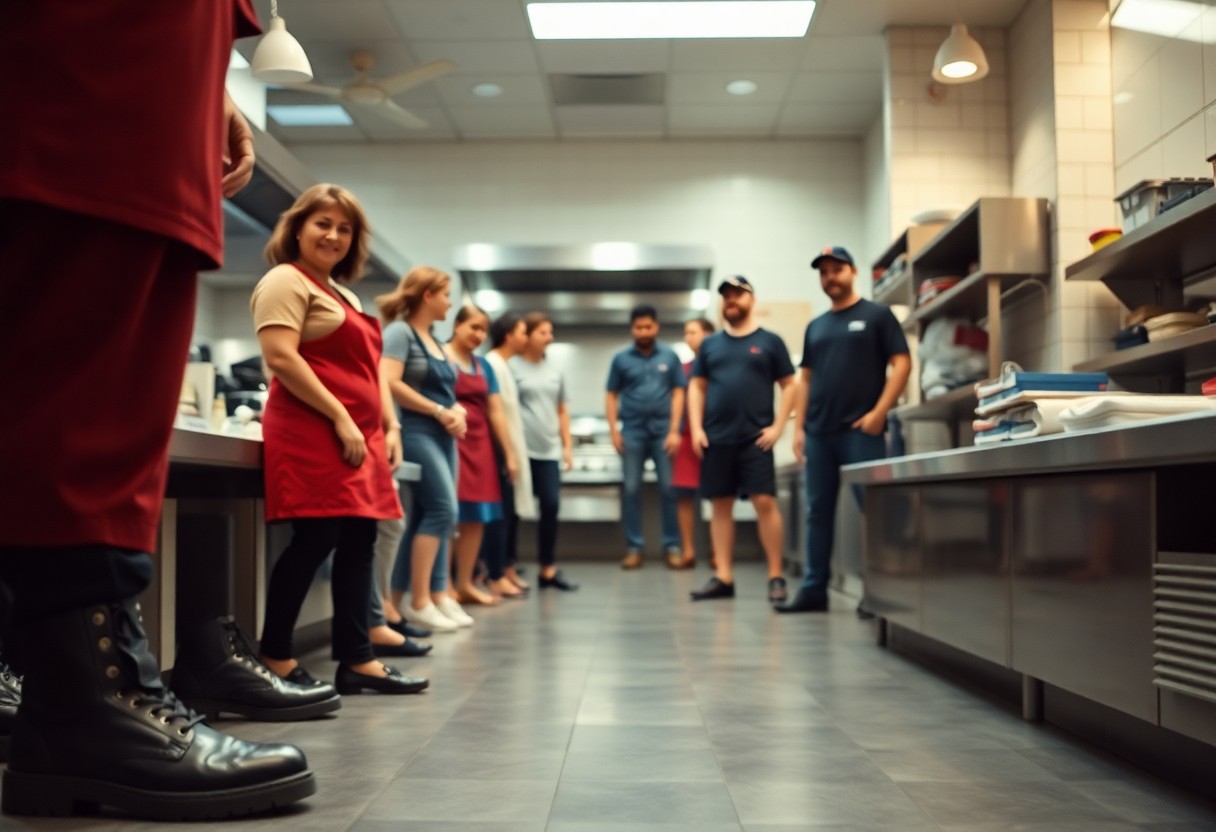
Material quality matters because food service shoes take a beating. Leather and durable synthetics are common for a reason: they tend to resist stains better, clean more easily, and last longer under daily exposure to spills and friction.
Fit matters just as much. A shoe that is too tight will create hot spots, toe pressure, and swelling pain by the end of a shift, while a shoe that is too loose can reduce stability. If sizing feels uncertain, use the width and fit guide before you buy.
For workers with wider feet, a roomy toe box and proper width are not minor details; they are often the difference between a shoe that feels fine for an hour and a shoe you can wear through a double shift. A second useful comparison is the article on finding shoes for wide feet.
How Long Food Service Shoes Usually Last
With daily restaurant use, many professional-grade shoes last roughly three to six months before traction, cushioning, or support starts to break down. The exact timeline depends on your workload, floor conditions, and how often you clean them.
Replace them sooner if you notice:
- Less traction on wet or greasy floors
- Flattened cushioning or aching feet after shorter shifts
- Visible sole separation or uneven wear
- Upper materials that stay stained, cracked, or hard to clean
If your shoes are showing these signs, replacing them is usually cheaper than pushing through pain or risking a slip. For a broader upkeep routine, the guide on how to prolong shoe lifespan is a practical next read.
Where Food Service Shoes Earn Their Value
A cheaper shoe can cost more if it wears out quickly or leaves you sore after every shift. The better value is usually the pair that balances traction, support, durability, and comfort without forcing you to compromise on safety.
That is especially true if you work long hours or split time between front-of-house and kitchen tasks. In those cases, the right shoe helps you move confidently, stay alert, and finish the shift with less strain.
Best next step
If you are buying now, compare non-slip options first, then narrow by fit and toe-box room. For shoppers who need a fuller fit check, the fit and width guide is the most useful companion piece.
For readers interested in minimal footwear as a work option, the posture and benefits discussion at barefoot shoes and posture can help you decide whether that direction fits your shift demands.
Common Questions About Food Service Shoes
What Shoes Are Good For Food Service Workers?
The best choice is usually a true non-slip work shoe with a stable outsole, enough cushioning for long shifts, and a fit that leaves room for natural foot movement.
What Type Of Shoes Should A Food Handler Wear?
A food handler should wear shoes that reduce slip risk, are easy to clean, and stay comfortable during extended standing and walking.
What Shoes Are Best For 12 Hour Shifts?
For 12-hour shifts, focus on a balanced shoe with reliable traction, moderate cushioning, low fatigue, and enough room to handle swelling later in the day.
In food service, the best shoe is the one that keeps you upright, supported, and comfortable from the first rush to closing time. Start with traction, then choose the pair that fits your foot shape and workload best.

Jessica Linford is an insightful author for My Shoes Finder, where she explores a wide array of general topics that resonate with everyday readers. With a passion for storytelling and a keen eye for detail, she brings a unique perspective to her writing, aiming to inform and inspire through her engaging content. Jessica’s diverse interests drive her curiosity, allowing her to connect with audiences on various subjects while sharing practical tips and relatable anecdotes.
See also:
 Xero Shoes For Nurses: Best Picks For 12-Hour Shifts
 Best Work Shoes For Wide Feet: Fit Tips And Workplace Picks
 Xero Shoes For Children In 2025: Fit, Safety, And Best Models
 Barefoot Shoes For Retail Workers: Comfort, Alignment, And Shift Endurance
 Heel Slip Explained: Why It Happens And How To Fix It
 Xero Shoes For Bunions: What Helps, What Doesn’t, And Which Models Fit Best

You make an excellent point about the critical role footwear plays in the food service industry. I’ve spent several years as a server and can definitely relate to the immense pressure our feet endure during those long shifts. It’s astonishing how much of our energy can get drained just from standing and moving around for hours, not to mention navigating slippery kitchen floors.
You’ve captured the experience perfectly. Feet really take a beating in the food service world, don’t they? It’s wild how much we underestimate the impact of being on our feet for hours. Those long shifts can feel like a marathon, and the combination of standing, moving quickly, and dodging spills makes it a real challenge.
Your experience highlights an important aspect of the food service industry that often goes unnoticed. The physical toll of being on your feet for extended periods can really take a hit on one’s energy and comfort. Many people might not realize that the right footwear can make a substantial difference, not only in personal comfort but also in overall job performance.
It’s so true that investing in the right footwear can make a world of difference in the food service industry! I remember when I first started as a server; I didn’t realize how much my shoes could affect my energy levels during a long shift. The right pair with non-slip soles completely revolutionized my experience, allowing me to focus on my tasks instead of aching feet.
You nailed it! The right footwear truly changes the game in the food service industry. It’s funny how something like shoes can have such a big impact on your day-to-day experience. When I was a server, I felt like a different person when I found my go-to pair with good arch support and non-slip soles.
You really hit on something important there. It’s interesting how often we overlook something as basic as footwear when it comes to comfort and performance in such a demanding job. Those long shifts can be tough, and a good pair of shoes really can make a world of difference both physically and mentally. I used to work in a café, and I remember how much I appreciated my non-slip shoes, especially during rush hours when the floor would get slippery.
I completely relate to your experience. When I started working in a busy restaurant, I learned pretty quickly just how much the right shoes matter. It’s interesting how often people overlook that aspect of the job. The long hours on your feet can really take a toll, and having non-slip soles is such a game changer, especially with all the spills and quick movements.
You nailed it! When I first started, I had this vision of gracefully swirling between tables like a ballerina. Reality check: I looked more like a newborn deer on ice. The right shoes? Game changer is an understatement. I learned that the hard way after a couple of shifts in trendy non-slip slippers that ended up being more slip than grip.
I can completely relate to what you’re saying about the importance of footwear in the food service industry. When I first started working in a similar role, I didn’t think much about my shoes either. I remember hopping from table to table and by the end of my shift, my feet felt like they were on fire. Switching to a pair that had decent arch support and non-slip soles really changed everything for me as well.
You’re spot on about the impact of good footwear in the food service world. It’s interesting how something as simple as a good pair of shoes can shift your entire day. I remember when I started working in a busy café; I learned quickly that comfort isn’t just about cushioning—non-slip soles were a game-changer. There’s something about feeling stable on your feet that just lets you dig into the work without distractions. Have you found any particular brands or styles that you swear by? It’s always helpful when others can share their go-to picks.
It’s interesting how something as seemingly simple as footwear can have such a profound impact on our day-to-day experiences, especially in high-energy environments like food service. I remember my own early days as a barista, and it didn’t take long for me to learn that the right shoes weren’t just a luxury; they were essential for surviving those long shifts. Non-slip soles are a game changer — not just for safety but also for comfort.
You’ve touched on such an important aspect of working in food service! The right footwear can really make a significant difference in how we handle those demanding shifts. I remember when I first started as a server; I underestimated the toll long hours on my feet would take. I eventually invested in a pair of shoes with a memory foam insole and slip-resistant soles, and I was amazed at how much more energized I felt by the end of the night.
You make a great point about the impact of footwear in food service. It’s easy to overlook until you experience those long shifts firsthand. I’ve seen many new servers go through the same realization you had about feeling drained by the end of the night.
You’re so right about how footwear can really change the game in food service. I remember my first few shifts, thinking I could get away with wearing some trendy but totally impractical shoes. By the end of the night, my feet were screaming, and I was just trying to make it to the finish line. It really made me appreciate the importance of investing in a good pair of shoes that offer proper support.
I can relate to that feeling, and if you’ve ever struggled with bunions during those long shifts, there’s some helpful advice out there about how the right footwear can really make a difference.
‘Xero Shoes for Bunions: 2025 Guide to Hallux Valgus Improvement’
https://myshoesfinder.com/xero-shoes-for-bunions-2025-improvement-guide/.
I totally get where you’re coming from. Those first few shifts are a real wake-up call, especially when you’re trying to balance style with comfort. Once the adrenaline wears off, you realize being on your feet all night is no joke. It’s amazing how much a good pair of shoes can change that experience.
It’s interesting how something as simple as footwear can have such a huge impact on our work experience in food service. I totally relate to your journey; I used to think that any sturdy pair of shoes would do, but after a few shifts, I realized how naive that was.
I can relate to your experience—finding the right shoes can truly change the game, especially for those of us on the move; I recently came across some great options for barefoot shoes that really prioritize comfort and mobility for digital nomads.
‘Top Barefoot Shoes for Digital Nomads: Comfort and Mobility on the Go’
https://myshoesfinder.com/best-barefoot-shoes-for-comfort-on-the-go/.
It’s funny how we often don’t think about the details until we feel the impact, right? I remember my early days in food service, convinced that just any sturdy sneaker would do. But those first few shifts taught me pretty quickly that comfort and support are game-changers—especially when you’re on your feet for hours.
You hit the nail on the head! It’s wild how much we take our feet for granted until they start staging a revolt by the end of a busy shift. Memory foam and slip-resistant soles? Major game-changers. It’s like walking on clouds that also happen to have superpowers against spills and mishaps.
You bring up such a good point about those unsung heroes – our feet. It’s so easy to forget about them until they start protesting after a long day. I’ve definitely felt the difference that memory foam can make; it’s like giving your feet a cozy hug. I remember when I first switched to slip-resistant soles at work. It felt like I had superpowers too, especially in a busy kitchen where spills are practically a daily occurrence.
It’s so true how easy it is to take our feet for granted until they remind us just how vital they are. I can relate to that “cozy hug” feeling with memory foam—it almost makes you want to stand longer just for the comfort of it. Finding the right footwear can really transform your day, especially in demanding environments like a kitchen where you’re on your feet for hours.
You know, your thoughts on foot comfort really resonate; I recently stumbled upon some insights that dive into stylish yet ergonomic footwear choices for office settings, making those long days a bit easier on our hardworking feet.
‘Xero Shoes for Office Workers: 2025 Ergonomic & Style Guide’
https://myshoesfinder.com/2025-ergonomic-style-guide-for-xero-shoes/.
Your experience really resonates with so many in the food service industry. Investing in the right shoes isn’t just a comfort decision; it’s a game changer for surviving those long shifts. Memory foam insoles and slip-resistant soles seem to be the gold standard for a reason.
You raise an important point about the critical role that appropriate footwear plays in the food service industry. As someone who has worked in various culinary environments, I can attest to the profound impact that choosing the right shoes can have on both safety and comfort during long shifts.
You’ve brought up such an important aspect of the food service industry that often gets overlooked—the role of proper footwear in enhancing our daily performance and well-being. As someone who’s spent countless hours on my feet in bustling kitchens, I can attest to the transformative power of the right pair of shoes. When I finally invested in high-quality, slip-resistant footwear with good arch support, it felt like a game changer. Not only did I notice a significant decrease in foot fatigue, but I also became more agile and confident on the job.
You’ve highlighted an often underestimated aspect of working in food service. The right footwear truly makes a significant difference in how we perform day-to-day. It’s interesting how something as simple as shoes can impact not just comfort but also overall confidence while navigating a hectic kitchen.
You’re so right about the shoes—it’s easy to overlook that detail when people talk about the intensity of working in food service. When I started in a busy kitchen, I realized quickly that a solid pair of shoes could mean the difference between a long shift feeling manageable or dragging my feet by the end.
You raise an important point about the critical role footwear plays in the food service industry. As someone who has spent several years working in various roles—from line cook to server—I can personally attest to how the right pair of shoes can make a significant difference in both comfort and performance during long shifts.
It’s great to hear your perspective as someone who has been on the ground. There’s just no underestimating the toll that those long shifts can take—not just mentally but physically. I imagine you’ve seen it all when it comes to the demands of the job.
You bring up a really good point about the impact that footwear has in the food service industry. I’ve often thought about how overlooked this aspect can be. When you’re in the thick of a long shift, every little detail matters, and having the right shoes can create a ripple effect on how the whole day goes.
You bring up a really good point about the impact that footwear has in the food service industry. I’ve often thought about how overlooked this aspect can be. When you’re in the thick of a long shift, every little detail matters, and having the right shoes can create a ripple effect on how the whole day goes.
Finding the perfect shoes for the food service industry is such an underrated topic! I remember my first few shifts in the kitchen; I never realized how much the right footwear could impact my energy levels and overall performance. Switching to shoes with non-slip technology and proper arch support made a world of difference. It’s fascinating how something so seemingly simple can enhance not just comfort but safety, especially in fast-paced environments where spills and long hours are a given.
You’re spot on about the impact of footwear in the kitchen. It’s interesting how something as basic as shoes can transform your experience on the line. Non-slip technology and arch support are game-changers, particularly in a setting where you’re constantly on your feet, navigating through hectic environments.
The emphasis on footwear in the food service industry often gets overlooked, yet it’s so crucial. From my own experience as a line cook, I remember the toll long shifts took on my feet with inadequate shoes. Switching to a pair with non-slip soles and proper arch support made a noticeable difference—not just in comfort, but in my overall productivity and energy levels.
You’ve highlighted an often-overlooked aspect of the food service industry—the importance of proper footwear! I remember my early days as a server; finding shoes that combined comfort and safety made all the difference in managing long shifts. Investing in quality shoes is not just about comfort; it also directly impacts our efficiency and ability to deliver great service without the distraction of foot pain.
Stepping into food service really does feel like entering a different world, doesn’t it? I’ve spent my fair share of shifts in both front and back of house roles, and I’ve learned that the right pair of shoes can literally make or break your experience. It’s not just about comfort; it’s about how footwear can affect your entire stance and movement throughout a bustling environment.
You really hit the nail on the head about the whole experience in food service. It’s a unique blend of chaos and camaraderie, isn’t it? I’ve also worn many hats—sometimes literally as a chef’s hat—and can’t agree more about the shoes.