
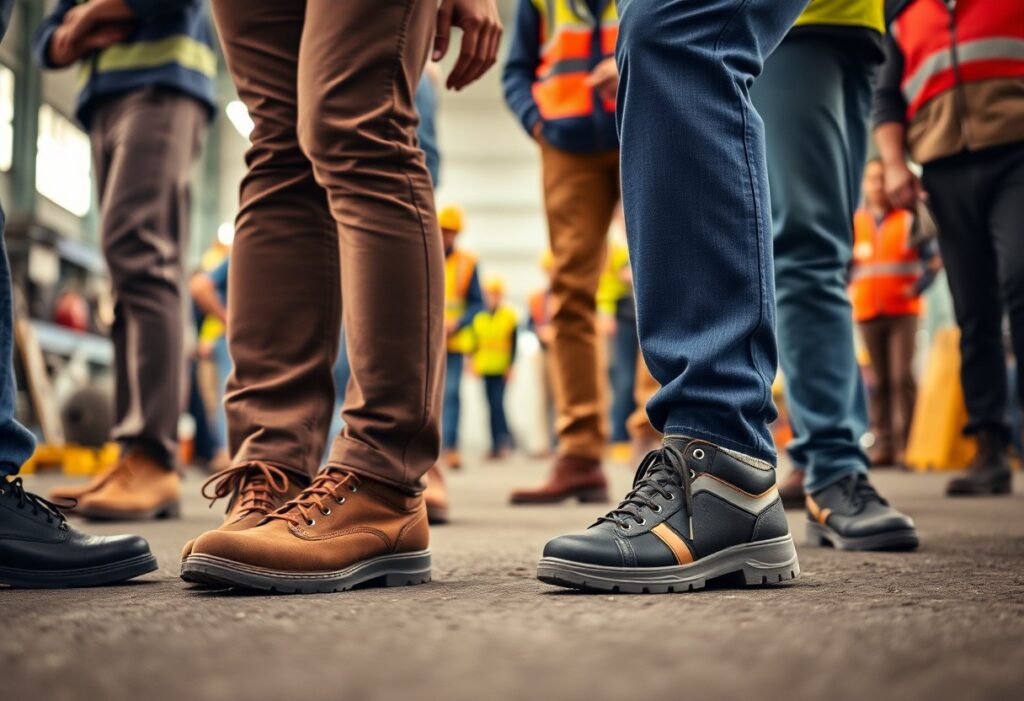
The right work shoe can change how stable you feel on your feet, how quickly you fatigue, and how exposed you are to slips and overuse injuries. That matters most in standing-heavy jobs, where the tradeoff between comfort, protection, and compliance is easy to underestimate.
If you need the broader workplace context first, the standing-professions guide is the better cluster page; this article focuses on the biomechanics behind that decision and where minimalist designs help, or fall short.
Quick decision: what kind of footwear fits the job?
| Minimalist Occupational Footwear | Best for long standing, indoor walking, and low-hazard environments where ground feel and balance matter. |
| General Occupational Shoes | Best for mixed-duty work when you need comfort plus moderate protection without a heavy safety-boot feel. |
| Steel-Toe Or Certified Safety Boots | Best when the job requires impact, compression, puncture, electrical, or site-specific compliance protection. |
Why Shoe Design Changes Stability At Work
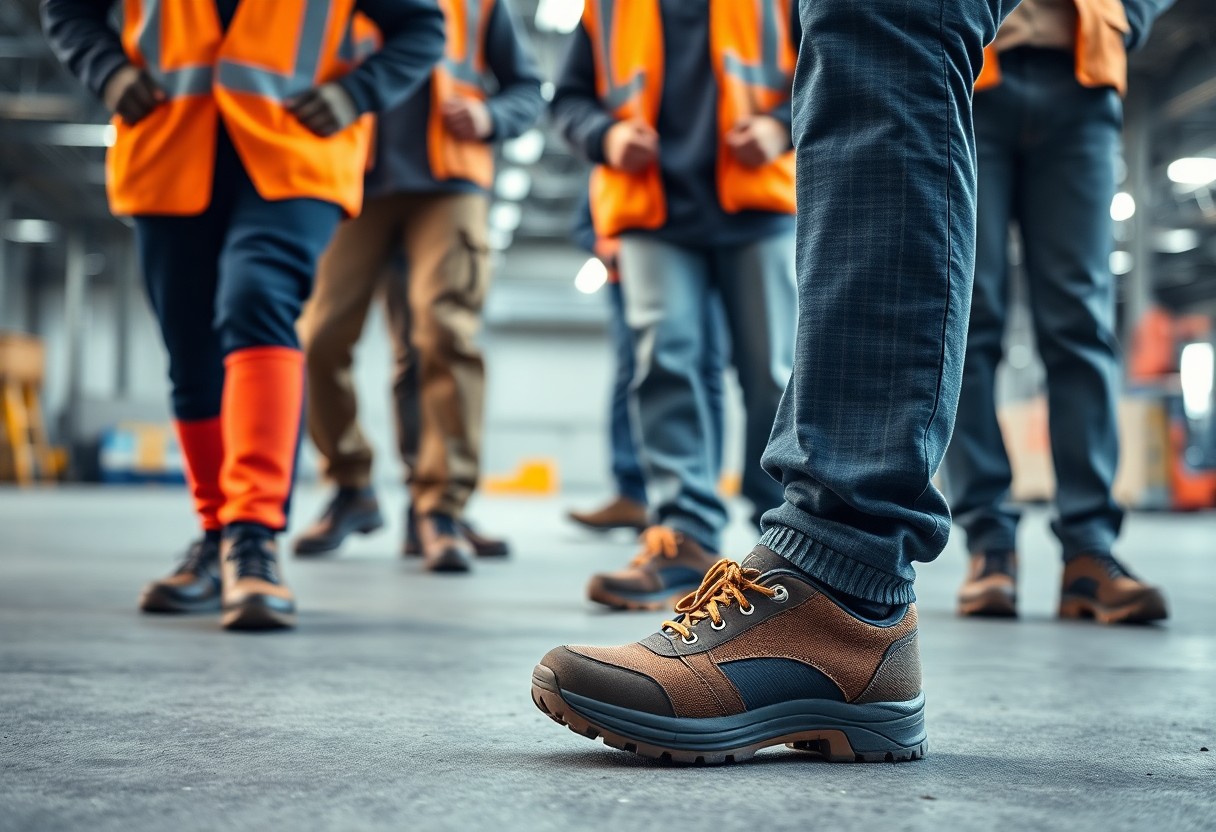
Occupational footwear affects how pressure moves under the foot, how much your body sways when you stand, and how your lower limbs absorb load during a shift. Those changes show up in Center of Pressure metrics, loading rates, and muscle activation patterns, which is why footwear is more than a comfort choice in a workplace setting.
In the available evidence, minimalist shoes often produce smaller sway areas and improved balance control during static standing tests. That does not mean they are the universal best option. It means their biomechanics can be favorable in low-hazard environments where the main task is standing, walking, or frequent position changes rather than exposure to impact or puncture risks.
Center Of Pressure Findings In Plain Language
| Footwear Type | Stability Signal | Workplace Takeaway |
| Minimalist shoes | 142.7 mm² sway area in the reported standing tests | Potentially steadier for standing workers in low-hazard settings |
| Steel-toe boots | 189.4 mm² sway area in the reported standing tests | Often chosen for protection first, not for maximum balance sensitivity |
| Medial-lateral excursion | Reduced by 18% in the minimalist group | Less side-to-side drift can help when you stand for long periods |
| Test condition | Static standing on a BTrackS™ platform | Useful for comparing postural control, but not the whole workplace picture |
The point of these measurements is not to crown a single winner. It is to show that when balance is the main concern, footwear geometry, sole thickness, toe-box width, and ground feedback can shift how stable the body feels while standing or moving slowly.
Where Minimalist Footwear Helps, And Where It Doesn’t
The strongest argument for minimalist footwear in the workplace is not that it replaces safety boots everywhere. It is that it may improve balance and reduce some overuse complaints in settings where heavy protective footwear is not required. That distinction matters because job demands, floor conditions, and compliance rules still set the boundary.
Practical read on the evidence
- Minimalist shoes were associated with fewer reported falls in the cited nursing example.
- They also showed lower knee pain reports in worker groups that spent long periods standing.
- Those benefits do not override site rules for toe protection, puncture resistance, or electrical hazard protection.
In real-world settings, surfaces matter. Dry floors, clean indoor environments, and predictable walking patterns are very different from oily shop floors, wet kitchens, or sites with falling-object hazards. A shoe that feels stable in one setting can be a poor fit in another if traction, protection, or durability is lacking.
That is where the safety comparison becomes more useful than the biomechanics alone. If you are deciding between a minimalist option and a certified boot, the most relevant question is not simply which shoe produces more ground feel. It is which shoe best matches the actual risk profile of the job.
For a more direct product-level comparison, the Xero shoes vs. steel-toe safety guide is the better next read when you are weighing protection requirements against comfort and mobility.
Real-World Performance: Traction, Materials, And Fatigue
Slip resistance remains one of the most important variables in injury prevention. The original data point here is useful because it shows how context changes the reading: minimalist shoes achieved a coefficient of friction of 0.78 on wet surfaces, which outperformed many conventional slip-resistant shoes in that specific test, but firefighter rubber boots reached 0.91 on oily surfaces, where the hazard profile is very different.
That means you should never choose occupational footwear from a single metric. Traction on wet tile, traction on oil, resistance to puncture, heat regulation, and toe protection all sit beside balance in the final decision. A shoe can be biomechanically efficient and still be the wrong option if the environment demands a certified safety package.
Materials Engineering Is Part Of The Safety Story
The article’s original material notes still matter. Michelin Fiber Lite outsoles, for example, were presented as outperforming penetration-resistance tests by an 18% margin, and phase-change materials were noted for thermal regulation in demanding environments. Those features do not magically make a minimalist shoe suitable for every site, but they do show that occupational footwear can improve when manufacturers combine protection with better movement mechanics.
Composite toe caps are another practical bridge. They can preserve toe protection while reducing some of the bulk that makes conventional safety footwear feel clumsy. For many workers, that kind of middle ground is more realistic than switching from a heavy boot to a fully minimalist design overnight.
What The Lower-Limb Data Suggests About Fatigue And Injury
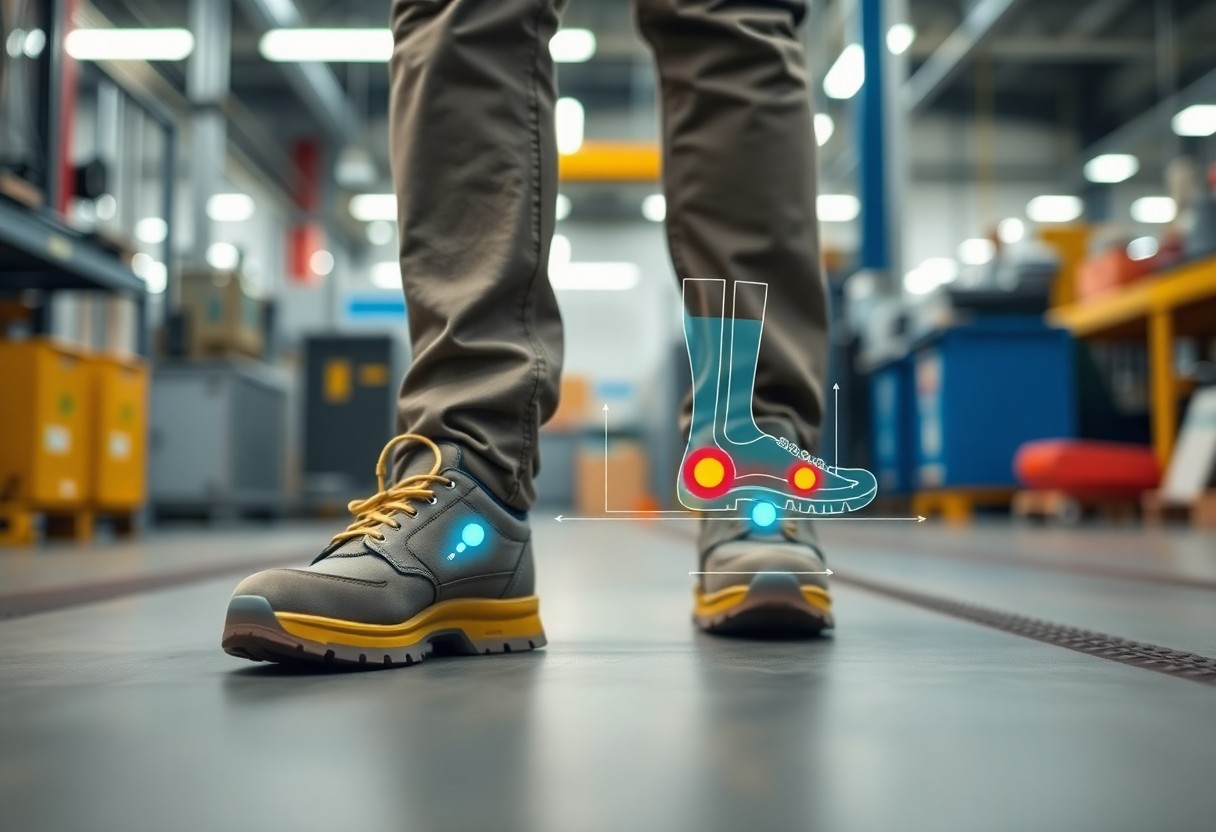
Footwear influences the full kinetic chain, not just the foot. When the sole is thinner and the toe box is less restrictive, the body often recruits muscles differently, and that can change how fatigue accumulates during a shift.
The original EMG and ground-reaction-force findings point in a clear direction: minimalist footwear can increase activation in stabilizing muscles and may support better foot control during repetitive work. The reported 29% increase in abductor hallucis activation and the change in tibialis anterior duty cycle from 43% to 57% during ladder climbing both suggest a more active foot and ankle strategy. In practical terms, that can help some workers feel more connected to the floor and less sloppy in their movement.
The same evidence also deserves a cautious reading. More muscle activity is not always better for every worker, especially during long shifts, rehabilitation, or tasks that already load the calves, arches, or knees heavily. The 2.1 bodyweights peak heel-strike force cited for extended nursing shifts shows that footwear and task structure interact in a way that can increase loading in some movements even as balance improves in others.
Over time, injury prevention is usually about the total pattern, not one lab result. The article’s longer-term data — fewer slip and fall incidents, lower plantar fasciitis incidence, and less knee cartilage loss in minimalist shoe wearers — suggests there may be a real health advantage in some standing professions. A five-year cohort rate of 2.1 plantar fasciitis cases per 100 workers versus 5.3 in traditional footwear is not trivial, and neither is the reported reduction in knee pain among warehouse employees.
Transitioning Without Creating New Problems
If a workplace wants to test minimalist occupational footwear, the transition should be phased. The original 12-week adaptation protocol is worth keeping because it recognizes that the body needs time to adjust. Jumping straight from a cushioned boot to a low-profile shoe can irritate the calves, feet, or plantar tissues before the worker has adapted.
A sensible rollout looks like this
- Start with short wear periods instead of full shifts.
- Add foot-strengthening work and monitor comfort at the arch, calf, and forefoot.
- Track slips, fatigue, and pain rather than relying on preference alone.
- Keep a fallback option for jobs that need more protection or stability support.
Compliance also depends on communication. Workers are more likely to accept a new footwear policy when managers explain why the change is being made, which hazards it addresses, and where the new shoe is not appropriate. Workshops, demonstrations, and peer mentoring all make sense because they turn a footwear change into a safety process rather than a fashion swap.
That is where the supporting workplace page can help most. If your team is building a broader footwear policy for standing-heavy roles, the standing-professions page is the cleaner starting point for deciding whether to test a barefoot-style or minimalist option at all.
When to choose which shoe
If the job is mostly standing or indoor walking, and the floor hazards are low, minimalist occupational footwear can be a reasonable test case. If the job includes impact risk, puncture risk, electrical exposure, slick contaminants, or explicit PPE rules, certified safety footwear should stay in the conversation first.
What The Evidence Means For Workers And Employers
The strongest value of this article is not that it proves minimalist shoes are “better.” It shows that occupational footwear can influence balance, loading, fatigue, and injury patterns in ways that matter to safety teams. For some workers, a lighter, wider, lower-profile shoe may improve postural control and reduce aches from long standing. For others, those same features may sacrifice necessary protection.
That is why the decision should start with the hazard, not the brand or the trend. Match the shoe to the floor, the task, and the compliance rule. Then use biomechanics to refine the fit, not to override the safety requirement.
Need the workplace-focused next step?
For a clearer entry point into standing-job footwear choices, open the dedicated guide to ergonomic barefoot footwear for standing professions. If you are comparing protection levels, use the steel-toe comparison guide before changing a safety policy.
Frequently Asked Questions
What Is Occupational Footwear?
Occupational footwear is work-appropriate footwear designed for standing, walking, and comfort in a workplace environment, sometimes with protection features depending on the job.
What Is The Difference Between Safety Footwear And Occupational Footwear?
Safety footwear is built to meet specific hazard requirements such as toe impact, compression, puncture, or electrical protection, while occupational footwear may prioritize comfort and slip resistance in lower-risk settings.
What Are The Osha Rules For Footwear?
OSHA requires employers to ensure that foot protection is used when hazards are present, and the exact footwear must match the specific workplace risk rather than a general style preference.
What Are Biomechanics Shoes?
Biomechanics shoes are designed to influence how the foot loads, moves, and stabilizes, often by changing sole thickness, toe-box shape, flexibility, or ground feedback.

Natalie Harper is a versatile author and content creator at My Shoes Finder, where she explores a wide range of general topics that resonate with diverse audiences. With a passion for storytelling and a keen eye for detail, Natalie crafts engaging articles that provide valuable insights and inspire readers. Her commitment to quality and relatability makes her work a trusted resource for those seeking both information and inspiration in their daily lives.
See also:
 Xero Shoes Vs Steel Toe: 2025 Workplace Safety Requirements Guide
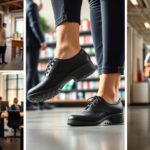 Barefoot Footwear For Standing Jobs: Is It The Right Work Shoe For Long Shifts?
 Barefoot Shoes For Retail Workers: Comfort, Alignment, And Shift Endurance
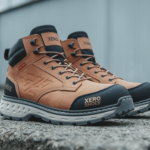 Xero Shoes Work Boots: Which Models Make Sense For Durability And Comfort?
 Best Work Shoes For Wide Feet: Fit Tips And Workplace Picks
 Are Xero Shoes Good For Standing All Day? Best Uses, Limits, And Comfort Tips
It’s interesting to see how footwear can impact not only comfort but also safety in the workplace. I’ve noticed that in my own experience, when I switched to a more minimalist design, it felt like I had a deeper connection to the ground, which definitely improved my balance during long shifts. It’s fascinating to think about how different types of shoes can influence postural stability metrics like Center of Pressure.
This topic is truly fascinating and resonates with me on multiple levels. As someone who has worked in various physically demanding roles, I’ve often experienced firsthand how the right footwear can dramatically impact both my performance and overall wellbeing. It’s remarkable how something we might consider trivial can play such a pivotal role in our daily work lives and long-term health outcomes.
It’s great to hear that this topic resonates with you. Your experience in physically demanding roles highlights an often-overlooked aspect of daily work life. The significance of the right footwear can’t be overstated; it’s fascinating how something as simple as a good pair of shoes can be a game changer for comfort and performance.
It really does make a difference, doesn’t it? I remember when I first started in a physically demanding role; I underestimated how vital proper footwear was. At times, it felt like a battle just to get through the day, and often, I found myself distracted by discomfort. Once I invested in a good pair of shoes specifically designed for my work environment, it changed the game.
I completely agree with you on the importance of the right footwear, especially in physically demanding roles. It’s interesting to consider how much our choice of shoes can affect not just our comfort, but also our overall productivity and wellbeing at work. I’ve found that when I wear shoes that don’t provide the right support, it can throw off my whole day – it’s almost like a domino effect.
I found your discussion on the impact of footwear on postural stability and injury prevention particularly thought-provoking. It’s fascinating how something as seemingly simple as a shoe can play such a pivotal role in our well-being, especially in physically demanding occupations. I can personally relate to this topic, as I once worked in a setting that required long hours on my feet, often leading to fatigue and discomfort due to inadequate footwear choices.
It’s really interesting to hear your take on the role of footwear in postural stability and injury prevention. Your experience resonates with many who have spent long hours on their feet. It’s surprising how often the shoes we wear are overlooked in discussions about well-being, especially when they can significantly affect not only comfort but also overall body mechanics.
You bring up such an interesting point about footwear and its surprising importance in the workplace. It made me reflect on my own experiences and the different types of shoes I’ve had over the years in various jobs. There really is a significant difference in how I feel at the end of the day when I choose the right shoes versus a poorly designed pair.
I find your insights on the impact of footwear on postural stability and injury prevention quite enlightening. It’s interesting how something as seemingly simple as shoe design can have profound effects on our overall safety and performance at work. The discussion around minimalist shoes versus traditional steel-toe boots certainly brings up some important considerations.
Reading through your insights on the impact of footwear on postural stability and injury prevention really resonated with me. The nuances of how a seemingly simple choice like footwear can influence both our physical health and performance at work are often overlooked. I’ve personally experienced the difference that the right shoes can make. After switching from heavy, traditional boots to a lighter, more minimalist design in my occupational setting, I noticed an improvement not only in my balance but also in my overall comfort throughout the day. It’s fascinating how our bodies can adjust and respond to something as foundational as our footwear.
Ah, the great footwear debate—a topic that can turn a casual discussion into an all-out philosophical quest for the most appropriate shoe. You raise a great point about how our choice in footwear can impact not only posture and balance but also overall job satisfaction and workplace safety. I’ve often wondered if my ‘user-friendly’ sneakers, which may be better suited for a leisurely stroll in the park, are truly fulfilling their duty when I’m trudging through a warehouse or dashing about the office.
You’ve hit on something interesting with your ‘user-friendly’ sneakers. It’s true that our footwear choices often reflect a blend of comfort and practicality, but when it comes to different environments—like a warehouse versus an office—things can get a bit tricky. While those sneakers feel great for a stroll, navigating different surfaces and the demands of a job might call for something more specialized.
I appreciate how you’ve tackled the often-overlooked role of footwear in workplace safety. It’s funny—when I think about my old steel-toe boots, the only stability they provided was in my bank account after splurging on pairs rather than a solid sense of balance!
It’s fascinating how often we overlook the impact of something as simple as footwear on our overall safety and functionality at work. I remember when I switched to minimalist shoes in my job, and the difference was noticeable—not just in my balance, but in my overall comfort during long shifts.
Your exploration of the impact of footwear on postural stability and injury prevention in the workplace raises several important considerations, particularly as we navigate the delicate balance between comfort, safety, and performance. While I find the advocacy for minimalist designs compelling, the interplay between personal choice and industry-specific requirements, especially concerning traditional steel-toe boots, is a vital issue that merits deeper discussion.
Your exploration of footwear’s impact on postural stability and injury prevention in occupational settings raises some important considerations. I’ve witnessed firsthand the struggles workers face when wearing traditional footwear that may not accommodate the unique demands of their roles. In my previous experience in a warehouse, for instance, switching to a lightweight, minimalist shoe significantly improved my comfort and agility, ultimately enhancing my day-to-day performance.
This topic resonates deeply with me, especially since I’ve experienced the transformative impact of proper footwear firsthand. When I transitioned to a more minimalist shoe design in my own job, I noticed not just a difference in comfort, but also in how it improved my posture and balance during long shifts.
It’s great to hear how effectively the shift to a minimalist shoe design has worked for you. It’s interesting how something as simple as footwear can ripple through various aspects of our daily lives. When I switched to minimalist shoes myself, I was surprised by the subtle ways they changed my experience, too.
It’s interesting to hear about your experience with minimalist footwear—it seems like such a simple change can lead to significant improvements in how we feel throughout our busy days. Many people may not realize how much their choice in shoes can affect not only comfort but also things like posture and balance.
Your insights on the impact of footwear on postural stability and injury prevention truly resonate with me, especially as I reflect on my own experiences in various work environments. It’s fascinating how something as seemingly simple as the shoes we wear can play such a crucial role in our overall performance, health, and safety on the job.
It’s interesting that you mention the impact of footwear on postural stability and injury prevention. I’ve noticed that my own experiences in different work environments are often influenced by the shoes I’m wearing. In more physically demanding roles, the right footwear has made a noticeable difference in how I feel at the end of the day—it’s not just about comfort, but also how balanced and stable I feel on my feet.
I appreciate your exploration of footwear’s impact on postural stability—it’s a topic that rarely gets the attention it deserves! I’ve personally experienced how switching to more minimalist shoes made a noticeable difference in my balance and comfort during long shifts at work, especially when I had to be on my feet all day.
This topic really resonates with me! I’ve always noticed how the right footwear can make a world of difference in my daily routine, especially during long shifts in a busy restaurant. Switching to a more minimalist shoe has certainly helped my comfort level and reduced some of that nagging knee pain. It’s fascinating to hear how the Center of Pressure metrics back this up scientifically.
Your discussion on the impact of footwear on balance and injury prevention really resonates with me. I’ve often found that many workers overlook how important their choice of footwear can be in influencing not just comfort but overall workplace safety. A personal experience comes to mind: a few years ago, I switched to a more minimalist shoe for my active job, and the change in my posture and stability was remarkable. I noticed less fatigue at the end of the day, suggesting that our feet are a critical foundation for our whole body.
It’s great to hear your thoughts on the importance of footwear for workplace safety. Your experience with switching to minimalist shoes really highlights how profound the impact of our footwear can be. It’s interesting how something we often take for granted can really change the way we feel throughout the day.
This is such an intriguing topic, especially as more workplaces are becoming aware of the importance of ergonomics! I’ve always felt that the right footwear is a game-changer. A few months back, I switched to a pair of minimalist shoes for my job in a fast-paced retail environment, and I definitely noticed an improvement in my foot and knee comfort.
You’ve made an excellent point about footwear—it really can make a significant difference, especially in a high-energy environment like retail. Many people overlook how their shoes impact not just comfort but their overall well-being throughout the day. Minimalist shoes can promote a more natural stride and may help with balance and stability, which is particularly important when you’re on your feet for long hours.
Your insights into the critical role of footwear in postural stability and injury prevention really resonate with me. It’s remarkable how often the subtleties of our daily choices, like what we wear on our feet, can have such far-reaching effects on our health and safety at work. I’ve personally experienced the differences that footwear can make, especially in environments where one is on their feet for long periods. In my own case, a switch to more supportive and minimalist shoes significantly improved my comfort and reduced my fatigue throughout the workday.
It’s fascinating to see how something as seemingly straightforward as footwear can impact our overall health and safety at work. I’ve noticed that when I switch to minimalist shoes during work, I feel a noticeable difference in my balance and energy levels throughout the day. It’s as if the shoes allow me to connect more with the ground, enhancing my stability, especially during long shifts.
It’s fascinating to see how crucial footwear is for our overall well-being at work. I’ve always thought about how my choice of shoes impacts my comfort, but the connection to postural stability and injury prevention is deeper than I realized! I remember a colleague who switched to minimalist shoes and mentioned a noticeable decrease in knee pain, which made me curious about the science behind it.
I totally agree that the right footwear is often overlooked when it comes to workplace safety and comfort. I switched to a pair of minimalist shoes a while back, and I was surprised at how much better my balance felt, especially during long shifts on my feet. It’s interesting how our shoes can change our biomechanics so much.
This topic raises some compelling points about the intersection of footwear design and occupational safety. I’ve often found myself juggling preferences between comfort and compliance with safety standards. As someone who works in a field that requires protective gear, I’ve experienced the cumbersome nature of traditional steel-toe boots first-hand. Despite their protective advantages, these can sometimes hinder agility and contribute to fatigue over long shifts.
I really appreciate this exploration of footwear’s impact on balance and injury prevention. It resonates with my experience; I’ve noticed that switching to more minimalist shoes has significantly improved my own stability during long days at work. However, I also find it interesting how challenging it can be in certain industries to balance safety standards with comfort.