
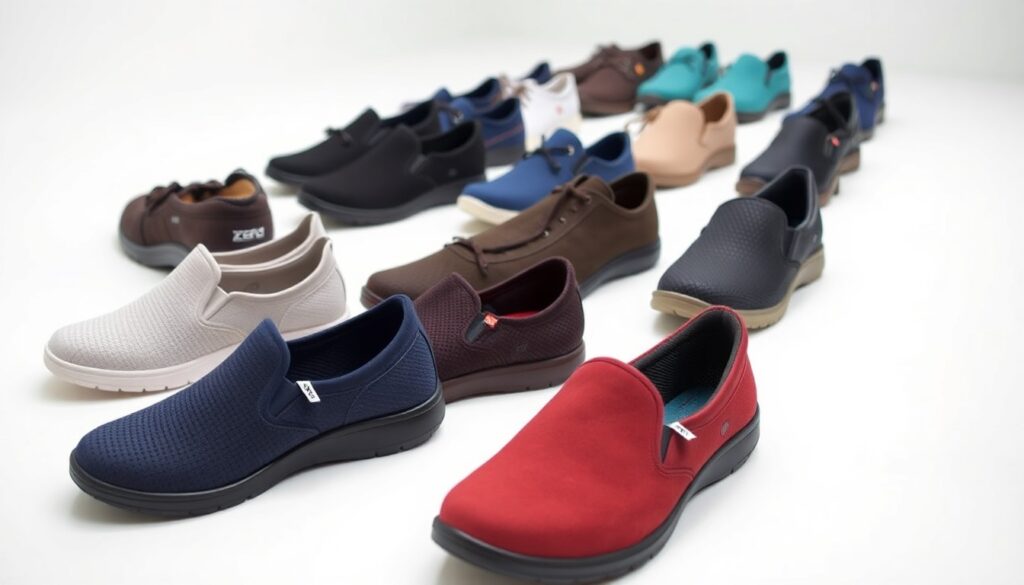
If you want the most cushioned Xero Shoes, the short answer is that a few models stand out for offering noticeably more underfoot protection without losing the brand’s barefoot feel. For a broader comparison across the brand, see our best Xero shoes buying guide, but this page stays focused on cushioning alone.
Top cushioned models:HFS II for road running, Prio for all-around wear, and Z-Trail for sandal-style comfort on warm-weather walks and hikes.
If your priority is maximum ground protection inside the Xero lineup, start with these models before moving to lower-profile options.
How Xero cushioning actually works
Xero Shoes are built around a minimalist philosophy, so “more cushion” still means something different here than it does in a conventional running shoe. The main levers are sole thickness, outsole material, and the way the platform manages pressure under the foot. A cushier Xero model usually gives you more protection from repeated impact and rough surfaces, but it still aims to keep your foot close to the ground.
That balance matters if you are deciding between Xero models. A shoe can feel soft enough for long walks or easy runs while still preserving the brand’s wide toe box and low-drop feel. If you want a deeper brand overview alongside this cushion-focused comparison, the Xero Shoes exploration guide provides the broader context without replacing this model-by-model decision.
Sole thickness
Thicker soles usually create the most noticeable comfort boost, especially on pavement, concrete, and longer walks.
Material feel
Some midsoles and footbeds feel softer under load, while others feel firmer and more responsive even at similar thicknesses.
Use case
The cushiest-feeling Xero model for a runner may not be the same one that feels best for hiking or standing all day.
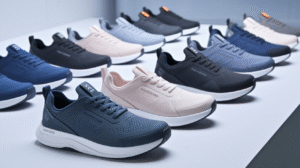
Which Xero models are the most cushioned?
The most cushioned Xero options generally fall into two groups: road-oriented shoes with a little more stack and protective feel, and lifestyle or trail choices that trade the thinnest barefoot sensation for a calmer ride. That is why the HFS II, Prio, and Z-Trail keep coming up in cushion discussions.
HFS II: the cushiest road-ready pick
If your main goal is a more forgiving ride for running or all-day pavement use, the HFS II is one of the best places to start. It keeps the low-drop, natural-foot design that Xero fans want, but it is built to feel more protective than the lightest-feeling models.
Best fit: runners who want comfort without jumping to a heavily padded trainer.
Prio: the safest all-around comfort choice
The Prio is a strong middle ground. It is not the softest-feeling shoe in the market, but inside the Xero range it offers a comfort profile that works for walking, training, commuting, and long hours on your feet. Many buyers end up here because it gives cushion without feeling overly specialized.
Best fit: people who want one Xero pair that can do most things reasonably well.
Z-Trail: the cushier sandal-style option
For warm weather, travel, and easy trail use, the Z-Trail gives you a softer ride than many minimalist sandals while staying light and airy. It is not a running shoe, but it belongs in a cushioned-Xero conversation because it can feel much friendlier than ultra-thin sandal platforms on longer outings.
Best fit: hikers and travelers who prefer a sandal but still want some underfoot protection.
What more cushioning gives you, and what it takes away
More cushioning can make Xero Shoes easier to wear for longer sessions, especially if you are transitioning from traditional footwear or spending more time on hard surfaces. It can also reduce the abruptness you feel underfoot on rough pavement, which is one reason many first-time minimal-shoe buyers prefer the cushier end of the lineup.
The tradeoff is that extra cushion usually softens the ground feel that minimalist fans like. You may get less proprioception, less direct feedback from the surface, and a slightly less agile sensation during quick movements. That is not necessarily a downside if your priority is all-day comfort, but it is worth understanding before you buy.
Best reasons to choose a cushier Xero model
- you walk or stand on hard surfaces for long periods
- you are transitioning from conventional shoes and want an easier start
- you want a little more protection for repetitive running or travel days
- you still want a wide toe box and low-drop feel, but not the thinnest setup
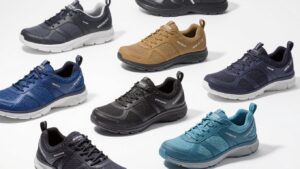
How to choose the right amount of cushioning
The best cushioned Xero for you depends on how your feet react to distance, surface, and pace. A model that feels ideal for recovery walks might feel dull on fast runs, while a lighter-feeling shoe that works for road running may not be the best choice for standing all day.
Choose more cushion if you
are newer to barefoot-style shoes, need more comfort on concrete, or want less fatigue over longer sessions.
Choose a middle-ground model if you
want one pair that can cover commuting, light training, and casual wear without feeling extreme in either direction.
If you are comparing fit and comfort side by side, the broader sizing and fit resources can help you narrow the final choice. Start with the Xero sizing guide and then compare the cushioning level against your intended use.
Want the broader Xero buying view?
If you need to compare cushioned models against the rest of the lineup, the main buying guide is the better next stop.
Related Xero comparisons worth reading next
If you are deciding between comfort-focused Xero models, it helps to compare the shoe against other use cases rather than chasing cushion alone. The Prio review is useful if you are leaning toward an everyday option, while the women’s comfort guide can help if fit and all-day wear matter more than pure stack height.
For activity-specific buyers, the comparison gets even more useful. If you want a cushier Xero for the court, start with the pickleball recommendations; if you want a shoe you can wear while traveling, browsing the Singapore buying guide can give you a cleaner lifestyle-focused comparison.
Frequently asked questions
Which Xero shoe has the most cushioning?
For most shoppers, the cushiest-feeling Xero choices are the HFS II for running, the Prio for everyday wear, and the Z-Trail for sandal-style comfort.
Is too much cushioning bad for feet?
Not necessarily, but too much cushion can reduce ground feedback and make it harder to sense how your foot is moving, which some minimalist-shoe wearers want to avoid.
What hiking shoe has the most cushioning in Xero’s lineup?
For hiking, the cushier Xero choices tend to be the models built with more protection underfoot, especially the Z-Trail for warm-weather use and trail days that do not need a heavy boot.
Who should avoid zero drop shoes?
Anyone with a foot issue, injury history, or tolerance problem should ease in carefully and consider professional guidance before switching fully to zero-drop footwear.
Do cushioned Xero Shoes still feel minimalist?
Yes, usually more than conventional shoes. Even the cushier Xero models still prioritize flexibility, wide toe room, and a close-to-ground ride.

Natalie Harper is a versatile author and content creator at My Shoes Finder, where she explores a wide range of general topics that resonate with diverse audiences. With a passion for storytelling and a keen eye for detail, Natalie crafts engaging articles that provide valuable insights and inspire readers. Her commitment to quality and relatability makes her work a trusted resource for those seeking both information and inspiration in their daily lives.
See also:
 Best Barefoot Shoes For Teachers: All-Day Comfort In The Classroom
 Barefoot Shoes For Retail Workers: Comfort, Alignment, And Shift Endurance
 Xero Shoes For Bunions: What Helps, What Doesn’t, And Which Models Fit Best
 Xero Shoes For Nurses: Best Picks For 12-Hour Shifts
 Hfs Original Vs. Hfs Ii: Which Xero Hfs Is Better For You?
 Widest Xero Shoes for Wide Feet: Models & Fit Guide
It’s fascinating how Xero Shoes are redefining our understanding of footwear through their minimalist design. I’ve personally noticed how transitioning to more barefoot-style shoes has positively impacted my foot strength and overall balance, especially during runs. It’s interesting to consider how much our footwear choices can influence our biomechanics and even our athletic performance.
You raise some interesting points about the impact of minimalist footwear on foot strength and balance. I’ve had a similar journey with my own choice of shoes, especially during my runs. I noticed that switching to a more barefoot-style shoe not only improved my foot mechanics but also offered a more connected feel to the ground, which, in turn, made me more aware of my posture and stride.
I totally relate to your experience; I recently came across some insights on how barefoot shoes can really enhance not just foot strength but overall athletic performance, and it’s definitely worth checking out for anyone considering the switch.
‘The Science Behind Barefoot Shoes: Why Making the Switch Matters’
https://myshoesfinder.com/the-science-of-barefoot-shoes-and-their-benefits/.
Your experience resonates with me on so many levels. Transitioning to barefoot-style shoes can really redefine our relationship with running and movement in general. I think it’s fascinating how something as simple as footwear can have such a profound impact on our awareness of posture and stride.
You really hit on an important point about how our choice of footwear extends beyond just aesthetics—it’s a game-changer for how we connect with our bodies during movement. When I started wearing barefoot-style shoes, I noticed that my awareness of my body shifted dramatically. Suddenly, I was more in tune with each step, feeling the ground beneath me in a way that traditional shoes simply didn’t allow.
It’s really interesting to hear about your experience with Xero Shoes. I completely agree that minimalist footwear can change the game when it comes to foot strength and balance. I made the switch to barefoot-style shoes a while back, too, and I’ve noticed similar benefits. It’s remarkable how our bodies can adapt when we give them the right tools—or, in this case, the right shoes.
I love how you’ve captured the essence of what Xero Shoes offer! It’s like they’re urging our feet to break free from the shackles of conventional footwear and dance in the moonlight—hopefully without stepping on any sharp objects, of course! I’ve been dabbling in minimalist footwear for a while now, and let me tell you, it’s a game-changer.
It’s really inspiring to hear how much you connect with the essence of Xero Shoes. There’s something so liberating about minimalist footwear, isn’t there? It’s almost like rediscovering what our feet were meant to do—move naturally, feel the ground beneath us, and ultimately be more in tune with our bodies.
I appreciate your detailed exploration of Xero Shoes and their unique approach to footwear. I’ve found that the minimalist design really does enhance my connection to the ground, especially during trail runs where feeling the terrain can significantly impact my performance.
It’s interesting to hear how you feel about the connection to the ground with Xero Shoes, especially on trails. That tactile experience can certainly change the way you run. Many people report that when they can feel the terrain more directly, it helps them adapt their movements, adjust their balance, and ultimately improve their speed and efficiency.
I’ve always been a fan of the “barefoot” vibe, but my feet have protested more than a toddler refusing broccoli! Xero Shoes have been a game-changer, though. It’s like my feet are throwing a little party—no shoes allowed, just the right amount of cushion to survive a casual stroll (or, you know, sprinting after the ice cream truck).
It’s fascinating how Xero Shoes have tapped into the growing interest in natural movement and minimalist footwear. Personally, I’ve transitioned to barefoot-style shoes over the past year and noticed a significant improvement in my foot strength and overall stability during my workouts. The concept of mimicking the barefoot experience goes beyond just athleticism; it connects to a broader awareness of how modern lifestyles can distance us from our body’s natural capabilities.
I really appreciate how you highlighted the unique approach of Xero Shoes in promoting natural foot movement! I’ve been on a journey to find footwear that supports my active lifestyle, especially as a runner and outdoor enthusiast. Transitioning to minimalist shoes like these has profoundly changed my connection to the ground and my overall biomechanics.
It’s interesting to see how Xero Shoes are revitalizing the conversation around minimalist footwear. As someone who has made the switch to a more barefoot-like shoe, I’ve noticed not only an improvement in my foot strength but also a significant change in my overall posture and running mechanics. There’s something liberating about being able to feel the ground beneath your feet, and it’s fascinating how that can translate into enhanced athletic performance.
It’s great to hear about your experience with minimalist footwear. The shift to a barefoot-like shoe can feel like such a game-changer, especially when you start to notice improvements not just in foot strength but in overall body mechanics. Feeling the ground beneath your feet really does foster a connection that many traditional shoes just can’t replicate.
The exploration of minimalist footwear like Xero Shoes resonates deeply with the growing trend towards natural movement and foot health. I appreciate how your article highlights the balance between protection and the barefoot experience. Personally, I have found that transitioning to minimalist footwear has significantly improved my foot strength and overall balance, especially during activities like running and hiking.
Your exploration of Xero Shoes and their innovative cushioning really resonates with me, especially considering the growing trend towards minimalist footwear in today’s fitness culture. I’ve recently transitioned to a more barefoot-inspired shoe for my daily runs, and I’ve noticed a significant difference in my foot strength and overall running form.
I really appreciate how you broke down the cushioning options in Xero Shoes! I’ve been transitioning to barefoot footwear myself, and it’s been eye-opening. The way these shoes let my feet engage naturally with the ground has been a game changer for my runs. I used to have knee pain, but since switching to minimalist shoes, I’ve noticed a significant decrease.
I’m glad to hear that your transition to barefoot footwear is going so well! It’s interesting how our bodies often adapt and start to thrive when given the chance to move more naturally. Knee pain can be really frustrating, and it’s great that switching to minimalist shoes has made a difference for you.
It’s intriguing to see such a detailed exploration of Xero Shoes and their innovative approach to minimalist footwear. The emphasis on natural foot movement really resonates with me, especially considering how many people are becoming more conscious about the health of their feet and the impact of traditional footwear. I’ve noticed that since transitioning to minimalist shoes, my own foot strength has improved significantly, reducing the occurrences of the common aches I used to experience with conventional shoes.
It’s fascinating how Xero Shoes are reshaping the perception of footwear in a world increasingly enamored with minimalist approaches. The emphasis on natural foot movement and biomechanics feels like a breath of fresh air, especially for anyone who has spent countless hours in conventional shoes that often constrict rather than support our natural anatomy.
I appreciate your exploration of Xero Shoes and the innovative approach they take toward minimalist footwear. As someone who’s transitioned to barefoot-style shoes over the past couple of years, I’ve experienced firsthand the advantages of promoting natural foot movement. The way these shoes allow for a more inherent connection with the ground has transformed my running and daily walks.
The exploration of Xero Shoes and their innovative cushioning options is a compelling topic, particularly as the demand for minimalist footwear continues to rise among various athletic communities. I’ve personally found that making the transition to barefoot-style shoes has significantly improved my overall foot strength and alignment. It’s fascinating how these designs, by mimicking the natural movement of our feet, can enhance not only performance but also reduce the risk of common injuries associated with traditional footwear.
I really appreciate your insights on Xero Shoes and their innovative cushioning! I’ve been exploring minimalist footwear lately and have found that transitioning to barefoot-style shoes has significantly improved my running form. It’s fascinating how the extra ground connection can enhance proprioception.
It’s interesting to see how Xero Shoes are resonating with so many people looking to enhance their connection to the ground while maintaining foot health. I’ve been experimenting with minimalist footwear for a while now, and I’ve noticed a significant difference not just in comfort, but also in my running form and balance. It’s fascinating how a shoe designed for a more natural foot movement can actually encourage better biomechanics and strengthen the feet over time.
It’s fascinating to see the growing interest in minimalist footwear like Xero Shoes. The emphasis on natural foot movement aligns well with the increasing awareness around holistic health approaches. In my personal experience, transitioning to minimalist shoes has not only improved my running technique but also helped alleviate some chronic foot issues I had with more traditional footwear.
It’s interesting to see the growing emphasis on minimalist footwear like Xero Shoes in an age where many still cling to heavily cushioned athletic shoes. While the idea of mimicking the natural feeling of being barefoot is appealing, I do wonder about the long-term effects for those who are new to this type of footwear. Transitioning from traditional shoes to minimalist options might lead to injuries if not done gradually—a concern echoed in various running communities.
I love how you’ve highlighted the unique cushioning options in Xero Shoes! As someone who started running more barefoot and noticed a huge difference in my foot strength and overall comfort, I can really appreciate what these shoes bring to the table. It’s interesting how minimalist footwear is shifting our approach to running and exercising, reminding us that our bodies are designed for natural movement. Have you experimented with a particular model that really stands out for its cushioning? I’m curious if you feel they truly bridge the gap between protection and that barefoot experience. Also, it seems more people are becoming aware of how conventional shoes can impact foot health—do you think this trend is leading to a broader acceptance of minimalist footwear?
I appreciate your perspective on Xero Shoes and the benefits of barefoot running. It’s fascinating how making that switch can change everything, like reconnecting with how our bodies are meant to move.
It’s fascinating to see how minimalist footwear like Xero Shoes is becoming more mainstream among fitness enthusiasts and everyday users alike. The emphasis on natural foot movement really resonates with the growing trend towards holistic well-being and back-to-basics approaches in health and fitness. Personally, I’ve noticed that transitioning to shoes that promote a more natural gait has significantly improved my foot strength and overall comfort during long runs.
It’s really interesting to hear how switching to minimalist footwear has worked for you. I’ve experienced similar benefits since making the transition myself. It’s surprising how much better I feel running in shoes that allow for natural foot movement. I also appreciate how this trend ties into a broader shift towards grounding ourselves in more natural practices in our daily lives.
I appreciate the focus on Xero Shoes and their innovative approach to minimalist footwear. As someone who has transitioned to a more natural running style, I’ve found that the right footwear makes a significant difference in performance and comfort. The cushioning options you highlighted are particularly intriguing; finding that perfect balance between protection and ground feel can be a challenge.
I’ve been really curious about Xero Shoes ever since I heard about the minimalist shoe trend. It’s fascinating how many people are shifting toward that barefoot feeling, especially runners and hikers. I think what stands out to me is how they blend modern technology with the idea of returning to our roots—literally!
It’s interesting how the minimalist shoe trend has sparked so much curiosity and conversation. Xero Shoes is a great example of how brands are experimenting with this blend of modern technology and our more natural ways of moving. Many people find the transition to minimalist footwear to be quite liberating, especially runners and hikers who are looking to reconnect with the ground beneath their feet.
I appreciate the insights you’ve shared about Xero Shoes and their innovative approach to minimal footwear. The emphasis on mimicking the natural state of our feet really resonates with me, particularly in a time when many people are beginning to prioritize natural movement over conventional footwear.
I find it so refreshing to see a shift toward prioritizing how our feet naturally function. The way Xero Shoes emphasizes that natural state aligns perfectly with the growing interest in movement-based lifestyles and overall wellness. I’ve noticed that more people are beginning to appreciate the benefits of minimal footwear—not just for their feet, but for their entire body mechanics.
Ah, the age-old debate: to shoe or not to shoe? I’ve wandered the minimalist path for a while now, and I can’t help but chuckle at the misconceptions that surround barefoot footwear. When I first slipped on a pair of Xero Shoes, it was like discovering that being barefoot while maintaining a fashionable appearance was a thing! Who knew I could channel my inner caveman while still looking like I belong in this century?
It’s fascinating how Xero Shoes blends minimalist design with innovative cushioning to support our natural foot movements. I’ve been experimenting with more barefoot-like footwear lately, and I’ve noticed a significant improvement in my foot strength and overall comfort during my runs. It feels liberating to connect more directly with the ground!
It’s interesting to read about the emphasis Xero Shoes places on mimicking the barefoot experience while providing cushioning. As someone who has transitioned from traditional running shoes to minimalist footwear, I’ve noticed significant changes in my own foot strength and overall comfort. The reduction in weight and the flexible design of these shoes have really allowed me to feel more connected to the ground, enhancing my running efficiency.
It’s cool to hear about your experience transitioning to minimalist footwear. The shift really does have a profound impact on how we connect with the ground. I think a lot of people overlook how much our shoes can influence our running form and overall comfort.
I completely agree—it’s fascinating how our footwear can shape not just our running form but also our overall comfort and even our mindset during exercise. When I made the transition to minimalist shoes, I initially underestimated the adjustment period. It took time to recalibrate my running style, but it was eye-opening to see how my connection to the ground changed.
I have to say, the idea of mimicking the barefoot experience sounds like a game-changer! I mean, who knew that our feet could feel this liberated? The last time I felt this free was at a beach bonfire, attempting to dance in the sand—let’s just say the sand had its own choreography.