
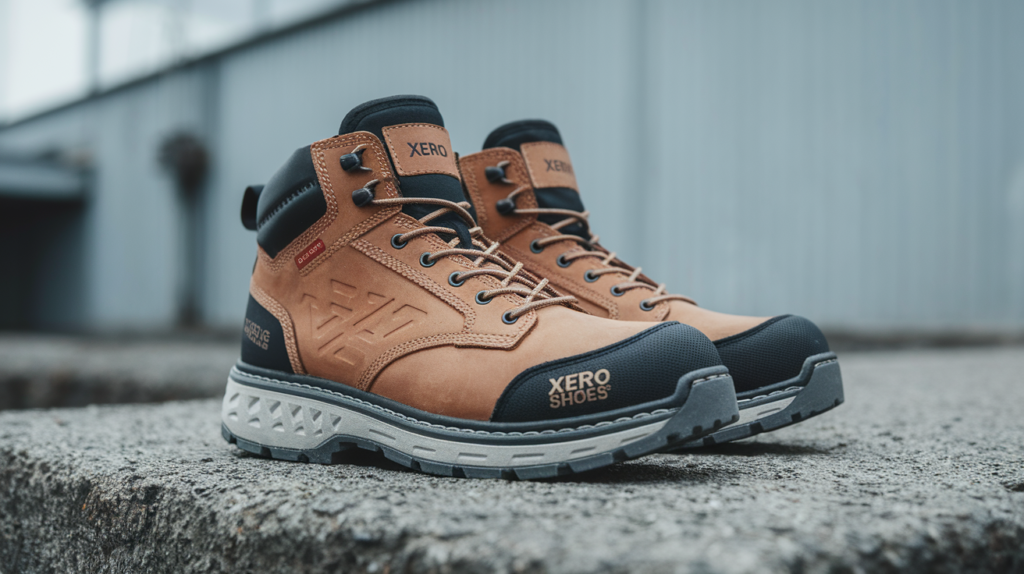
If you’re looking at Xero Shoes for work, the real question is not whether they feel light—it’s whether they can handle your job site, your shift length, and the level of protection you actually need. For many wearers, that makes Xero a strong comfort-first option, but not a universal replacement for traditional safety boots.
Quick decision
Choose Xero work-boot styles if your priority is all-day comfort, ground feel, and a wide toe box. If your job requires a steel toe, strict EH/ASTM protection, or heavy impact resistance, compare first with our Xero Shoes vs. steel-toe safety guide before you buy.
For readers comparing different Xero categories, the dominant buying path on this site is the broader Xero Shoes near-me and store guide; this article stays narrower and focuses on work-day fit, durability, and comfort tradeoffs.
Which Xero Shoes Are Most Realistic For Work?
Xero’s boot lineup is best understood as minimalist workwear rather than full protective equipment. That distinction matters because many buyers search for “Xero work boots” expecting a traditional safety boot with a soft feel, when the better fit is often a lightweight boot for warehouse shifts, light construction, delivery work, travel, or standing all day on hard floors.
If you want a deeper look at the brand’s construction and wear patterns, pair this article with Xero Shoes durability and lifespan explained. That page helps frame how long Xero footwear typically lasts, while this one is about whether it makes sense for work in the first place.
| Work factor | What Xero does well | Where to be careful |
|---|---|---|
| Durability | Good for light to moderate daily wear, especially when you rotate pairs and maintain them well. | Not the same as a heavy-duty boot built for repeated abrasion, wet concrete, or sharp-site abuse. |
| Toe protection | Roomier toe shape can improve comfort and reduce pressure points. | Wide toe boxes are not the same as a reinforced safety toe. |
| Grip | Flexible outsoles can feel stable on varied surfaces and help with natural movement. | If your site is slick, oily, or constantly wet, you still need to inspect tread pattern and job-specific slip resistance. |
| All-day comfort | Strong option for people who dislike bulky boots and want a lighter feel on long shifts. | Minimal cushioning can feel great to one worker and too sparse to another, especially on hard floors. |
| Sizing | The broader fit profile often works well for wider forefeet. | A work sock, insole, or orthotic can change the fit more than expected, so sizing needs a careful check. |
The Features That Matter Most On The Job
A work-boot guide has to go beyond general barefoot-shoe praise. The details that matter in daily use are the ones that affect fatigue, protection, and whether you can keep the boots on for ten or twelve hours without counting the minutes until you get home.
Comfort For Long Shifts
Xero’s strongest appeal is comfort through low weight, flexible construction, and a roomier toe area. That combination can reduce the “boot drag” many workers feel late in the day.
Protection Tradeoffs
What you gain in mobility, you give up in heavy-duty protection. That is why the safety checklist matters more here than in a standard sneaker review.
Traction And Terrain
Flexible soles can be a plus on mixed surfaces, but no outsole is magic. Match the tread to mud, concrete, stairs, ladders, or wet floors.
Fit, Sizing, And Who Benefits Most
The sizing conversation deserves its own section because a work boot that feels fine for ten minutes can become miserable after a full shift. Xero’s shape can work especially well for workers who need room in the forefoot, dislike toe squeeze, or spend time moving between walking and standing rather than sitting all day.
- Measure both feet while standing, then size for the larger foot.
- Wear the same sock weight you’ll use at work.
- Leave enough room for toe splay, but do not let the heel feel sloppy.
- Check whether your insole, orthotic, or padded sock changes the fit.
If you need a more general fit reference, this site’s Xero size guide is a useful companion read. For workers comparing wider toe shapes across the brand, the wide toe box guide explains why that shape feels so different in daily wear.
Where Xero Work Boots Fit Best — And Where They Don’t
The best use cases are jobs where comfort, flexibility, and foot shape matter more than maximum protection. Think retail backrooms, delivery routes, light warehouse work, office-to-floor mixed roles, travel-heavy jobs, and certain outdoor tasks where you want a more natural stride.
The weaker fit is obvious too: heavy construction, steel-toe-required sites, environments with strict safety standards, or places where your employer mandates specific certifications. If you need to compare those categories directly, the steel-toe comparison is the better decision page than a comfort-first boot review.
Best for
Buyers who want a minimalist-feeling boot, a roomy toe box, and a lighter option for long days on their feet.
Not ideal for
Jobs that require reinforced protection, strict compliance, or heavy-duty abrasion resistance.
Care, Durability, And Getting More Life From The Pair
One reason some shoppers are drawn to Xero is that the boots often feel easy to live with. That convenience only pays off if you keep up with basic care. Dirt, grit, and repeated moisture exposure are the fastest ways to shorten the life of a lightweight boot, especially if you use it on job sites instead of only for errands or commuting.
- Brush off debris after dirty shifts so grit does not grind down the upper or outsole.
- Let the boots air dry naturally instead of using direct heat.
- Rotate pairs if you wear them every day.
- Check the sole edge, stitching, and flex point for early wear.
- Use treatment only if the material calls for it and the manufacturer allows it.
For readers who care about the material story behind the brand, how Xero Shoes are made is a helpful background page. If your focus is more on everyday wear and comfort structure, the benefits and features overview gives broader brand context without losing the minimalist angle.
What To Check Before You Buy
- Does your workplace require a safety toe or specific certification?
- Will you be standing still, walking, climbing, or kneeling most of the day?
- Do you need extra room in the toe box for swelling or thick socks?
- Will the outsole grip match your surfaces?
- Does the return policy give you enough time to test them at home and on the job?
Need The Nearest Xero Buying Route?
If you’ve decided Xero is worth testing and want the most direct shopping path, start with the broader store and location guide. It’s the better next step once you know whether you want comfort-first boots or a stricter safety alternative.
Frequently Asked Questions
Are Xero Shoes Good Work Boots?
They can be a good work-boot option if your job values comfort, flexibility, and toe room more than heavy protection. They are not a one-size-fits-all safety boot.
Do Xero Work Boots Replace Steel-Toe Boots?
No. If your workplace requires a steel toe or specific protective certification, you should not treat a minimalist boot as an automatic substitute.
Who Benefits Most From Xero-Style Work Boots?
Workers who stand for long periods, move a lot during the day, or prefer a wider toe box and lighter feel usually get the most value.
Should I Size Up For Work Socks?
Only if your normal work-sock setup makes the forefoot or instep feel compressed. The better rule is to test the exact sock thickness you’ll wear on shift.

Ethan Marshall is a passionate writer and content creator at My Shoes Finder, where he explores a diverse range of topics, from lifestyle and fashion to innovative products and personal development. With a keen eye for detail and a commitment to delivering engaging and informative content, Ethan connects with readers by sharing insights that inspire and inform. He believes in the power of storytelling to influence positive change, and he continually seeks to provide valuable perspectives that resonate with his audience.
See also:
 Xero Shoes Vs Steel Toe: 2025 Workplace Safety Requirements Guide
 Xero Ridgeway Chelsea Boots: Fit, Features, And Who They’re Best For
 Xero Winter Boot Comparison: Denver Vs Alpine — Which Fits Your Conditions?
 Xero Shoes For Walking: Comfort, Fit, And Who They Suit Best
 Xero Shoes For Back Pain And Posture: What Helps, What Doesn’t, And How To Transition
 Who Founded Xero Shoes? The Origin Story Behind The Brand
Your exploration of MyShoesFinder’s barefoot shoes really highlights the essential aspects of minimalist footwear, particularly the balance between comfort and natural foot movement. It’s interesting to consider how the design innovations you’ve mentioned, such as the wide toe box and lightweight construction, align with broader trends in health and wellness that emphasize the importance of allowing our bodies to move as they were naturally designed to.
I appreciate your insights on MyShoesFinder Barefoot Footwear; it’s always refreshing to see a brand that genuinely prioritizes natural foot movement and comfort in their designs. I’ve personally found that the minimalist approach you describe can significantly enhance not only foot health but overall well-being. My transition to barefoot shoes has been transformative in many ways.
It’s great to hear about your positive experience with barefoot shoes. The shift to minimalist footwear often opens up a new awareness not just in how we walk but also in our overall connection to our bodies. It’s fascinating how something as simple as changing our shoes can lead to a more natural gait and potentially reduce discomfort, right?
It’s great to hear how your transition to barefoot shoes has been so transformative for you. I think the way MyShoesFinder emphasizes natural foot movement really resonates with a growing awareness of how our footwear choices impact not just our feet, but our overall health.
I’ve been really curious about barefoot shoes lately, especially with how much emphasis there is on natural foot movement. It seems like more people are realizing the benefits of shoes that let our feet do their thing rather than be confined in traditional designs. I remember switching to minimalist footwear a couple of years ago and experiencing a real change, not just in comfort but in how my feet felt stronger over time.
It’s fascinating to read about MyShoesFinder Barefoot Shoes and how they emphasize natural foot movement. I’ve been exploring minimalist footwear for a while now, and I truly appreciate how they cater to both comfort and functionality. Your mention of the wide toe box resonates with me personally; I’ve found that having enough space for my toes to spread naturally has made a remarkable difference in how I feel after a long day of walking or standing.
It’s fascinating to see the emphasis on natural foot movement and comfort in the design of MyShoesFinder’s barefoot shoes. I’ve been exploring barefoot footwear for a while now and have found that the minimalist approach not only enhances my foot’s natural mechanics but also significantly improves my overall posture and alignment.
I appreciate the insights you’ve shared about MyShoesFinder Barefoot Shoes and their emphasis on natural foot movement. I’ve been exploring the benefits of minimalist footwear recently, especially as I’ve started incorporating more natural movement practices into my daily routine.
I really appreciate your insights on MyShoesFinder Barefoot Shoes! The emphasis on natural foot movement and comfort resonates deeply with me. I’ve been exploring barefoot footwear for a while, and I find that having a wide toe box is a game-changer for my foot health. It’s surprising how many shoes overlook this aspect, leading to discomfort over long periods.
I really appreciate your insights on MyShoesFinder Barefoot Shoes! The emphasis on minimalist design and a wide toe box resonates with my own experience. I switched to barefoot footwear a while back, and I’ve found that it has completely altered my approach to movement, whether I’m hiking or just running errands around town.
It’s fascinating to see how the evolution of footwear is paving the way for more natural movements. I’ve been exploring minimalist shoes myself recently, and it’s remarkable how much they can influence not just comfort but also form and posture. I remember transitioning to barefoot shoes a while back and was amazed by how my feet gradually strengthened over time.
I completely resonate with your experience of transitioning to minimalist and barefoot shoes. I found that when I switched to them, I not only noticed an improvement in my foot strength but also in how my entire body engaged during movement. It’s interesting how our footwear can dictate our posture and form over time—something we often overlook in daily life.
I can really relate to your experience with minimalist and barefoot shoes. It’s fascinating how just switching up our footwear can lead to such significant changes in our bodies. For me, I noticed that my balance improved as well. It’s as if I became more in tune with my surroundings, rediscovering how to connect with the ground beneath me.
I really appreciate how you’ve broken down what makes MyShoesFinder Barefoot Shoes stand out. The minimalist design concept really resonates with me. I’ve been trying to transition toward barefoot footwear after years of wearing more traditional shoes, and it’s fascinating to see how many people are moving towards this style for both health and comfort reasons.
I really appreciate your insights into MyShoesFinder Barefoot Shoes, especially the focus on how their design supports natural foot movement. It’s fascinating how the minimalist approach not only highlights comfort but also encourages a more grounded way of walking that can impact overall well-being.
I appreciate how you highlighted the importance of understanding the specific requirements of one’s job before choosing footwear. It’s such a nuanced decision, and I think many people overlook how critical the right work boots can be for both safety and comfort throughout a long shift.
Ah, the age-old dilemma of comfort vs. protection! It reminds me of my last attempt at wearing “work shoes” while avoiding a rogue toe-stubbing incident. If only Xero Shoes came with a built-in force field! I appreciate that you highlighted the need to measure the balance between comfort and safety; it’s like choosing between a warm hug and a suit of armor.
I appreciate your insights on Xero Shoes, particularly regarding the balance between comfort and the necessary safety features for work environments. It’s a nuanced topic that affects many who are seeking adequate footwear for demanding job conditions.
It’s interesting to consider how much our footwear can impact our work experience. I’ve been looking into barefoot footwear options myself, especially since I spend long hours on my feet. I appreciate your note about prioritizing comfort alongside protection. Many people overlook that balance, assuming that traditional boots are the only option for safety.
It’s interesting how the conversation around footwear has evolved to include not just style but also functionality and health benefits, especially when it comes to work environments. The emphasis on comfort and fit in your discussion about Xero Shoes resonates with the growing awareness of how important our footwear choices are for overall well-being.
It’s really interesting how we often underestimate the importance of footwear in our daily work routines. I’ve switched to barefoot-style shoes, including Xero, for my job as a landscaper, and it’s a game changer for comfort and ground feel. However, I definitely see your point about the need for proper protection. For those in more hazardous environments, the balance between comfort and safety is crucial.
It’s interesting to consider how the shift towards barefoot footwear like Xero Shoes reflects broader trends in occupational health and ergonomics. The emphasis on all-day comfort and a wide toe box can significantly impact long-term foot health, especially for those who spend extended periods on their feet. However, I agree that assessing the specific safety requirements of one’s job is crucial—comfort should not come at the expense of necessary protection.
You bring up an essential point about the balance between comfort and protection when choosing work footwear. I’ve personally experienced the struggle of finding the right pair of shoes that supports my long shifts while also providing adequate safety features. In my case, transitioning to a more minimal shoe like Xero was beneficial for comfort, especially during slower-paced tasks on the job. However, I quickly realized that on days requiring heavy lifting or frequent exposure to potentially hazardous materials, my traditional steel-toe boots afforded more peace of mind.
I appreciate the depth of your review on Xero Shoes, especially regarding how to assess their suitability for various job environments. It’s such a crucial aspect that many people overlook when considering work boots. The emphasis on fit and sizing, along with the comfort window, resonates with my own experiences. I remember purchasing a pair of “comfort-first” boots for my previous job, only to realize they didn’t provide the support I needed for long shifts on my feet.
Ah, the great shoe debate! It seems like we’re not just talking about footwear here; we’re diving deep into the battle between comfort and protection, with Xero Shoes squarely in the ring. You raise a fantastic point about balancing all-day comfort with job site practicality. It’s like trying to find the perfect spouse: do you prioritize romance (comfort) or can they handle the chaos of family life (job site hazards)?
It’s interesting how the conversation around footwear is shifting, especially in the work environment. I’ve had experience with transitioning to more minimalistic shoes like Xero, and I’ve found they do indeed provide a different kind of comfort. It’s crucial, though, to weigh that comfort against the specific demands of our jobs.
Your insights on the fit and purpose of Xero Shoes for work environments are quite valuable, especially in a time where comfort and long shifts demand careful consideration. It’s interesting to balance the need for all-day comfort against the stringent safety requirements of various job sites.
It’s fascinating to see how footwear, especially in the context of work environments, plays such a crucial role in our daily comfort and health. I’ve often found that the right choice extends beyond just protection or style; it’s about how our feet connect to the ground and support the entire body throughout the day.
It’s interesting to see the emphasis on the fit and comfort of Xero Shoes in your overview. I’ve worn minimalist footwear myself, and it really does change your approach to comfort and mobility on the job. However, the point about needing protection is crucial. In safety-critical environments, balancing comfort with the necessary safety features can be a challenge.
Your insights on Xero Shoes and their suitability for different work environments are really illuminating, especially when it comes to balancing comfort and safety in footwear. I completely resonate with your point about the importance of finding the right fit—and not just in terms of size, but also how well the shoes align with the specific demands of our jobs.