
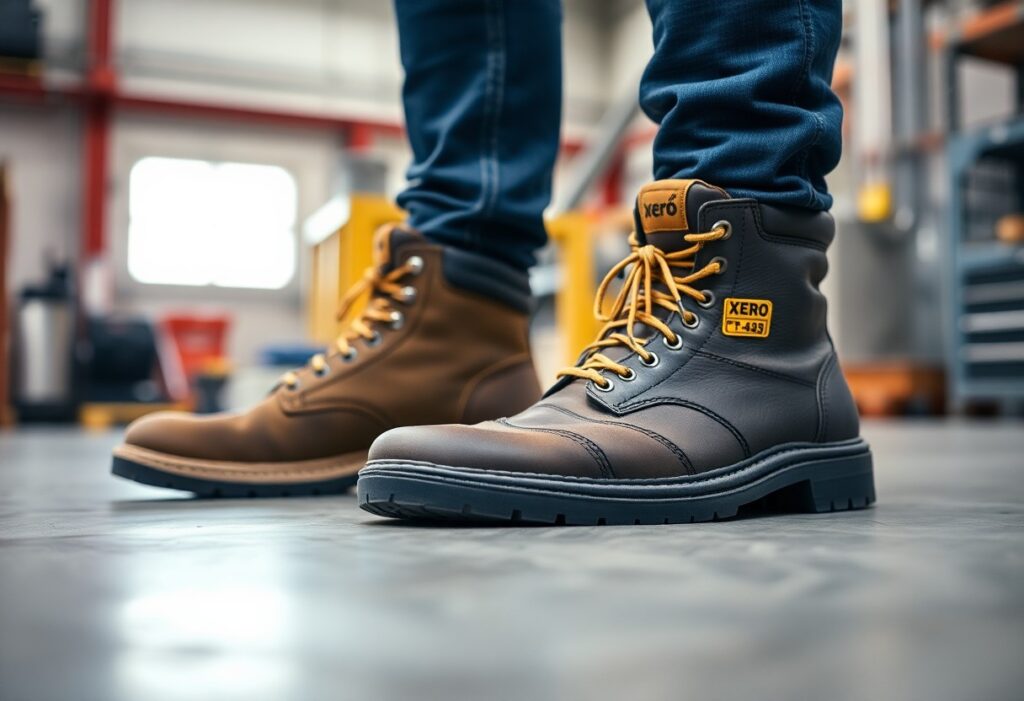
If your job site asks for steel toe protection, the real question is whether a composite-toe Xero Work shoe is acceptable in that environment. In many light- to medium-duty workplaces, the answer can be yes; in heavy-duty settings with high heat, severe compression, or specialized hazards, steel toe still wins.
For readers comparing the decision against broader comfort and foot-health guidance, it can also help to look at related categories like Xero Shoes for neuropathy when comfort and foot sensitivity matter alongside safety compliance.
| Choose Xero Composite-Toe Work Shoes | If you need ASTM F2413-18 protection but also want a lighter, more flexible shoe for warehouse, logistics, retail backroom, or light construction work. |
| Choose Steel Toe | If your workplace involves welding, foundry work, intense heat, heavy impact exposure, or a policy that specifically requires steel toe. |
| Do Not Treat Comfort As Compliance | A shoe can feel better on shift and still be wrong for the hazard profile. The safety label and the site rules decide the final call. |
Xero’s Work Series sits in an interesting middle ground: it keeps the brand’s zero-drop, flexible feel while adding composite-toe protection, puncture resistance, and work-ready outsoles. That makes it relevant for people who want a minimalist shoe without giving up the protection required on many job sites.
Bottom Line Xero Shoes can replace steel toe only when the specific workplace hazard profile and employer policy allow a composite-toe shoe. They are not a universal steel-toe substitute.
How Osha And Astm Actually Apply
Workplace foot protection is usually governed by the hazard, not by brand preference. OSHA requires protective footwear when the job exposes you to falling objects, rolling loads, punctures, electrical hazards, or other conditions that can injure the foot. The footwear itself must then meet the relevant ASTM standard your employer or site requires.
For this conversation, the most important benchmark is ASTM F2413-18. That standard covers impact and compression resistance, and it may also include puncture resistance or other protections depending on the shoe’s rating. Xero’s Aurora Work and Denver WP Safety are positioned as work shoes that meet those requirements with a composite toe rather than a traditional steel toe.
That distinction matters. Steel toe and composite toe can both be compliant, but they are not identical in weight, temperature behavior, or use-case fit. If you want to understand how the same minimalist design approach shows up in health-oriented footwear too, see the safety guide for diabetics, where fit, pressure relief, and protection have to work together.
Steel Toe Vs Composite Toe Vs Xero Work Models
The cleanest way to compare the options is by job hazard, not just by material. The table below keeps the decision practical.
| Option | Best strength | Main limitation | Best fit |
|---|---|---|---|
| Steel Toe | Traditional, widely recognized heavy-duty protection | Heavier, stiffer, less forgiving over long shifts | Welding, foundries, harsh industrial environments, policies that specifically require steel |
| Composite Toe | Lighter weight with ASTM-compliant protection | May not satisfy every site policy or extreme-heat use case | Warehousing, logistics, light construction, mixed mobility tasks |
| Xero Aurora Work / Denver Wp Safety | Minimalist feel, zero-drop geometry, lighter composite-toe protection | Not the right choice for heavy heat, foundry-level hazards, or steel-only policies | Workers who want compliance plus a more natural feel in light to medium-duty roles |
Where Xero Shoes Make Sense At Work
The strongest case for Xero’s work shoes is not “they are the same as steel toe.” It is that they solve a different problem: how to keep protection while reducing the bulk and stiffness that many workers hate by the end of a shift. The Aurora Work and Denver WP Safety are most appealing when your day involves frequent walking, repeated stops and starts, climbing in and out of equipment, or standing for hours on hard floors.
That lighter feel can reduce fatigue, especially in warehouse logistics and light construction. The zero-drop platform also encourages a more natural stance, which some people find easier on the back and lower legs during long shifts. If you want a broader look at how minimalist footwear affects movement and comfort outside the job site, the therapeutic benefits guide explains why some wearers prefer the brand’s shape and feel.
The Denver WP Safety version also matters if your work environment is wet, muddy, or debris-heavy. Waterproofing and puncture resistance are not substitutes for every industrial requirement, but they do help in occupations where dry feet and underfoot protection are part of the daily reality.
Best Use Cases
- Warehouse picking, packing, and logistics roles
- Light-medium duty construction and maintenance work
- Jobs with long walking routes or constant standing
- Workplaces that allow composite toe rather than steel toe
- Environments where puncture resistance is helpful but not extreme heat resistance
Do Not Use Them For
- Welding or foundry work
- Jobs with high heat exposure or molten material risk
- Situations where your employer specifically requires steel toe
- Tasks where the safety policy calls for specialized chemical, electrical, or metatarsal protection beyond the shoe’s rating
How To Choose Without Overcomplicating It
Start with the hazard, then check the policy, and only then look at comfort. That order keeps you from buying a shoe that feels great but fails the job requirement. If your workplace allows composite toe and the hazard profile is moderate, Xero’s minimalist work shoes are a strong option. If the site says steel toe or the job involves serious heat and impact exposure, skip the compromise and go with steel toe.
A practical test is whether your day is dominated by mobility or by brute-force exposure. When mobility is the main issue, Xero’s lighter feel can be an advantage. When the environment itself is the main issue, protection standards matter more than gait mechanics.
This is also why broader Xero content can be helpful in context but should not blur the safety decision. For example, if you wear orthotics or need a different fit strategy, the orthotics compatibility guide is useful for fit planning, but it does not replace workplace compliance rules.
If you are comparing Xero Shoes against steel toe because you want less weight, the safest next step is to verify the exact shoe rating and the employer’s PPE policy before you buy.
What The Comfort Claim Does And Does Not Mean
The original draft leaned heavily on phrases like “the safety features of a tank with the feel of a sports car.” That idea is useful as shorthand, but only if it stays grounded. In practice, it means Xero’s work models try to pair protective toe structure with a lighter, more flexible platform than a conventional boot. It does not mean they outperform steel toe in every environment.
This distinction is especially important because readers often search for “Xero Shoes vs steel toe” hoping for a universal answer. There isn’t one. Instead, there is a workplace-specific answer: composite toe can be enough when the hazard and policy allow it; steel toe is still the more conservative pick when the job is severe or the rule is explicit.
If you are exploring other ways minimalist shoes affect performance or foot health, you may also find the weightlifting analysis useful for understanding how the brand behaves under load, though that article is about gym use rather than occupational safety.
Common Questions People Ask When Comparing The Two
A lot of the confusion comes from mixing material strength with workplace approval. Composite toe is not automatically weaker in every meaningful sense, but it is different. It tends to be lighter and less conductive, which is helpful in some jobs, while steel remains the more familiar standard for harsh industrial use. That is why site rules matter so much.
Another point worth keeping in mind is that minimalism and safety are not opposites. Xero’s work shoes show that a barefoot-inspired platform can still be built around a compliance standard. The catch is that compliance must be matched to the task, and the task must be matched to the shoe.
Frequently Asked Questions
Are Composite Toe Boots As Good As Steel Toe Boots?
They can be just as compliant for many jobs, but “as good” depends on the hazard. Composite toe is often lighter and more comfortable, while steel toe is still preferred for harsher, hotter, or policy-driven environments.
Does Osha Approve Composite Toe Shoes?
OSHA looks at whether the footwear is appropriate for the hazard and meets the required protective standard. If the shoe meets the relevant ASTM requirement and your workplace allows composite toe, it can be acceptable.
Are Xero Shoes Actually Good For Work?
They are a good fit for workers who want composite-toe protection with a lighter, more flexible feel. They are not the right answer for every site, especially where steel toe or heavy-duty industrial protection is required.
What Are The Disadvantages Of Composite Toe?
The main downsides are that it may not satisfy every employer policy, and it is not the best match for extreme heat or the most demanding industrial conditions. In those settings, steel toe is still the safer default.

Jessica Linford is an insightful author for My Shoes Finder, where she explores a wide array of general topics that resonate with everyday readers. With a passion for storytelling and a keen eye for detail, she brings a unique perspective to her writing, aiming to inform and inspire through her engaging content. Jessica’s diverse interests drive her curiosity, allowing her to connect with audiences on various subjects while sharing practical tips and relatable anecdotes.
See also:
 Xero Shoes Work Boots: Which Models Make Sense For Durability And Comfort?
 Barefoot Footwear For Standing Jobs: Is It The Right Work Shoe For Long Shifts?
 Occupational Footwear And Stability: What Shoe Design Means For Safety At Work
 Best Work Shoes For Wide Feet: Fit Tips And Workplace Picks
 Xero Shoes For Children In 2025: Fit, Safety, And Best Models
 Are Xero Shoes Good For Standing All Day? Best Uses, Limits, And Comfort Tips
I appreciate your insights on Xero Shoes and how they’re pushing the envelope in safety footwear. It’s refreshing to see a brand prioritize both protection and comfort, especially in sectors where employees are on their feet for long hours. The mention of a composite toe being lighter yet equally protective really caught my attention—it’s fascinating how material innovation is transforming workwear.
The introduction of Xero Shoes as a player in the workplace safety footwear market is intriguing, particularly given the growing emphasis on comfort and mobility in demanding job environments. The hybrid of barefoot design with ANSI-compliant safety features seems like a game-changer for those of us who spend long hours on our feet, especially in warehouse or light construction settings.
I love how Xero Shoes is shaking things up in the safety footwear game. The idea of combining a lightweight composite toe with barefoot flexibility sounds like a dream for anyone who spends long hours on their feet—especially in jobs where you need to stay agile. I recently switched to a similar style of footwear for my own job in a warehouse setting, and the difference in comfort is huge!
I totally get where you’re coming from. Xero Shoes really does seem to be setting a new standard for comfort in safety footwear. The blend of lightweight materials with that barefoot flexibility is such a crucial innovation, especially for those of us who find ourselves on our feet for the majority of the day.
I came across this insightful piece on how the right footwear can really enhance postural stability and help prevent injuries in various work environments, and it totally resonates with the shift towards more flexible and comfortable designs like those by Xero Shoes.
‘Occupational Footwear Biomechanics: Postural Stability and Injury Prevention in Workplace Environments’
https://myshoesfinder.com/biomechanics-of-occupational-footwear-stability-and-injury-prevention/.
The integration of barefoot flexibility with ANSI-compliant safety features in Xero Shoes truly addresses a significant gap in workplace footwear. As someone who has experienced the discomfort of wearing traditional steel-toed boots during long shifts, the prospect of a lighter, more flexible alternative is quite appealing. The mention of the Aurora Work and Denver WP Safety models meeting ASTM F2413-18 standards highlights an essential balance between safety and comfort, which is often overlooked in the industry.
The blend of safety and comfort in Xero Shoes’ designs is certainly intriguing, particularly in a landscape where traditional work footwear often prioritizes protection at the expense of wearer comfort. The ANSI-compliance and ASTM certification are crucial, especially for those of us working in environments where foot hazards are prevalent. It does raise an interesting question about how other industries might adapt their safety protocols to embrace innovation in protective gear.
I really appreciate how you highlighted the innovative approach Xero Shoes takes toward workplace safety footwear. It’s refreshing to see a company that isn’t just trying to meet the bare minimum when it comes to safety standards; instead, they’re focused on combining that safety with comfort and flexibility.
Your exploration of Xero Shoes and their innovative approach to workplace safety footwear truly resonates with me, particularly because I’ve recently been on the hunt for options that balance comfort and protection. It’s promising to see brands like Xero reimagining safety footwear, especially when they manage to create a product that prioritizes both flexibility and compliance with stringent safety standards like the ASTM F2413-18.
It’s great to hear that you’re on the lookout for comfort and protection in safety footwear. It’s not always easy to find that sweet spot where a shoe can meet the demands of a tough work environment while still feeling good throughout the day. Xero Shoes really does a nice job of blending flexibility with those important safety standards like ASTM F2413-18.
Finding that balance between comfort and safety in footwear is definitely a challenge. I’ve tried several brands, and it’s interesting how some prioritize one aspect over the other. With work environments becoming more demanding, having shoes that can flex and move with you is so crucial. It’s like, the more rigid the shoe, the more you feel it after a long day.
It’s really fascinating how Xero Shoes has managed to merge comfort with safety in such a critical area like workplace footwear. The idea of a shoe that feels flexible and light while still offering the protection required by OSHA standards is quite innovative. I’ve always found that traditional safety shoes can be cumbersome, often leading to fatigue during long shifts.
You raise some compelling points about merging comfort and safety in workplace footwear. Traditional safety shoes, as you mentioned, often feel like they’re built for protection at the expense of overall comfort. Many workers end up sacrificing their well-being for safety, which is quite a paradox, considering how essential both aspects are for productivity and morale.
You touch on a really important issue regarding the balance between comfort and safety in workplace footwear. It’s interesting how the traditional design of safety shoes often prioritizes protective features, sometimes overlooking the day-in, day-out comfort workers truly need. I’ve spoken with many people in various industries who feel that way; they’re often stuck wearing shoes that make long shifts unbearable.
It’s interesting you mention the balance of comfort and safety in workplace footwear. I’ve seen firsthand how the right shoes can make a big difference, especially in demanding jobs where you’re on your feet for long hours. Traditional safety shoes often prioritize protection over comfort, which can really take a toll on your energy levels and overall well-being.
I love the idea of combining safety with a “feel like a sports car” approach! It’s like having your cake and eating it too—who knew safety footwear could be so, well, footloose and fancy-free?
Ah, the age-old battle between comfort and safety in the workplace! It’s like choosing between a hug from your grandma and a fist bump from the tough guy who works next door. On one hand, you want the all-around warmth and flexibility of Xero Shoes, especially knowing they’ve got that seamless blend of barefoot luxury with the ASTM F2413-18 safety standards. The idea that a composite toe can be 38% lighter than steel is like finding out your favorite heavy metal band has a hidden soft acoustic side—unexpected but oh-so-welcome!
You hit the nail on the head with that analogy—it’s such a juggling act trying to balance comfort and safety at work. The charm of Xero Shoes really does lie in that barefoot feel, and knowing they meet tough safety standards just makes them all the more appealing.
You really summed it up well. It’s interesting how footwear can be a reflection of our broader lifestyle choices, isn’t it? Xero Shoes capturing that barefoot feel is definitely a game-changer. I love how they allow your feet to move naturally while still adhering to safety standards.
You’ve captured that balance between comfort and safety perfectly. It’s such an interesting juxtaposition, isn’t it? On one hand, you have the freedom of movement that comes with a more minimalist shoe like Xero’s. That barefoot feel can really change how you experience your day, especially if you’re on your feet a lot. I can see how the safety features could almost feel like a purposeful contradiction—like your grandma’s warm embrace offering the coziness you want, while the tough guy embodies the protective edge that’s often valued in work environments.
You’ve pointed out something really insightful about the balance between comfort and safety. The idea of minimalist shoes like Xero’s giving that barefoot feel resonates with so many people who are trying to escape the rigid confines of traditional footwear. It’s amazing how a change in our shoes can tweak our entire daily experience, making us feel more grounded and aware of our surroundings, especially when we’re on our feet for long hours.
You’ve highlighted a key aspect of our relationship with footwear that often gets overlooked. The shift towards minimalist shoes like Xero does open up a new realm of possibility, not just for comfort but also for an enhanced sense of awareness. Many people go through their daily routines almost on autopilot, and it’s fascinating how something as simple as the shoes we wear can shift that experience.
You’ve really nailed that balance in your perspective. It’s intriguing how something we wear on our feet can affect our entire experience of the day. The freedom of movement that minimalist shoes like Xero’s provide definitely changes how we connect with our environment. I often find that when I wear them, I’m more aware of the ground beneath me, which seems to bring a heightened sense of being present.
You’ve really captured that tension perfectly! It’s interesting how our choices in footwear can reflect larger themes in our lives—balance between comfort and practicality. Xero Shoes really do seem to blend those elements nicely, almost like they’re delivering a hug and a fist bump all in one. Personally, the idea of lighter materials in safety gear resonates with me, especially since I’ve seen how traditional safety shoes can impede mobility, which is crucial in so many jobs today.
I’ve got to say, the idea of wearing shoes that feel like a sports car but protect like a tank is a winning combo in my book—talk about a workplace superhero upgrade! I can just imagine gliding through the warehouse like I’m on some high-tech racetrack, only to stop short and think, “Why am I not wearing these while grocery shopping instead?” After all, dodging shopping cart collisions should come with some level of impact resistance, right?
It’s interesting to see how Xero Shoes is shaking up the traditional safety footwear market. The combination of barefoot flexibility with high ANSI-compliance is a game changer, especially for those of us who spend long hours on our feet. I recently transitioned to more minimalist footwear, and I can personally attest to how much lighter and more comfortable a good pair of shoes can feel, especially when you’re navigating through a busy warehouse or during a day packed with light construction tasks.
It’s interesting to see how Xero Shoes has taken an innovative approach to safety footwear by focusing on both protection and comfort. In many workplaces, especially in settings that involve prolonged standing or movement, traditional safety shoes can feel stifling and clunky, which can ultimately hinder productivity and worker satisfaction. The combination of a lightweight composite toe with barefoot flexibility really seems like a game-changer, especially for industries like warehousing and light construction where agility can make a significant difference in daily tasks.
You’re spot on about Xero Shoes and their fresh take on safety footwear. It’s pretty wild when you think about how many jobs require long hours of standing or moving around, and yet traditional safety shoes often feel like they’re working against you. The clunky designs can really put a damper on your day. If you’re constantly shifting and trying to stay comfortable, it definitely steals focus from your actual tasks.
The innovation behind Xero Shoes and their approach to workplace safety footwear is truly intriguing, particularly in how they balance comfort and compliance with stringent safety standards. The shift towards a more flexible, barefoot-like experience in protective footwear reflects a broader trend in ergonomics and workplace wellness. Providing employees with safety shoes that are not only protective but also lightweight and comfortable is essential for overall productivity and health.
Ah, the age-old battle between comfort and protection in workplace footwear! It seems Xero Shoes has stepped into the ring with some heavyweight options that don’t just meet the safety requirements but seem to want to do a little jig while they’re at it. I must admit, the idea of sporting footwear that combines the feel of a sports car with the safety features of a tank almost makes me want to work in light construction—almost.
It really is a fascinating discussion, isn’t it? The balance between comfort and protection in footwear seems so crucial, especially in industries where you’re on your feet all day. Xero Shoes definitely seems to be appealing to that sweet spot, where you don’t have to choose between looking good and being safe. It almost feels like we’re at a point in time where technology is evolving to enhance both styles without compromising safety.
I love the idea that Xero Shoes has merged the “fortress” of protective footwear with the “sports car” feel—it’s about time we got a shoe that doesn’t make us feel like we’re wearing clunky bricks on our feet. I can just imagine walking through a warehouse, dodging boxes and roller carts, with the lightness of a feather while still keeping my toes safe from falling debris.
It’s interesting to see how companies like Xero Shoes are innovating in the realm of safety footwear. The combination of barefoot flexibility and the necessary ANSI-compliant protection really addresses a significant concern for many in labor-intensive roles. As someone who has spent time in both warehouse and construction settings, I can appreciate how vital it is to have footwear that not only meets safety standards but also prioritizes comfort throughout long shifts.
I really appreciate your insights on Xero Shoes and their approach to safety footwear! The combination of comfort and protection is often hard to come by in work environments, and it’s refreshing to see a brand that understands the importance of both. As someone who has spent long hours in industrial settings, I’ve always struggled to find shoes that don’t make my feet cry by the end of the day.
It’s interesting to see how Xero Shoes is pushing the envelope in the realm of workplace safety footwear. The combination of lightweight materials with essential protection truly addresses the often overlooked balance between comfort and safety. In environments like warehouses or light construction, having the agility that a shoe like the Aurora Work provides can make a significant difference, especially for those on their feet for extended periods.
I really appreciate how you highlighted the unique combination of safety and comfort in Xero Shoes. It’s clear that they are aiming to challenge traditional notions of heavy work footwear with a design that caters to both functionality and agility. I’ve often found that a lot of the conventional safety shoes are bulky and uncomfortable, which can really hinder productivity and lead to fatigue on long days.
It’s interesting to see how Xero Shoes is pushing the envelope in workplace safety footwear by emphasizing both protection and comfort. The fact that they offer a composite toe option that’s lighter than steel is a game-changer for anyone who spends long hours on their feet. In my experience working in a warehouse, the clunky, traditional safety shoes can lead to discomfort and fatigue, detracting from productivity.
It’s fascinating to see how footwear design is evolving to meet the demands of safety without sacrificing comfort! I’ve personally struggled with traditional safety shoes feeling bulky and restricting, so the idea of a lightweight, flexible option like Xero Shoes sounds like a game-changer.