
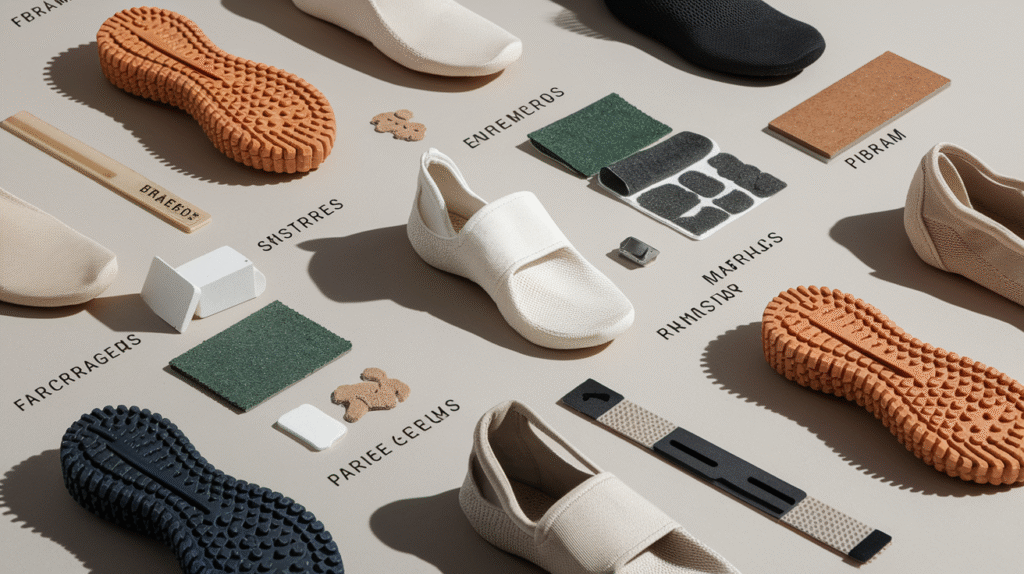
Barefoot footwear works best when the material matches the job. The right sole or upper can improve ground feel, extend lifespan, and reduce waste without turning the shoe into a stiff compromise.
Best use at a glance
Choose Tpu when durability and abrasion resistance matter most, Eva when softness and lightweight cushioning matter more, Vibram-Type Rubber Soles when grip and reliable outsole performance are priorities, and Recycled Or Bio-Based Inputs when sustainability needs to stay visible in the design brief. For the sustainability side of that tradeoff, see eco-friendly barefoot shoe options.
How The Main Materials Compare
The barefoot category depends on a narrow but important material toolbox. Most design decisions come down to how a polymer behaves under flex, abrasion, temperature change, and long-term use.
| Material | Durability | Flexibility | Weight | Environmental profile |
|---|---|---|---|---|
| Tpu | High abrasion resistance, strong long-term wear | Stable across a wide temperature range | Moderate | Better for longevity than softness-first foams |
| Eva | Good for cushioning, weaker under heavy wear | Soft and easy to compress | Very light | Often less durable, so replacement can be sooner |
| Vibram-Style Rubber | Excellent outsole grip and dependable wear | Responsive with strong ground contact | Moderate | Strong longevity can offset material use |
| Recycled Pet And Other Recovered Inputs | Depends on blend and construction | Varies by yarn, weave, and lamination | Usually light to moderate | Best when it replaces virgin material without sacrificing lifespan |
Why Tpu, Eva, And Vibram Behave So Differently
TPU and EVA are both common in barefoot footwear, but they solve different problems. TPU tends to hold its shape better under repeated stress and temperature swings, which is why it often shows up in shoes that need resilience over many miles. EVA is easier to keep light and soft, so it remains useful when the design goal is comfort and reduced mass rather than maximum wear life.
That same logic applies to outsole design. Vibram-type rubber compounds are valued because they can preserve traction and protect the foot without adding unnecessary bulk. In barefoot shoes, that balance matters more than maximum cushioning: the sole should stay thin, flexible, and reliable enough for daily use while still supporting natural movement.
Practical Rule if a shoe is meant for rocky trails, daily commuting, or long-term wear, TPU or durable rubber often makes more sense. If it is meant for short, easy wear where softness and low weight matter more, EVA can be the better fit.
How Sustainability Fits Into Material Selection
Sustainability is not just about using recycled content. A shoe made from a greener input can still create waste if it wears out quickly, so longevity is part of the environmental equation.
That is why recycled PET uppers, reduced-waste manufacturing, and cleaner sourcing are best viewed as part of a broader system. A product that lasts longer, uses fewer virgin resources, and keeps performance consistent usually has the stronger sustainability case. For a brand-specific example of that tradeoff, the advantages of minimalist Xero-style shoes page and the broader sustainable footwear and biomechanics discussion provide useful context.
When sustainable manufacturing makes the biggest difference
- When recycled content replaces virgin material without hurting durability.
- When the manufacturing process lowers waste, water use, or transport distance.
- When longer product life reduces replacement frequency.
- When the design still protects ground feel, flexibility, and fit.
What The Wear Data Is Really Saying
Abrasion testing and longer wear studies point in the same direction: material structure matters as much as material type. Dense compounds and better-bonded construction can resist compression, cracking, and surface loss much more effectively than softer foam-first builds.
That is one reason barefoot footwear engineering often focuses on the interface between the outsole, midsole, and upper rather than any single component. In practical terms, the shoe fails where the weakest material or bond gives out first. Better engineering reduces that failure point and can make a minimalist shoe feel more consistent across trails, pavement, and daily wear.
Choose The Material Before You Choose The Marketing
For barefoot footwear, the smartest purchase is usually the one that matches your use case instead of the loudest sustainability claim. TPU and durable rubber win when longevity and abrasion resistance are the priority. EVA still has a place when low weight and soft underfoot feel matter. Recycled and bio-based materials are most compelling when they support performance rather than replacing it.
If you want to compare that material logic with a real brand approach, use this page alongside Xero Shoes sustainability so you can separate performance engineering from brand messaging.
Need a deeper sustainability comparison?
Read the dedicated guide to eco-friendly barefoot shoe options for a closer look at recycled inputs, production choices, and environmental tradeoffs.
Frequently Asked Questions
What Materials Are Used In Shoe Manufacturing?
Common shoe materials include TPU, EVA, rubber, mesh, recycled PET, leather, and synthetic blends. In barefoot footwear, the priority is usually flexibility, low weight, and enough protection to keep the shoe durable.
What Does A Footwear Engineer Do?
A footwear engineer designs how the shoe performs under stress, including flexibility, traction, fit, cushioning, and durability. The role often includes choosing materials and balancing performance against cost and manufacturability.
How Can I Manufacture My Own Shoes?
You would need a clear pattern, compatible sole materials, reliable adhesives or bonding methods, and a way to test fit and wear. For most people, the harder part is not assembly but selecting materials that hold up under repeated use.
How Much Do Shoe Engineers Make?
Pay varies by experience, company size, and specialization. Shoe engineers with advanced materials or product-development experience can earn competitive salaries, especially when they work on performance footwear or technical product lines.
If you are comparing barefoot categories rather than material science alone, you may also find the broader science of barefoot shoes useful for connecting material choices to foot function and movement.

Jessica Linford is an insightful author for My Shoes Finder, where she explores a wide array of general topics that resonate with everyday readers. With a passion for storytelling and a keen eye for detail, she brings a unique perspective to her writing, aiming to inform and inspire through her engaging content. Jessica’s diverse interests drive her curiosity, allowing her to connect with audiences on various subjects while sharing practical tips and relatable anecdotes.
See also:
 How Sustainable Are Xero Shoes? Materials, Ethics, And Trade-Offs Explained
 Carbon Plate Running Shoes And Running Economy: What They Actually Improve
 Cool Barefoot Shoes: Discover the Best Barefoot Shoes
 Shoe And Boot Sole Types Explained: How To Choose The Right One
 Are Xero Shoes Vegan In 2025? Materials, Ethics, And What To Check Before Buying
Unleash Your Natural Movement with Barefoot Shoes for Men
Are Xero Shoes Vegan In 2025? Materials, Ethics, And What To Check Before Buying
Unleash Your Natural Movement with Barefoot Shoes for Men


It’s fascinating to see how material engineering is pushing the boundaries of footwear design, especially in the realm of barefoot shoes. The emphasis on technologies like Vibram soles truly reflects a deeper understanding of how our bodies interact with the ground. As someone who has always valued natural movement, I appreciate how these advancements not only enhance comfort but also prioritize functionality and protection.
It’s fascinating to see how far barefoot footwear has come, especially with innovations in materials like TPU and EVA. I’ve recently switched to a pair of minimalist shoes that use a mix of both, and the difference in ground feel and comfort is remarkable. It’s interesting how manufacturers balance durability with the need to keep things eco-friendly. As we become more aware of the environmental impact of our choices, I wonder how consumer preferences will shape future designs. With the rise of sustainable materials in other sectors too, do you think we’ll see more brands adopting similar approaches to align with eco-conscious consumers? I’m excited to see where this blend of technology and sustainability takes us!
Your exploration of the advancements in material engineering for barefoot footwear truly captures the exciting intersection of technology, sustainability, and biomechanics. It’s fascinating to see how materials like Vibram soles are not just enhancing performance but also responding to a growing consumer awareness around comfort and environmental impact.
Your exploration of barefoot footwear and the innovations in material engineering is truly compelling, especially as it highlights the intersection of comfort, performance, and sustainability. I find the advancements in technologies like Vibram soles particularly intriguing. The way they enhance ground feel without sacrificing protection resonates with my own experiences of seeking a more natural connection to the terrain while staying active.
It’s interesting to hear how the innovations in barefoot footwear resonate with your experiences. The balance between comfort and protection that Vibram soles provide is something I’ve come to appreciate too. It’s like stepping into a new understanding of how we connect with the ground beneath us.
Your exploration of the advancements in material engineering for barefoot footwear is genuinely enlightening, particularly with the contrast between TPU and EVA. While both materials have carved out their niches, the ongoing TPU vs. EVA debate raises important questions about user experience and the implications for health and performance in minimalist footwear.
Your exploration of innovations in material engineering and their implications for barefoot footwear is a fascinating topic, especially given the growing concern for both performance and sustainability in the industry. As someone who has recently transitioned to minimalist footwear, I find it particularly interesting how these advancements are not just about comfort, but also about creating a more harmonious relationship between our bodies and the environment.
Your experience with minimalist footwear highlights a significant shift in how we think about our shoes and their relationship with our bodies. The innovations in material engineering are truly transforming not just performance but how we connect with our environment. One of the intriguing aspects of this transition to more sustainable and minimalist options is the emphasis on natural movement.
It’s great to hear your personal experience with minimalist footwear. The shift toward a more natural way of moving can be eye-opening, can’t it? It’s interesting to think about how innovations in material engineering can enhance that experience. For many, it’s not just about shedding excess weight or cushioning, but truly reconnecting with the ground beneath us. Manufacturers are now exploring sustainable materials that don’t just perform well, but also lessen our impact on the environment.
The advancements you’re highlighting in barefoot footwear engineering resonate deeply with my own journey toward embracing a more natural way of movement. It’s fascinating how technologies like Vibram soles are not just about comfort; they’re revolutionizing our understanding of what it means to “feel” the ground beneath us. My personal experience with minimizing my shoe structure has led to a profound appreciation for how much our footwear influences our posture, balance, and even our overall mindset when it comes to physical activity.
I really appreciate how you’ve highlighted the advancements in material engineering that are reshaping the barefoot footwear space. It’s fascinating to see how innovations like Vibram soles have transformed the way we experience ground feel and protection. As someone who has been exploring minimalist footwear for a while now, I’ve personally felt the difference in comfort and performance they provide.
It’s fascinating to see how advancements like TPU and EVA are shaping the future of barefoot footwear. I’ve personally transitioned to minimalist shoes over the past year and noticed a significant improvement in my comfort levels during activities like hiking and running. The conversation around sustainable manufacturing techniques adds another layer of value—it’s encouraging to know that as we seek more natural movement, we’re also taking care of the planet. I wonder how the integration of smart materials could further enhance performance and feedback in footwear design, potentially revolutionizing how we interact with our environment. It would be interesting to hear others’ experiences with different materials or thoughts on future innovations in this space!
It’s great to hear about your experience with minimalist shoes. I think many people overlook how much footwear can influence overall comfort and performance in activities like hiking and running. Your transition to more natural movement resonates with a growing trend toward holistic health and wellness, which is interesting to see.
It’s really insightful to hear about your experience transitioning to minimalist shoes—it seems like they really can make a difference in comfort levels, especially for activities that put a lot of stress on your feet, like hiking and running. There’s something about connecting more directly with the ground that feels freeing, isn’t there?
Ah, the TPU vs. EVA showdown—one can only hope the referees have a solid understanding of polymers! I’ve always found it fascinating how a couple of letters can spark such heated debates in the footwear community. Personally, I tend to lean toward TPU for its versatility; it feels like the Swiss Army knife of materials. One moment it provides cushioning, and the next, it’s giving you that “barefoot but with a protective shell” vibe.
This exploration into barefoot footwear and the materials driving innovation is truly fascinating. The comparison between TPU and EVA got me thinking about how our choices in footwear not only affect our comfort but also our overall health and well-being. It’s incredible how a shift towards materials that provide better ground feel can enhance proprioception and encourage a more natural gait.
It’s great to hear you’re connecting with the discussion around barefoot footwear. You raise a solid point about how our choices can influence both comfort and overall health. The shift to materials like TPU and EVA really does open up new opportunities for how we experience movement.
You’ve touched on an important point about how our footwear choices ripple through our daily lives and health. The relationship between ground feel and proprioception is fascinating. It’s like connecting the dots between what we wear on our feet and how we experience the world around us.
This is such an interesting topic, and I couldn’t agree more about the transformative impact that advanced materials are having on barefoot footwear. I think it’s great how innovations in materials like TPU and EVA are not just enhancing performance, but also how they’re influencing our understanding of movement and comfort.
I appreciate your perspective on the impact of advanced materials in barefoot footwear. The way materials like TPU and EVA are reshaping not just performance but also our understanding of movement and comfort is fascinating. It’s intriguing to think about how these advancements contribute to a more natural feel and better biomechanics, helping to prevent injuries and promote healthier movement patterns.
Your insights on the advancements in material engineering within barefoot footwear are incredibly thought-provoking, especially as they highlight the balance between performance and sustainability. It’s fascinating to think about how the evolution of materials like TPU and EVA can dramatically affect our experience with footwear, making the choice between them a nuanced decision based on personal preferences and intended use.
It’s great to hear your thoughts on this topic. The ongoing conversation around materials like TPU and EVA is really interesting, especially when you think about the trade-offs involved. For some, TPU offers that snug, bouncy feel, making it a favorite for high-performance situations. On the other hand, EVA’s lightweight and soft cushioning can create a more relaxed experience for casual wear.
The exploration of TPU and EVA in the context of barefoot footwear is particularly intriguing, especially considering how material choice can significantly influence both biomechanics and sustainability. From my experience, the preference for TPU often stems from its superior durability and flexibility, which many runners find beneficial for long-distance performance. However, EVA still retains a loyal following due to its lightweight and cushioning properties, appealing to those who prioritize comfort in their minimalist approach.
It’s really interesting how material choice plays such a pivotal role in shaping not just performance but also comfort and sustainability in barefoot footwear. I’ve noticed the same preference for TPU among my running friends who often tackle longer distances; they really appreciate that durability, especially on varied terrain. It gives them confidence that their shoes can handle the wear and tear without compromising performance.
I recently came across an article that dives into the best outdoor shoes for 2025, and it really highlights how material choices, like TPU and EVA, play a crucial role in balancing performance and comfort for adventurers.
‘Top Outdoor Shoes for 2025: Best Picks for Adventure and Comfort’
https://myshoesfinder.com/best-outdoor-shoes-for-2025-comfort-and-adventure/.
I must admit, the whole TPU vs. EVA debate feels a bit like watching two superheroes duke it out for the title of “Most Comfortable Sole.” On one hand, you’ve got TPU, strutting in with adaptability and toughness, like the character who swoops in to save the day (or your arches) at the last moment. Meanwhile, EVA is that laid-back friend who’s always ready for a chill day at the park—soft, cushiony, and simply inviting you to relax.
I really like how you framed the TPU vs. EVA debate as a superhero showdown – it’s a compelling way to think about it. TPU definitely has that edge when it comes to durability and responsiveness; it reminds me of how advanced materials in athletic shoes have evolved over the years. I’ve started noticing that more brands are leaning towards TPU for their performance-oriented models, especially for activities that demand a lot from footwear, like running or cross-training.
Speaking of comfort and adaptability, I found this intriguing piece about how Xero Shoes hold up in extreme cold—it’s like seeing how our superhero favorites fare in the frosty battleground.
‘Xero Shoes in Extreme Cold: -40°F Arctic Testing Results (2025)’
https://myshoesfinder.com/xero-shoes-arctic-testing-results-at-40-f/.
The evolution of barefoot footwear through innovative materials like TPU and EVA is fascinating, and it’s exciting to see how these advancements are influencing not only comfort but also our connection to the ground. Personally, I’ve found that shoes with Vibram soles have truly enhanced my outdoor experiences, giving me the confidence to tackle varied terrains while still feeling that vital ground feedback.
It’s fascinating to see how material engineering is evolving within barefoot footwear! The shift towards using TPU and EVA highlights the balance between comfort and performance, which is so crucial for minimalist shoes. I’ve personally noticed that the right material can make all the difference in how connected you feel to the ground—something that’s deeply tied to both comfort and your natural running style.
It’s intriguing to consider how materials like TPU and EVA are reshaping the landscape of barefoot footwear. You mentioned that the right material can enhance your connection to the ground, which is spot on. While comfort and performance are often weighed against each other, it’s interesting to think about how the right balance can actually change our running form.
The exploration of innovative materials in barefoot footwear is indeed fascinating and speaks to a growing movement towards enhancing both comfort and sustainability in our daily lives. As someone who has recently shifted towards minimalist footwear, I’ve found the benefits of ground feel and flexibility to be transformative for my running and casual wear. The emphasis on understanding the unique properties of materials, such as TPU and EVA, can certainly influence how we perceive not just footwear but also the wider implications for sports health and performance.
It’s fascinating to see how material advancements like TPU and EVA are pushing the boundaries of barefoot footwear. My own experience with minimalist shoes has truly transformed how I approach running and hiking. The ground feel you get from high-quality soles never ceases to amaze me, and I can definitely appreciate the shift towards sustainable practices in manufacturing.
It’s really cool to hear about your transformation with minimalist shoes. There’s something special about connecting with the ground beneath your feet, isn’t there? It’s kind of like rediscovering running or hiking all over again, feeling every little change in terrain. Those high-quality soles let you experience the ground in such a raw way, and for a lot of people, it’s a game-changer.
I find your exploration of advanced materials in barefoot footwear fascinating, especially the spotlight on Vibram soles and the TPU versus EVA debate. It’s true that as more people become aware of the benefits of minimalist footwear, understanding the materials behind them can significantly influence choices. I personally switched to barefoot shoes a couple of years ago after struggling with chronic foot pain in traditional sneakers. Since then, I’ve noticed not just improved foot health, but also a stronger connection to the ground while running.
It’s great to hear how barefoot shoes have made such a positive impact on your foot health. I can completely relate to the struggle with traditional sneakers. The transition to minimalist footwear can be a game changer, not just for the feet but for overall body alignment and movement.
It’s fascinating to see how the evolution of materials like TPU and EVA is influencing not only the performance of barefoot footwear but also our relationship with the ground beneath our feet. As someone who has embraced minimalist footwear over the years, I can attest to the profound impact these advancements can have on comfort and overall foot health. The way TPUs offer a balance of flexibility and durability while EVA provides that classic cushioning experience really highlights how nuanced shoe design has become.