
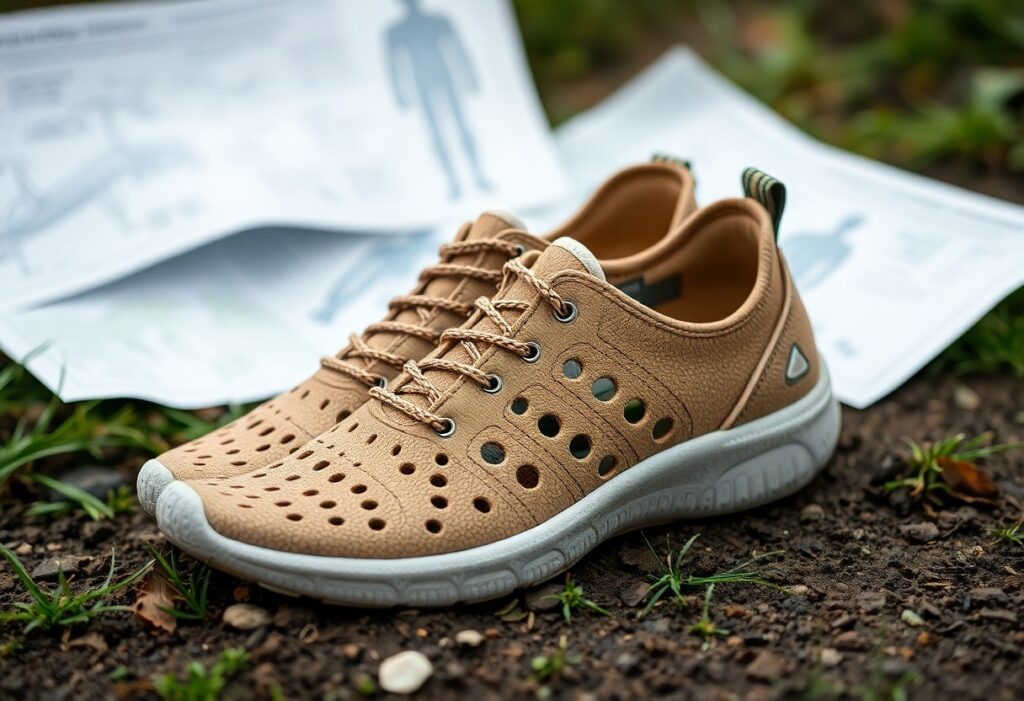
Barefoot shoe design becomes more compelling when you look at it through two lenses at once: how the foot moves, and what it costs the planet to make the shoe. That is where the sustainability case gets stronger, not weaker.
If you want the broader materials-first view, start with modern barefoot footwear materials and sustainability; this page focuses on the bridge between movement economy, product design, and lower-impact manufacturing.
Quick takeaway
Minimalist footwear can support sustainability because lighter construction, fewer layered components, and more natural movement patterns can reduce material demand, shipping weight, and wear-related inefficiency. The biomechanical benefit is part of the environmental story, not separate from it.
Why Biomechanics Matters To Sustainability
The sustainability conversation around shoes often starts with materials, but that is only part of the equation. If a shoe helps the body move more efficiently, it can reduce the need for unnecessary structure, excess cushioning, and some of the design complexity that drives material use. That is why biomechanics belongs in the same discussion as recycled content, hemp uppers, and lower-impact foams.
Barefoot shoes aim to let the foot work more like a foot. A wider toe box, low stack height, flexible construction, and a zero-drop platform can support a more natural gait. In practical terms, that means the shoe is not trying to do all the work for the wearer. It is built to get out of the way while still protecting the foot from the ground. That design philosophy can reduce unnecessary layers, and it can also make the shoe easier to repair, lighter to move, and simpler to manufacture.
This is also why the topic connects naturally to the science of barefoot shoes and their benefits. The more clearly you understand the movement side, the easier it is to see why minimalist design can be a legitimate sustainability strategy rather than just a style preference.
What Lower-Impact Barefoot Design Usually Looks Like
Less Material, Fewer Parts
Many barefoot models use thinner midsoles, pared-back uppers, and fewer decorative or stabilizing elements. That does not automatically make them sustainable, but it lowers the burden brands have to manage when they choose recycled PET, hemp, algae-based foams, or other lower-impact inputs.
More Efficient Movement Demands
A shoe that supports natural foot motion may reduce some of the compensations people make in heavier, stiffer footwear. That can help preserve energy over long wear periods, especially for walking, standing, and training where small inefficiencies add up.
Longer Use Through Better Fit
If a shoe fits the foot shape well, it is more likely to get worn regularly instead of sitting unused. That matters because product longevity is one of the most meaningful sustainability levers in footwear.
Materials, Emissions, And Lifecycle Thinking
The original article made an important point: lifecycle assessments help show where footwear emissions come from. That remains true here. Material extraction, manufacturing, transport, use, and end-of-life all contribute to the footprint of a pair of shoes. Barefoot shoes can perform well in this conversation because a simpler design may use less raw material and fewer complex bonding steps, while still leaving room for durable, repairable construction.
Examples from the category are useful because they show how the theory translates into practice. Brands that use hemp, recycled PET, or similar inputs are often trying to reduce dependence on virgin synthetics. Others extend product life through resale or refurbishment programs, which matters because keeping one pair in circulation longer is often better than manufacturing a replacement too soon. Vivobarefoot’s ReVivo initiative is a good illustration of this lifecycle logic: extending use can lower emissions more effectively than a token material swap alone.
The claim that barefoot shoes may average roughly 10-20 kg CO₂e per pair, or sit below traditional athletic shoes on a relative basis, should be read as a directional indicator rather than a universal rule. Material choices, factory energy, transport distance, and durability all change the outcome. That is why the most credible sustainability story is not “barefoot equals green” but “minimalist design creates better conditions for lower impact when the rest of the system is aligned.”
Consumer Behavior Is Part Of The Footprint Too
Environmental responsibility is not only a factory-side issue. Consumer behavior shapes replacement cycles, return rates, and how often a pair is actually worn. The article’s original consumer insight still matters: many buyers are willing to pay more for products that align with their values, and sustainability often scores highly when people explain why they buy.
That said, the stronger insight is that biomechanical satisfaction can reinforce sustainable behavior. When a shoe feels natural and performs well, users are less likely to treat it as disposable. A comfortable, well-fitting barefoot shoe can build loyalty because it serves a practical purpose first and a values-based purpose second. That combination is what supports repeat use, fewer returns, and better long-term value perception.
If you are still comparing options, a practical next read is the advantages of minimalist footwear, which goes deeper on how barefoot models behave in everyday use.
Regulation And Innovation Are Pushing The Same Direction
The regulatory angle in the source article is worth keeping because it explains why brands are moving faster. Recycled content requirements, carbon disclosure, and labeling expectations all pressure companies to get more transparent about what goes into a shoe and how it is made. Those rules do not automatically make a product sustainable, but they reward clearer design choices and more traceable supply chains.
For barefoot footwear, that creates an opening. If a product is already built with fewer components and a more functional silhouette, it may be easier to document, optimize, and improve than a heavily layered shoe. The same pressure also encourages experimentation with biodegradable materials, 3D printing, and localized production. Those methods are not universal solutions, but they do show how engineering choices and environmental goals can move in the same direction.
When The Sustainability Case Is Strongest
- The shoe uses low-impact or recycled materials without sacrificing durability.
- The design is simple enough to avoid unnecessary structural layers.
- The fit encourages regular wear and reduces replacement churn.
- The brand supports repair, resale, or longer product life.
- The shoe helps the wearer move comfortably, which increases real-world use.
Choose the broader sustainability guide if your main goal is materials research
This page is intentionally the bridge: it explains why movement mechanics strengthen the sustainability argument. If you want the cluster’s more material-led overview, go to modern barefoot footwear materials and sustainability.
If you are ready to narrow the choice to a practical model, compare that broader view with sustainability of Xero Shoes for a more brand-specific angle.
Frequently Asked Questions
What Is Eco-Friendly Footwear?
Eco-friendly footwear is made with lower-impact materials, cleaner production methods, and a design that reduces waste across the full lifecycle, including wear and end-of-life.
What Are The Most Eco-Friendly Shoes?
There is no single winner for every use case, but the best options usually combine durable construction, simpler materials, repairable design, and a fit that encourages long-term wear.
What Is The Healthiest Shoe To Wear?
The healthiest shoe is the one that suits your foot shape, activity, and transition tolerance while allowing natural movement without forcing the body into an awkward pattern.
Do Barefoot Shoes Actually Help With Movement Efficiency?
They can, especially when the design allows the foot to move more naturally and the wearer transitions gradually, but the effect depends on activity, fit, and individual mechanics.

Jessica Linford is an insightful author for My Shoes Finder, where she explores a wide array of general topics that resonate with everyday readers. With a passion for storytelling and a keen eye for detail, she brings a unique perspective to her writing, aiming to inform and inspire through her engaging content. Jessica’s diverse interests drive her curiosity, allowing her to connect with audiences on various subjects while sharing practical tips and relatable anecdotes.
See also:
 Unleash Your Natural Movement with Barefoot Shoes for Men
 How Sustainable Are Xero Shoes? Materials, Ethics, And Trade-Offs Explained
Cool Barefoot Shoes: Discover the Best Barefoot Shoes
Good Barefoot Shoes: Discover the Best Barefoot Shoes for Optimal Comfort!
How Sustainable Are Xero Shoes? Materials, Ethics, And Trade-Offs Explained
Cool Barefoot Shoes: Discover the Best Barefoot Shoes
Good Barefoot Shoes: Discover the Best Barefoot Shoes for Optimal Comfort!
 Occupational Footwear And Stability: What Shoe Design Means For Safety At Work
MEN
Occupational Footwear And Stability: What Shoe Design Means For Safety At Work
MEN



Your insights on sustainable footwear are compelling, especially the link between minimalist designs and foot health. However, it raises a critical question: can the movement toward such sustainable practices create a shift in consumer priorities? Many still gravitate towards flashy, high-performance brands despite the detrimental impacts on the environment.
You bring up a crucial point about consumer priorities. The allure of flashy, high-performance brands is tough to compete with—after all, we’re often drawn to what stands out or seems to deliver the best results. Yet, it’s interesting how much our choices can change when we understand the broader impact of those choices.
You bring up a really important point. It’s definitely a complex situation when it comes to consumer priorities. While the minimalist and sustainable footwear designs offer significant benefits for foot health and the environment, it’s hard to ignore the deep-rooted allure of flashy, high-performance brands. Many people associate those brands with status and cutting-edge technology, which can overshadow the ethical considerations.
It’s interesting to see how embracing minimalist footwear can not only support foot health but also challenge our consumer habits, which is a theme well explored in a piece I came across on minimalist barefoot sandals for women.
‘Minimalist Barefoot Sandals: Shop Minimalist Barefoot Sandals for Women’
https://myshoesfinder.com/xero-sandals/minimalist-barefoot-sandal-options/.
It’s refreshing to see a blog post that so clearly connects the dots between sustainable design and personal well-being, particularly within the realm of footwear. The notion that our choices in what we wear on our feet can have such a profound impact on both our health and the health of our planet is a powerful reminder of the interconnectedness of our actions.
It’s inspiring to see the shift towards sustainable footwear design, especially with the emergence of barefoot shoes. I’ve personally made the switch to minimalist footwear over the past year, and I’ve noticed not just a positive change in my foot health but also a growing awareness of the role my choices play in environmental sustainability. The connection between comfort, health, and ecological consciousness is becoming increasingly clear.
As someone who has recently transitioned to barefoot shoes, I can attest to the profound difference they make not just for foot health, but also in terms of mindfulness about our consumption choices. It’s fascinating how the minimalist design can encourage a more natural gait, ultimately reducing injury risk while aligning with sustainability principles.
It’s really fascinating to see how sustainable footwear is making waves—not just for the planet but for our health too! I recently made the switch to barefoot shoes, and honestly, the difference in comfort and support has been eye-opening. It’s like my feet finally get a chance to breathe and move naturally.
It’s refreshing to see discussions on sustainable design in footwear, especially the emphasis on barefoot shoes and their innovative approaches to both health and environmental stewardship. I’ve been exploring the transition to more sustainable footwear in my own life, and I’ve noticed how much our choices in this area can influence not just our personal well-being but also the larger ecological picture.
It’s refreshing to see the conversation around sustainable footwear evolving, especially with the rise of barefoot shoes. I’ve personally experienced the benefits of minimalist designs—not only do they reduce waste, but they also promote a more natural gait that feels better for my feet and overall posture. There’s something quite liberating about being able to feel the ground beneath you while knowing that your choice is also supporting environmental initiatives.
I love how you highlight the connection between sustainable footwear and foot health! I’ve recently shifted to barefoot shoes myself, and I’ve noticed a positive change in how my feet feel throughout the day. It’s fascinating to see how mindful design can influence our biomechanics while also caring for the planet.
It’s inspiring to see how the intersection of footwear design and sustainability can lead to healthier choices for both our feet and the planet. I’ve recently switched to barefoot shoes myself, and I’ve felt a genuine difference in comfort and mobility. It’s fascinating to consider how much of an impact innovation in materials can have, not just on our daily lives but on the global environment as a whole.
Your insights on sustainable footwear are truly thought-provoking. As someone who has recently transitioned to barefoot shoes, I’ve noticed not only the benefits for my foot health but also the sense of connection to the environment that comes with choosing eco-friendly options. It’s fascinating to see how the choice of materials can significantly impact our ecological footprint while enhancing our biomechanics.
I love the direction this is heading! It’s almost like our feet are getting their own eco-friendly spa day while saving the planet. Who knew a pair of shoes could be both a fashion statement and a carbon-fighting superhero?
It’s refreshing to hear that you’re feeling the vibe of eco-friendly footwear. The idea of our shoes being like little spa retreats for our feet while also taking steps to help the planet is a beautiful way to think about it. It’s fascinating how something as basic as footwear can evolve into a tool for positive change.
It’s fascinating to see how barefoot shoes are making waves not only for foot health but also for sustainability. I recently switched to minimalist footwear, and I’ve noticed a significant improvement in my posture and overall comfort. It’s a win-win when our choices benefit both our bodies and the environment.
Your insights on sustainable footwear truly resonate with the ongoing dialogue surrounding eco-conscious living and personal well-being. It’s refreshing to see how the evolution of barefoot shoes encapsulates not only a shift in design philosophy but also a fundamental change in how we perceive our relationship with the environment.
Your exploration of sustainable footwear design resonates deeply with the broader shift we are witnessing in consumer habits and environmental consciousness. The dual benefit of supporting our foot health while simultaneously making eco-friendly choices is particularly compelling. I’ve recently transitioned to barefoot shoes myself, and the difference in comfort and posture has been remarkable. It’s interesting to see how this shift towards minimalist footwear not only promotes better biomechanics but also aligns beautifully with our collective responsibility to the planet.
It’s interesting to see how the conversation around sustainable footwear is evolving, particularly with the rise of barefoot shoes. While I’m fully on board with the idea that reducing waste and lowering our carbon footprint is critical, I can’t help but wonder about the potential trade-offs. For instance, while minimalist footwear can enhance foot health by promoting natural movement, there’s a concern that not everyone can easily transition to these styles without adjustments or adaptations to how they walk and run.