
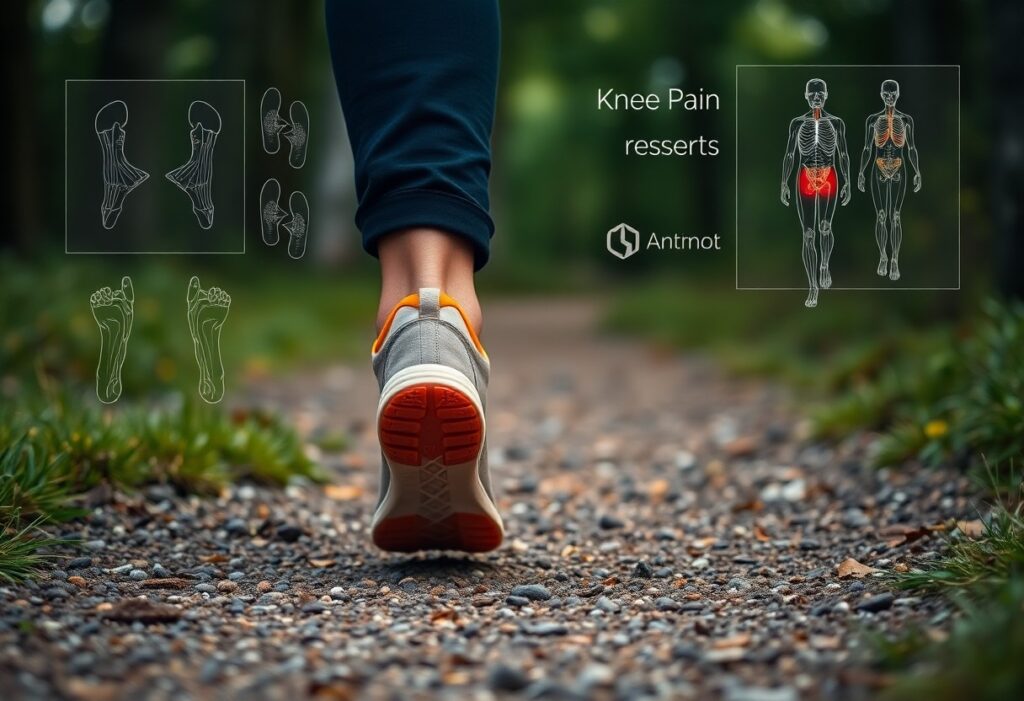
Barefoot shoes are often discussed as a knee-pain fix, but the more useful question is narrower: do they change the mechanics that influence knee stress in the first place? That distinction matters, and it is where the science is strongest.
If you want the broader buying-and-selection view for painful knees, the site’s main guide on Xero shoes for knee pain is the better decision page. This article stays focused on prevention mechanics, what minimalist footwear changes biomechanically, and where the evidence is promising but still limited.
Best-Fit Takeaway barefoot shoes may reduce knee loading for some people by encouraging a shorter stride, better proprioception, and less heel-strike force.
Main Caution the same shoes can trigger calf, foot, Achilles, or even knee flare-ups if you switch too quickly or ignore your current biomechanics.
Who should be cautious first
- People with current knee inflammation or sharp pain
- Anyone with plantar fasciitis, Achilles issues, or recurring calf tightness
- Runners and walkers who are tempted to change mileage and footwear at the same time
| Footwear choice | Likely effect on knee loading | Transition risk | Best use case |
|---|---|---|---|
| Barefoot Shoes | Can reduce some impact patterns and encourage a more natural stride, which may lower stress for certain users. | Moderate to high if you switch abruptly or add mileage too fast. | Gradual adaptation, walking, light training, and users who tolerate low cushioning well. |
| Cushioned Shoes | Can feel protective short term, but may also mask ground feedback and change mechanics in ways that increase knee load for some wearers. | Low immediately, though repetitive use can keep inefficient patterns in place. | Short-term comfort, higher-impact sessions, or people who are not ready for minimalist shoes. |
| No Footwear | Can maximize sensory feedback, but terrain and sharp-surface risk rise quickly. | High on hard, uneven, or dirty surfaces. | Controlled environments only, usually for short drills rather than daily wear. |
For the underlying mechanics, a deeper science explainer on the science of barefoot shoes and their benefits helps frame why heel height, toe box shape, and sole stiffness can matter as much as cushioning.
Why Barefoot Shoes Entered The Knee-Pain Conversation
The interest is easy to understand. The knee bears load every time you walk, run, climb stairs, squat, or change direction, so even small mechanical shifts at the foot can alter how force travels up the leg. Barefoot shoes promise a different starting point: less heel elevation, less rigidity, and more direct feedback from the ground.
That is not the same as claiming they “cure” knee pain. The better scientific framing is that minimalist footwear may change the way some people move in ways that Could reduce knee stress over time. For others, especially those with poor adaptation, weak foot muscles, or existing lower-limb sensitivity, the same change may simply move stress to another tissue.
This is why the page is best read as a prevention guide rather than a treatment promise. If the question is whether your current knee symptoms need a shoe choice decision first, the broader knee guide on Xero shoes for knee pain should come first; if the question is why minimalist footwear might change load in the first place, this article is the right layer.
What Changes Biomechanically When You Switch Footwear
The strongest claims around barefoot shoes are biomechanical, not cosmetic. Traditional shoes, especially those with raised heels and thick cushioning, can subtly shift posture and force patterns. Barefoot shoes reduce those design interventions and often encourage a shorter stride, lighter landing, and greater awareness of how the foot contacts the floor.
Heel Elevation And Forward Load
Raised heels move the body’s center of mass forward and can increase the amount of work required higher up the chain, including at the knee. Even modest elevation may change your preferred standing and walking posture. In people already sensitive to patellofemoral stress, that extra forward shift can matter more than the marketing often suggests.
By contrast, a zero-drop shoe keeps heel and forefoot closer to the same level. That doesn’t guarantee lower knee pain, but it does remove one of the most common design features associated with altered loading patterns.
Cushioning, Feedback, And Stride Choice
Cushioning is more complicated than “more is better” or “less is healthier.” Thick midsoles can reduce the sensation of impact, which feels comfortable in the moment, but that sensory quieting sometimes encourages heavier heel strikes and longer strides. Those patterns can increase joint loading even when the shoe feels soft.
Barefoot shoes do the opposite. They keep the user closer to the ground, which can improve proprioception and encourage a more controlled foot strike. In practical terms, many wearers naturally shorten stride length and increase cadence, both of which are commonly associated with lower peak stress on the knee.
Muscle Use And Movement Control
Minimalist footwear may also recruit the intrinsic muscles of the foot and lower leg more actively. That is one reason enthusiasts talk about “stronger feet,” but the more important point for knee prevention is control: if the foot becomes more responsive, the whole lower limb may coordinate more efficiently. Better control can mean fewer abrupt corrections at the knee.
The caveat is that a weak or deconditioned foot can’t magically handle this load on day one. If your calves, arches, or plantar tissues are unprepared, the nervous system may compensate in ways that overload a different structure. That is why the adaptation period is not a footnote; it is part of the mechanism.
What The Research Suggests, And What It Does Not
The best current evidence does not say that barefoot shoes are universally better for knees. It suggests that certain mechanical changes often occur when people wear them, and those changes can be beneficial under the right conditions. Some studies report lower joint loading, lower impact peaks, or reduced knee discomfort in minimalist footwear users. Other studies warn that the adaptation process can raise the risk of overuse injuries when people progress too quickly.
That mixed picture is important. It keeps the discussion honest and prevents overclaiming. A shoe can be mechanically interesting without being universally appropriate. In fact, a realistic prevention message has to include both sides: the same design that may reduce load for a trained, gradual adaptor can be too aggressive for a person with limited calf strength, a history of plantar pain, or an abrupt jump in walking volume.
Research also tends to focus on one activity at a time. Walking, jogging, treadmill running, trail terrain, and daily standing all create different demands. A shoe that seems knee-friendly in one context may not behave the same way in another. That is another reason the page stays focused on mechanism rather than a blanket endorsement.
Evidence in plain English
The science supports a cautious, conditional answer: barefoot shoes may help reduce knee stress for some people because they change gait mechanics, but they are not a universal prevention tool and they are not risk-free.
When Minimalist Shoes Make Sense, And When They Do Not
The right time to try barefoot shoes is usually when you want to test a change in mechanics gradually, not when you are already in the middle of an acute flare-up. If your knee pain is clearly tied to a specific injury, swelling, instability, or a recent twist, a shoe experiment is not the first lever to pull. If your pain is more related to repetitive walking, long standing, or recurring overuse patterns, the footwear question becomes more relevant.
There is also a practical timing issue. Start during a low-stress period, not right before a trip, long race block, new job shift, or increase in training volume. The benefit of minimalist footwear depends heavily on how carefully the transition is handled, and the easiest time to make that change is when your calendar is calm enough to observe how your body responds.
| Timing factor | Better choice | Why it matters |
|---|---|---|
| Acute Knee Flare-Up | Pause the experiment | New footwear stress can obscure the cause of pain. |
| Stable Routine, Low Training Load | Good window to trial barefoot shoes | You can monitor the response without stacking variables. |
| Preparing For A Long Walk Or Run | Stay conservative | The tissue load is too high for a first-time transition. |
| After A Structured Strengthening Phase | Best time to expand use | Stronger calves and feet usually tolerate the change better. |
How To Transition Without Trading One Problem For Another
Transition safety is the part of the story that gets ignored most often, yet it determines whether barefoot shoes feel helpful or punishing. Most of the downside people report does not come from the shoe alone; it comes from using the shoe as if adaptation were instantaneous.
A safer approach is to start with short, low-demand sessions. Wear the shoes for a few minutes at first, then extend only if your knees, calves, arches, and Achilles tendons respond well over several days. Walking on soft surfaces can help in the first phase because it allows you to feel the mechanics without the full impact of hard pavement.
The article on transitioning to barefoot shoes gives a broader adaptation framework, but the knee-specific takeaway is simple: if the lower leg is sore in a sharp or lingering way, you have probably progressed too quickly.
A Practical Adaptation Ladder
- Start with short indoor wear or easy walking sessions.
- Keep the terrain predictable until you know how your calves and knees react.
- Add time slowly, not daily distance all at once.
- Use one variable at a time: either more wear time or more intensity, not both.
- Back off if soreness becomes sharp, asymmetric, or lasts beyond normal adaptation fatigue.
That ladder sounds conservative because it is. Conservative is good here. Barefoot shoes reward patience and punish impatience. The common mistake is thinking that discomfort is proof the shoes are “working.” In reality, discomfort can just as easily mean the tissues are not ready.
What To Look For If You Are Choosing A Pair For Prevention Rather Than Fashion
If the goal is to support knee-friendly mechanics, the features that matter most are the ones that preserve natural motion. A wide toe box helps the forefoot spread. A zero-drop platform removes unnecessary heel bias. A flexible sole keeps you closer to the ground and allows the foot to articulate. Light weight matters too, because a heavy shoe can interfere with the gait changes people are trying to achieve.
The specific model matters less than the fit. A minimalist shoe that pinches the toes or collapses the heel will not give the kind of movement you are after. Likewise, a shoe that feels fashionable but stiff may behave more like a conventional sneaker than a true barefoot design. If your foot is broad, high-volume, or unusually shaped, fit should win over appearance every time.
For people trying to narrow model choices, the site’s model-level discussion of Xero shoes for plantar fasciitis is useful because it highlights a related decision pattern: when a shoe is trying to solve one lower-limb issue, it can create another if the fit or progression is wrong.
Best practice before you buy
Choose the shoe only after you decide how you will transition into it. A good barefoot shoe with a bad transition plan is still a bad outcome.
If you already know your knee symptoms are persistent or complex, start with the broader knee guide on Xero shoes for knee pain before making a purchase decision.
How Foot Strength Changes The Knee Equation
A surprisingly large part of knee comfort begins below the knee. If the arch is weak, the foot collapses too easily. If the calves are tight, the body may compensate with a stiffer landing. If the toes cannot splay, balance and propulsion may suffer. These issues do not guarantee knee pain, but they can contribute to inefficient mechanics that travel upward.
That is why foot-strengthening work often pairs well with minimalist footwear. Toe curls, short-foot drills, marble pickups, and controlled calf raises can improve the tissues that support the foot during the transition. The goal is not athletic perfection. The goal is enough capacity that the new shoe style does not overtax tissues that have been underused.
The better you can stabilize the foot, the less likely your knee is to compensate for poor control elsewhere. In that sense, barefoot shoes are not a stand-alone solution; they are part of a system that includes strength, timing, and movement quality.
What This Means For Runners, Walkers, And Everyday Wearers
Runners tend to notice the mechanics question fastest because impact is more obvious. A shorter stride and quicker cadence can reduce the hammering effect that some runners feel in the knee. But running also magnifies mistakes, so the transition window must be slower and more deliberate than it is for casual walking.
Walkers and all-day wearers often have a more forgiving starting point. They may notice knee relief only after the foot and calf adapt enough to support steadier, less constrained movement. In these cases the shoe’s benefit is usually indirect: less stiffness, better balance, and a more natural response to changing surfaces.
If your day already includes long hours on your feet, you may also want the more practical, use-case-driven coverage in barefoot shoes for comfort on the go. That kind of article helps with everyday wear decisions, while this one is specifically about the knee-loading question behind those decisions.
A Realistic View Of Benefits And Limits
The benefits people report are real enough to take seriously: better ground awareness, smoother gait, and in some cases less knee discomfort after adaptation. But the limits matter just as much. Not everyone has the calf capacity, foot mobility, or patience to make the switch safely. And not every knee complaint comes from a problem that footwear can fix.
It helps to think of barefoot shoes as one variable in a larger prevention equation. They can nudge movement in a healthier direction, but the body still needs strength, sensible training volume, appropriate terrain, and enough time to adapt. That broader view is more useful than a simple yes-or-no answer because it matches how musculoskeletal issues actually behave in the real world.
If your priority is a lower-risk first step, start with walking, compare response over a few weeks, and treat any persistent pain as a signal to slow down or seek a specialist’s input. If your priority is finding a model that fits a knee-sensitive routine, the main buying path remains the broader knee guide linked earlier, with this article serving as the science layer behind that choice.
Need the practical buying guide next?
If you are choosing shoes because your knees already need relief, the decision should move from science to fit and use case. Start with the site’s primary knee-focused guide and then return here to judge whether the mechanics of minimalist footwear fit your situation.
Frequently Asked Questions
If you are comparing specific models after reading the science, the next step is to choose a shoe that supports your feet without forcing a rushed transition. For a more practical product-level angle, go back to the main knee-pain shoe guide and use it as the decision page.

Oliver Prescott is a dedicated author and content creator at My Shoes Finder, where he explores a diverse range of topics focusing on lifestyle, fashion, and personal development. With a keen eye for detail and a passion for storytelling, he connects with readers by providing insightful and engaging content. Oliver’s writing aims to inspire and inform, making complex ideas accessible and relatable to a broad audience. When he’s not writing, he enjoys exploring new shoe trends and sharing his findings with fellow enthusiasts.
See also:
 Xero Shoes For Knee Pain: What Helps, What Doesn’t, And Who Should Be Careful
 Xero Shoes For Children In 2025: Fit, Safety, And Best Models
 Transitioning To Xero Shoes: A Safe Beginner’s Guide For 2025
 Are Barefoot Shoes Good For Wet Hiking? What Works, What Fails, And When To Avoid Them
 Xero Shoes For Arthritis: A Practical 2025 Footwear Guide
 Xero Shoes For Bunions: What Helps, What Doesn’t, And Which Models Fit Best
Your exploration of barefoot shoes and their impact on knee pain really resonates with me. I’ve been on a journey dealing with knee discomfort myself, and I can see how traditional cushioned shoes might mess with our natural gait. I recently switched to a more minimalist shoe, and while my feet have been adjusting, I’ve noticed a significant improvement in my overall stride and comfort levels during walks. It’s fascinating how something as simple as footwear can influence our biomechanics so profoundly.
I completely relate to your experience with knee discomfort and the transition to minimalist shoes. It’s interesting how footwear, often overlooked, plays such a crucial role in our overall well-being. I remember when I first made the switch myself; it felt a bit strange at first, almost like re-learning how to walk. But over time, the benefits became clear—not only did my stride improve, but I also gained a heightened awareness of my body and movement.
It’s interesting to hear about your journey with knee discomfort and how switching to minimalist shoes has made a positive difference for you. I think it’s a testament to how much our choice of footwear can affect our overall biomechanics. I experienced something similar myself when I transitioned to barefoot shoes a couple of years ago. At first, my feet needed time to adjust, just like you mentioned, but over time, I felt my posture and balance improve significantly.
It’s intriguing to hear you had a similar transition to barefoot shoes. The adjustment period can feel quite challenging, but it sounds like you’ve navigated it well. For me, feeling my posture and balance improve has underscored how interconnected everything is, from our feet to our overall alignment.
This post strikes a chord with me—my knees definitely have more drama than a soap opera! I tried switching to barefoot shoes once, thinking I’d channel my inner gazelle. Spoiler alert: my transition was more like a clumsy hippo. The key takeaway for me was the gradual adaptation—felt like I was walking on marshmallows… in a good way eventually!
Your insights on the increasing popularity of barefoot shoes and their potential benefits for knee pain are particularly relevant, especially as I’ve been exploring various footwear options due to my own knee discomfort. The connection you made between traditional cushioned shoes and altered gait resonates with my experience; I’ve often noticed that certain types of shoes can lead to uneven strain in my joints.
The discussion on barefoot shoes and their potential benefits for knee pain resonates deeply with me. As someone who has struggled with knee discomfort for years, I can relate to the quest for effective solutions. The idea that barefoot shoes encourage natural foot movement really strikes a chord; I’ve often felt that my traditional footwear limited my mobility and contributed to my joint issues.
It sounds like you’ve really thought through how footwear can impact overall mobility and joint health. The correlation between traditional shoes and limited movement is an interesting one. I’ve read that many people experience similar issues, often attributed to the lack of flexibility and support that conventional shoes provide.
It’s interesting you mention the connection between footwear and mobility. I’ve certainly noticed how the type of shoes we wear can affect not just our comfort but also our overall posture and balance. It makes sense that traditional shoes, with their rigid structures, could limit our natural movements.
You raise a great point about the connection between footwear and mobility. I’ve definitely experienced it myself; when I switched to more flexible shoes, I noticed a real difference in how I moved throughout the day. It’s fascinating how something as simple as our shoes can impact not only comfort but also our posture and even our mood. I’ve read about minimalist footwear and how it encourages a more natural gait, which seems to resonate with your thoughts on the limitations of traditional, rigid shoes.
It’s interesting how much our footwear can influence not just how we walk but also our overall well-being. I’ve gone through a similar transformation myself after switching to more flexible shoes. Initially, I didn’t realize the extent to which my posture was affected by stiffer designs until I made the change. It’s almost like a light bulb went on, revealing just how much movement we might be missing when our feet are restricted.
I appreciate your thoughts on this topic. It’s interesting how something as common as our shoes can play such a significant role in our daily lives. The experience you mentioned about feeling more agile in flexible shoes resonates with many people. It’s like suddenly giving your feet the freedom they need to move naturally without constraints.
You’re spot on about the impact of footwear on mobility; it’s surprising how often we overlook that connection. When I made the switch to more flexible shoes, I felt a shift not just in how I moved, but in how my entire day unfolded. I noticed I had more energy and was even more present in my interactions, which I think ties back to how comfortable we feel physically.
It’s great to hear your experience resonates with the topic. Knee discomfort can be such a frustrating challenge, and it makes sense that traditional footwear might not always lend a hand. Many people find that when they switch to barefoot shoes, they start to feel a difference not just in foot mobility, but also in how the entire leg and joint mechanics work together.
This topic really resonates with me because I’ve dealt with knee pain for over a year now, and I’ve tried a bunch of different footwear options hoping for relief. It’s interesting to see barefoot shoes gaining traction as a potential solution. I’ve read mixed reviews, though; some swear by them for improving their gait and alleviating pain, while others have warned about the adjustment period leading to more discomfort initially.
As someone who has dealt with chronic knee pain for years, I find this conversation about barefoot shoes both intriguing and somewhat cautionary. While it’s clear that traditional cushioned footwear can contribute to poor biomechanics and misalignment, the idea that a minimalist shoe can remedy these issues raises a few questions for me.
Fantastic insights on barefoot shoes! It’s like the footwear equivalent of ditching your winter coat in favor of a breezy Hawaiian shirt—except instead of looking like a tourist, you might actually be doing wonders for your knees. I have to admit, I tried switching to minimalist shoes last summer after realizing my old cushioned ones were like pillows for a foot that needed a wake-up call. Spoiler alert: my ankles first felt like they were auditioning for a role in a horror movie, but I persevered. Gradual adaptation, they said. Ha! It felt more like I was on the fast track to Foot Pain City.
Switching to minimalist shoes can feel like those early days of a new workout routine—full of enthusiasm but also a fair bit of discomfort. Your “audition for a role in a horror movie” is a classic experience for many who make the switch. It’s amazing how our bodies adapt, sometimes in ways we don’t expect.
I totally relate to that feeling of switching to minimalist shoes. It really is a mixed bag of excitement and those uncomfortable adjustments our bodies go through. When I first made the switch, I felt like I was rediscovering running all over again, but my calves had other plans. There’s this strange balance of listening to your body and pushing through those early discomforts.
It’s fascinating to see how the conversation around barefoot shoes is evolving, especially in the context of knee pain and footwear choices. As someone who has struggled with knee issues intermittently over the years, I find the emerging research surrounding minimalist designs quite intriguing. The idea that these shoes can encourage more natural foot movement and potentially alleviate joint strain resonates with me.
It’s great to hear how the conversation around barefoot shoes resonates with your experience. Knee pain can really disrupt the rhythm of life, and understanding how footwear impacts that can be a game changer.
I found this discussion on barefoot shoes and their potential benefits for reducing knee pain truly captivating, particularly given how common this issue is for so many people. The idea that our footwear choices can significantly influence our biomechanics and ultimately affect joint health is something we often overlook. I’ve personally experienced the challenges of knee pain, especially after long periods of standing or engaging in activities that require repetitive motions.
It’s interesting to hear your personal experience with knee pain, especially when it often seems like a common struggle for so many. You touch on a crucial point about how our footwear can impact our biomechanics. It’s not just about comfort; it’s about how the design of our shoes can alter our posture and gait, which in turn affects our joints.
I completely resonate with your thoughts about barefoot shoes and their impact on knee pain. It’s interesting how something as simple as our choice of footwear can play such a crucial role in our biomechanics and overall joint health. I’ve had my own struggles with knee discomfort, particularly after long walks or during workouts, and it really makes you reconsider what you put on your feet.
As someone who’s experienced the joys of knee pain firsthand (who knew a couch potato could develop a flair for it?), I appreciate this deep dive into footwear choices. I recently tried switching to barefoot shoes, and while they promised the freedom of a ballet dancer, I felt more like a baby giraffe learning to walk. My knees had a bit of a curveball reaction!
It’s fascinating how footwear can affect our bodies, isn’t it? You’ve jumped right into the deep end with the barefoot shoes, which can feel liberating but often turns into a real challenge, especially if your knees aren’t ready for the transition. Switching to minimalist footwear does promise that ballet dancer vibe, but it’s not just a ‘switch flip’ kind of change.
This topic really resonates with me, as I’ve been on a journey to manage my own knee pain over the past few years. It’s interesting to consider how our footwear choices can significantly impact our overall biomechanics and joint health. I’ve recently started exploring barefoot shoes after hearing about their benefits, and it’s been enlightening to feel how they encourage a more natural movement pattern.
Ah yes, the infamous knee pain saga—my knees and I have had a long-term relationship that often feels like a bad romantic comedy. They get cranky when they see me reaching for my cushy sneakers, and I’m pretty sure they roll their eyes when I do the “shuffle” walk across the room. I’ve often wondered if my shoes throw shade at me collectively—cushioned footwear can feel like a hug for the feet, but I’ve felt that “gait awkwardness” creeping in, especially during my casual jogs to the fridge.
I found your insights on barefoot shoes really intriguing, especially with all the growing interest in holistic health approaches and natural movement. I’ve personally dealt with knee pain on and off over the years, often chalking it up to playing sports and not always paying attention to my form. Your mention of how traditional cushioned footwear can alter gait struck a chord with me — I’ve definitely felt that disconnect sometimes when switching between my running shoes and more minimalist options.
It’s great to hear your thoughts on this. Knee pain can be frustrating, especially when it feels tied to how our shoes impact our movement. The transition between cushioned shoes and minimalist options can definitely lead to that sense of disconnect. Cushioned footwear tends to create a bit of a ‘bubble’ around our feet, which can make it easy to lose touch with the ground and what proper form feels like.
You raise some important points regarding the relationship between footwear and knee health, particularly in the context of the rising popularity of barefoot shoes. While the potential benefits of these minimalist designs are certainly intriguing, my experience leads me to wonder about the broader implications of switching to barefoot footwear and the diverse populations affected by knee pain.
You bring up a really important point about barefoot footwear and how it might affect different people, especially considering the complexity of knee pain. The exploration of minimalist shoes certainly seems to be gaining traction, and it’s fascinating to think about how something as simple as a shoe can impact our bodies in such profound ways.
This post raises important points about the intersection of footwear and knee health, a topic I find particularly relevant given the increasing prevalence of knee pain among active individuals. Personally, I’ve experienced the discomfort that can stem from unfavorable footwear choices, which prompted me to explore alternative options like barefoot shoes.
It’s interesting how footwear can significantly impact our overall health, particularly with something as crucial as our knees. Your experience with discomfort really resonates, and it’s a reminder of how our choices can have lasting effects. I’ve also dabbled with barefoot shoes after noticing knee issues flare up during my runs. Each style has its pros and cons, but transitioning to barefoot footwear felt more natural for my gait.
I found an insightful read about MBT shoes that really aligns with our conversation on footwear and knee health, especially for those of us dealing with knee pain from less supportive options.
‘Masai Barefoot Technology Shoes: Experience the Comfort of MBT Shoes!’
https://myshoesfinder.com/barefoot-shoes/masai-shoes/.