
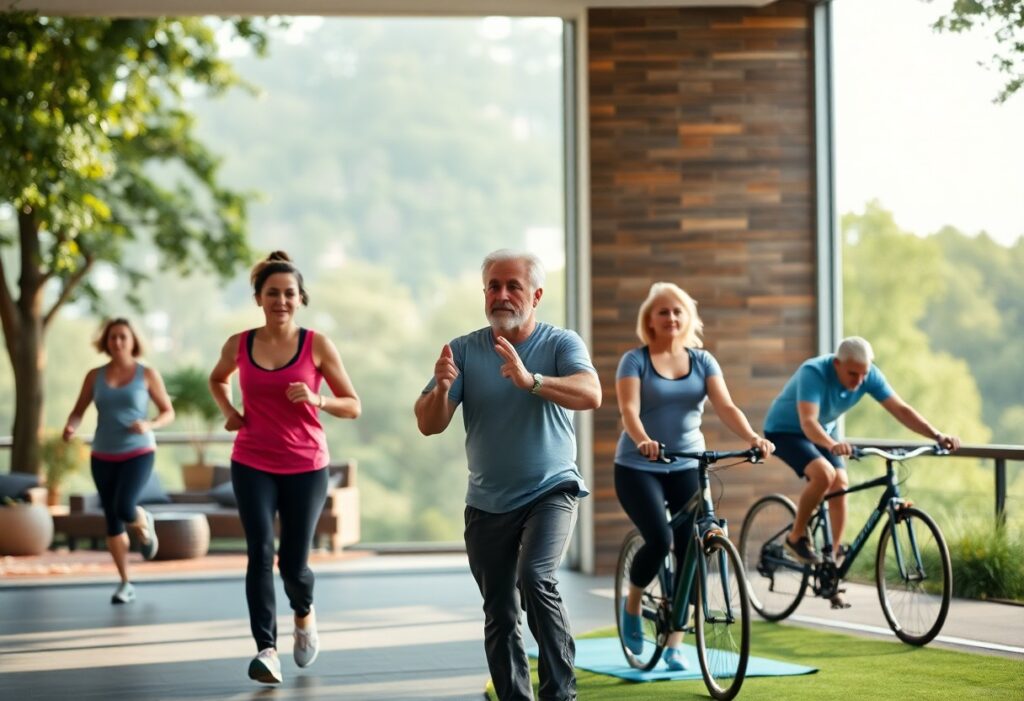
Staying fit after 40 is less about pushing harder and more about training with intent. Recovery slows, joints ask for more respect, and smart consistency starts to beat all-out intensity.
If you want a practical place to start, pair this guide with our latest articles for related recovery, walking, and footwear support ideas that can make your routine easier to sustain.
What changes after 40, and what should you do about it?
- Strength keep it, but train it with better form and a little more recovery.
- Mobility protect range of motion before stiffness becomes a problem.
- Recovery sleep, protein, and spacing workouts matter more than ever.
- Consistency shorter, repeatable sessions usually win over occasional hard efforts.
Build The Right Base First
Fitness after 40 works best when you think in layers: keep strength, preserve mobility, and reduce the kinds of stress that cause setbacks. That means your plan should be more deliberate than it was in your 20s, but it does not need to be complicated.
A big part of that foundation is what happens outside the gym. Walking, recovery, and footwear all affect how much stress your feet, knees, hips, and back absorb. If you want to make daily movement easier on your body, it is worth reading about barefoot walking shoes and how they can support a more natural stride for everyday activity.
1. Keep Strength Training, But Shift The Emphasis
The goal is not to train like you did at 25. The goal is to keep muscle, maintain bone density, and protect the joints that carry you through daily life. Compound movements such as squats, hinges, rows, presses, and loaded carries still matter because they train multiple patterns at once and keep your body functional.
The difference is in how you dose the work. Use manageable loads, increase gradually, and stop a set when form begins to slip. Better form beats extra volume every time, especially when recovery is no longer automatic.
2. Treat Mobility As Part Of Training, Not An Afterthought
As mobility decreases, movement quality can quietly drop before you notice a real problem. A few minutes of dynamic warmup work before exercise and a short mobility routine on off days can keep hips, ankles, shoulders, and thoracic spine moving more freely.
This matters even more if you spend a lot of time walking or standing. Supportive daily habits, including footwear that does not force your feet into a cramped position, can reduce the friction that builds up over time. For readers comparing options, all-day walking comfort is a useful place to start when you want movement support beyond the gym.
3. Recover Like Recovery Matters
One of the most common mistakes after 40 is training hard enough to need recovery, but not organizing the week to allow it. If sleep is poor, stress is high, and rest days are random, even a good plan can start to feel like it is working against you.
A better approach is simple: place hard sessions farther apart, keep easy days truly easy, and make recovery inputs non-negotiable. That includes hydration, adequate protein, and enough total calories to support the activity level you are asking of your body.
4. Eat For Maintenance, Not Just Appetite
Nutrition matters more because the margin for error narrows. Protein supports muscle repair, complex carbohydrates help you train and recover, and nutrient-dense foods make it easier to stay energized without overcomplicating meals. You do not need a perfect diet, but you do need enough fuel to match your output.
A practical rule: make each meal do a job. Include a protein source, add produce, and build around foods you can repeat consistently. The easier your meals are to execute, the easier your fitness routine becomes to sustain.
5. Protect Consistency With Low-Friction Habits
The best plan after 40 is the one you can repeat during busy weeks. Short workouts, regular walks, and realistic scheduling often outperform ambitious routines that collapse after a month. If you can keep moving most days, you are already doing more than many people who only exercise in bursts.
That is also where movement support matters. If your feet or shoes are part of the problem, it becomes harder to stay active. For people comparing footwear with a more natural feel, whether barefoot shoes are comfortable can be a useful question before making a switch.
A Simple Weekly Structure
You do not need an extreme split. A balanced week for many adults over 40 looks more like this: two or three strength sessions, two mobility or active recovery days, and daily walking or light movement. That rhythm gives your body enough stimulus to improve without creating the constant fatigue that leads to missed sessions.
- Strength Days focus on good form, moderate volume, and gradual progression.
- Mobility Days work on range of motion, balance, and easy movement quality.
- Walking Or Low-Impact Cardio use it to build capacity without beating up the joints.
- Rest take it seriously so the other sessions actually pay off.
Choose the right support for your routine
If you spend a lot of time walking, standing, or training in mixed settings, the wrong shoes can undermine consistency. Start with the footwear category that matches your routine, then build from there.
A good next step is to browse our barefoot shoe collection and compare it with your needs for comfort, flexibility, and all-day wear.
What To Avoid If You Want Progress To Last
The fastest way to stall progress is to ignore recovery, jump intensity too quickly, and treat soreness as proof that a workout was effective. After 40, sustainable fitness usually comes from better pacing, not more punishment.
Another mistake is focusing on exercise alone while ignoring the parts of life that influence movement quality. Foot pain, poor shoe fit, and repetitive stress can all change the way you walk and train. If fit has been a problem, it may help to review practical shoe-care and support guidance to keep footwear performing properly longer.
A Final Word On Staying In Shape After 40
You do not need a perfect routine to stay fit after 40. You need a plan that respects recovery, keeps strength in the picture, and makes movement easy enough to repeat.
If your next decision is about footwear, training comfort, or simply making daily movement feel better, this all-day comfort guide is a practical place to continue.
Ready to keep moving with less friction?
Explore the broader articles hub for more practical support on walking, recovery, and footwear choices that can help you stay active longer.
Frequently Asked Questions
Is It Too Late To Get Back In Shape After 40?
No. Most people do best when they restart gradually, focus on consistency, and give recovery the same attention they give workouts.
What Is The Most Important Type Of Exercise After 40?
Strength training is the anchor, but it works best when paired with mobility, walking, and sensible recovery.
How Often Should I Work Out?
For many adults, two or three strength sessions plus regular low-intensity movement is a sustainable starting point. The best schedule is the one you can keep without feeling beat up all week.

Natalie Harper is a versatile author and content creator at My Shoes Finder, where she explores a wide range of general topics that resonate with diverse audiences. With a passion for storytelling and a keen eye for detail, Natalie crafts engaging articles that provide valuable insights and inspire readers. Her commitment to quality and relatability makes her work a trusted resource for those seeking both information and inspiration in their daily lives.
See also:
 Xero Shoes For Achilles Tendonitis: 2025 Rehab Protocol And Loading Guide
 8 Running Recovery Tips That Actually Improve Endurance And Performance
 Do Barefoot Shoes Help Active Recovery? Benefits, Limits, And Best Use Cases
 How To Get Back Into The Gym After Time Off: A Simple Return Plan
 Xero Shoes For Nurses: Best Picks For 12-Hour Shifts
 Best Xero Shoes for Summer Travel: Lightweight Barefoot Picks for Road Trips, Flights, and Everyday Walking



Your insights on maintaining fitness after 40 resonate deeply with me, particularly the emphasis on smart training over intense training. As someone who has recently crossed that threshold, I can attest to the truth in your observations. It’s remarkable how the norms of fitness shift as we age; the focus on sustainability rather than sheer intensity feels vital not only for physical health but also for mental well-being.
It’s great to hear that my thoughts on maintaining fitness after 40 resonate with you. I think it’s such an important shift in perspective—we often get caught up in the idea that more intensity equals better results, but that’s not always the case. As we age, our bodies respond differently, and what worked in our twenties may not be sustainable or even safe anymore.
It’s great to hear that the ideas around smart training resonate with you. As we enter this stage of life, it’s fascinating to notice how the landscape of fitness evolves. Emphasizing sustainability over intensity isn’t just a shift in approach; it’s a recognition of where we find ourselves at different ages and stages.
You make a great point about the shift in fitness norms with age. It’s interesting how the mindset toward training evolves—focusing on sustainability really helps to build a routine that you can stick with in the long run. For me, finding activities I genuinely enjoy has been game-changing. Whether it’s a brisk walk, a fun dance class, or cycling with friends, it’s all about those moments that make staying active feel less like a chore and more like a joy.
You touched on something really important with the idea of finding activities you genuinely enjoy. It’s so easy to get caught up in what we think we “should” be doing when it comes to fitness, but when it actually becomes something we look forward to, it shifts the whole experience.
I completely relate to what you’re saying about the shift in fitness priorities after 40. It’s like you start to see your body in a new light and realize that sustainability really is key. I’ve found that smart training allows for not just a better balance between strength and flexibility, but also a stronger connection between mind and body.
It’s interesting how our perspectives on fitness can evolve so much after a certain age. I’ve found that, like you mentioned, sustainability really becomes paramount. It’s not just about pushing boundaries anymore; it’s more about discovering what feels good and works for our bodies long-term.
You’ve captured something really profound about the changes we experience in our fitness journey after 40. It’s like we start peeling back the layers and realizing that our body isn’t just a machine to push harder but a complex system that thrives on balance and connection.
This resonates deeply with me. As someone who recently turned 42, I’ve felt the shift in my body and my approach to fitness. I used to equate fitness with intensity and endurance, pushing myself to the limit during every workout. However, I’ve learned that listening to my body is key. Instead of heavily loaded squats or long runs, I now prioritize functional movements and flexibility exercises that not only strengthen my muscles but also enhance my mobility and balance.
I couldn’t agree more! It’s like my body decided to enroll in a game show entitled “Guess What Hurts Today!” after I hit 40. One minute I’m doing squats like a boss, and the next, I’m trying to figure out which ice pack goes where. But honestly, the shift in focus from just pushing through the pain to understanding what my body needs has been a revelation.
It really is a wild ride once you hit that milestone, isn’t it? One minute you’re crushing workouts, and the next, you feel like you need a whole first-aid kit just to get out of bed. I totally get that shift in perspective—it’s almost like our bodies are trying to teach us something. Listening and understanding what we need becomes key, right?
You raise a compelling point about the need for a more strategic fitness approach after 40, particularly in a culture that often equates intensity with effectiveness. I’ve experienced firsthand how the demands of my body change as I age; what once felt effortless now requires much more attention to recovery and technique.
You really hit the nail on the head with your reflections on how our bodies change over time. It’s interesting to think about how our definitions of fitness evolve as we age. The idea that intensity equals effectiveness can be so ingrained in our thoughts, but when you strip that down, what we truly need is a sense of balance and sustainability.
You’re spot on about the shift that comes with aging. It’s interesting how the body communicates its needs more clearly as we get older, isn’t it? Emphasizing recovery and proper technique can feel frustrating at times, especially when we remember a time when everything seemed effortless.
I find that shift to be quite profound, too. It’s fascinating how the body doesn’t just age in a physical sense but also evolves in how it communicates its needs. As we grow older, it’s like we develop this internal wisdom that urges us to pay more attention to what our bodies are telling us.
It’s fascinating how our needs evolve with age; I recently came across some insights on footwear that really emphasize recovery and comfort, which might resonate with your experience.
‘Xero Shoes Prio Women’s: Explore Top Features and Benefits’
https://myshoesfinder.com/xero-shoes-prio-womens-explore-top-features-and-benefits/.
You’ve touched on something that resonates with many of us — the shift in our bodies post-40 is undeniable and, frankly, often surprising. It’s like we suddenly find ourselves in a new manual with rules we didn’t quite expect. Recovery and technique become crucial players in how we approach fitness, and it’s interesting how those elements were often secondary in our younger years.
You make a great point about shifting our mindset as we age. I think it’s interesting how our culture often glorifies intensity without considering the long-term implications it can have on our bodies. It’s almost like there’s this unspoken competition around who can push themselves the hardest, but not everyone talks about the toll that can take, particularly after 40.
I really resonate with the idea that fitness after 40 is all about strategy rather than pushing limits. I found that when I turned 40, my body started sending me clearer signals about what it needed and what it didn’t. I used to be all about high-intensity workouts, but now I’ve shifted towards more mindful practices like yoga and swimming. It’s surprising how much emphasizing mobility and flexibility has improved not only my fitness but also my overall mood.
I can really relate to your experience. It’s interesting how our bodies communicate differently as we age. I used to push myself in the same way with intense workouts, and while I still enjoy strength training, I’ve found a lot of value in incorporating lower-impact activities like cycling and Pilates into my routine. It’s refreshing to shift the focus from just intensity to overall movement quality and enjoyment.
I can really relate to that shift in mindset about workouts. As we age, it’s like our bodies start revealing their preferences and limits in a way we can’t ignore, right? I’ve also diversified my routine lately. While I used to solely chase after those intense sessions, I’ve found a lot of joy in activities like yoga and swimming.
It’s really heartening to hear that you can relate to my experience. As we navigate through different stages of life, our bodies definitely become more vocal about what they need—sometimes it’s a gentle nudge, and other times, it’s a strong suggestion to slow down. I can completely resonate with your shift towards incorporating lower-impact activities like cycling and Pilates.
I really appreciate the perspective you’ve shared on fitness after 40. It resonates with me as I’ve recently embraced this phase of life, and I’ve noticed how my approach to fitness has had to shift. I used to focus on high-intensity workouts, but I’ve found more joy and sustainability in incorporating activities like yoga and strength training that emphasize mobility and balance.
It’s great to hear that you’ve found a new approach to fitness that aligns with this phase of your life. I can relate; my own journey after 40 has involved a lot of reflection on what truly brings me joy and makes me feel good. I used to be caught up in the idea that workouts had to be about intensity and pushing limits, but I’ve come to appreciate the value of activities like yoga and strength training as well.
I completely relate to your insights on fitness after 40! It’s amazing how our bodies send us new messages as we age. I’ve found that incorporating activities like yoga and swimming not only keeps me active but also helps me tune into what my body needs each day. Plus, I think the social aspect of fitness is so vital—joining community classes has been a game changer for motivation and accountability.
It’s interesting how our relationship with fitness evolves as we age. I’ve found similar benefits with activities like yoga; it really helps me connect with my body on a different level. It’s almost like a dialogue—I notice what feels good and what doesn’t, and adjust accordingly.
Your insights on fitness after 40 resonate deeply with my journey. I’ve definitely noticed how my approach to exercise has evolved as my body has changed. It’s enlightening to realize that embracing smart, strategic training not only helps prevent injuries but also fosters a greater sense of well-being.