
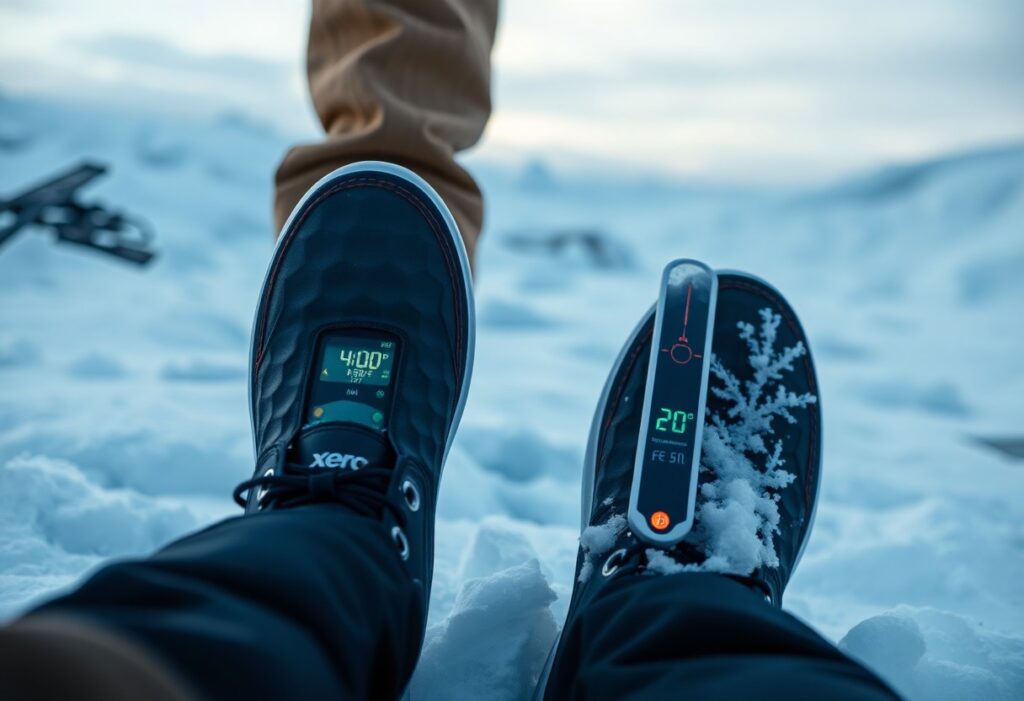
Xero Shoes can be tested in severe cold, but the useful question is not whether they survive -40°F on paper. It is how they behave in dry cold, snow, ice, and longer exposure when warmth, grip, and circulation all matter.
If you want the broader winter-use view, start with the winter trekking guide; this article stays focused on the extreme-cold limit case so the two pages do not compete.
Verdict at a glance
| Best Use Case | Short outings in dry cold, controlled field tests, and low-mileage winter use with careful layering. |
| Where They Are Weakest | Wet snow, long static exposure, and icy conditions where traction and insulation matter more than ground feel. |
| Practical Limit | They can be serviceable in extreme cold only with active movement and a strong sock system; they are not a substitute for insulated winter boots. |
| Best Comparison Page | Use the broader winter trekking guide for route-ready buying decisions. |
What The Arctic-Style Testing Is Really Checking
The value of this kind of test is not a headline temperature. It is whether a minimalist shoe keeps its shape, remains flexible, sheds moisture reasonably well, and still gives the foot enough feedback to move without discomfort or loss of control.
That makes the topic narrower than general winter footwear coverage and more useful for a reader who already knows they want Xero Shoes. The real decision is whether the shoes stay usable when the environment shifts from dry cold to wet snow or long periods of standing still.
For a second point of comparison, the hiking test results and guide is helpful when your cold-weather use overlaps with trail mileage and uneven terrain.
Cold-Weather Scenarios: Where Xero Shoes Fit, And Where They Do Not
| Scenario | What Xero-style minimalist shoes do well | Main limitation |
|---|---|---|
| Dry Cold | They preserve mobility and ground feel, and the upper can remain workable if your socks are doing the heavy lifting. | Cold still transfers fast because there is little insulation underfoot. |
| Wet Snow | Lightweight feel can make walking efficient if conditions are brief and footwork stays active. | Moisture exposure quickly becomes the issue, especially if the shoe is not paired with a barrier strategy. |
| Ice | Low weight helps foot placement feel precise in controlled steps. | Barefoot-style tread is rarely enough for sustained icy travel without additional caution or traction support. |
| Prolonged Standing | Comfort can be good for short monitoring tasks or gear changes. | Static exposure is the hardest case; circulation slows, feet cool down, and minimalist insulation is usually not enough. |
| Winter Hiking | They work best when the route is active, the pace is steady, and the user expects to manage layers carefully. | For longer hikes, a dedicated winter hiking boot is usually the safer and more comfortable choice. |
Material, Grip, And Moisture: The Three Things That Matter Most
The strongest part of the original testing angle is not the branding language; it is the practical trio of material flexibility, outsole traction, and moisture management. Those three factors decide whether minimalist footwear can remain usable once temperatures drop below normal winter comfort levels.
Material Flexibility
In the cold, the useful sign is whether the upper and sole stay bendable instead of turning stiff. If the shoe keeps moving naturally, it remains far easier to walk in and easier to tolerate for short, active outings.
Ice Grip Tread
On packed snow or ice, tread patterns matter less than many marketing claims suggest. A minimalist sole can feel precise, but precision is not the same as winter traction.
Moisture Control
The first real failure point in extreme cold is often dampness. Once socks or the interior environment get wet, the shoe becomes much harder to keep warm no matter how well it moves.
That is why the original layering section is worth keeping, but only if it is framed as a practical system rather than a science-fiction insulation story. A dry foot, an active pace, and a good sock plan do more work than claims about exotic materials.
How To Layer Them For Extreme Cold
If someone insists on using Xero Shoes in severe cold, layering becomes the deciding factor. The goal is to reduce moisture buildup, preserve circulation, and delay heat loss long enough for short outdoor tasks or active movement.
- Start with a thin merino base sock if your fit allows it; bulk can create pressure points and reduce circulation.
- Add a moisture-managing mid-layer only when the fit remains relaxed enough for toes to move.
- Use a barrier approach only for very cold, short-duration exposure; it can help with evaporation control, but it is not a cure for inadequate insulation.
- Avoid over-tight lacing or sock stacking that compresses the forefoot, because numbness usually arrives sooner when circulation is restricted.
For readers who are deciding whether to take Xero shoes on a winter trip rather than a test outing, the travel packing guide is the better place to judge how much footwear flexibility makes sense in a real itinerary.
Safety Limits You Should Not Gloss Over
Important limitation
The original draft overstates protection. In real cold-weather use, minimalist shoes can help with movement, but they do not remove frostbite risk, and they do not replace insulated boots for long exposure, rest stops, or wet conditions.
That is the practical reason the broader winter trekking page should remain the cluster winner: most readers need a shoe that can do more than survive a brief cold test. They need something that works on the route, through the stop-and-start rhythm of winter travel.
What The Field-Style Data Suggests
The original post included a lot of big-number language, but the more useful takeaway is simpler: Xero Shoes can remain structurally usable in severe cold if the test is short, dry, and active. The moment exposure becomes wet, static, or long-duration, their advantages narrow quickly.
The feedback that matters most is not a perfect scorecard. It is whether users can still flex, feel the ground, and keep enough warmth for the task at hand. In that sense, the testing angle supports a limited verdict rather than a universal one.
Best next read
If you are deciding whether Xero Shoes belong in your winter kit, the broader trekking guide is the better purchase and planning reference.
Frequently Asked Questions

Jessica Linford is an insightful author for My Shoes Finder, where she explores a wide array of general topics that resonate with everyday readers. With a passion for storytelling and a keen eye for detail, she brings a unique perspective to her writing, aiming to inform and inspire through her engaging content. Jessica’s diverse interests drive her curiosity, allowing her to connect with audiences on various subjects while sharing practical tips and relatable anecdotes.
See also:
 Xero Shoes For Cold Weather Trekking: What Works, What Doesn’t, And When To Upgrade
 Xero Shoes Winter Boots Review: Best Picks For Warmth, Waterproofing, And Traction
 Xero Shoes Alpine Review: Winter Fit, Comfort, And Versatility
 Xero Winter Boot Comparison: Denver Vs Alpine — Which Fits Your Conditions?
 Xero Ridgeway Chelsea Boots: Fit, Features, And Who They’re Best For
 Are Barefoot Shoes Good For Wet Hiking? What Works, What Fails, And When To Avoid Them

This is such a fascinating take on minimalist footwear in extreme conditions! It’s incredible to think about how technology has evolved to merge warmth and mobility. I remember trying a pair of minimalist shoes last winter, and while they were great for agility on less extreme days, I was always skeptical about their cold-weather performance. Hearing about Xero Shoes’ design choices feels like a game-changer.
It’s fascinating to consider how minimalist footwear like Xero Shoes is evolving to meet the demands of extreme conditions. I’ve always believed that less can be more, especially in nature where mobility and adaptability are crucial. The comparison to a penguin’s feather system really resonates; nature often provides the best inspiration for innovation.
This is a fascinating exploration of minimalist footwear in extreme conditions! As someone who loves winter hiking, I’ve often found myself torn between wanting to feel the ground beneath my feet and needing protection from the elements. The comparison to a penguin’s feather system is spot on! It makes me think about how nature has engineered some incredible survival adaptations that we can learn from.
I’m glad you found the comparison to penguins helpful! It’s amazing how nature provides so many lessons in resilience and adaptation. When it comes to winter hiking, striking that balance between ground connection and protection can be tricky. One thing to consider is how layering can play a role, not just in clothing, but in footwear too. Some minimalist shoes are designed to let you add warmth without bulk—like thicker, insulated socks or removable liners.
I really appreciate the detailed insights into how minimalist footwear, like Xero Shoes, can perform in extreme conditions. It’s fascinating to think about winter gear inspired by nature, like the penguin’s feather system you mentioned. As someone who loves hiking in colder climates, I’ve always prioritized insulation, but this concept makes me reconsider the balance between warmth and bulk.
Reading about Xero Shoes’ performance in extreme arctic conditions is fascinating, especially as someone who enjoys outdoor activities regardless of the weather. The concept of minimalist footwear standing up to such brutal temperatures is both surprising and intriguing. It challenges the common perception that warmer footwear necessitates added bulk and weight, similar to the way we often think about insulation in winter gear more broadly.
I find it fascinating how technology has evolved to create minimalist footwear that can perform in extreme conditions. The comparison to a penguin’s feather system really highlights the ingenuity behind these designs. When I’m out in the cold, maintaining circulation is crucial, and it seems like Xero Shoes has nailed that with their innovative materials.
It’s interesting how our connection with the natural world can inspire innovation in unexpected ways. The penguin’s feather system is a brilliant example of nature’s design genius, showcasing how something as simple as a feather can provide warmth and protection in extreme cold. This makes me think about how we often look to nature for solutions, and in the case of minimalist footwear, it’s amazing to see how companies like Xero Shoes adapt those principles to meet our needs on the ground.
It’s great to hear your thoughts on minimalist footwear and their design inspiration. The connection to a penguin’s feather system really does showcase how nature often leads the way in innovation. When you think about it, these animals have adapted beautifully to their environments, developing features to deal with extreme temperatures while still allowing for mobility.
The exploration of minimalist footwear in extreme conditions is indeed a fascinating subject and raises important discussions about the intersection of technology and nature. The comparison of Xero Shoes to a penguin’s feather system offers a brilliant analogy that highlights how nature has evolved highly efficient solutions for survival in harsh climates. This perspective not only highlights the ingenuity present in both natural and engineered designs but also prompts us to consider how our understanding of biomimicry can continue to innovate other areas of outdoor gear.
You’ve hit on something really essential here about the relationship between our designs and the natural world. It’s interesting to think about how creatures like penguins have honed their adaptations over millions of years, while we’re still just scratching the surface with our engineered solutions. The idea of biomimicry certainly opens up a realm of possibilities for outdoor gear. Just as the penguin’s feathers trap air for insulation, what if we could apply similar concepts to create footwear that adapts to various environments or conditions?
Your insights on minimalist footwear in extreme conditions are really captivating, and I can’t help but think about how crucial the choice of gear is for outdoor adventurers, especially as we face more unpredictable weather patterns. I’ve always been intrigued by the balance between insulation and mobility — it’s a fine line to walk in harsh environments.
I find it fascinating how minimalist footwear is challenging traditional notions of winter gear. Your comparison to a penguin’s feather system is spot on; it highlights the importance of warmth without unnecessary bulk, which resonates with many outdoor enthusiasts who value mobility as much as insulation. I recently transitioned to minimalist shoes for my hikes, and it’s remarkable how they foster a more natural stride.
The insights you shared about minimalist footwear in extreme arctic conditions are truly fascinating! As someone who has always appreciated the balance between comfort and performance in outdoor gear, your comparison of Xero Shoes to a penguin’s feather system really resonated with me. It’s intriguing how nature inspires technology, especially in harsh environments where survival often depends on innovation.
It’s fascinating to see how minimalist footwear can adapt to extreme conditions, especially given the common perception that bulkier boots are the only viable option for cold weather. The comparison to a penguin’s feather system really illustrates the concept of warmth without excessive weight — it’s a clever analogy that speaks to both functionality and innovation.
I find the comparison to a penguin’s feather system really intriguing—it’s a clever way to highlight how effective insulation can be without adding bulk. As someone who loves winter hiking, I often struggle with finding gear that balances warmth and mobility. Have you had the chance to test these in any real-world conditions? I’m also curious about how well these shoes perform on icy trails compared to traditional boots. It’s fascinating how technology in outdoor gear continues to evolve, making previously impossible adventures seem achievable. Looking forward to hearing more experiences from others who have put them to the test!
It’s fascinating to see how far minimalist footwear has come, especially for extreme conditions like the arctic! I’ve always loved the idea of being able to roam without the bulk of heavy boots, and if these Xero Shoes can hold up in -40°F, that’s pretty groundbreaking. The comparison to a penguin’s feather system really highlights how smart design can mimic nature!
It’s fascinating to see how footwear technology continues to evolve, particularly with innovations like Xero Shoes designed for extreme conditions. The comparison to a penguin’s feather system really highlights the cleverness behind their thermal technology. As someone who spends a lot of time hiking in winter, I can appreciate how vital it is to maintain foot circulation in frigid environments.
It’s fascinating to see how minimalist footwear is evolving, especially for extreme conditions. I’ve always been drawn to the idea of barefoot running, but the thought of braving arctic temperatures had me hesitant. Your insights on Xero Shoes and their feather-like design are intriguing—it seems they’ve really captured the essence of nature’s adaptations, just like the way penguins managed their warmth.
It’s really interesting how minimalist footwear has found its niche in extreme environments. The idea of barefoot running definitely has its allure, and it’s fascinating how technology is adapting to bring that experience to colder climates. The way Xero Shoes emphasizes a close-to-nature feel really speaks to our innate desire to connect with the earth beneath us.