
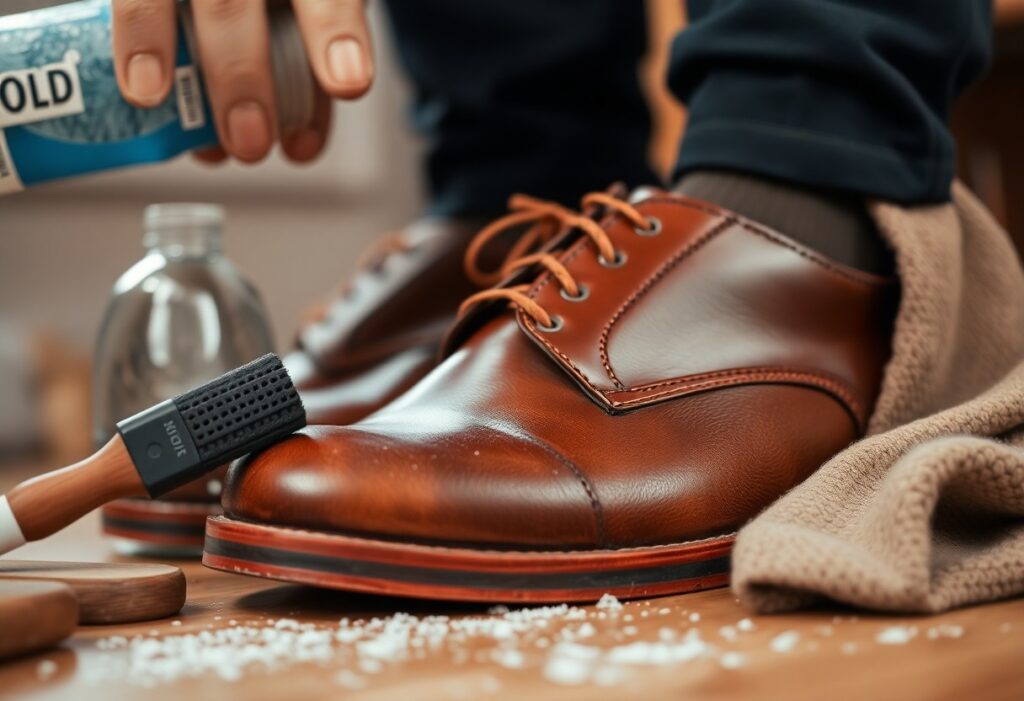
Mould on leather shoes can usually be saved if you act quickly and clean them the right way. The goal is to remove the growth, dry the leather fully, and prevent spores from returning.
| Situation | What to do |
|---|---|
| Light surface mould, no deep staining | Clean gently with a leather-safe method, then condition and dry fully. |
| Mould inside the shoe or on seams | Treat both inside and outside, then use controlled drying and moisture control. |
| Strong smell, heavy staining, or repeated return | Consider professional cleaning before the leather dries out or finishes become damaged. |
| Leather is cracking, delaminating, or the mould has penetrated deeply | Replacement is often the safer option than aggressive cleaning. |
If you already know the shoe is only lightly affected, skip straight to the cleaning steps. If you want a broader leather-care reference after this, the candle wax removal guide is a useful comparison point because it shows how leather-safe cleaning should be handled when residue is on the surface.
- Remove dry spores first so you do not spread them around the shoe or room.
- Use mild moisture only; soaking leather makes the damage worse.
- Finish with conditioning so the leather does not dry out and crack.
- Fix the storage problem or the mould will come back.
Why Mould Shows Up On Leather Shoes
Leather is porous, so it can hold moisture and provide a friendly surface for mould when shoes are stored in warm, damp, or poorly ventilated spaces. The usual triggers are simple: trapped humidity, dirt left on the surface, and shoes put away before they are fully dry.
Most mould problems start in closets, basements, sealed boxes, or any place with weak airflow. Once spores settle, they can spread across stitching, folds, and the inside lining if the shoes stay damp. That is why prevention is as important as cleaning.
Safe Mould Removal For Leather Shoes
The safest approach is to clean the surface gently, let the shoe dry completely, and then condition the leather. Avoid bleach, harsh detergents, and heavy water saturation, because those can strip finish and leave permanent marks.
- Take the shoes outside or to a well-ventilated space before you brush or wipe anything.
- Use a soft, dry brush or cloth to lift loose mould from the surface and seams.
- Lightly dampen a clean cloth with a leather-safe cleaning solution. A diluted white vinegar mix is commonly used for mould, but test a small hidden area first.
- Wipe the affected areas gently rather than scrubbing. Pay attention to stitching, tongue edges, and the area under the laces.
- Let the shoes air-dry naturally at room temperature, away from direct heat, radiators, or sunlight.
- Once fully dry, apply leather conditioner to restore suppleness and reduce drying damage.
If the mould is inside the shoe as well as on the outside, remove the insole if possible and treat both areas separately. Do not seal the shoes in a bag or closed box after cleaning; trapped moisture is what allows mould to return.

How To Keep Mould From Coming Back
Once the shoes are clean, prevention becomes the real job. Keep leather shoes in a space with steady airflow, and avoid storing them in damp wardrobes, garages, or cardboard boxes that trap moisture. If your climate is humid, use moisture control tools in the storage area rather than on the leather itself.
Storage Habits That Help
- Use shoe trees to help the leather hold its shape and dry evenly.
- Keep shoes spaced apart so air can move around them.
- Add silica gel packets or cedar blocks to help manage excess moisture.
- Let worn shoes rest before putting them away long term.
Routine Care That Reduces Risk
- Brush off dirt after wear so mould has less to feed on.
- Dry damp shoes naturally before storage.
- Condition leather every few months to keep it resilient.
- Check the pair regularly if it is stored seasonally.
For readers comparing wider leather-care choices, the article on alternatives to waterproofing spray on smooth leather is a helpful companion because prevention often starts with controlling moisture before it reaches the leather surface.
When To Get Help Or Replace The Pair
Some shoes are worth saving, but not every pair is. If the mould has penetrated deeply, the leather is cracking, or the smell returns after drying and cleaning, a professional cleaner may be the better option. That is especially true for valuable dress shoes, delicate finishes, or shoes with complex construction.
If the pair is inexpensive and the mould has already damaged the leather structure, replacement can be more practical than repeated treatments. The important part is to avoid aggressive cleaning that ruins the leather while trying to rescue it.
If you want to extend the life of the pair after cleaning, it helps to understand how leather quality affects maintenance and why some finishes tolerate treatment better than others.
Common Mistakes To Avoid
- Using bleach or strong household cleaners on leather.
- Soaking the shoes in water or spraying them until wet.
- Drying them with direct heat, hairdryers, or radiators.
- Skipping conditioning after cleaning.
- Storing the shoes again before they are fully dry.
Clean the mould carefully, dry the leather completely, then improve the storage conditions that caused the problem. If you need a broader maintenance routine after that, the wider shoe-care advice on prolonging your shoes’ lifespan is a practical next read.
Frequently Asked Questions
Can Mouldy Leather Shoes Be Saved?
Yes, if the mould is mainly on the surface and the leather has not started cracking or separating. Shoes with deep staining, heavy odour, or repeated regrowth are harder to save and may need professional treatment.
What Kills Mould On Leather Shoes?
A gentle cleaning method that removes spores, followed by careful drying, is the safest approach for leather. Many people use a diluted vinegar solution on a test patch first, because it can help break down mould without soaking the shoe.
Does Vinegar Kill Mould On Shoes?
Vinegar is commonly used on leather shoes when it is diluted and applied carefully. It should not be used as a soaking treatment, and it is wise to test a hidden area first because finishes can react differently.
What Should I Do If Mould Keeps Coming Back?
That usually means moisture is still trapped in the shoes or storage area. Improve airflow, use moisture absorbers, dry shoes fully after wear, and avoid sealed storage until the pair is completely dry.

Henry Harrington is a passionate author and content creator at My Shoes Finder, where he explores a wide range of topics related to footwear, lifestyle, and personal growth. With a keen eye for detail and a love for storytelling, Henry engages readers by sharing insights, tips, and personal anecdotes that resonate with his audience. His commitment to delivering high-quality content has established him as a trusted voice in the online community, inviting readers to step into new perspectives and discover their unique paths.
See also:
 How To Keep White Shoes Clean Without Damaging Them
 How To Remove Salt Stains From Shoes And Prevent Winter Damage
 Xero Shoes For Children In 2025: Fit, Safety, And Best Models
 How To Remove Candle Wax From Leather Shoes Safely
 Best Xero Shoes For Sweaty Feet: Breathable Picks And Moisture Control Tips
 Xero Shoes For Nurses: Best Picks For 12-Hour Shifts



I found your guide on protecting and restoring leather shoes from mould super timely. As someone who’s always been a little too casual about shoe care, I can totally relate to the struggle of keeping them in good shape, especially during the humid summer months. I used to think that as long as I kept them tucked away in a closet, they were safe from any mould menace lurking in the shadows. But, boy, was I wrong!
It sounds like you’ve had quite the journey in shoe care! It’s interesting how we can overlook things we consider safe, thinking that simply putting shoes in a closet means they’re protected. Humidity really can sneak up on us, especially in summer, and it seems like mould spores adore that warm, damp environment just as much as we do.
You’re so right about how easy it is to overlook the potential damage lurking in the closet. We often focus on more visible aspects of our shoe care, like cleaning scuff marks or polishing leather, but humidity can be a silent enemy. The summer months really do create that perfect storm for mould spores, and it’s surprising how quickly they can take hold if we’re not paying attention.
Your guide resonates deeply with me, especially given how often we overlook the significance of proper maintenance for our leather goods. I’ve experienced the distress of finding mould on a favorite pair of shoes, a reminder of how moisture can be a stealthy adversary.
It’s great to hear that my guide resonated with you. The experience of finding mould on a beloved pair of shoes can be genuinely upsetting. It’s surprising how quickly mould can take hold when leather isn’t cared for properly. I’ve had my own share of battles with moisture, especially when the weather takes a turn and we end up with wet shoes just sitting around.
It’s interesting to read about the interplay between leather care and mould prevention. While most people might think of caring for leather purely in terms of aesthetics, I appreciate how you’ve highlighted the potential health hazards of neglecting mould. It’s intriguing how environmental factors like humidity and storage conditions play such a critical role in this process.
You bring up a really valuable point about the connection between leather care and mould prevention. It’s easy to get caught up in the aesthetic aspect, especially when leather items can be such a style statement. But the health implications of neglecting proper care can’t be overlooked—even if it’s not something many think about day-to-day.
This is a topic I really resonate with! I’ve definitely learned the hard way that neglecting leather care can lead to some unexpected consequences. Last summer, I found a pair of my favorite loafers covered in mould after a humid few weeks without proper storage. Your guide really highlights how crucial it is to strike the right balance with humidity levels, and I appreciate the focus on both prevention and treatment.
I can totally relate to your experience with leather care — it’s surprising how quickly neglect can lead to some pretty unfortunate outcomes. I had a favorite pair of boots that I forgot to treat before a particularly rainy season, and the leather ended up cracking. It definitely taught me the importance of both prevention and preservation.
It’s interesting how quickly something like humidity can turn a favorite pair of shoes into a disaster, isn’t it? Your story about the loafers really paints a picture of how we often overlook the little things in our daily lives. It’s not just about keeping our leather items looking nice; there’s a real aspect of preservation that ties into how we value and take care of our belongings over time.
Your insights on the relationship between leather shoes and mould growth are spot on. It’s interesting to think about how our environments influence not just the appearance but the longevity of our footwear. I recently read about the benefits of using moisture absorbers or silica gel packets in shoe storage—these could complement the maintenance practices you suggest, especially in humid climates.
I completely agree with you on how the environment plays a critical role in the longevity of footwear. It’s fascinating how something as simple as humidity can impact our leather shoes so significantly. The use of moisture absorbers or silica gel packets is a great tip, especially in places where humidity levels are consistently high. I’ve started using them in my shoe storage, and it really seems to help.
I completely relate to what you’re saying about the impact of the environment on footwear. Humidity is such a sneaky factor; it can really sneak up on you. I used to overlook the importance of proper storage until I noticed that some of my leather shoes were developing minor issues. Now, I’m a firm believer in moisture absorbers too. It’s amazing how something so small can make a difference.
You raise a great point about how our environments really shape the care we need for our footwear. The use of moisture absorbers or silica gel packets is something I recently started incorporating as well, especially during the wetter months. It’s fascinating how simple solutions can make a significant difference.
You make a great point about the role of our environments in the longevity of footwear. It’s fascinating how something we may overlook, like humidity, can significantly impact not just leather shoes but our overall wardrobe. I’ve started using silica gel packets myself, especially during those muggy months when it feels like everything is trying to grow something.
Your insights on the importance of mould prevention for leather shoes resonate with me deeply, especially since I’ve struggled with this issue in the past. I remember finding my favorite pair of leather boots covered in mould after a particularly humid summer. It was disheartening to see such damage, and it made me realize just how crucial proper storage is.
It’s interesting how we often overlook our leather shoes until it’s too late, isn’t it? I’ve had a couple of pairs that fell victim to mould because I didn’t store them properly. It really hit home when I realized how much I’d invested in them. Learning about the right conditions for leather care feels like a tiny but important step in extending their life.
You raise an excellent point about the often-overlooked care our leather shoes deserve. It’s easy to forget how much we’ve invested in them until we find ourselves facing the consequences of neglect. Mould can sneak up on us, especially if shoes are stored in less-than-ideal conditions—like damp areas or tightly packed away without airflow.
You’re so right about that moment when we realize how much we’ve actually invested in our leather shoes. It can be a harsh wake-up call. I’ve had my share of those moments, too. Leather is such a beautiful, durable material, but it does require a bit of respect and attention.
I completely resonate with that moment of realization regarding how much we invest in our leather shoes. It’s almost like a little wake-up call about the value we place on quality and craftsmanship. I’ve had a couple of pairs that I thought were an impulse buy until I saw how they aged beautifully over time. Leather really does have that unique ability to tell a story, doesn’t it?
Your insights on the need for diligent care of leather footwear resonate deeply, especially as we navigate through changing climate patterns that can significantly affect storage environments. The vulnerability of leather shoes to mould not only speaks to the importance of humidity control but also brings to light a broader discussion about sustainability and material care.
I genuinely appreciate the depth of information you’ve provided in this guide. It’s alarming how easily mould can take hold on leather, and many people don’t realize that the very environment we store our shoes in can play such a crucial role in their longevity. I’ve learned this the hard way with a pair of beloved leather boots that I neglected during a particularly humid season.
You’ve raised an important issue regarding mould growth on leather shoes, which can often be overlooked until it’s too late. Your emphasis on understanding the relationship between leather and mould spores strikes a chord with anyone who has invested in quality footwear, only to watch it deteriorate due to environmental factors. I have witnessed friends and family members unknowingly subjecting their leather shoes to damp conditions, hastening their downfall, often thinking that a simple wipe-down might suffice.
It’s a common scenario, isn’t it? People invest in high-quality leather shoes and then neglect their care, thinking a quick wipe-down is enough to protect them from mould and mildew. Leather is a natural material that needs to breathe and be properly maintained. When it’s exposed to damp environments, it’s not just a matter of appearance; the integrity of the shoe is at stake.
You’ve hit the nail on the head. It can be tough to watch a nice pair of leather shoes suffer because of something as simple as humidity or a damp floor. A quick wipe might feel like a good fix but it’s really just the tip of the iceberg.
It’s interesting how often the care of our belongings can become an afterthought. The relationship between leather and its environment can be delicate. Many people put significant time and investment into selecting quality footwear, only to find it has suffered not from wear and tear but from neglect of environmental factors. The idea that a simple wipe-down might handle everything can be a comforting thought, but in reality, leather is much more intricately linked to its surroundings.
It’s fascinating to consider the delicate balance between maintaining leather’s beauty and its vulnerability to external factors like mould. Your guide sheds light on a topic that many might overlook until it’s too late. Mould, often seen as merely a nuisance, can indeed pose a significant threat to our beloved leather footwear, something I unfortunately learned the hard way with a pair of cherished leather boots.