
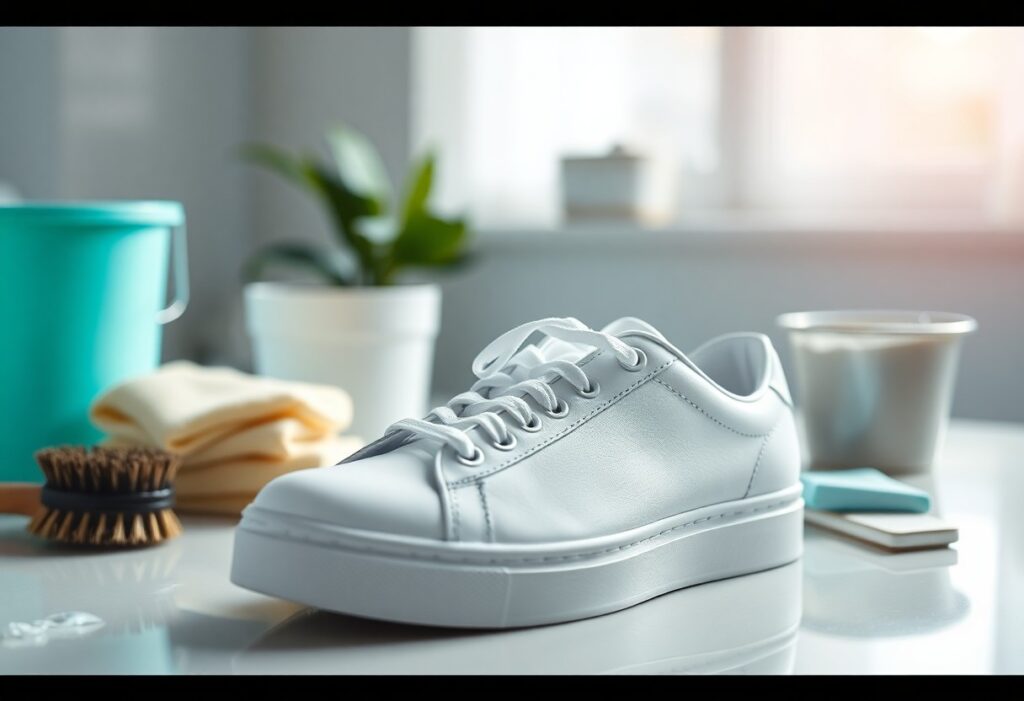
White shoes stay bright much longer when you treat prevention like part of the routine, not an afterthought. A light protective spray, fast spot-cleaning, and the right method for each material do most of the work.
Best approach in one glance
Use a protectant before first wear, brush off dry dirt after each outing, clean small marks the same day, and match the cleaning method to the shoe material. If you want a deeper cleaning routine, see these residue-removal tips for a more detailed cleanup process.
The Safest Way To Keep White Shoes Looking Fresh
The simplest way to keep white shoes clean is to stop grime from bonding to the surface in the first place. That means protecting the material, limiting exposure to mud and salt, and cleaning gently before stains have time to settle. The broad cleaning question is covered more directly on the main white-shoe cleaning guide; this article stays focused on the habits that keep shoes cleaner for longer.
That distinction matters. A one-time wash can restore a pair, but daily maintenance is what prevents the next round of stains, scuffs, and yellowing. If you wear white shoes often, a few small habits will do more for appearance than occasional aggressive scrubbing.
Material-By-Material Care Guide
White shoes do not all react the same way to water, detergent, or brushes. The material determines how hard you can clean, how often you should condition or protect the surface, and what to avoid entirely.
| Shoe material | Safest care method | What to avoid |
|---|---|---|
| Athletic / synthetic | Soft brush, mild detergent, cool water, air dry | Bleach, metal bristles, high heat |
| Canvas | Spot clean with a damp cloth and mild soap | Soaking, harsh chemicals, aggressive scrubbing |
| Leather | Wipe gently, condition regularly, dry thoroughly | Excess water, bleach, stiff brushes |
| Suede | Dry brush, suede protector, careful spot treatment | Water, standard detergent scrubbing, soaking |
Athletic Shoes
Athletic shoes are usually the easiest white shoes to maintain, but their mesh, foam, and synthetic overlays still need a light touch. Use a soft-bristled brush to remove dust before it settles into seams, and clean with a mild detergent rather than anything that could leave a residue or discolor the upper. If the pair is new, a protectant spray can give you a helpful head start against dirt and moisture.
Canvas Shoes
Canvas tends to show marks quickly, which is why spot-cleaning is better than waiting for a full wash. A damp cloth with a little mild soap is usually enough for fresh marks. Keep the water use controlled so the upper does not dry unevenly and leave a ring. For stubborn residue on canvas, use a careful cleaning approach rather than repeated heavy scrubbing.
Leather Shoes
Leather benefits from regular conditioning because it can dry out, crease, and look dull even when it is technically clean. Wipe it with a soft cloth and mild soap, then dry it completely before conditioning. Keep the product light and avoid soaking the surface. If you also struggle with salt or winter grime, this salt-stain guide is a useful next read because leather shoes often pick up the same seasonal marks.
Suede Shoes
Suede demands the most caution. Water can leave obvious marks, so a dry suede brush should be your first tool, not a sponge. A suede protector helps reduce staining, and it is worth applying before the shoes are worn outside for the first time. If suede gets marked, work slowly and gently; forcing the issue usually does more damage than the original stain.
Simple Upkeep Habits That Prevent Stains
The most effective maintenance is boring in the best way. A few repeatable habits will preserve white shoes far better than occasional deep cleaning.
- Brush off dry dirt after each wear so it does not become embedded.
- Treat fresh stains the same day whenever possible.
- Use a protectant spray on new shoes before the first outing.
- Store shoes in a cool, dry place away from direct sunlight to limit yellowing.
- Let shoes air dry fully after cleaning; avoid heaters and hot dryer settings.
- Keep separate care routines for smooth leather, suede, canvas, and athletic materials.
A small but important rule
Bleach, metal bristles, and heavy soaking can do more damage than the dirt you are trying to remove. Gentle cleaning tools protect the material and keep white shoes looking cleaner for longer.
Cleaning Tools Worth Keeping On Hand
You do not need a large kit to care for white shoes. A few basic tools cover most situations: a soft-bristled brush, a clean cloth, a small bowl or bucket, and a mild non-bleach detergent. An old toothbrush can work for seams and textured soles, but avoid anything with metal bristles, since they can tear fabric or scuff delicate finishes.
For readers who are also trying to reduce buildup on the soles and edges of other footwear, this residue-cleaning article is a practical companion piece. It fits naturally with the maintenance approach here because buildup on outsoles is often what makes white shoes look older than they really are.
When To Clean, When To Protect, And When To Leave Them Alone
| Situation | Best move | Why it helps |
|---|---|---|
| New shoes | Apply protectant before first wear | Helps repel water and fresh dirt |
| Light dirt after an outing | Dry brush or wipe immediately | Prevents the stain from setting |
| Salt or winter grime | Use a targeted removal method | Stops residue from leaving white marks |
| Suede or delicate materials | Use dry methods first | Reduces the risk of water spotting |
Need the full cleaning walkthrough?
If your shoes already have embedded dirt, discoloration, or edge buildup, move from prevention into cleaning mode with the main guide. It covers the direct washing process in more depth and is the better next step when maintenance alone is not enough.
Used consistently, these habits make white shoes far easier to maintain. The goal is not perfection after every outing; it is keeping the shoes clean enough that light care is enough to restore them. That approach protects the finish, extends wear life, and keeps the pair looking intentional rather than neglected.
Common Questions About Keeping White Shoes Clean

Ethan Marshall is a passionate writer and content creator at My Shoes Finder, where he explores a diverse range of topics, from lifestyle and fashion to innovative products and personal development. With a keen eye for detail and a commitment to delivering engaging and informative content, Ethan connects with readers by sharing insights that inspire and inform. He believes in the power of storytelling to influence positive change, and he continually seeks to provide valuable perspectives that resonate with his audience.
See also:
 Nubuck Vs Suede Vs Roughout Leather: Differences, Care, And Best Uses
 Prio Suede – Women
 How To Remove Mould From Leather Shoes Without Damaging The Leather
 Barefoot Shoe Care: Cleaning, Drying, Storage, And Repair Tips
 How To Choose The Right Leather Type For Shoes And Accessories
 Xero Shoes Dillon Canvas Review: Lace-Up vs Slip-On



I really appreciate this rundown on caring for white shoes! I’ve always struggled with keeping my canvas sneakers clean, especially when I wear them out in the park with my kids. Spot cleaning can feel like a losing battle, but I’ve found that keeping a small stash of baby wipes handy really helps for those quick clean-ups on the go.
Keeping white shoes clean, especially when the kids are involved, is definitely a challenge. I can relate to that struggle! Spot cleaning feels like a never-ending task, but baby wipes are such a clever solution for quick fixes. I’ve even heard people use them for everything from sticky hands to food spills, so it’s a great all-around tool to have on hand when you’re out and about.
I get where you’re coming from with the white shoes and kids – it’s like they have a built-in magnet for dirt and chaos. Spot cleaning can sometimes feel futile, but baby wipes really do come in handy. They’re so versatile; I’ve used them in all kinds of situations, from a quick shoe refresh to tackling a sticky snack crisis.
I totally get where you’re coming from. White shoes can be a real battle, especially when little ones are running around. It feels like the moment you clean them, someone has somehow managed to track in mud or spill something sticky on them. It’s a constant juggling act of keeping them looking nice while dealing with the day-to-day chaos that kids bring.
Ahoy, fellow shoe aficionados!
You’ve touched on a very relatable challenge—keeping white shoes pristine in a world where dirt seems to cling to them like a best friend. I’ve always find white shoes to carry a certain charm, an effortless yet polished look that can elevate even the simplest outfit. However, their maintenance can feel daunting.
I really appreciate how you broke down the care requirements for different types of white shoes! It’s fascinating to see how something as simple as a shoe can require such tailored maintenance, depending on its material. I personally love my canvas sneakers for their comfort and breathability, but I’ve noticed I need to be extra vigilant about spot cleaning since they can pick up stains so easily.
It’s great to hear your thoughts on canvas sneakers! They really do strike that sweet spot between comfort and style, but I totally get what you mean about the stains. Those shoes love to attract dirt like a magnet.
I totally relate to that struggle with canvas sneakers. They really do capture that perfect mix of comfort and style, yet I feel like each outing somehow transforms them into a mud magnet. I’ve tried all sorts of cleaning methods, from baking soda to laundry detergent, but the scuff marks seem to have a life of their own. It makes me wonder if there’s a hidden elite club of sneakers that just enjoy being dirty.
I hear you on the canvas sneakers—those stains can be a pain! If you’re looking for something comfy and stylish that might steer clear of dirt, I found this great review on Xero Shoes that dives into fit and comfort, which could be right up your alley.
‘Xero Shoes Nexus Knit Review: Fit, Sizing, Comfort, And Who It’s Best For’
https://myshoesfinder.com/xero-shoes-nexus-knit-minimalist-footwear-at-its-best/.
I really appreciate the detailed breakdown you provided about caring for different types of white shoes. It’s interesting how each type requires a unique approach to maintenance—especially with materials like suede that can be so sensitive to water. I’ve always found it a bit nerve-wracking to clean my suede sneakers, as I absolutely love the texture but have definitely made mistakes before by exposing them to moisture.
I appreciate the detailed insights on caring for various types of white shoes; it’s an often-overlooked topic that can really extend the life of our favorite footwear. I find that taking the time to maintain white shoes can be both a practical and enjoyable part of my routine. For instance, I always try to clean my athletic shoes right after a workout or after walking in them for an extended time. This way, I don’t give dirt and stains the chance to really settle in.
I really appreciate your insights on keeping white shoes pristine! I’ve always had a soft spot for white sneakers, but I’ve found that the upkeep can feel like a daunting task. I remember a pair of canvas shoes I owned that I practically lived in; I learned the hard way that a little daily care goes a long way. It’s interesting how each shoe type has its own quirks—like leather needing regular conditioning. Do you think using natural products for cleaning would be better in the long run? I’ve been experimenting with a homemade cleaner, but I’m curious about others’ experiences with that.
It’s interesting to see how shoe care really varies depending on the materials and intended use. As someone who frequently wears both athletic and casual styles, I’ve spent quite a bit of time experimenting with different cleaning methods. The three-step cleaning process you mentioned seems straightforward, but I’ve found that it’s essential to be diligent about it, especially after outdoor outings or workouts where shoes can quickly lose that pristine look.
You’ve hit the nail on the head with your observations about shoe care! It’s true that different materials and styles come with their own quirks when it comes to cleaning. I’ve also had my share of trial and error, especially with athletic shoes that really seem to take a beating.
I completely agree that proactive care can make a huge difference in the lifespan of our white shoes. I’ve found that using a protectant spray not only helps at the beginning but also makes the cleaning process so much easier later on. For my canvas sneakers, I like to keep a damp cloth handy for quick spot cleaning after wearing them out. It’s surprising how much of a difference a little maintenance can make.
I hear you on that protectant spray—it’s like a little insurance policy for your shoes. I’ve noticed that it not only keeps them looking fresh but also makes those inevitable scuffs and stains way less daunting when it’s time to clean up.
I appreciate the insightful breakdown of care requirements for various types of white shoes. It’s so true that the way we treat our footwear can say a lot about our style and approach to maintenance. I’ve found that adopting a bit of routine when it comes to cleaning not only keeps my shoes looking fresh but also extends their lifespan, which is especially valuable for those of us who view our sneakers as a canvas for personal expression.