
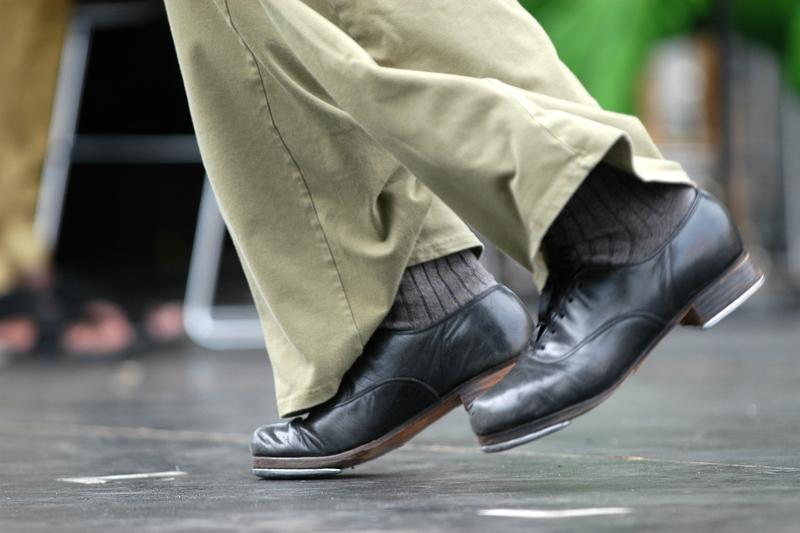
Toe taps are worth adding to many leather-soled dress shoes, but they are not necessary for every pair. If you wear your shoes often and want to slow toe wear, they can be a smart, low-cost upgrade; if the pair is rarely worn or sees delicate flooring, they may be optional or even a poor fit.
Quick decision guide
If you’re still deciding how to protect a good pair, it also helps to understand different sole types and how they wear, because the outsole material usually tells you more than the shoe price tag does.
When Toe Taps Make Sense
Toe taps are most useful on leather-soled shoes that take repeated forward pressure at the front of the foot. The toe area often wears down first, especially if you walk a lot on hard sidewalks, spend time at a desk-to-street pace, or own shoes that are expensive to resole. A small metal or rubber protector can delay that wear and reduce how often you need repair work.
That is why toe taps make the most sense for dress shoes you actually wear, not for pairs that sit in the closet. If you’re trying to preserve the life of a favorite pair, it is also worth pairing toe taps with routine care; a simple cleaning habit, such as the one outlined in this shoe-brushing guide, helps you spot wear before it becomes expensive.
Best Fit
Leather soles, regular wear, and a clear desire to reduce toe abrasion.
Maybe Fit
Shoes worn a few times a month, or pairs you want to protect but do not wear hard.
Poor Fit
Shoes on delicate floors, pairs with rubber outsoles, or footwear you rarely rotate into use.
Cost, Wear, And The Real Trade-Off
The decision usually comes down to a simple comparison: a small installation cost now versus a longer lifespan later. Toe taps are not a magic fix, but they can be a practical way to postpone toe wear and make resoling less frequent.
If the shoe itself is already doing most of the protective work, toe taps add less value. For a broader look at what makes a sole durable in the first place, compare it with the guidance on sole construction and materials.
Metal Vs. Rubber Toe Taps
The right material depends on how you wear the shoes. Metal taps are the classic choice for frequent use on hard surfaces because they hold up well and offer reliable edge protection. Rubber taps are quieter and can feel friendlier in settings where noise matters, though they may not last as long under heavier wear.
Choose Metal If
- You wear the pair often.
- You want the most durable front-end protection.
- You mostly walk outdoors on concrete or asphalt.
Choose Rubber If
- You prefer a quieter step.
- You are more concerned with surface friendliness than maximum durability.
- The shoes see moderate use rather than constant wear.
If your shoes are new, the best time to add protection is often before the toe starts to round off. For the related question of whether to add protection immediately or wait, this new-shoe care guide is useful because the same timing mindset applies: protect early when the material is fresh, and wait when the shoe does not need intervention yet.
When To Skip Toe Taps
Toe taps are not the right answer for every pair. Skip them if the shoe already has strong toe protection, if the outsole is rubber and wears evenly, or if you often visit interiors where metal contact is likely to mark floors. In those cases, the practical benefit is smaller than the risk or the extra hardware.
They are also unnecessary when a pair is worn so rarely that toe wear never becomes a meaningful issue. The fewer miles the shoe sees, the less value there is in adding another component to maintain.
A practical takeaway
Toe taps are a sensible upgrade when your shoes are worth protecting, the sole material can benefit from extra front-end defense, and you expect to keep wearing the pair often. If those conditions are not true, skipping them is perfectly reasonable.
Frequently Asked Questions
Do Toe Taps Actually Work?
Yes, they work best as a wear-prevention tool. Their job is simple: reduce abrasion at the toe so the leather underneath lasts longer before repair is needed.
Are Toe Taps Noisy?
They can make some sound, especially on hard floors, but the noise is usually modest compared with the wear they prevent. Rubber taps tend to be quieter than metal.
Where Should I Avoid Wearing Them?
Avoid delicate interiors with polished stone, untreated wood, or other floors that could show marks from metal contact. If you know you will be indoors in those spaces often, toe taps may not be the right choice.
What Kind Of Shoes Benefit Most?
Classic leather-soled dress shoes benefit most, especially when they are part of a small rotation and are worn regularly.
Need the bigger shoe-care picture?
If you are deciding how to protect a pair beyond toe taps, the next useful step is to think about sole construction, care habits, and whether the shoe will be in regular rotation.

Natalie Harper is a versatile author and content creator at My Shoes Finder, where she explores a wide range of general topics that resonate with diverse audiences. With a passion for storytelling and a keen eye for detail, Natalie crafts engaging articles that provide valuable insights and inspire readers. Her commitment to quality and relatability makes her work a trusted resource for those seeking both information and inspiration in their daily lives.
See also:
 Leather Vs Rubber Soles: Which One Should You Choose?
 Barefoot Shoes For Retail Workers: Comfort, Alignment, And Shift Endurance
 Repair Shoes Or Buy New? A Practical Guide To The Right Decision
 Shoe And Boot Sole Types Explained: How To Choose The Right One
 Barefoot Shoes For Climbing And Bouldering: When They Work, When They Don’t
 Xero Shoes For Nurses: Best Picks For 12-Hour Shifts



Your exploration of toe taps really resonates with me, particularly the balance between initial costs and long-term savings. I used to be skeptical about them, primarily due to the noise factor you mentioned, but I’ve come to appreciate how they extend the life of my shoes. Investing in high-quality footwear is often a significant financial commitment, and having those taps has actually saved me from repeated sole repairs.
It’s interesting to hear how your views on toe taps have evolved. I completely get where you’re coming from. Many folks initially see any added expense, however small, as a reason to hesitate. But as you pointed out, that noise factor can be a real sticking point. Some people just can’t get past the sound. It’s like this sneaky little drawback that leads to second-guessing the whole investment.
I appreciate your perspective on the issue of toe taps. It’s fascinating how our initial hesitations can sometimes prevent us from fully embracing something that could enhance our experience. The noise factor, in particular, is an area I’ve been mulling over quite a bit. In a world where we’re often seeking a quiet space to reflect or focus, those little sounds can be surprisingly disruptive.
I completely get where you’re coming from regarding initially hesitating about toe taps. It’s interesting how something as small as a noise can have such a big impact on our ability to concentrate or really dive into an experience. I’ve often found myself in situations where the slightest sound seems to creep in and disrupt my flow. It’s almost like those little noises can become the loudest thing in the room, taking our focus away from what we’re trying to enjoy or reflect on.
You bring up a really interesting point about the noise factor. It’s true that our environment plays such a crucial role in how we interact with new experiences, even something as seemingly simple as toe taps. It reminds me of how sounds can become part of our mental clutter—especially when we’re trying to carve out those rare moments of peace.
You raise a point that often gets drowned out in discussions about environmental impact—it’s not just the big, flashy sounds that disrupt our peace; it’s the subtle, almost ambient noise that creeps in and affects our mental clarity. Those toe taps, while they might seem trivial, can really accumulate and create a background hum that adds to our internal chaos. It’s fascinating to think about how something so innocuous can contribute to a larger conversation about mindfulness and our interaction with the world around us.
It’s so true how the subtle sounds in our environment can weave into the fabric of our daily lives, often without us even realizing it. Those toe taps you mentioned are like little pebbles thrown into a still pond—each one barely makes a ripple on its own, but over time, they create a complex pattern that can feel overwhelming.
You raise a really interesting point about toe taps and that hesitation we sometimes feel. It’s funny how something seemingly minor, like a little noise, can have such a significant impact on our ability to focus or immerse ourselves in an experience. I can relate to that struggle; I often find that even the ambient sounds of a cafe—laughter, clinking cups—can pull me out of my flow when I’m trying to concentrate.
You bring up such an interesting point about toe taps and the whole noise factor. It’s funny how something as simple as sound can create a ripple effect in our daily lives. When you think about it, we often curate our spaces to be serene, whether it’s through the music we play, the environments we choose, or even the types of activities we engage in. The little sounds that we might initially dismiss—like the rhythmic tapping of toes—can actually disrupt that carefully crafted atmosphere.
It’s definitely a nuanced topic, isn’t it? I remember when I first started looking into toe taps, I was purely focused on the aesthetics and how they could elevate my dance shoes. But then, like you mentioned, the noise factor hit me deep. It’s surprising how something so small can influence your overall enjoyment and performance.
It’s interesting how our journey with dance evolves, isn’t it? When I first got into it, my focus was also on aesthetics—how my shoes looked while moving across the floor. But as you pointed out, the noise aspect can really change everything. When you’re on stage or dancing with others, those little sounds can create an atmosphere that adds layers to the experience, both for you and the audience.
I never knew toe taps were such a hot topic in the footwear world! It’s funny how a little piece of metal can provoke such passionate opinions. I remember my first pair of “fancy” shoes; they were screaming for toe taps a few months in, but I was worried about the added noise. Did I want to sound like a tap-dancing superstar as I walked? Spoiler: nobody was impressed by my impromptu performances outside the coffee shop.
I’ve always thought of toe taps as the superhero sidekicks of our beloved shoes—here to save the day (and the sole) but usually underestimated. It’s funny how just a little added hardware can spark such debate, isn’t it? Remember that time when everyone thought high heels were just for fashion, until someone realized they might just take out a small predator on the sidewalk? Maybe toe taps are the unsung heroes we never knew we needed!
You’ve hit on something interesting there. Toe taps really do have a reputation that doesn’t quite match their potential. It’s fascinating to think about how something so small can make such a difference—both in style and function. Just like those high heels turned out to pack more punch than anyone expected, toe taps are quietly doing their part to extend the life of shoes while also adding a unique flair to our footwear.
You bring up a really interesting point about toe taps and their underrated role. I’ve often thought about how these small additions can really change the game—not just for shoes, but for how we perceive fashion as a whole. The idea that something so subtle can extend the life of our favorite pairs and add a unique touch is pretty remarkable.
You hit the nail on the head with the whole toe tap situation—it’s like the unsung hero we didn’t even know we needed in our footwear arsenal. It’s funny to think about how something so small can have such a big impact, right? It’s like finding out that the shy kid in class was actually a brilliant artist all along.
You bring up a really interesting point about toe taps and their underrated role. It’s fascinating how something so small can have such a big impact, isn’t it? When we think about fashion, we often focus on bold statements and eye-catching designs, but these subtle details can really shift our perspective.
You’ve captured that idea perfectly. Toe taps really do seem to fly under the radar, but their impact is noteworthy. It’s interesting to consider how something so small can change not just the aesthetic of a shoe, but also its longevity. I love the analogy with high heels; they often get a bad rap for their discomfort, but when you think about their craftsmanship and the way they can transform an outfit, it’s a bit of a revelation.
You’ve really captured the essence of toe taps beautifully with your superhero analogy. It’s true, they often don’t get the respect they deserve. People see a shoe and think primarily about style or comfort, but those little metal pieces can really change the game. They do so much more than just protect the soles; they can enhance the way shoes wear over time and actually improve traction. As you hinted at, a small piece of hardware can spark quite the discussion!
It’s interesting how something so small, like toe taps, can carry so much significance. I’ve always felt that when people overlook the details, they miss out on some of the most essential aspects of any craft or item. You’re right about the focus often being on style or comfort, especially in a world inundated with trends. But those little metal pieces really do play a crucial role in both functionality and longevity.
You raise some excellent points about toe taps and their often-overlooked significance. It’s fascinating how such a small element can play a major role in both functionality and the overall experience of wearing shoes. Many people often miss out on the potential benefits that toe taps provide, focusing instead solely on aesthetics or comfort.
It’s fascinating how our perceptions of footwear evolve over time, particularly with something as seemingly simple as toe taps. When I first heard about them, I instinctively thought of the noise they might create, but as I reflected on my own experiences with expensive shoes wearing out too quickly, I began to see the merit in their protective benefits. Investing in quality footwear isn’t just about aesthetics; it’s about making choices that enhance their lifespan, ultimately reflecting our values around sustainability and mindful consumption.
I’ve been mulling over the toe tap debate for a while now, and it’s fascinating how they’ve shifted from being seen as a “no-go” to a standard feature in quality shoes. For me, it’s all about balancing aesthetics with practicality.
You make a great point about the shift in perceptions around toe taps. It’s interesting how trends evolve, right? There was a time when they were thought of as a bit tacky or old-fashioned, but now they’re popping up in everything from high-end fashion lines to everyday wear.