

Trail running in minimalist footwear can improve ground feel and natural foot engagement, but it also changes how your body absorbs load on uneven terrain. The right choice depends on trail type, training history, and how well your feet tolerate repeated stress.
If you want the broader biomechanics context behind this topic, start with the biomechanics and injury-prevention hub, then use this article to judge where trail-specific minimalist footwear fits.
Quick decision guide
- Best fit: experienced runners who already tolerate low-drop or minimal shoes and want better trail feedback.
- Use caution: runners with recent calf, Achilles, metatarsal, or plantar fascia issues.
- Highest risk: steep descents, loose gravel, and rapid mileage jumps.
- Most useful metric: changes in load, cadence, and foot strike consistency, not a single “perfect” number.
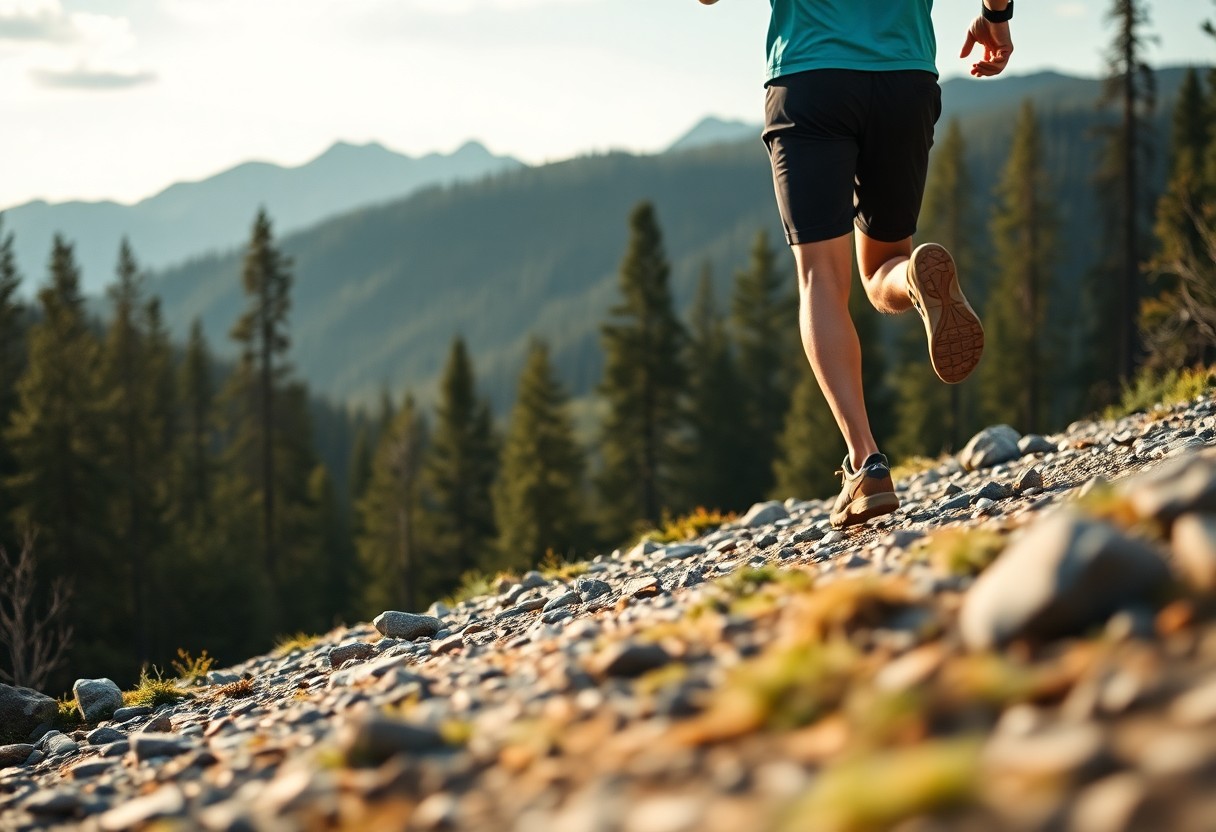
What Minimalist Trail Shoes Change First
The main shift is not just less cushioning. Minimalist footwear changes how quickly the foot has to stabilize, how much the forefoot works on landing, and how strongly the calf–Achilles chain contributes on climbs and descents. On technical trails, those changes can be useful because they sharpen proprioception, but they also raise the demand on structures that may already be under load.
A common adaptation is a greater tendency toward midfoot loading on irregular ground. That can improve balance, but it also increases the work done by the smaller foot muscles and the metatarsophalangeal joints. If your training has not prepared you for that shift, the same shoe that feels precise on a smooth path can feel punishing on rocky or cambered terrain.
Terrain Changes The Cost Of Every Step
Terrain is the biggest modifier. On descents, minimalist shoes can expose you to higher vertical loading rates because the body has less material underfoot to soften impact. Loose surfaces also demand more lateral toe control, while steep downhills increase braking forces and fatigue in the foot and lower leg. That combination is why a shoe that feels efficient on a short trail loop can become risky on long, technical descents.
| Trail condition | Biomechanical effect | Best use case |
|---|---|---|
| Smooth hardpack | Lower stabilization demand, easier adaptation | Good for acclimation runs and form work |
| Rocky or technical trail | Higher foot muscle demand and balance load | Best for experienced runners with strong feet |
| Steep descents | Higher braking forces and loading rates | Use cautiously and build downhill tolerance slowly |
| Loose gravel or uneven camber | Greater toe splay and lateral stabilization demand | Only if you already adapt well to minimalist shoes |
Where Wearable Tech Helps, And Where It Can Mislead
Wearables are useful here, but only if you treat them as trend tools rather than absolute truth. On trails, devices can struggle to read vertical oscillation, power, and load consistently because the surface is constantly changing. A 12.4% difference in power readings between leading devices on inclines is enough to distort training decisions if you rely on one number without context.
The best use of wearable data is pattern recognition. If cadence drops sharply on descents, if load spikes on certain surfaces, or if one shoe setup consistently produces more fatigue after the same route, that is actionable. Paired with a more authoritative biomechanics reference such as the advanced running footwear efficiency analysis, you can compare trail-specific strain against broader running mechanics without overreading any single metric.
Practical Rule use wearables to confirm whether your body is tolerating the trail load you think it is, not to prove that one shoe is universally better.
Injury Prevention Depends On Transition, Not Just Shoe Choice
The biggest mistake is switching to minimalist trail shoes and keeping the same distance, terrain, and intensity. A safer approach is gradual exposure: short runs on predictable ground, then controlled hill work, then technical trail time once your feet and calves stop reacting after each session. That progression matters more than any marketing claim about “natural” running.
For runners with a history of plantar fascia pain or Achilles irritation, the transition should be slower still. In those cases, a related guide such as Xero shoes for plantar fasciitis can help you think through tolerance, symptom response, and fit before you commit to more aggressive trail use.
A Simple Progression That Reduces Risk
- Start with short, low-technical runs on firm ground.
- Check calf, arch, and forefoot soreness the next day, not just during the run.
- Increase one variable at a time: distance, technicality, or speed.
- Use wearables only to confirm trends in fatigue or loading, not to chase perfect metrics.
- Back off if pain becomes sharp, persistent, or changes your stride.
For runners exploring the minimalist category more broadly, barefoot footwear and biomechanics offers useful context on how low-profile shoes change foot function across use cases, while running in Xero shoes is a practical next read if you are comparing specific minimalist options.
Who Is A Good Candidate For Minimalist Trail Shoes?
Minimalist trail shoes tend to work best for runners who already have a reasonable base of foot strength, strong balance, and no recent lower-leg injury. They are also more sensible on trails that are predictable rather than highly technical. If you like close ground feel, move efficiently, and can tolerate gradual loading changes, they can be a useful training tool.
They are a poor fit when you are returning from injury, ramping volume fast, or using them because they sound more natural rather than because they match the route. On demanding terrain, protection and stability can matter more than minimal structure.
Want the broader biomechanics perspective?
If your goal is to compare trail-specific loading against wider footwear stability and injury-prevention principles, visit the main biomechanics guide next. It gives the larger framework this article builds on.
Frequently Asked Questions
Are Minimalist Trail Shoes Safe For Beginners?
They can be safe only if you start with very short, easy runs and you already tolerate low-drop or minimal footwear. For true beginners, a slower transition is usually better than starting with technical terrain.
What Injury Signals Should I Watch For?
Watch for calf tightness that lingers, Achilles soreness, metatarsal pain, arch pain, and any change in stride that shows you are protecting a sore area. Those signs usually mean the load is too high too soon.
Do Wearables Prevent Injury On Trails?
No device prevents injury on its own, but wearables can highlight load spikes, fatigue patterns, and form changes that help you adjust before problems build. They are most useful when paired with honest recovery and gradual progression.
Should I Choose Minimalist Footwear For Steep Trails?
Usually not if the descents are long, technical, or loose. Steeper routes increase braking forces and foot fatigue, which makes minimalist shoes a more advanced choice.

Henry Harrington is a passionate author and content creator at My Shoes Finder, where he explores a wide range of topics related to footwear, lifestyle, and personal growth. With a keen eye for detail and a love for storytelling, Henry engages readers by sharing insights, tips, and personal anecdotes that resonate with his audience. His commitment to delivering high-quality content has established him as a trusted voice in the online community, inviting readers to step into new perspectives and discover their unique paths.
See also:
 Barefoot Shoes And Knee Pain Prevention: What The Science Suggests In 2025
 Xero Shoes For Achilles Tendonitis: 2025 Rehab Protocol And Loading Guide
 Best Outdoor Shoes For 2025: Hiking, Trail And Water Picks That Actually Perform
 Xero Shoes For Hiking: 2025 Trail Test Results, Durability, And Best Models
 Are Xero Shoes Good For Standing All Day? Best Uses, Limits, And Comfort Tips
 Barefoot Footwear Biomechanics: What The Evidence Says About Clinical Outcomes



I can totally relate to the challenges of trail running in minimalist footwear. Transitioning to a more stripped-down shoe has been a game changer for my performance, but I’ve also had my fair share of close calls with injuries. The biomechanics behind foot strikes on rocky or uneven terrain can really make or break your run. Like you mentioned, understanding how our bodies adapt to these surfaces is crucial.
This post brings up such an important point about the interplay between minimalist footwear and biomechanics in trail running. I’ve been experimenting with minimalist shoes for about a year now, and the transition was both rewarding and challenging. Initially, I underestimated how essential it is to pay attention to the terrain and my foot strike patterns; my training runs on well-groomed paths felt fantastic, but once I hit more rugged trails, I definitely felt the difference.
Your experience with minimalist shoes resonates with me. I think lots of folks get caught up in the allure of how freeing and light they can feel, especially on smooth trails. It’s liberating to strap on a pair of minimalist shoes and enjoy that close-to-the-ground vibe. But you really hit the nail on the head about paying attention to the terrain.
This is a pretty fascinating dive into the world of trail running and minimalist footwear. I’m always amazed at how something as simple as our foot’s interaction with the ground can turn into a math problem of biomechanical proportions. It reminds me of that time I tried trail running in shoes that were way too rigid – let’s just say my foot strike was more “crash landing” than “graceful ballet.”
It’s interesting to hear your experience with trail running and those rigid shoes. It’s a common story for many who venture into the world of minimalist footwear. The adjustment can feel like a steep learning curve. Your “crash landing” foot strike highlights how important it is to find that sweet spot between protection and flexibility. The right shoe can truly make a difference in how we connect with the terrain beneath us.
This post hits home for me! I’ve definitely experienced the rollercoaster of injuries related to trail running, and I can relate to that staggering 62% figure. When I first switched to minimalist footwear, I felt great for the first few runs, but soon realized that my foot strike and the varied terrain required a complete shift in technique that I wasn’t prepared for.
It’s really interesting to hear about your experience with minimalist footwear. It can feel liberating at first, right? Yet, jumping into that style often reveals the need for a whole new approach. I think it’s easy to underestimate how much our foot strike interacts with the surface we’re running on. Each trail can throw new challenges at us, and without the right adjustment in technique, it’s no wonder injuries can creep in.
Your insights into the biomechanics of trail running and the impact of footwear truly resonate with me. As someone who has transitioned to minimalist shoes over the past couple of years, I have firsthand experience with the challenges posed by uneven terrain. Initially, I faced numerous adjustments—everything from altered foot strike patterns to developing new muscle strength. It’s enlightening to see how our bodies respond to the demands of trail running and how crucial it is to listen to those signals.
Ah, the great minimalist footwear conundrum in trail running! It’s like trying to navigate a rollercoaster in flip-flops – thrilling yet fraught with peril. I must admit, I once broke a personal record for “The World’s Fastest Trip and Fall” on a rocky trail because I thought my five-fingers would magically turn me into a mountain goat. Spoiler alert: they didn’t.
I totally get where you’re coming from with the minimalist footwear dilemma. It really is a balancing act—one minute, you’re feeling the thrill of the trail, and the next, you’re questioning your life choices after a slip or two. I’ve had my fair share of adventures in minimalist shoes as well. There was one particularly memorable run where I thought I was channeling my inner David Attenborough, gliding over rocky terrain like it was a nature documentary. Spoiler: I found out I’m more like a clumsy bison than a graceful gazelle.
This topic really resonates with me as a trail runner navigating the complexities of different terrains. Honestly, the injury statistics you mentioned are quite alarming, and they serve as an important reminder of the need to not only focus on gear but also on understanding our own bodies.
This is such an insightful exploration into the intersection of biomechanics and trail running! As someone who recently transitioned to minimalist footwear, I’ve keenly felt the impact of proper technique and the importance of understanding how each surface affects my stride. It’s fascinating how the shift from cushioned shoes to more natural options can give us a heightened awareness of our foot mechanics and overall body movement.
Your insights on the impact of footwear on trail running injuries really resonate with me. As someone who has shifted to minimalist shoes, I can certainly attest to the learning curve involved. It’s fascinating how the biomechanics of different terrains challenge our bodies in unique ways, and I’ve found that taking the time to understand my foot strike patterns has been crucial.
I can completely relate to the challenges of trail running in minimalist footwear—it’s a game-changer for grip and feel, but the risk of injury can be daunting. When I started running trails, I didn’t pay enough attention to the varying surfaces and my foot strike, and I ended up with some annoying aches. It’s so true that understanding biomechanics is key.
I get where you’re coming from. Switching to minimalist footwear really does change the whole trail running game. It feels like you’re directly connected to the terrain, but that can also be a double-edged sword, right? The uneven surfaces and hidden rocks always seem to surprise you, especially if you’re not paying close attention.
I can relate to what you’re saying about the challenges of trail running in minimalist footwear. The grip and feel can be phenomenal, especially when navigating uneven terrain—there’s something so liberating about being that connected to the ground. But as you mentioned, the risk of injury is definitely a factor to consider.
I completely resonate with your insights on the importance of understanding biomechanics when it comes to trail running in minimalist footwear. As someone who transitioned from traditional shoes to a more minimalist approach, I found that being mindful of my foot strike and adjusting my training to incorporate more ground-feel has made a noticeable difference.
I totally relate to the challenge of navigating trails in minimalist footwear! Transitioning to them was a game changer for me, but I had to learn the hard way about foot strike and terrain impact. I remember one particularly rocky run where I ended up with a nagging ankle strain because I didn’t adjust my technique to accommodate the trail. It’s interesting how much of a difference those small biomechanical tweaks can make.
This is such an interesting topic! I’ve been trail running for a few years now, and I can definitely relate to the challenges of adapting to different terrains with minimalist footwear. It feels like every surface demands a unique approach, and I’ve sometimes found myself struggling after hitting rocky paths or steep descents. The mention of biomechanics really resonates with me—I recently started tracking my foot strike using an app, and it’s been eye-opening to see how it varies on different trails.
I find it fascinating how much the right footwear can influence not just our performance, but our overall health as trail runners. I switched to minimalist shoes a couple of years ago after dealing with recurring injuries, and while it took a bit of an adjustment period, I’ve noticed my foot strength has improved significantly.